Maglaj Castle
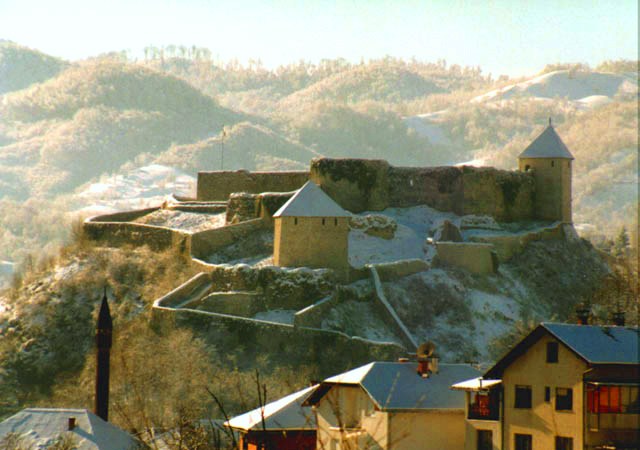
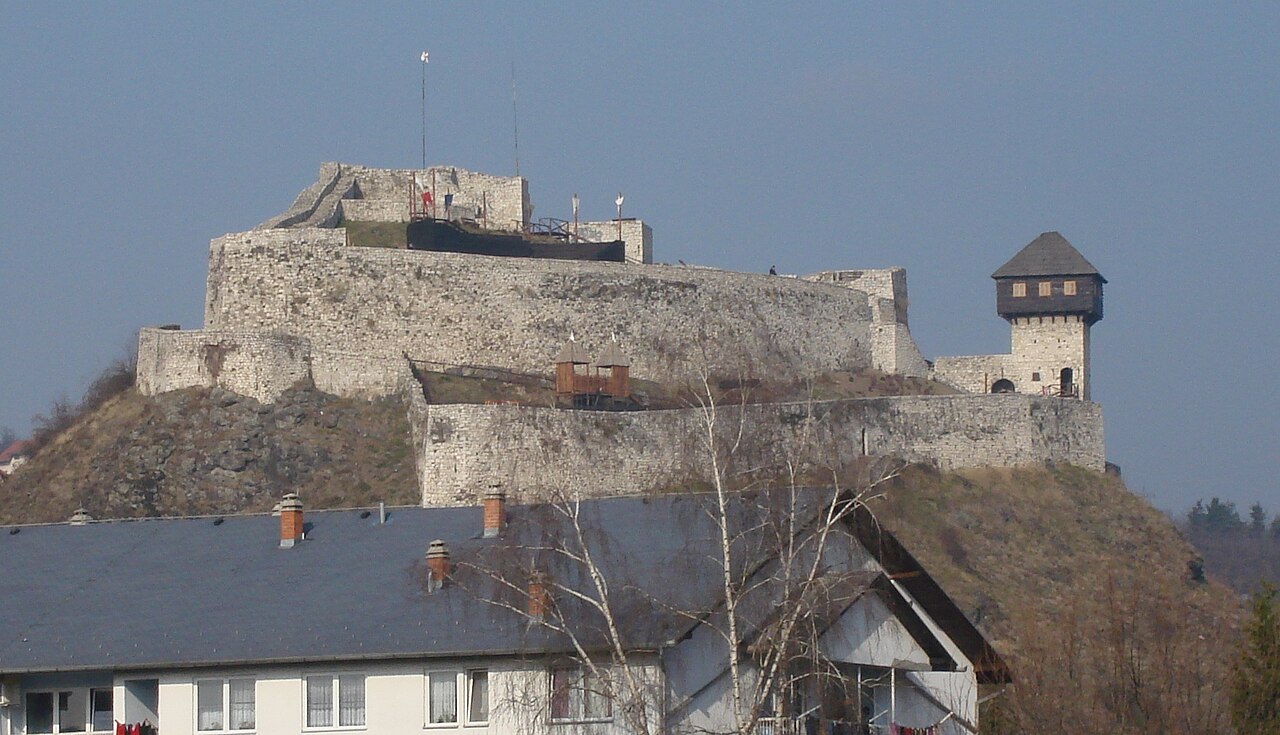
Maglaj Castle, also known as Maglaj Fortress, stands as a significant example of a late medieval hill castle in Bosnia and Herzegovina. First mentioned in 1408 in the charter of Hungarian King Sigismund, this fortress was originally constructed in the 14th century to defend the Bosnian kingdom. Its strategic location on a steep magmatic rock formation, rising 182 meters above sea level, provided a commanding view over the right bank of the Bosna River, making it a critical defensive structure in the region.
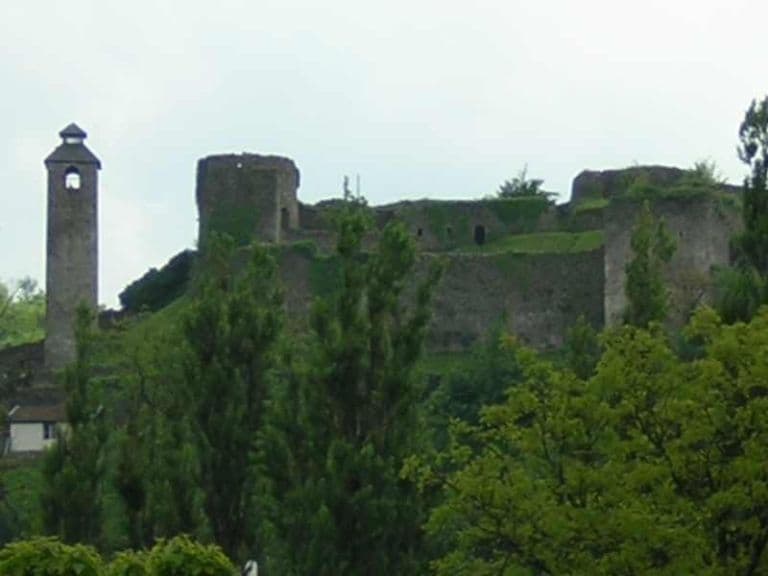
The fortress evolved over centuries, especially during the Ottoman period, when it acquired its final form. The complex is known locally as Gradina and was officially declared a national monument of Bosnia and Herzegovina in 2005. The fortress complex comprises five prominent towers: Širbegova (Kapi) tower, Dizdareva (Southern) tower, Defender tower, The Captain's (North) tower, and the distinctive Clock Tower (Sahat-kula). While detailed construction records exist primarily for the Clock Tower, the rest of the fortress reflects architectural adaptations across centuries to meet evolving military needs.
Historical context and strategic importance
Located in the present-day municipality of Maglaj, the fortress was established by medieval Bosnian builders no later than the 14th century. It served as a fortified settlement and administrative center for a nahija (local district) during the 14th and 15th centuries. The fortress functioned as a fully developed medieval town, equipped with defensive features designed to protect the area from external invasions and internal conflicts.
With the advent of artillery and changing military technology, Maglaj Fortress underwent modifications to meet early modern fortification standards. Its military significance persisted into the 19th century, primarily safeguarding the internal security of the district. However, after the Austro-Hungarian occupation of Bosnia and Herzegovina in 1878, the fortress lost its strategic relevance and was gradually abandoned, leading to its decline.
Restoration and preservation efforts
A major restoration took place in 1782, aimed at maintaining the fortress's defensive capabilities. Although smaller repairs were undertaken subsequently, none matched the scale of this significant renovation. Starting in 1962, archaeological excavations and conservation initiatives led by the Institute for the Protection of Cultural Monuments of SR Bosnia and Herzegovina, in partnership with local authorities, focused on preserving the fortress and uncovering its history.
These studies confirmed that Maglaj Fortress was founded during the medieval period without evidence of earlier Roman or prehistoric settlements beneath it, distinguishing it from many other Bosnian hillforts that often overlay ancient sites.
Architectural features and layout
The fortress is built on a naturally defensible rock outcrop, which provided a strong foundation and a vantage point over the surrounding landscape. The layout of Maglaj Fortress preserves much of the medieval town core despite multiple phases of construction and adaptation over at least six centuries.
The original entrance was located on the western side, accessed by a narrow path approximately 2.5 to 3 meters wide, cut directly into the rock from the southern area known as Zagrađe. This approach exposed attackers to defensive fire from ramparts above, demonstrating sophisticated tactical planning in its design.
The clock tower (sahat-kula)
One of the fortress's most distinctive features is the Maglaj Sahat-kula, or clock tower, constructed on October 17, 1697. This square tower measures about 3.07 meters on each side. Due to its position on the cliff, the tower's front elevation reaches 17.10 meters, while the rear side stands slightly lower at 14.77 meters.
The clock tower was designed to tell time according to Central European standards and remained operational well into the 20th century, being one of the few functioning clock towers in Bosnia by 1955. Alongside those in Sarajevo, Prusac, Foča, and Tešanj, the Maglaj clock tower is a rare surviving example of this architectural and cultural feature.
Archaeological findings and current condition
Extensive archaeological investigations have found no evidence of earlier settlement layers beneath Maglaj Fortress, confirming its origins firmly in the medieval period. After its abandonment post-1878, the fortress fell into disrepair, but modern conservation efforts have helped stabilize and restore key structures.
Today, the fortress retains the character of a medieval fortified town that adapted over centuries to changing defensive requirements. Its stone walls, towers, and other structures reflect the architectural evolution from the late medieval period through the Ottoman era and into early modern times.
Maglaj Fortress remains an important historical and architectural monument in Bosnia and Herzegovina, drawing visitors interested in medieval military architecture and the region's complex history.
Visitor information and significance
As a declared national monument, Maglaj Fortress is accessible to visitors who wish to explore its towers, walls, and the well-preserved clock tower. The site offers insights into medieval Bosnian fortifications and the adaptations made during the Ottoman period. Its commanding views of the Bosna River valley provide a tangible connection to the strategic importance the fortress held for centuries.
Visitors can appreciate the fortress's layered history, from its medieval origins through its Ottoman modifications and eventual decline in the late 19th century. Conservation efforts continue to preserve this heritage site for future generations, highlighting its cultural and architectural value within Bosnia and Herzegovina.
Frequently asked questions (FAQ)
- What is the historical significance of Maglaj Castle?
- Maglaj Castle dates back to the medieval period and has played a crucial role in the defense of the region throughout its history. It is an important cultural heritage site in Bosnia and Herzegovina, showcasing the architectural and historical evolution of the area.
- When was Maglaj Castle built?
- Maglaj Castle was constructed in the late 14th century, with its foundations believed to have been laid during the reign of the Bosnian kings. Over the centuries, it has been modified and expanded, reflecting various architectural styles and influences.
- Can I visit Maglaj Castle?
- Yes, visitors are welcome to explore Maglaj Castle and its surroundings. The castle offers a unique glimpse into Bosnia's medieval past and is accessible to tourists interested in history and architecture.
- What are the opening hours for Maglaj Castle?
- Maglaj Castle is open to visitors year-round, but the hours may vary depending on the season. It is advisable to check local listings or contact the tourism office for the most current opening hours before your visit.
- Is it possible to take guided tours of Maglaj Castle?
- Yes, guided tours are available for those looking to gain a deeper understanding of the castle's history and architecture. Tour guides typically provide insightful information and anecdotes that enrich the visitor experience.
- What is the best time to visit Maglaj Castle?
- The best time to visit Maglaj Castle is during the spring and early autumn when the weather is mild and pleasant. This allows for a comfortable exploration of the castle and its stunning surroundings.
- Are there any nearby attractions to visit?
- Yes, Maglaj is surrounded by beautiful landscapes and historical sites. Nearby attractions include the scenic river valleys and other historical landmarks, making it a perfect destination for a day trip.
- What are the ticket prices for visiting Maglaj Castle?
- Ticket prices for Maglaj Castle are generally affordable, allowing visitors of all budget levels to enjoy the site. It is recommended to check the latest information regarding entry fees at the entrance or through local tourism resources.
- How do I get to Maglaj Castle?
- Maglaj Castle is located in the town of Maglaj, which is accessible by car or public transport from major cities in Bosnia and Herzegovina. Local signage will guide you to the castle once you are in the area.
Photo gallery

Information
Loading map...
Visitor reviews
No reviews yet. Been here? Write the first review and help other travelers!
Write the first reviewVisited this castle? Share your experience
Your review helps other travelers and adds first-hand knowledge to our encyclopedia.