Macroom Castle
Macroom Castle stands prominently in the town of Macroom, County Cork, Ireland, guarding the historic ford over the River Sullane. This high medieval hill castle traces its origins back to the 12th century, when it was likely established by the O'Flynn family, early local rulers of the Muskerry region. Known originally as Caisleán Uí Fhloinn, the castle's strategic location made it a vital defensive and administrative center throughout its long history.
The castle's ownership transitioned to the powerful MacCarthy family in the 14th century, who became the Lords of Muskerry. In 1353, Dermot MacCarthy was granted the castle and surrounding lands, initiating a centuries-long association with the MacCarthys. The castle served as a fortified residence and symbol of their regional authority.
Architectural evolution and structure
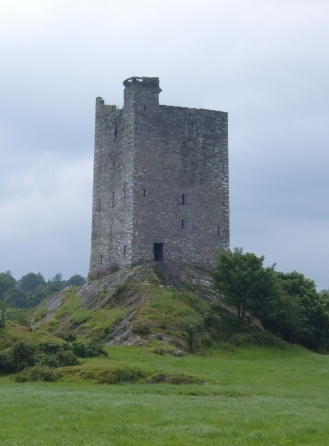
The core of Macroom Castle was a square tower or keep, dating back to the original medieval construction. Over the centuries, the castle expanded and evolved, reflecting changing defensive needs and domestic comforts. By the mid-16th century, under Teige MacCarthy, 11th Lord Muskerry, the castle was restored and enlarged, enhancing its stature and fortifications.
The main residential block, built before 1750, was a three-story structure measuring six bays by three bays. This block was constructed by filling the space between two older towers, overlooking a large park along the river. The castle also featured a gatehouse with attached walls, which survives as one of the most distinctive remnants of the complex.
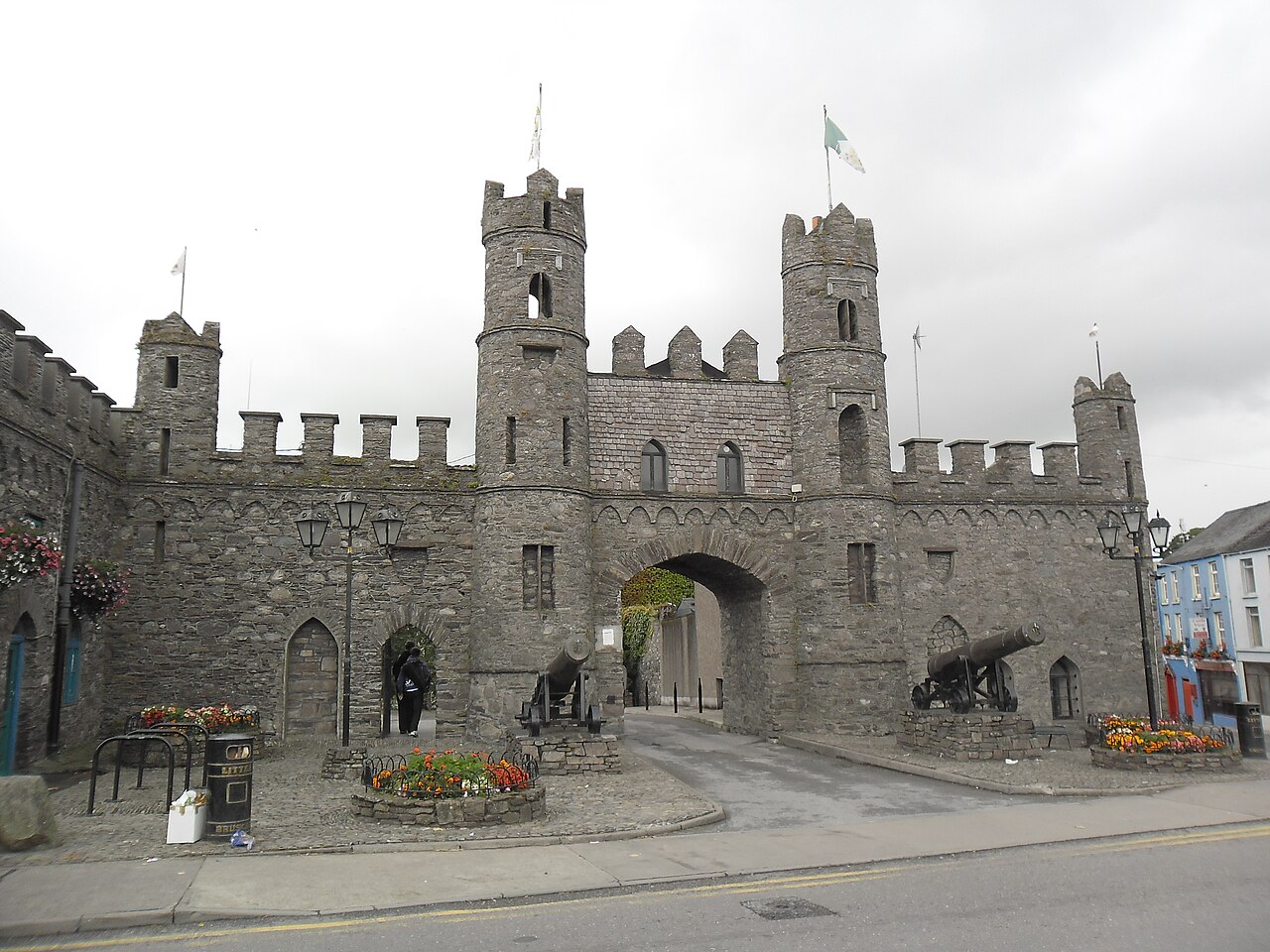
The gatehouse, built before 1824 by Robert Hedges Eyre, was designed as a decorative folly. It includes an arched passage with a guard chamber above, flanked by two round turrets, topped with crenellated battlements. The grey rubble stone walls are faced with slate ashlar on the guard chamber front, and two historic cannons stand on pedestals before the gatehouse, adding to its imposing appearance.
The castle's west wing connected the surviving tower to the main residence. This wing, partially rebuilt in the 19th century, featured a five-bay facade with a central pointed-arch gate, crow-stepped gables, and square hood-moulded windows. Stepped crenellations crowned the walls, contributing to the castle's romantic medieval character.
Historical significance and events
Macroom Castle played a significant role in Irish history, particularly during the turbulent 16th and 17th centuries. It was a focal point during Tyrone's Rebellion (1594–1603), when government forces besieged it around 1601–1602 due to secret communications between its owner, Cormac MacDermot MacCarthy, and Spanish allies. The siege resulted in the castle catching fire and the arrest of Lord Muskerry.
During the Irish Confederate Wars (1641–1653), the castle was a key stronghold for the Catholic Confederation. In 1645, it hosted Giovanni Battista Rinuccini, the Papal Nuncio sent to support the Confederation. In 1650, Bishop Boetius MacEgan assembled Confederate forces at Macroom before the arrival of Cromwellian troops. To prevent the castle's capture by Oliver Cromwell's forces, the garrison set fire to it. The castle suffered multiple burnings during this period, including destruction by General Henry Ireton.
Following the Cromwellian conquest, the castle was confiscated in 1656 and granted to Admiral William Penn, father of the founder of Pennsylvania, USA. After the Restoration of the Monarchy in 1660, ownership returned to the MacCarthys, who renovated and expanded the castle further.
In the Williamite War of the late 1680s, Macroom Castle served as a prison for Protestant captives in 1689. After the war, the castle was confiscated again in 1691 due to the MacCarthys' allegiance to King James II. It was sold at auction in 1703 to the Hollow Sword Blade Company, later passing to Francis Bernard, who became the Earl of Bandon.
19th and 20th century transformations
In the 19th century, ownership passed to the Hedges Eyre family, who undertook rebuilding efforts including the gatehouse and market house, aiming to enhance the town's appearance. The castle grounds became intertwined with the town's development, with new structures built nearby.
During the Irish War of Independence, British Auxiliary forces occupied Macroom Castle. In 1922, amid the Irish Civil War, anti-Treaty forces set fire to the castle following the evacuation of British forces. This fire caused significant destruction, marking the last burning of the castle.
In 1924, the castle grounds were sold to local businessmen who held the property in trust for the town's benefit. By 1967, much of the castle's remains were demolished. Today, the site is occupied by a technical college, which incorporates modern buildings that largely enclose the historic ruins.
Current remains and visitor experience
Today, visitors to Macroom can observe the castle's ruins and the surviving gatehouse, which stand as evocative reminders of its rich history. The square tower remains partially intact, covered in ivy, with crenellations added in the 19th century. The gatehouse, with its distinctive turrets and battlements, offers a glimpse into the castle's defensive and decorative architecture.
Access to the castle ruins is limited due to modern development around the site, including the technical school. The castle complex extends between the town square and the River Sullane, with the gatehouse facing West Square and the ruins near the river bridge, separated from Castle Street by residential buildings.
Macroom Castle remains an important cultural and historical landmark in County Cork, representing centuries of Irish medieval and early modern history, architectural evolution, and the complex political struggles of the region.
Frequently asked questions (FAQ)
- How do I get to Macroom Castle?
- Macroom Castle is located at McEgan College in the United Kingdom of Great Britain and Northern Ireland. Visitors can reach the castle by car, bus, or train, with local transport services available to facilitate access. Parking is available nearby for those traveling by car.
- What is the historical significance of Macroom Castle?
- Macroom Castle has a rich history dating back to the 12th century and has been a significant site in Irish heritage. It was originally built as a stronghold and has witnessed many historical events over the centuries. Today, it serves as a reminder of Ireland's tumultuous past and architectural evolution.
- When was Macroom Castle built?
- Macroom Castle was constructed in the 12th century, showcasing the architectural styles and defensive needs of that era. Over the years, it has undergone several renovations and restorations, reflecting changes in design and usage. Its long-standing presence makes it a notable landmark in the region.
- Can I take a guided tour of Macroom Castle?
- Yes, Macroom Castle offers guided tours that provide visitors with an in-depth look at its history and architecture. These tours are led by knowledgeable guides who share fascinating stories and insights about the castle. It's recommended to check the schedule in advance to secure your spot.
- Why is Macroom Castle an important architectural site?
- Macroom Castle is an important architectural site due to its blend of medieval and later architectural styles. The castle's structures reflect the historical significance of defensive architecture in Ireland, as well as the aesthetic preferences of different periods. Its preservation allows visitors to appreciate the artistic and historical value of the site.
- Is it possible to visit Macroom Castle year-round?
- Macroom Castle is typically open to visitors year-round, but it's important to check for any seasonal changes in opening hours or special events. The castle may have reduced hours during the winter months or on public holidays. Always confirm the current visiting hours on the official website before planning your visit.
- What are the ticket prices for visiting Macroom Castle?
- Ticket prices for Macroom Castle vary depending on age and type of tour selected. Generally, there are discounts available for children, seniors, and groups. It's advisable to purchase tickets in advance online to secure the best rates and avoid disappointment.
- What is the best time to visit Macroom Castle?
- The best time to visit Macroom Castle is during the spring and summer months when the weather is mild and many outdoor events take place. Additionally, these seasons offer the best opportunities to explore the surrounding gardens and landscapes. However, fall can also be a beautiful time to see the changing colors of nature around the castle.
- Are there any nearby attractions to visit?
- Yes, there are several nearby attractions to Macroom Castle, including local parks, historical sites, and charming villages. Visitors often enjoy exploring the stunning scenery of the countryside, as well as nearby museums and cultural centers. Taking a day trip to the surrounding areas can enhance your experience of the region.
Information
Website
Visit websiteSources & official resources
Verify the information above using these authoritative references.
Loading map...
Visitor reviews
No reviews yet. Been here? Write the first review and help other travelers!
Write the first reviewVisited this castle? Share your experience
Your review helps other travelers and adds first-hand knowledge to our encyclopedia.