Lützelhardt Castle
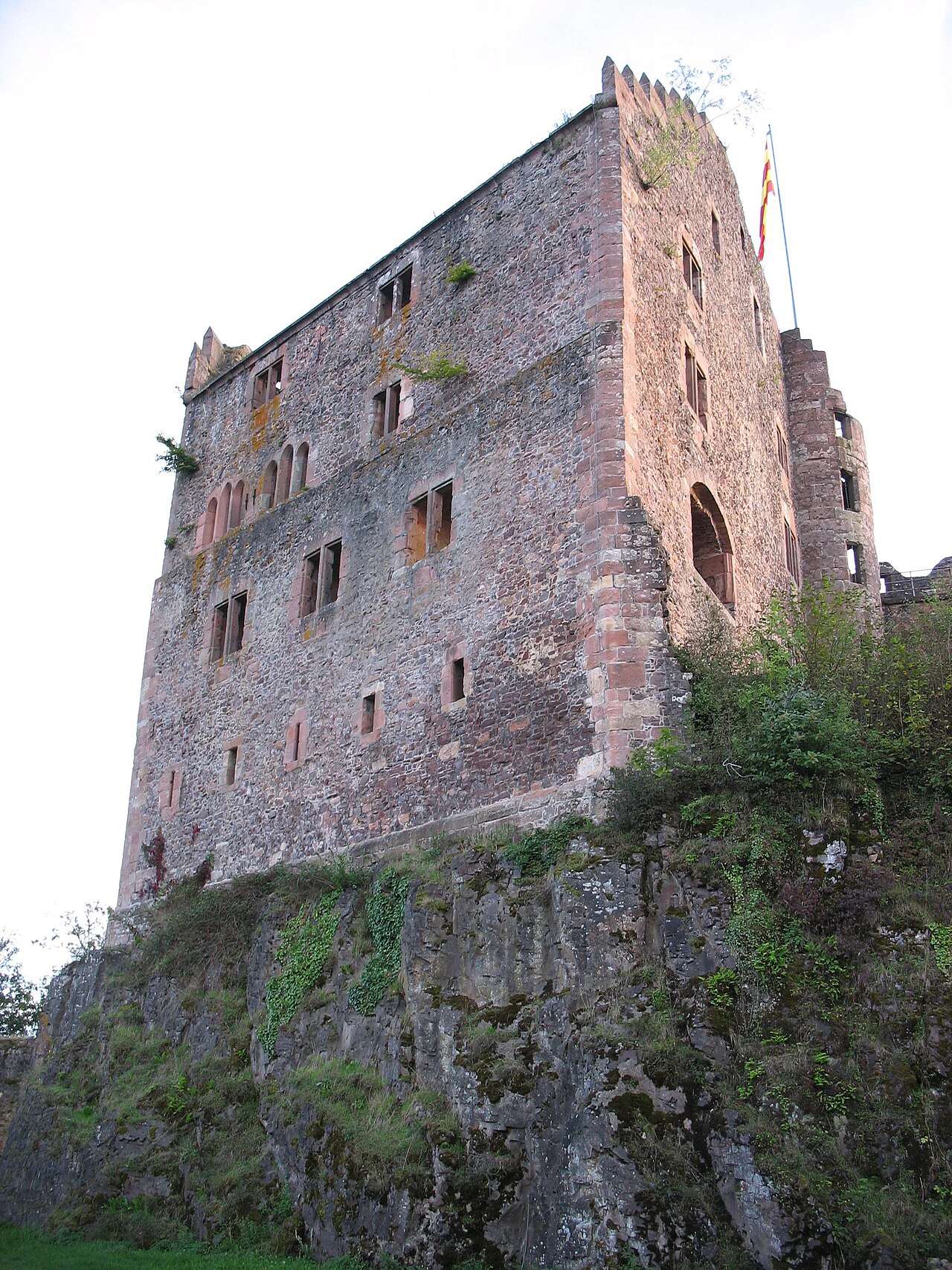
The ruins of Lützelhardt Castle crown the summit of the mountain sharing its name near Seelbach, Germany. As the oldest historic monument in the area, the castle offers a rare glimpse into high medieval fortification architecture, blending Romanesque and early Gothic styles. The site consists of three interconnected buildings, with the remains of the main building particularly notable for its preserved Romanesque windows that highlight the craftsmanship of the early 13th century.
Historical context and origins
Lützelhardt Castle was constructed between 1215 and 1240, a period marked by territorial conflicts among noble families in southwestern Germany. The castle was likely built by knights from the House of Zähringen, specifically those who took the name von Lützelhardt. Its strategic location atop the mountain was chosen to oversee and guard the vital pass over the Schönberg, an important route through the region.
The castle's role was primarily military and defensive, serving as a stronghold to control movement and assert dominance in the area. However, its active use was relatively brief, as the castle was destroyed by fire in the mid-13th century during a conflict with the rival House of Geroldseck.
Architectural features and layout
The castle complex originally comprised three main buildings linked together, forming a compact fortified site. The surviving structures display a transition between the Romanesque style, characterized by robust walls and rounded windows, and the emerging early Gothic style, which introduced pointed arches and more elaborate stonework.
The main building is the most prominent ruin, with its distinctive Romanesque windows still partially intact. These windows are notable for their rounded arches and thick stone mullions, typical of early 13th-century castle architecture. The castle's elevated position not only provided a defensive advantage but also allowed for clear surveillance of the surrounding landscape and the Schönberg pass below.
Defensive elements
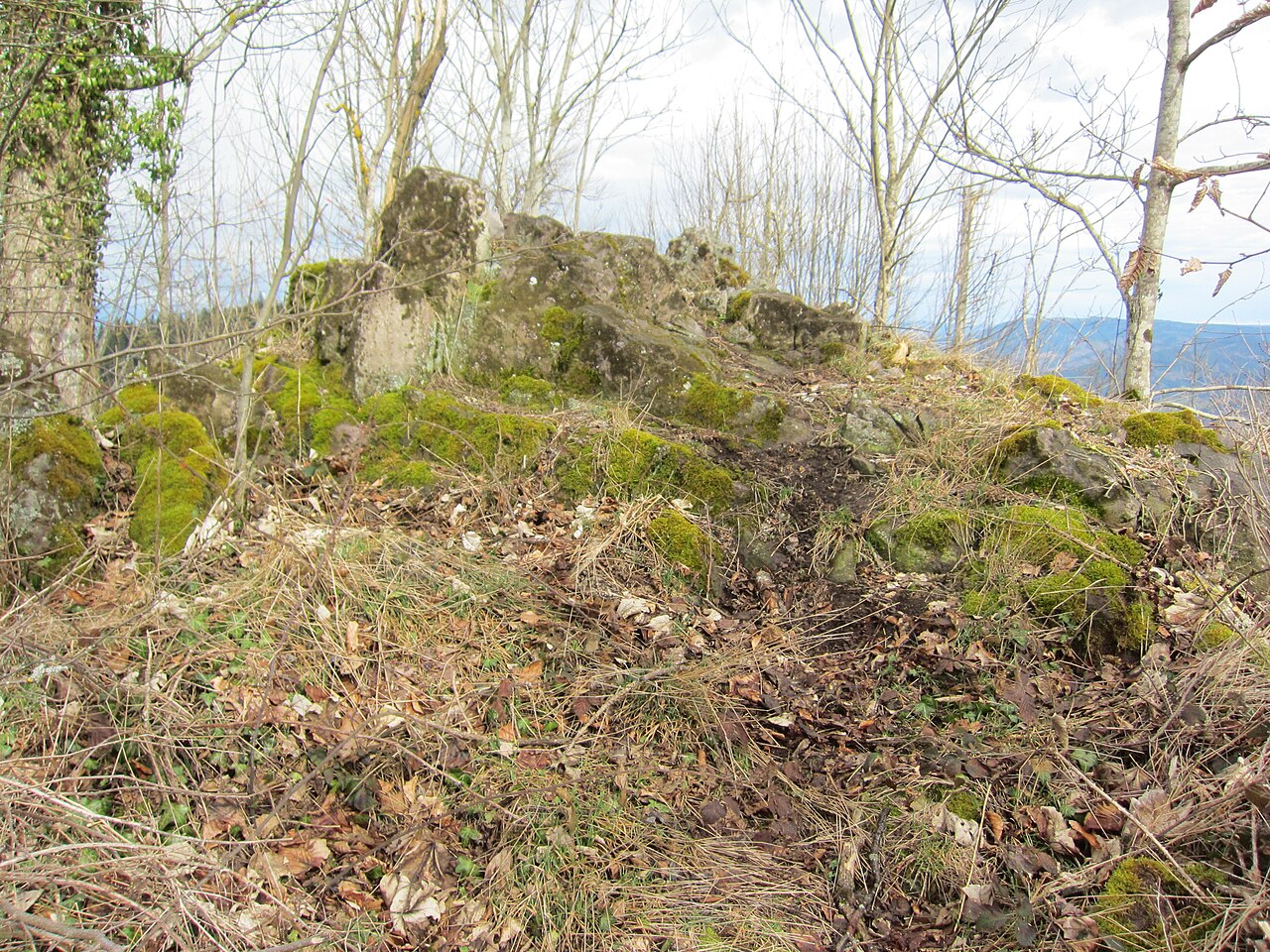
While much of the castle's defensive works have not survived intact, the location itself served as a natural fortification. The steep slopes of the mountain acted as a deterrent against attackers. The castle likely had basic fortifications such as curtain walls and possibly a gatehouse, though detailed records or remains of these features are limited.
The legend of lützelhardt and geroldseck rivalry
A local legend recounts the dramatic events leading to the castle's destruction. According to the story, the head of the House of Lützelhardt captured Baron Walter von Geroldseck and subjected him to a harsh ordeal, driving him through the forest while shackled. Von Geroldseck, believing himself far from home, was imprisoned in a dungeon within the castle.
After some time, the baron heard the faint sound of his own castle's horn, realizing he was closer to home than he thought. With the help of a bribed watchman named Rublin, he escaped captivity. Following a period of recovery, Baron Walter sought revenge, ultimately leading to the capture and burning of Lützelhardt Castle in 1235 by the Geroldseck forces.
Modern preservation and public access
Since 1990, the Seelbach branch of the Schwarzwaldverein (Black Forest Association) has taken responsibility for the upkeep and preservation of the castle ruins. Their efforts include maintaining the site for visitors and ensuring the ruins remain accessible and safe.
Today, the Lützelhardt Castle ruins are open year-round and can be visited free of charge. The site attracts history enthusiasts, hikers, and those interested in medieval architecture. Despite its ruined state, the castle offers a tangible connection to the region's medieval past and the turbulent noble rivalries that shaped its history.
Cultural and historical significance
Lützelhardt Castle stands as a significant monument reflecting the high medieval period in southwestern Germany. Its blend of Romanesque and early Gothic architectural elements provides valuable insight into the transitional styles of castle construction during the early 13th century.
The castle's brief but eventful history, marked by noble conflicts and dramatic legends, adds to its cultural importance. It serves as a reminder of the strategic importance of mountain fortresses in medieval territorial control and the complex feudal relationships of the time.
Visitors to Lützelhardt can explore the ruins to appreciate the architectural remnants and imagine the historical events that unfolded on this commanding hilltop.
Frequently asked questions (FAQ)
- How do I get to Lützelhardt Castle ruins in Seelbach?
- Lützelhardt Castle ruins are located atop the mountain near Seelbach, Germany. Visitors can reach the site by hiking trails from Seelbach town center, with well-marked paths leading to the ruins.
- What architectural styles are visible at Lützelhardt Castle?
- The ruins display a blend of Romanesque and early Gothic architectural features, including rounded Romanesque windows and early pointed arches.
- When was Lützelhardt Castle built and destroyed?
- The castle was built between 1215 and 1240 and was destroyed by fire in 1235 during a conflict with the House of Geroldseck.
- Is there an entrance fee to visit the castle?
- No, visiting the Lützelhardt Castle ruins is free of charge throughout the year.
- Who manages the upkeep of the castle ruins?
- The Seelbach branch of the Schwarzwaldverein (Black Forest Association) has maintained the site since 1990, ensuring its preservation and accessibility.
Information
Ticket prices
Free
Current owner
Seelbach branch of the Schwarzwaldverein
Loading map...
Visitor reviews
No reviews yet. Been here? Write the first review and help other travelers!
Write the first reviewVisited this castle? Share your experience
Your review helps other travelers and adds first-hand knowledge to our encyclopedia.