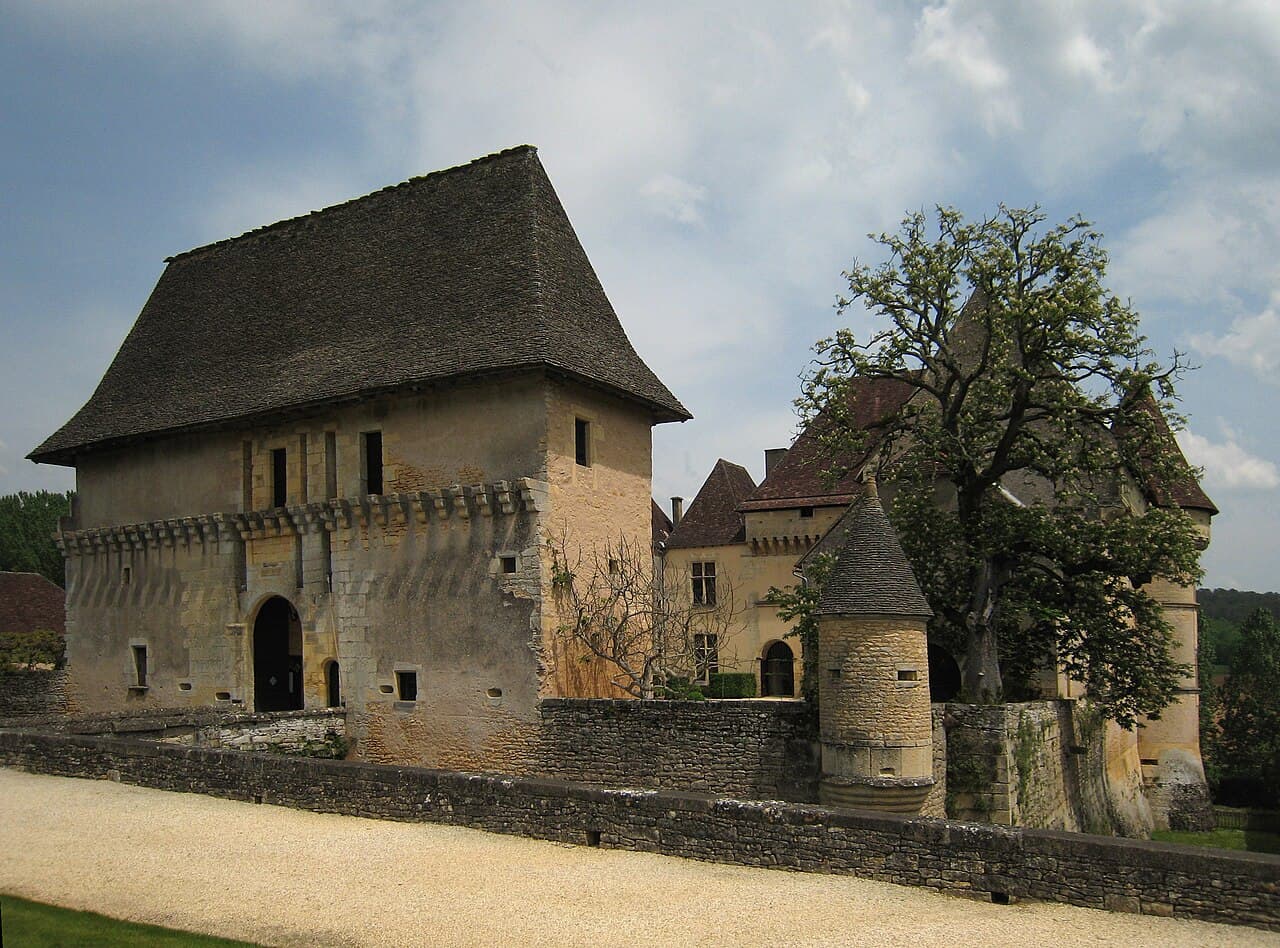
Losse Castle
Losse Castle, located in Thonac, Dordogne in the Nouvelle-Aquitaine region of southwestern France, stands as a remarkable example of a Renaissance hill castle that has retained much of its original character since the 16th century. Overlooking the scenic Vézère river, the castle is nestled in the historic area of Périgord, near the famous Lascaux prehistoric caves, making it a site of both architectural and cultural significance.
The castle and its gardens have been officially recognized as a French Historical House and Site since 1928, reflecting their importance in French heritage. Originally a medieval fortress, Losse Castle was transformed during the Renaissance period, particularly between the late 16th and early 17th centuries, when the Renaissance Hall was constructed within its walls. This hall exemplifies the fusion of military fortification and elegant Renaissance residential architecture, a characteristic feature of noble residences adapting to the evolving needs of defense and comfort.
Historical background and significance
The Losse family and feudal origins
The origins of Losse Castle trace back to the 11th century when the Losse family, originally from Flanders, established their stronghold on the right bank of the Vézère river. As part of the feudal hierarchy, the family initially held allegiance to local lords before pledging loyalty to the King of France. This transition marked their integration into the broader royal domain and influenced the castle's development over the centuries.
Jean II Marquis de Losse and Renaissance transformation
The most significant phase in the castle's history occurred in the late 16th century under Jean II Marquis de Losse. A distinguished soldier and courtier, Jean II served as a page to François I, tutor to Henri IV, and was closely associated with the royal court during the reign of Catherine de' Medici's sons. His experiences at court exposed him to the latest Renaissance architectural styles and cultural trends, which he sought to incorporate into his ancestral home.
In 1575-1576, Jean II commissioned the construction of the Renaissance Hall within the medieval fortress. This addition reflected Renaissance ideals of symmetry, proportion, and the use of classical motifs, while maintaining the castle's defensive capabilities. The period was marked by the French Wars of Religion, and Jean II's military expertise led to enhancements in the castle's fortifications, including adaptations for firearms such as muskets and cannons. These defensive improvements are evident in the castle's curtain walls and the fortified barbican, which features specialized openings for gunfire.
Architectural features and layout
Fortifications and access
Losse Castle is classified as a hill castle, strategically positioned to oversee the Vézère river valley. Its defensive structures include curtain walls surrounded by a deep moat, which historically provided protection against invaders. The castle's sole entrance is accessed via a bridge over the moat, leading to a fortified gatehouse. This gatehouse is notable for being one of the largest of its kind in France, showcasing robust defensive architecture typical of the Renaissance period.
Renaissance hall and interior
The Renaissance Hall built in 1576 is the centerpiece of the castle's residential section. Constructed from the characteristic golden Périgord limestone, the hall features finely carved façades that exemplify Renaissance artistry. Inside, the rooms are adorned with period furnishings and sculpted mantelpieces, reflecting the refined lifestyle of Jean II Marquis de Losse. The hall's grand staircase, embellished with stone ornamentation, leads visitors through the various chambers, which retain much of their original decorative elements.
Terrace and river views
On the riverside, the castle boasts a grand terrace perched on the cliff edge, offering commanding views of the Vézère valley. This terrace not only provided aesthetic pleasure but also strategic surveillance over the surrounding landscape. Adjacent to the terrace, a 16th-century balcony overlooks the river, enhancing the connection between the castle and its natural environment.
Gardens and landscape design
17th-century hornbeam gardens
The castle's gardens were designed in the 17th century and include the distinctive hornbeam green chambers. These garden rooms are formed by meticulously pruned hornbeam hedges, creating labyrinthine walkways and intimate outdoor spaces. The garden windows open onto views of the castle and its flower beds, integrating the natural and architectural elements harmoniously.
Balcony and river outlook
At the garden's edge near the river, the historic balcony provides visitors with panoramic views downstream along the Vézère. This feature emphasizes the castle's relationship with the river, which was historically vital for transportation, defense, and sustenance.
Legacy and cultural importance
Losse Castle remains largely unchanged since the 16th century, preserving its Renaissance character and military heritage. Its status as a listed Historical Monument since 1928 underscores its cultural and architectural significance. The castle serves as a tangible link to the Renaissance era in France, illustrating the period's blend of fortified military architecture and refined noble living.
The motto of Jean II Marquis de Losse, engraved over the castle entrance—"Man does as he may, Fortune (fate) as she will"—reflects the philosophical outlook of its most famous resident and adds a personal historical dimension to the site.
Today, Losse Castle attracts visitors interested in French history, Renaissance architecture, and the picturesque landscapes of the Dordogne region. Its well-preserved state, combined with its rich historical narrative, makes it a significant destination for cultural tourism.
Frequently asked questions (FAQ)
- What are the opening hours for Losse Castle?
- Losse Castle is open to visitors from April to October, typically from 10 AM to 6 PM. During the peak summer months, the castle may extend its hours to accommodate more visitors. It's advisable to check the official website for any seasonal changes in hours.
- How do I get to Losse Castle?
- Losse Castle is located in Thonac, France, and is easily accessible by car or public transport. The nearest major city is Sarlat-la-Canéda, from where you can take a bus or drive for approximately 20 minutes to reach the castle.
- What is the historical significance of Losse Castle?
- Losse Castle, built in the late 16th century, is a prime example of Renaissance architecture in the Dordogne region. It played a crucial role in the region's history, reflecting the political and social changes of the time, and has been beautifully preserved to showcase its historical importance.
- Can I take guided tours of the castle?
- Yes, guided tours are available at Losse Castle, providing visitors with in-depth information about its history and architecture. These tours are typically conducted in both English and French, and advance booking is recommended during peak tourist season.
- Is there an entrance fee to visit Losse Castle?
- Yes, there is an entrance fee to visit Losse Castle, which helps maintain the site and its grounds. Ticket prices may vary depending on the season and any special events, so it's best to check the official website for the latest pricing information.
- When is the best time to visit Losse Castle?
- The best time to visit Losse Castle is during the spring and early fall when the weather is pleasant, and the gardens are in full bloom. Additionally, visiting during these times can help you avoid the large summer crowds, allowing for a more enjoyable experience.
- Is Losse Castle accessible for visitors with mobility issues?
- Losse Castle strives to be accessible to all visitors, but due to its historical architecture, some areas may be challenging for those with mobility issues. It's recommended to inquire about accessibility options when planning your visit, as staff can provide assistance where possible.
- What nearby attractions should I consider visiting?
- In addition to Losse Castle, the beautiful village of Thonac and the stunning Vézère Valley are nearby attractions worth exploring. The region is rich in prehistoric sites, including the famous Lascaux Caves, which offer a glimpse into ancient human history.
Photo gallery

Information
Website
Visit websiteSources & official resources
Verify the information above using these authoritative references.
Loading map...
Visitor reviews
No reviews yet. Been here? Write the first review and help other travelers!
Write the first reviewVisited this castle? Share your experience
Your review helps other travelers and adds first-hand knowledge to our encyclopedia.



