Longueville Castle
Longueville Castle, also known locally as Château de Longueville or Château Gauthier Giffard, is a historic medieval fortress located in the village of Longueville-sur-Scie in the Seine-Maritime department of Normandy, France. The castle occupies a site of strategic importance with origins dating back to a Roman castrum, highlighting its long-standing military significance.
The earliest fortifications at Longueville were wooden structures built during the Carolingian period in the 9th century. These timber defenses were typical of early medieval fortifications designed for rapid construction and immediate defense. Towards the end of the 11th century, the wooden castle was replaced by a more durable stone fortress commissioned by Walter Giffard (known in French as Gauthier II Giffard), the 1st Earl of Buckingham. This stone castle became the seat of the newly created County of Longueville, marking its rise as a significant feudal stronghold in the region.
Medieval origins and architectural development
The transition from wood to stone at Longueville Castle reflects broader trends in medieval castle construction during the High Medieval period. The stone castle featured defensive walls, towers, and a keep, designed to withstand sieges and assert control over the surrounding territory. While specific architectural details of the original stone castle are limited, typical Norman features such as thick curtain walls, battlements, and a fortified gatehouse would have been present.
Noble ownership and political significance
Throughout its history, Longueville Castle was associated with prominent noble families. In the 14th century, the castle was under the control of the Counts of Evreux, a title that was also held by several Spanish kings during that era. This connection brought the castle into the complex political and military conflicts of the Hundred Years' War. In 1356, the castle was besieged during the ongoing hostilities between England and France.
By 1364, Longueville Castle returned to French control and was granted by Charles V of France to Bertrand du Guesclin, a renowned Breton knight who later became the Constable of France. This transfer underscores the castle's strategic importance in the defense of the French crown during a turbulent period.
Conflicts and changes in the late medieval period
The 15th century saw Longueville Castle change hands multiple times between English and French forces amid the ongoing conflicts of the Hundred Years' War. Both sides undertook modifications and repairs to strengthen the castle's defenses. Ultimately, the fortress remained under French control, stabilizing its position in the region.
In 1505, the County of Longueville was elevated to a duchy, reflecting the increasing prestige of its ruling family. The castle itself continued to serve as a noble residence and administrative center.
Early modern period and decline
During the 16th century, Longueville Castle hosted notable visitors, including Henry IV of France in 1589. However, the castle's fortunes declined in the following century. The last Duke of Longueville died in the 17th century, leading to the dissolution of the duchy. Subsequently, the castle came under the management of a bailiff rather than a noble lord.
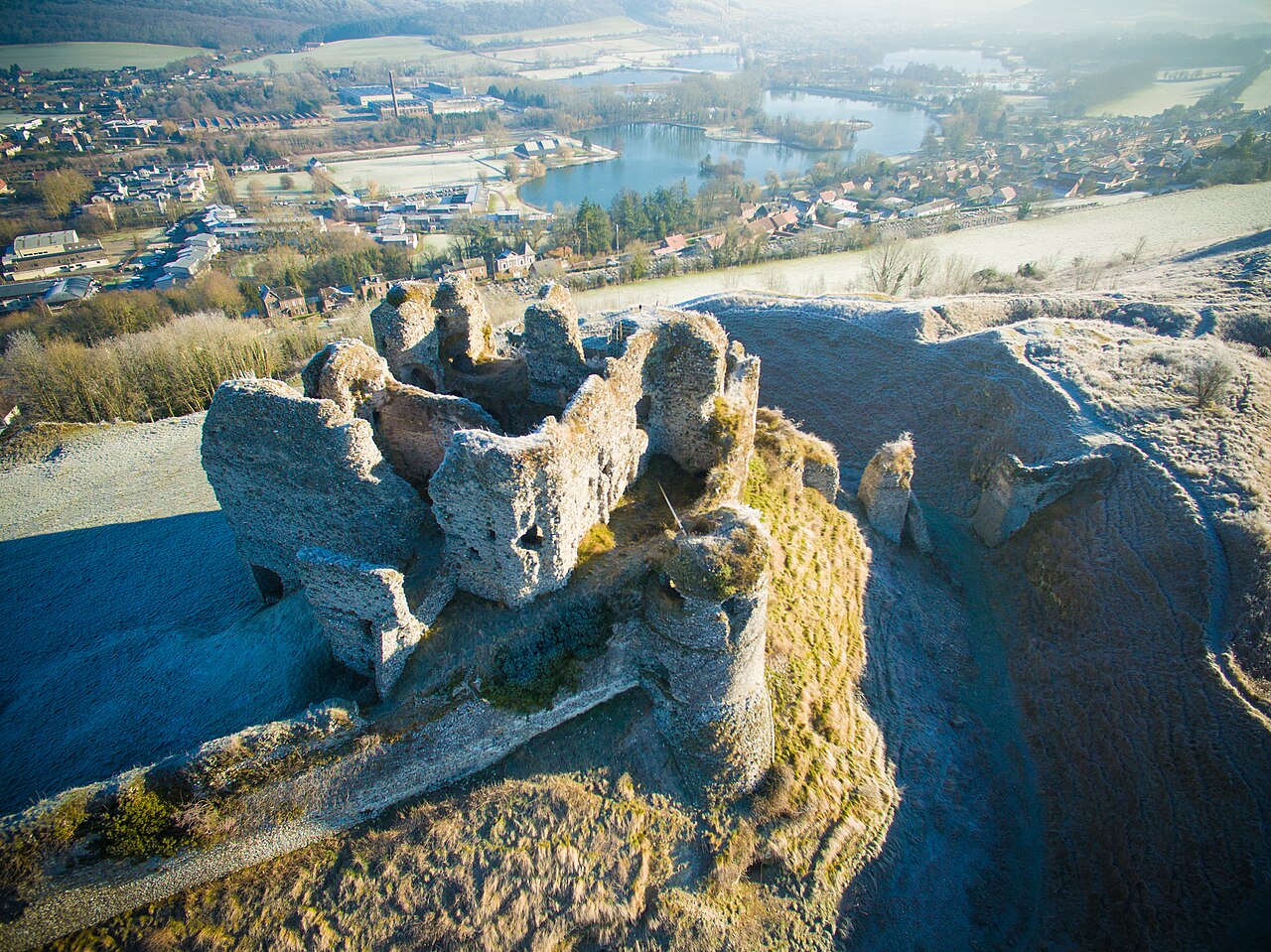
Without a resident noble family, the castle was gradually dismantled and repurposed as a stone quarry. This dismantling accelerated its decay, and over time Longueville Castle fell into ruin. Despite this, the remains still convey the outline of its medieval grandeur.
Current state and visitor experience
Today, the ruins of Longueville Castle are accessible to the public without charge, offering visitors a glimpse into Normandy's medieval past. While the site is not among the most spectacular castle ruins in France, it holds historical interest due to its layered history from Roman times through the Middle Ages and into the early modern period.
Visitors can explore the remnants of the castle's walls and foundations, appreciating the strategic location overlooking the surrounding landscape. The site provides insight into the evolution of medieval fortifications and the shifting political landscape of northern France.
Frequently asked questions (FAQ)
- How do I get to Longueville Castle?
- Longueville Castle is located in Longueville-sur-Scie, Normandy, France, just off the D-149 road. It is accessible by car and local roads connecting to nearby towns.
- What is the historical significance of Longueville Castle?
- Longueville Castle dates back to the 9th century and was a key medieval fortress in Normandy. It served as the seat of the County of Longueville and was involved in conflicts during the Hundred Years' War.
- Can I visit Longueville Castle ruins freely?
- Yes, the ruins of Longueville Castle are open to the public and can be visited free of charge. Visitors can explore the remains at their own pace.
- When was Longueville Castle built?
- The original wooden fortification dates back to the 9th century, with the stone castle constructed towards the end of the 11th century by Walter Giffard.
- What remains of Longueville Castle today?
- Today, visitors can see the ruins of the stone walls and foundations. Although not spectacular, the ruins provide a tangible connection to the castle's medieval past.
Information
Address
Off the D-149 road, Longueville-sur-Scie, Seine-Maritime, Normandy, France
Loading map...
Visitor reviews
No reviews yet. Been here? Write the first review and help other travelers!
Write the first reviewVisited this castle? Share your experience
Your review helps other travelers and adds first-hand knowledge to our encyclopedia.