Château de Miromesnil
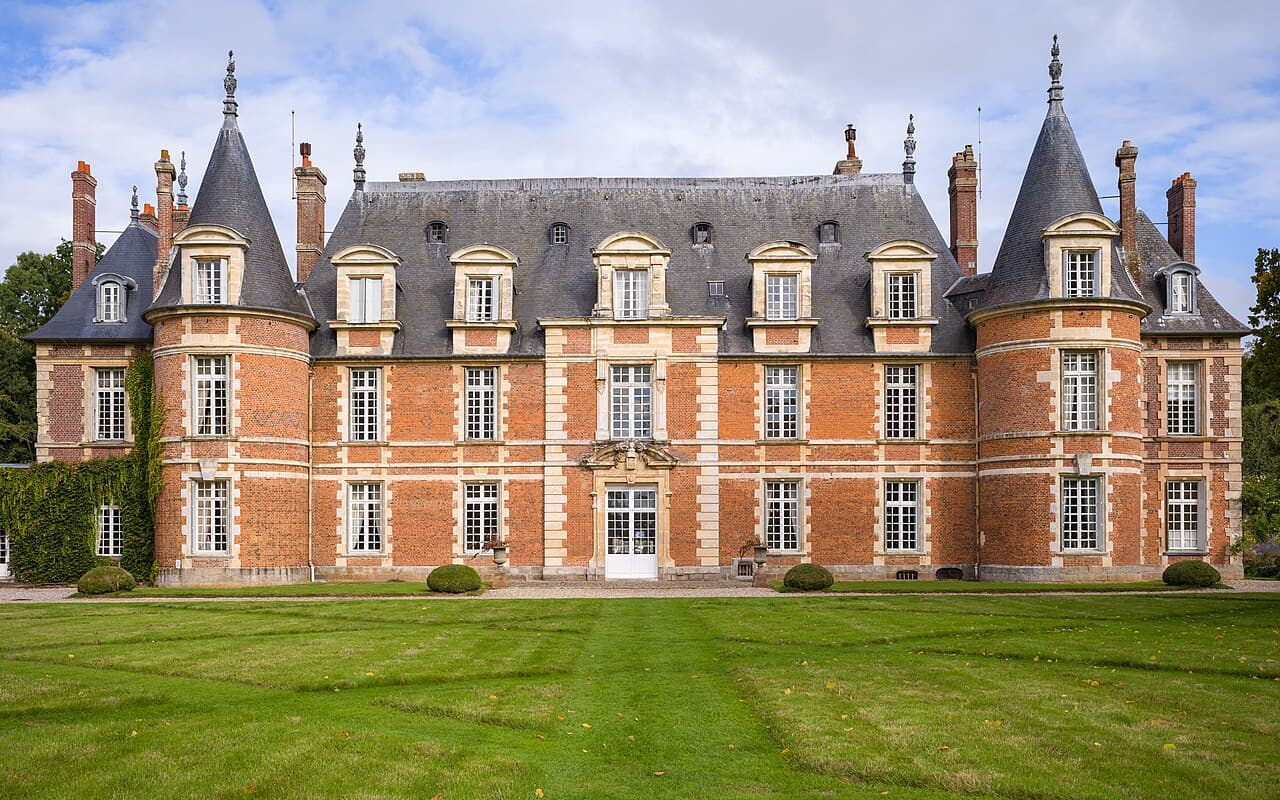
Château de Miromesnil, located in Tourville-sur-Arques, France, is a remarkable example of a Renaissance hill castle that stands on the historic site of an earlier fortified castle destroyed during the Battle of Arques. Constructed in 1590, the castle reflects over four centuries of architectural evolution and aristocratic life, embodying the transition from the late medieval fortifications to the refined aesthetics of Renaissance France.
Architectural design and stylistic features
The castle’s architecture is distinguished by its contrasting facades that illustrate the stylistic shifts of its era. The south facade exhibits the Henry IV style characterized by simple, elegant lines and restrained decoration, emphasizing symmetry and classical proportions. In contrast, the north facade is more monumental and ornate, reflecting the influence of Louis XIII’s reign with decorative richness that includes intricate stonework and elaborate window frames.
The castle’s layout includes traditional Renaissance elements such as towers, battlements, and a well-planned courtyard that integrates both defensive and residential functions. Inside, the castle preserves original wooden paneling dating from the 17th and 18th centuries, which adds warmth and historical authenticity to the interiors.
Interior furnishings and historical inhabitants
The furnishings within Château de Miromesnil provide a vivid glimpse into aristocratic life during the 18th century. The collection includes period sofas, chests of drawers, and wardrobes that have been carefully preserved to reflect the lifestyle and tastes of the castle’s former residents. One of the castle’s towers houses a small lounge redecorated in the 19th-century style to commemorate the presence of the Maupassant family, who lived there between 1849 and 1853. This room offers a unique insight into the cultural history of the castle and its connection to the famous French writer Guy de Maupassant.
Saint Anthony chapel: a blend of austerity and richness
Within the castle park stands the Saint Anthony chapel, constructed between the 15th and 16th centuries. The chapel’s exterior is notably austere, with a simple arch above the door serving as its sole decorative feature. This sobriety sharply contrasts with the richly adorned interior, which includes wooden panels and stucco ornaments that exemplify Renaissance craftsmanship.
Visitors entering the chapel are greeted by four 16th-century painted stone statues that watch over the sanctuary. The stained glass windows from the same period depict a central image of the Blamed Christ flanked by portraits of the castle’s historical landlords. In addition, three modern stained glass windows created in 1964 by Guy De Vogüé offer an abstract visual interpretation of the Christ Passion, blending contemporary art with historical reverence.
The chapel also features an oak altar and a wrought iron fence crafted by the local blacksmith known as Le Chien in the 17th century. Historically, the chapel served the monks from the nearby Fécamp Abbey until the French Revolution, marking its religious and cultural significance in the region.
Historical significance and preservation
Château de Miromesnil has witnessed numerous changes in ownership and function over the centuries, yet it has remarkably retained many of its original decorative elements and architectural integrity. The castle’s preservation of wooden paneling and period furniture offers an authentic window into the Renaissance and post-Renaissance aristocratic lifestyle in Normandy.
Today, the castle operates as a hotel surrounded by beautifully maintained gardens, allowing visitors to experience its historical ambiance firsthand. Its status as a well-preserved Renaissance hill castle makes it a valuable cultural landmark and a destination for those interested in French history, architecture, and literature.
Visiting Château de Miromesnil
Visitors to Château de Miromesnil can explore the richly decorated interiors, including the historic lounge and the Saint Anthony chapel, while enjoying the tranquil gardens that surround the estate. The castle’s combination of architectural styles, historical furnishings, and artistic heritage provides a comprehensive experience of French Renaissance culture and its evolution through the centuries.
Frequently asked questions (FAQ)
- When was Château de Miromesnil built?
- Château de Miromesnil was built in 1590 on the remains of an older fortified castle destroyed during the Battle of Arques.
- What architectural styles are represented at Château de Miromesnil?
- The castle features a mix of styles, including the Henry IV style on the south facade and the more decorative Louis XIII style on the north facade, reflecting Renaissance influences.
- Can visitors see the original furnishings inside the castle?
- Yes, the castle retains wooden paneling and furniture from the 17th and 18th centuries, showcasing the lifestyle of its historical inhabitants.
- What is special about the Saint Anthony chapel at Château de Miromesnil?
- The chapel, built between the 15th and 16th centuries, has a sober exterior but a richly decorated interior with 16th-century statues, stained glass, and wooden panels.
- Is Château de Miromesnil open to the public?
- Today, the castle functions as a hotel and is surrounded by beautiful gardens, allowing visitors to experience its historical ambiance.
Photo gallery

Information
Website
Visit websiteSources & official resources
Verify the information above using these authoritative references.
Loading map...
Visitor reviews
No reviews yet. Been here? Write the first review and help other travelers!
Write the first reviewVisited this castle? Share your experience
Your review helps other travelers and adds first-hand knowledge to our encyclopedia.