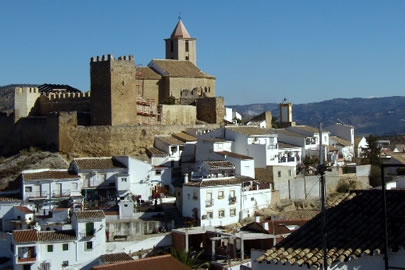
Loja Castle is a significant historical fortress located in Loja, Spain, renowned for its extensive Islamic heritage and strategic position in the region of Andalusia. The castle is primarily known for its Alcazaba, a Moorish fortress dating back to the 9th century AD, constructed on a site that likely hosted Roman remains before the Islamic period.
The origins and historical context of Loja Castle
The castle's origins are deeply rooted in the Early Medieval period, a time when the Iberian Peninsula was under the control of various Muslim dynasties following the Umayyad conquest. The 9th century construction of Loja Castle coincides with the establishment of the Emirate of Córdoba, a period marked by significant military and architectural developments to secure territorial control.
The fortress was strategically positioned to oversee and protect the surrounding territory, including vital trade routes and agricultural lands. Its location on a hilltop provided commanding views of the landscape, an essential feature for defense and surveillance.
Architectural features of the alcazaba
The Alcazaba of Loja is characterized by robust walls and towers that have largely survived through the centuries. The fortress walls are constructed with traditional masonry techniques typical of Moorish military architecture, utilizing stone and mortar to create thick defensive barriers.
The towers, which punctuate the curtain walls at intervals, served as lookout points and defensive strongholds. Their design reflects the functional requirements of the period, incorporating features such as narrow windows for archers and crenellations for protection during combat.
While the castle's layout follows the typical alcazaba style, it also integrates adaptations to the local topography, with irregular walls conforming to the contours of the hill on which it stands. This integration enhanced its defensive capabilities by maximizing natural barriers.
Roman influences and archaeological significance
Before the construction of the Islamic fortress, the site likely hosted Roman structures, as suggested by archaeological findings in the area. This continuity of occupation highlights the strategic importance of the location across different historical periods.
Excavations have uncovered remnants that indicate the presence of Roman fortifications or settlements, although these remains are less visible compared to the dominant Moorish architecture. The layering of Roman and Islamic elements at Loja Castle provides valuable insights into the cultural and military evolution of the region.
Later history and preservation
Following the Reconquista, Loja Castle came under Christian control, which led to modifications and repairs adapting the fortress to new military technologies and administrative uses. Although some alterations occurred, the core Moorish structure remains largely intact, preserving the castle's original character.
Today, Loja Castle stands as a well-preserved example of Early Medieval Islamic military architecture in southern Spain. Its walls and towers continue to define the landscape of Loja, attracting visitors interested in history, architecture, and the legacy of Moorish Spain.
Visiting Loja Castle
The castle is accessible to the public and offers a glimpse into the medieval military heritage of Andalusia. Visitors can explore the fortress walls, towers, and the surrounding area, enjoying panoramic views of Loja and its environs.
Interpretive signage and guided tours provide context about the castle's history, architecture, and its role in the region's historical conflicts and cultural exchanges.
Architectural style and classification
Loja Castle is classified as a hill castle, reflecting its elevated position and defensive function. Its architectural style is predominantly Islamic Moorish, aligned with the Early Medieval period of construction.
Frequently asked questions (FAQ)
- What is the historical significance of Loja Castle?
- Loja Castle, built in the 11th century, played a crucial role during the Reconquista as a strategic fortification. It served as a defensive structure for the Kingdom of Granada and reflects the architectural styles of both Moorish and Christian influences.
- When was Loja Castle built?
- Loja Castle was constructed in the early 11th century, during the Islamic period in Spain. Its long history has seen various modifications and restorations, particularly after the Christian conquest in 1486.
- Can I visit Loja Castle year-round?
- Yes, Loja Castle is open to visitors throughout the year. However, it's advisable to check local schedules for any events or maintenance work that may affect accessibility.
- What are the opening hours for Loja Castle?
- Loja Castle typically opens daily from 10 AM to 6 PM, though hours may vary seasonally. It is recommended to verify the current opening times on the official website before planning your visit.
- Is it possible to access Loja Castle with mobility aids?
- Loja Castle has some accessibility features, but due to its historical nature, certain areas may pose challenges for visitors with mobility aids. It's best to contact the castle administration in advance to inquire about specific accessibility options.
- What is the best time to visit Loja Castle?
- The best time to visit Loja Castle is during the spring and fall when the weather is mild and pleasant. This is also when tourist crowds are smaller, allowing for a more enjoyable experience.
- How much do tickets cost for Loja Castle?
- Ticket prices for Loja Castle are generally affordable, with discounts available for students and seniors. It's wise to check the official site for the latest pricing information and any potential special offers.
- Are there any nearby attractions to visit after Loja Castle?
- Yes, after visiting Loja Castle, you can explore the charming town of Loja, with its beautiful plazas and historical buildings. Additionally, the nearby Sierra de Loja offers stunning natural landscapes perfect for hiking and outdoor activities.
Loading map...
Visitor reviews
No reviews yet. Been here? Write the first review and help other travelers!
Write the first reviewVisited this castle? Share your experience
Your review helps other travelers and adds first-hand knowledge to our encyclopedia.