Lockenhaus Castle
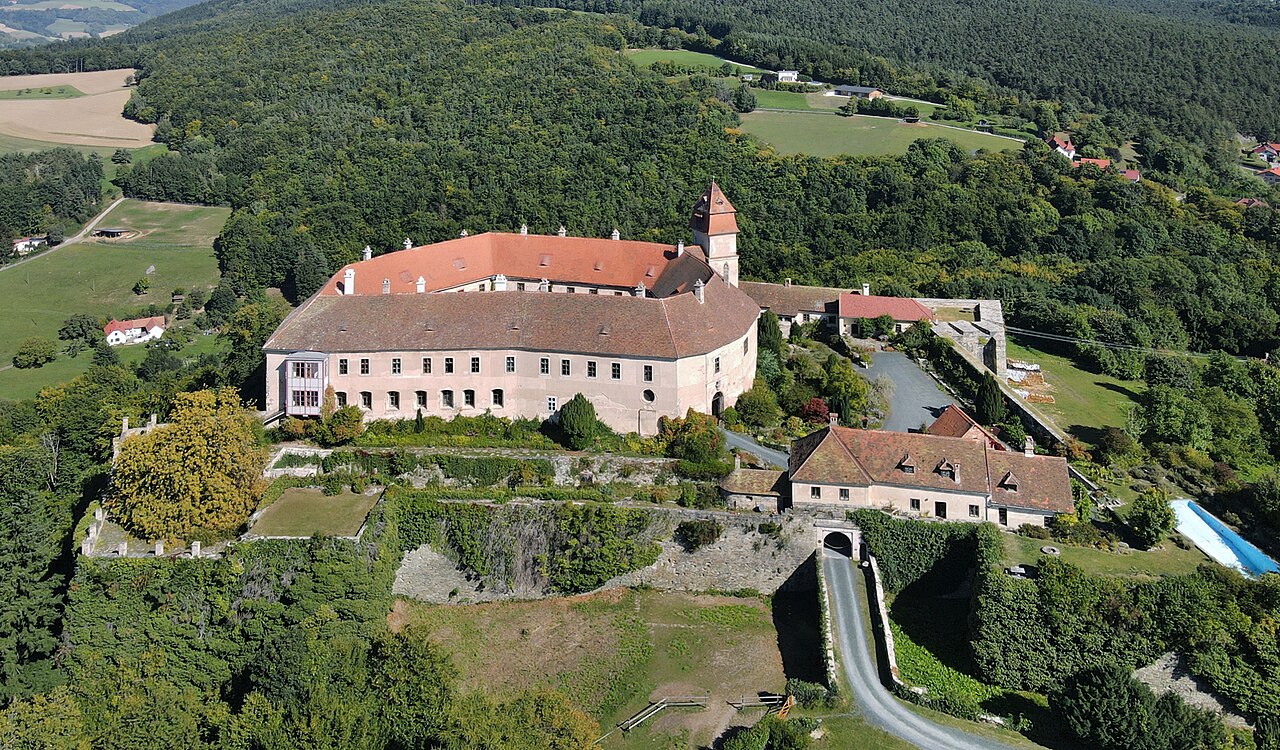
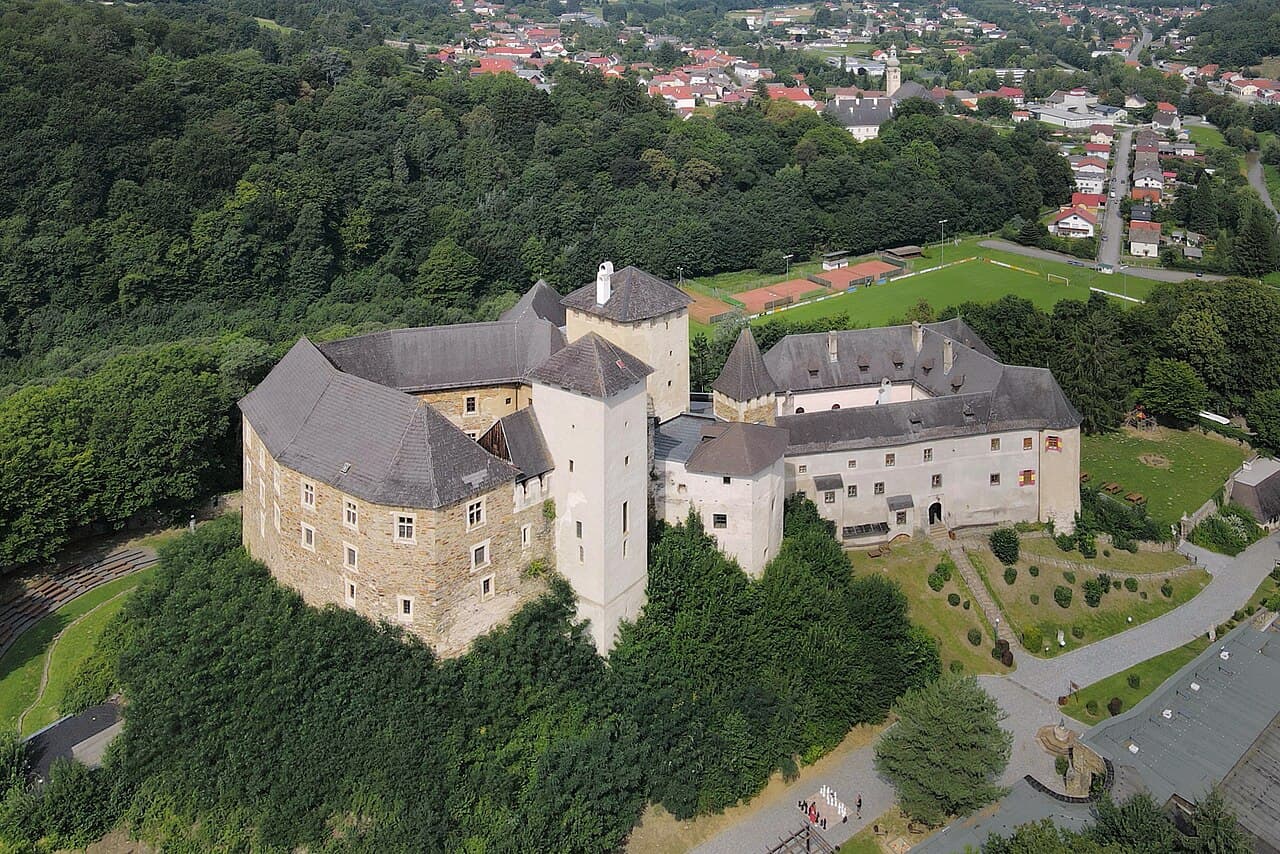
Lockenhaus Castle, known historically as "Leuca" or "Léka," stands as a remarkable example of medieval fortification in the Güns Valley near the Austrian-Hungarian border. Constructed around 1200, this hill castle combines Romanesque and Gothic architectural styles, reflecting the evolving defensive and residential needs of the region's nobility. Its strategic position in eastern Austria underscored its role in guarding against invasions, notably during the High Medieval period when threats like the Mongol incursions were prevalent.
Historical significance and early origins
The site of Lockenhaus Castle has a history of human settlement dating back to the Stone Age, with early Illyrian and Celtic peoples utilizing local materials for habitation. The castle first appears in written records in 1242, though its construction began earlier, around 1200. Initially part of the Roman province of Pannonia, the region saw diverse cultural influences, including Germanic and Slavic populations over subsequent centuries.
Lockenhaus was originally built to serve as a defensive stronghold against the Mongols, a significant threat in the 13th century. Ownership passed through several prominent noble families, including the Güssinger family (1266–c.1390), the Kanizsay family (1390–1535), and the Nádasdy family (1535–1676), before becoming part of the Esterházy estates until the late 20th century.
Architectural features and castle layout
Medieval defensive structures
The castle's design features robust outer walls reinforced by round towers, typical of early 13th-century fortifications. The complex is organized around two main courtyards, separated by heavy masonry walls. The lower courtyard historically housed a tavern serving the castle's inhabitants and visitors.
Interior spaces and unique chambers
Among the castle's most notable interiors is the Kultraum or "Cult Room," located on the first floor. This chamber is architecturally distinctive for its double apse, a feature more commonly found in ecclesiastical buildings. Light enters this room through a single hole in the vaulted ceiling, a design element linked to the Knights Templar, who are believed to have used this space for secret meetings.
Adjacent to the Kultraum is the Rittersaal or Great Hall, distinguished by its soaring Gothic rib-vaulted ceiling. This hall served as a communal dining and gathering area for the knights and castle residents. Local legend associates the hall with the execution of the last Knights Templar, marked by red algae near the entrance.
The castle also contains a chapel within one of its towers, notable for well-preserved medieval frescoes that provide insight into the religious life of its inhabitants.
Dungeon, torture chambers, and burial vaults
Lockenhaus Castle's dungeon is hewn directly from the natural rock by Turkish prisoners in the 16th century. Historical records recount the grim fate of sixteen Turkish captives who were burnt alive there in 1557. The dungeon complex includes a spiral stone staircase leading to a torture chamber equipped with restraint devices such as an Iron Maiden, manacles, crushers, pincers, and other instruments of punishment, reflecting the harsh penal practices of the era.
The Nádasdy family sepulchre is an extensive underground gallery with vaulted arches supported by columns, illuminated by a single circular opening that could be sealed for security. Another burial vault lies beneath the former lord's chambers, carved into solid rock and featuring short pillars with rounded arches. Fragments of wooden statues once adorned this chamber, indicating the artistic tastes of the noble family.
Above one burial chamber is a large hall with two slender arched windows, providing filtered light. Nearby, a well dug fifty fathoms deep into the rock supplied water to the fortress, showcasing advanced medieval engineering.
Notable historical events and ownership
The castle endured destruction in 1337 under the orders of Charles I of Hungary, but was rebuilt and fortified by subsequent owners. In 1492, the nearby settlement was granted market rights, marking its growing regional importance.
A notorious figure associated with Lockenhaus is Elizabeth Báthory, the "Blood Countess," who married Francis II Nádasdy. Allegations of her sadistic crimes have become part of the castle's dark lore, though historical analysis suggests political motives influenced her prosecution.
The castle suffered damage during the Turkish War of 1683 and further destruction during an 18th-century uprising. Restoration efforts began after World War II, with significant private conservation initiated by Professor Paul Anton Keller and his wife Margaret from 1968 onward, culminating in the establishment of a dedicated foundation in 1980.
Cultural significance and modern use
Lockenhaus Castle is recognized as one of the last authentic knights’ castles, retaining original features such as the medieval kitchen, sanctuary, knights’ hall, chapel, and priest’s lodging. It has been used as a filming location for medieval scenes in Rudolf Steiner’s mystery drama "The Soul’s Probation."
Today, the castle serves as a venue for weddings, cultural events, conferences, and seminars. It houses a museum with guided tours highlighting its extensive history and architectural features. The castle grounds include a birds of prey station and support a significant bat colony, with modern audiovisual and night vision equipment educating visitors about local wildlife.
Frequently asked questions (FAQ)
- What is the historical significance of Lockenhaus Castle?
- Lockenhaus Castle, dating back to the 13th century, is a remarkable example of medieval architecture in Austria. It has played a vital role in the region's history, serving as a fortress and later as a residence for various noble families.
- When was Lockenhaus Castle built?
- The construction of Lockenhaus Castle began in the early 1200s, with significant expansions and renovations occurring over the centuries. Its architectural style reflects the evolution of medieval fortifications and residential design.
- Can I visit Lockenhaus Castle?
- Yes, Lockenhaus Castle is open to visitors, allowing you to explore its rich history and stunning architecture. Guided tours are available to provide insights into the castle's past and its significance in the region.
- What are the opening hours for Lockenhaus Castle?
- Lockenhaus Castle typically opens from 10 AM to 5 PM during the tourist season, which runs from April to October. It's advisable to check the official website for any seasonal changes or special events that may affect visiting hours.
- Is it possible to access Lockenhaus Castle by public transport?
- Yes, Lockenhaus Castle is accessible by public transport, with regular bus services connecting it to nearby towns. Visitors can also enjoy scenic walks from local train stations, making it a pleasant destination for day trips.
- What is the best time to visit Lockenhaus Castle?
- The best time to visit Lockenhaus Castle is during the spring and autumn months when the weather is mild and the surrounding landscapes are particularly beautiful. Additionally, visiting during weekdays can help you avoid larger crowds.
- Are there any nearby attractions to Lockenhaus Castle?
- Yes, nearby attractions include the picturesque village of Lockenhaus, the scenic Pannonia region, and various hiking trails in the surrounding countryside. Visitors can also explore other historical sites and castles in the area.
- What are the ticket prices for Lockenhaus Castle?
- Ticket prices for Lockenhaus Castle are generally affordable, with discounts available for children, students, and seniors. It's recommended to check the official website for the most current pricing and any special offers.
Photo gallery

Information
Website
Visit websiteSources & official resources
Verify the information above using these authoritative references.
Loading map...
Visitor reviews
No reviews yet. Been here? Write the first review and help other travelers!
Write the first reviewVisited this castle? Share your experience
Your review helps other travelers and adds first-hand knowledge to our encyclopedia.