Loarre Castle
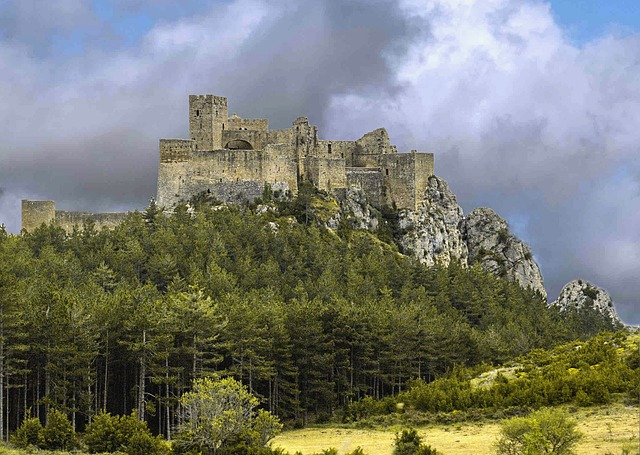
Loarre Castle is a remarkable example of Romanesque military architecture located near the village of Loarre in the province of Huesca, Spain. Perched on a rocky hill in the southern foothills of the Pyrenees, it is widely regarded as the oldest fortified castle in Spain, with origins dating back to the 11th century. The castle's strategic location provided commanding views over the surrounding Huesca valley, offering both defensive advantages and control over important routes in the region.
Historical background and construction
The earliest construction phase of Loarre Castle was initiated during the reign of King Sancho III of Navarre (Sancho el Mayor) in the early 11th century. The castle was built atop earlier Roman walls, as evidenced by excavations that uncovered Roman and Iberian coins, indicating the site's long history of occupation. An inscription above the castle entrance dating to 1096 marks a significant phase of construction, likely associated with the expansion and fortification efforts under King Sancho Ramírez of Aragon.
The castle's development reflects the consolidation of Christian power during the Reconquista period, as the Kingdom of Aragon expanded southward. Unlike many castles built for defense against sieges, Loarre Castle was constructed during a time of territorial growth, which explains why it was never besieged. Its imposing walls and towers served more as a symbol of power and control rather than for active military defense.
Architectural features and layout
The castle and its towers
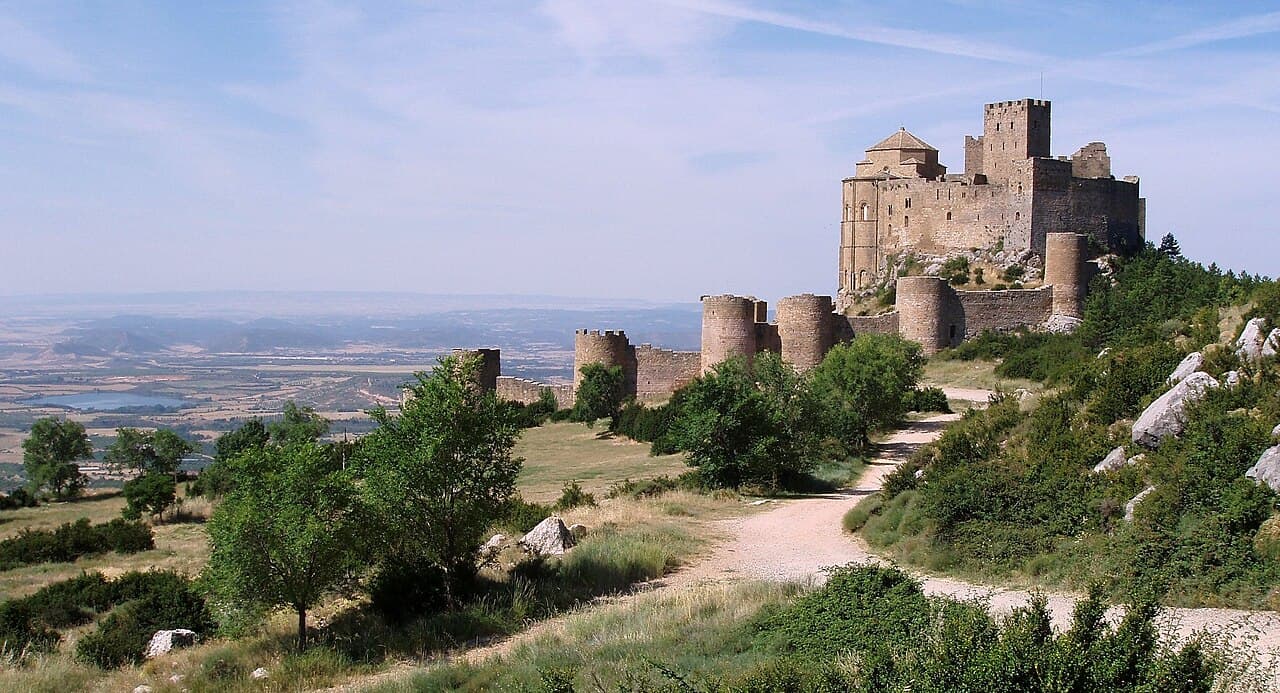
Loarre Castle is divided into two main parts: the original castle built under Sancho el Mayor and the adjacent Romanesque monastery founded by Sancho Ramírez in 1071. The castle section includes two prominent towers that dominate the hilltop, constructed primarily from local stone and designed for both lookout and defense.
The Romanesque monastery and church
The attached monastery is a significant architectural highlight, featuring a beautifully preserved Romanesque church with a crypt. This church is one of the earliest examples of Romanesque ecclesiastical architecture in Aragon, characterized by its semicircular arches, thick walls, and modest decorative elements that emphasize solidity and spiritual solemnity.
The walled enclosure and civil settlement
At the base of the hill lies a walled enclosure built in the 13th century, comprising ten semicircular towers and one square tower. This enclosure once contained a small civil settlement, serving as a protective barrier for the inhabitants. Today, only a watchtower remains as a testament to this medieval community that supported the castle.
Preservation and current condition
Loarre Castle is well preserved, retaining much of its original structure, including the towers, walls, and monastery buildings. Its preservation allows visitors to experience a comprehensive glimpse into high medieval fortification and Romanesque architecture in Spain. The castle is managed as a cultural heritage site and requires a small entrance fee for access, reflecting its status as a significant historical monument.
Visitor experience and significance
Visitors to Loarre Castle can enjoy panoramic views over the Huesca valley and the surrounding Pyrenean landscape. The winding road leading up to the castle is popular among motorcyclists and offers a scenic approach to this historic site. The castle's combination of military and religious architecture, along with its historical context as a frontier fortress during the Reconquista, makes it a compelling destination for those interested in medieval history and architecture.
As one of the few castles in Spain with such a high degree of preservation and accessibility, Loarre Castle provides valuable insights into the Romanesque style and the early medieval period of the Iberian Peninsula. Its role in the expansion of the Kingdom of Aragon and its architectural innovations contribute to its importance in Spanish cultural heritage.
Frequently asked questions (FAQ)
- When was Loarre Castle built and by whom?
- Loarre Castle was primarily built in the 11th century during the reign of King Sancho III of Navarre and expanded under King Sancho Ramírez of Aragon.
- What architectural style is Loarre Castle known for?
- Loarre Castle is renowned for its Romanesque architectural style, especially evident in its church and monastery buildings.
- Is Loarre Castle open to visitors and is there an entrance fee?
- Yes, Loarre Castle is open to visitors and requires a small entrance fee for access.
- What makes Loarre Castle historically significant?
- It is considered the oldest fortified castle in Spain and played a key role during the Reconquista as a symbol of Christian expansion in Aragon.
- Can visitors access the monastery within Loarre Castle?
- Yes, visitors can explore the Romanesque monastery and its well-preserved church and crypt within the castle complex.
Photo gallery

Information
Address
Near A-1206, Loarre, Huesca, Spain
Loading map...
Visitor reviews
No reviews yet. Been here? Write the first review and help other travelers!
Write the first reviewVisited this castle? Share your experience
Your review helps other travelers and adds first-hand knowledge to our encyclopedia.