Litschau Castle
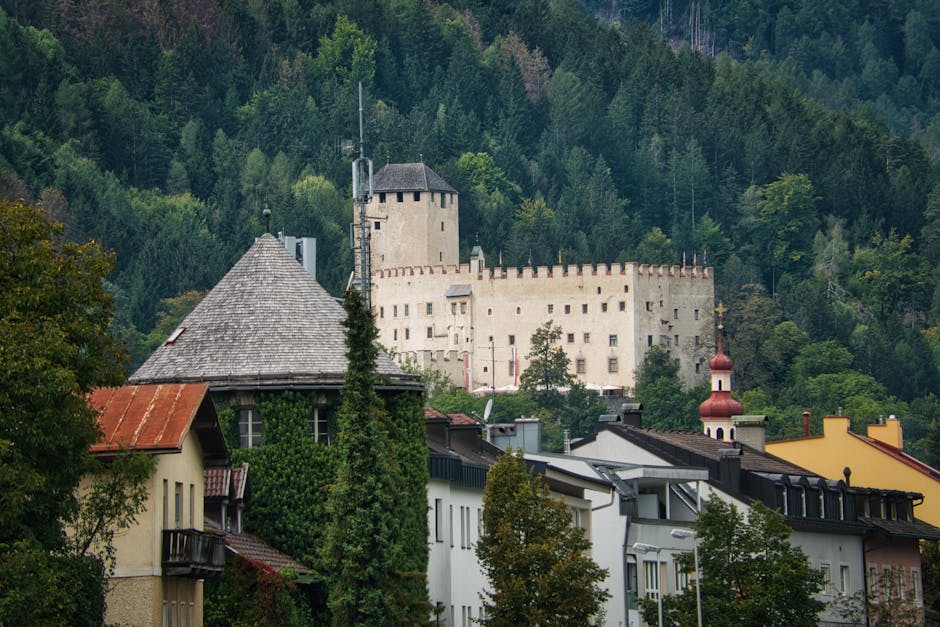
Litschau Castle, also known locally as Schloss Litschau, is a historic fortress situated in the town of Litschau, the northernmost town in the province of Lower Austria, Austria. Its location near the Czech border places it at a strategic point in Central Europe, which influenced its medieval military significance. The castle's origins trace back to the 13th century, making it a valuable example of High Medieval fortification architecture in the region.
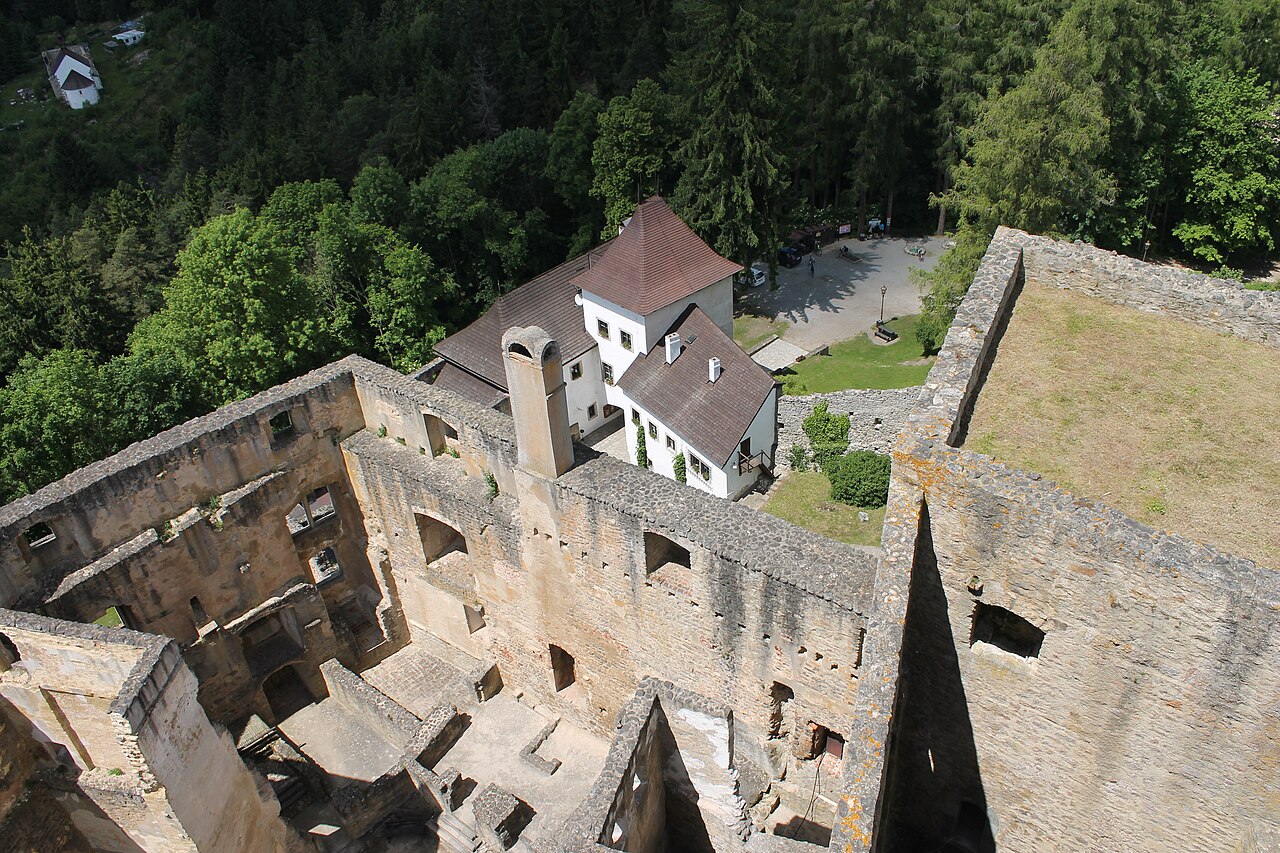
The castle features an irregular layout characterized by a curtain wall that once enclosed the complex, with surviving sections of circular towers that provided defensive vantage points. A notable architectural element is the circular keep, a tall fortified tower that served both as a last refuge and a lookout. This keep is among the oldest parts of the castle and dates from the initial construction phase in the 13th century.
Historical background and ownership
Litschau Castle was first documented in 1215, indicating its early importance in the region. It was originally held by the Kuenringer family, a prominent noble lineage known for their role in Austrian medieval politics and military affairs. Later ownership passed to the Puchheim family, another influential noble house during the late Middle Ages.
In 1431, the castle suffered significant damage during the Hussite Wars, when Hussite forces attacked many fortifications across the region. The damage inflicted on Litschau Castle reflects the turbulent political and religious conflicts of the 15th century in Central Europe.
Since 1763, the castle has been under the ownership of the Counts of Sellern-Anspang, who have maintained the property as a private residence. This continuous private ownership has helped preserve the castle's structure, though it remains inhabited and is not open to the public.
Architectural features and defensive elements
The castle's curtain walls form an irregular perimeter adapted to the natural terrain, a common feature in medieval hill castles designed to maximize defensive capabilities. The remnants of circular towers punctuate the walls, providing flanking fire and observation points over the surrounding landscape.
The moat surrounding parts of the castle served as an additional defensive barrier, deterring siege engines and infantry assaults. The moat, combined with the elevated position of the castle, enhanced its defensibility against attackers.
The circular keep stands as the castle's dominant vertical structure. Its thick stone walls and limited access points were designed to withstand prolonged sieges. The keep also functioned as the lord's residence and a symbol of feudal authority.
Legends and cultural significance
Litschau Castle is associated with several local legends that contribute to its cultural heritage. One popular tale recounts the bravery of the lord's wife during a siege by Swedish troops. According to the legend, she stood atop the keep and shot an arrow with such precision that she knocked a spoon from the hand of a Swedish general who was dining, demonstrating both her courage and skill.
These stories have been passed down through generations, enriching the castle's historical narrative and connecting it to the local community's identity. The castle also holds personal significance for some, including descendants of families from the town of Litschau.
Current status and accessibility
Today, Litschau Castle remains a private residence owned by the Counts of Sellern-Anspang. Because it is inhabited, the castle is not open for public tours or visitation. Its preservation as a living residence has helped maintain its structural integrity, though it limits direct access for historical tourism.
The castle's location in a small town near the Czech border makes it a point of interest for those studying medieval fortifications in Austria, though visitors must appreciate it from the outside. The surrounding town of Litschau offers additional historical and cultural attractions reflecting the region's heritage.
Architectural context and regional importance
Litschau Castle exemplifies the characteristics of a hill castle built during the High Medieval period. Its design reflects the military and residential needs of the Austrian nobility in the 13th century, combining defensive features like moats, curtain walls, and keeps with the requirements of a noble household.
Its survival through centuries of conflict and change illustrates the resilience of medieval architecture in this border region. The castle's proximity to the Czech border also highlights its role in historical border defense and regional power dynamics.
Frequently asked questions (FAQ)
- Can I visit Litschau Castle?
- Litschau Castle is private property and inhabited by its owners, so it is not open to the public for visits or tours.
- When was Litschau Castle first mentioned in historical records?
- The castle was first documented in 1215, marking its early significance in the region's medieval history.
- What architectural features define Litschau Castle?
- The castle is characterized by its irregular curtain walls, remnants of circular towers, a moat, and a prominent circular keep dating back to the 13th century.
- Who owned Litschau Castle historically?
- Historically, Litschau Castle was owned by the Kuenringer and Puchheim families before passing to the Counts of Sellern-Anspang in 1763.
- What is the legend associated with Litschau Castle?
- A local legend tells of the lord's wife shooting an arrow from the keep to knock a spoon from a Swedish general's hand during a siege, highlighting her bravery.
Information
Current owner
Counts of Sellern-Anspang
Address
Schlossweg 2, Austria
Loading map...
Visitor reviews
No reviews yet. Been here? Write the first review and help other travelers!
Write the first reviewVisited this castle? Share your experience
Your review helps other travelers and adds first-hand knowledge to our encyclopedia.