Listowel Castle
Listowel Castle stands as a remarkable example of Norman military architecture in County Kerry, Ireland. Founded in the 13th century by the influential FitzGerald family, this hill castle was strategically positioned on a raised bank overlooking the River Feale. Its location allowed control over vital river crossing routes, a key factor in its military significance during the medieval period.
The origins and early history of Listowel Castle
The castle's initial construction dates back to the early medieval period, reflecting the expanding influence of the Norman feudal lords in Ireland following their invasion in the late 12th century. The FitzGerald family, a powerful Norman dynasty, established the fortress to consolidate their control over the region. The original structure was typical of Norman fortifications, featuring robust stone walls and defensive towers designed to withstand assaults.
Reconstruction and role during the late medieval period
In the 15th century, significant rebuilding was undertaken by the FitzMaurice family, known as the Knights of Kerry. This reconstruction enhanced the castle's defensive capabilities and transformed it into a notable stronghold within the area. The castle's architecture from this period combines practical military features with elements of the Anglo-Norman style, characterized by thick curtain walls and imposing towers.
During the late 16th century, Listowel Castle played a pivotal role in the Desmond Rebellions, a series of armed uprisings against English rule led by the Geraldine rebels. The castle served as the final bastion for these rebels resisting the forces of Queen Elizabeth I. In a significant historical event, the castle endured a siege lasting 28 days before being captured on November 5, 1600, by Sir Charles Wilmot. Following the siege, Wilmot assumed command of the garrison and ordered the execution of the defenders, marking a decisive moment in the conflict.
Post-siege history and decline
After its capture, ownership of Listowel Castle passed to the Hare family, who were later ennobled as the Earls of Listowel. The FitzMaurice family lost possession, and the castle gradually ceased to function as a residence or military installation. Over the ensuing centuries, the fortress fell into a state of ruin, reflecting the changing political and military landscape of Ireland.
Following the loss of the castle, the Knights of Kerry constructed a new Norman-style castle at Woodford, located near the original site. This move signified a shift in the family's seat of power and architectural preferences during the early modern period.
Architectural features and surviving remains
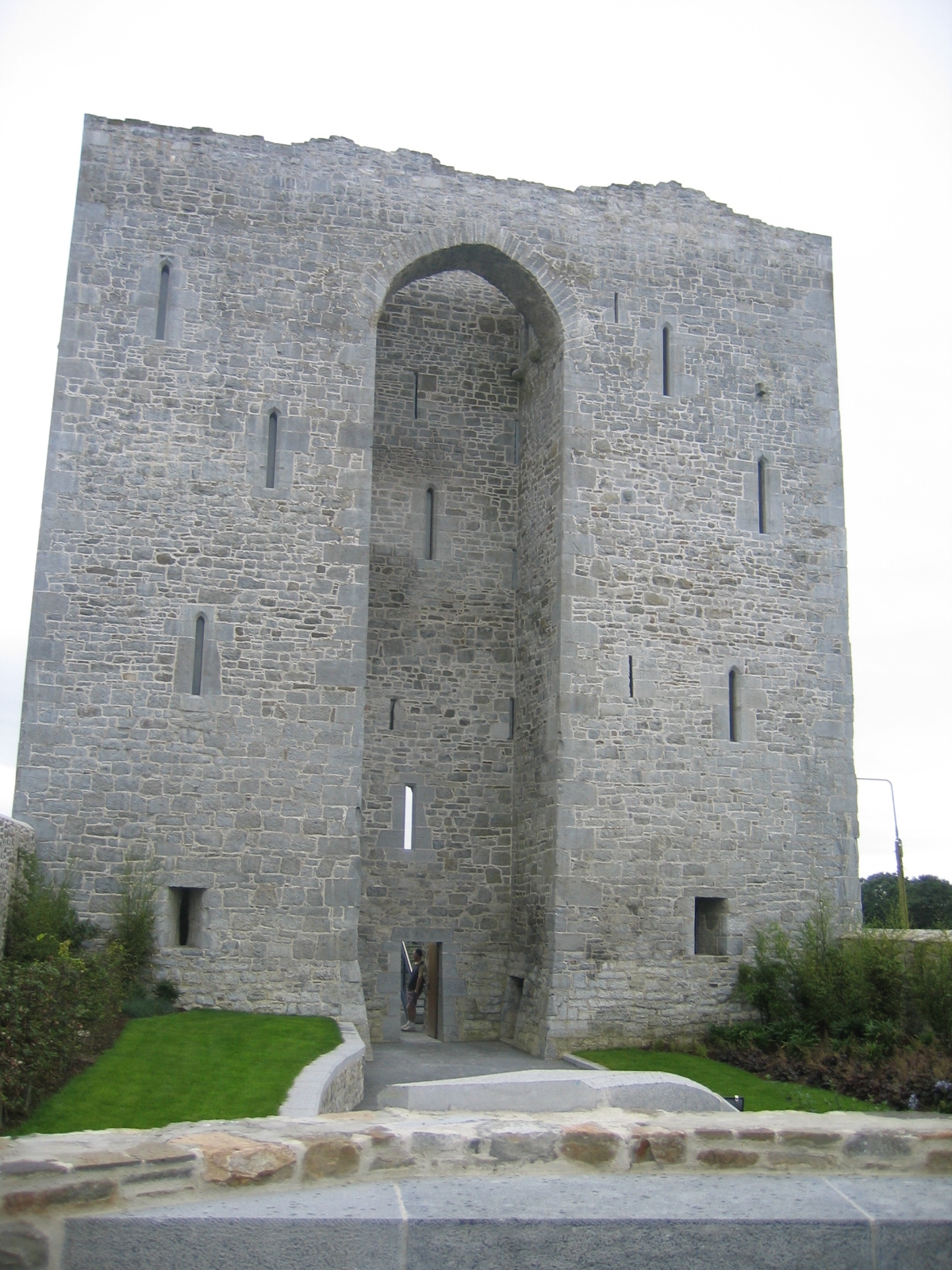
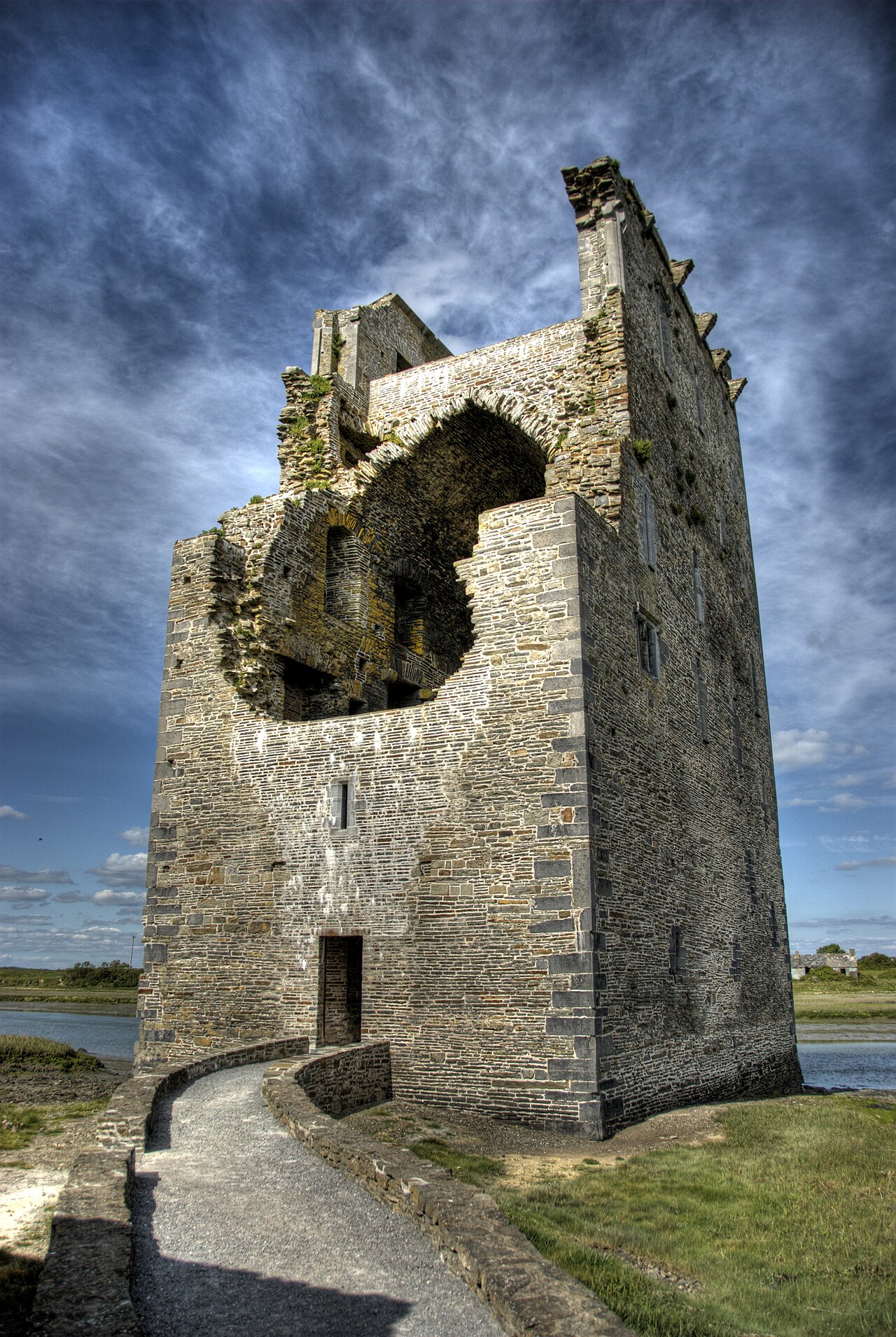
Today, the surviving ruins of Listowel Castle primarily consist of two of the original four towers, connected by a thick curtain wall that once formed the main defensive perimeter. The stonework exemplifies the Anglo-Norman architectural style, notable for its solid masonry designed to resist attacks. A distinctive architectural feature is a large, high arch beneath the battlements, an uncommon element in castles of this type, which adds to the fortress's unique character.
The castle's elevated position on a raised bank provided natural defensive advantages and commanding views of the surrounding landscape. This strategic siting was essential for controlling movement along the River Feale and nearby routes, critical during its active military use.
Preservation and modern significance
Efforts to preserve Listowel Castle began in earnest in the early 21st century, with involvement from the Irish Office of Public Works and skilled craftsmen dedicated to stabilizing and protecting the ruins. Restoration work has included cleaning the exposed stonework to reveal the original craftsmanship and repairing the upper portions of the walls, which had suffered from weathering over centuries.
To improve visitor access, an external staircase was added, designed to complement the castle's historical character while ensuring safety. Today, the castle ruins are officially designated as a national monument, symbolizing a significant chapter in Ireland's medieval heritage and Norman legacy.
Nearby historical and cultural sites
Close to the castle, the Seanchai Literary Centre occupies an 18th-century Georgian house, offering visitors insights into the castle's history and the broader cultural heritage of Listowel. This centre provides educational resources and hosts events that celebrate the region's rich literary and historical traditions.
Visiting Listowel Castle
Visitors to Listowel Castle can explore the atmospheric ruins and appreciate the architectural ingenuity of the Norman builders. The site offers a tangible connection to Ireland's turbulent medieval past and the legacy of the FitzGerald and FitzMaurice families. The castle's preservation ensures that future generations can continue to learn from and be inspired by this enduring symbol of Irish history.
Frequently asked questions (FAQ)
- How do I get to Listowel Castle?
- Listowel Castle is located in the heart of Listowel, United Kingdom. You can reach it easily by car, with parking available nearby, or by public transport, as there are bus services that connect to Listowel from major cities.
- What is the historical significance of Listowel Castle?
- Listowel Castle dates back to the 15th century and is a prime example of medieval architecture in Ireland. It played a crucial role in the local history, serving as a stronghold for the Fitzmaurice family and reflecting the turbulent political landscape of the time.
- When was Listowel Castle built?
- Listowel Castle was built in the 15th century, specifically around the year 1400. Its construction marked an important period in the development of fortified structures in Ireland.
- Can I take guided tours of Listowel Castle?
- Yes, guided tours are available at Listowel Castle, providing visitors with an in-depth look at its history and architecture. Tours are led by knowledgeable guides who share fascinating stories about the castle and its past.
- Why is Listowel Castle considered an important architectural site?
- Listowel Castle is considered significant due to its well-preserved medieval architecture and its representation of the defensive styles used during the 15th century. The castle's unique design features, including its imposing towers, make it a key example of its time.
- Is it possible to access all areas of Listowel Castle?
- While some areas of Listowel Castle are accessible to the public, certain sections may be restricted for preservation reasons. Visitors are encouraged to check with the staff for any limitations before their visit.
- What are the opening hours for Listowel Castle?
- Listowel Castle is open to visitors from 10 AM to 5 PM daily, with extended hours during the summer months. It's advisable to check the official website for any seasonal changes or special events that may affect opening times.
- What is the best time to visit Listowel Castle?
- The best time to visit Listowel Castle is during the spring and early autumn months when the weather is mild and pleasant. These seasons also tend to have fewer crowds, allowing for a more enjoyable experience.
- Are there any nearby attractions to Listowel Castle?
- Yes, nearby attractions include the Listowel Town Park and the Kerry Literary and Cultural Centre. Both sites offer additional insights into the region's rich history and culture, making them great complements to your visit to Listowel Castle.
- What are the ticket prices for Listowel Castle?
- Ticket prices for Listowel Castle are generally very affordable, with discounts available for students and seniors. It's best to check the official website for the most current pricing and any special promotions that may be available.
Information
Website
Visit websiteSources & official resources
Verify the information above using these authoritative references.
Loading map...
Visitor reviews
No reviews yet. Been here? Write the first review and help other travelers!
Write the first reviewVisited this castle? Share your experience
Your review helps other travelers and adds first-hand knowledge to our encyclopedia.