Carrigafoyle Castle
Carrigafoyle Castle stands as a remarkable example of a late medieval tower house strategically positioned on a rocky headland beside the Shannon estuary in Ballylongford, Ireland. Constructed around 1490 by the Irish chieftain Conor Liath O’Connor Kerry, the castle was designed to command and protect one of the most vital waterways leading to the important settlement of Limerick, located approximately 20 miles upriver. This location provided a formidable natural defense enhanced by the castle’s architecture, making it a key stronghold in western Ireland during a turbulent period of Irish history.
Architectural design and defensive features
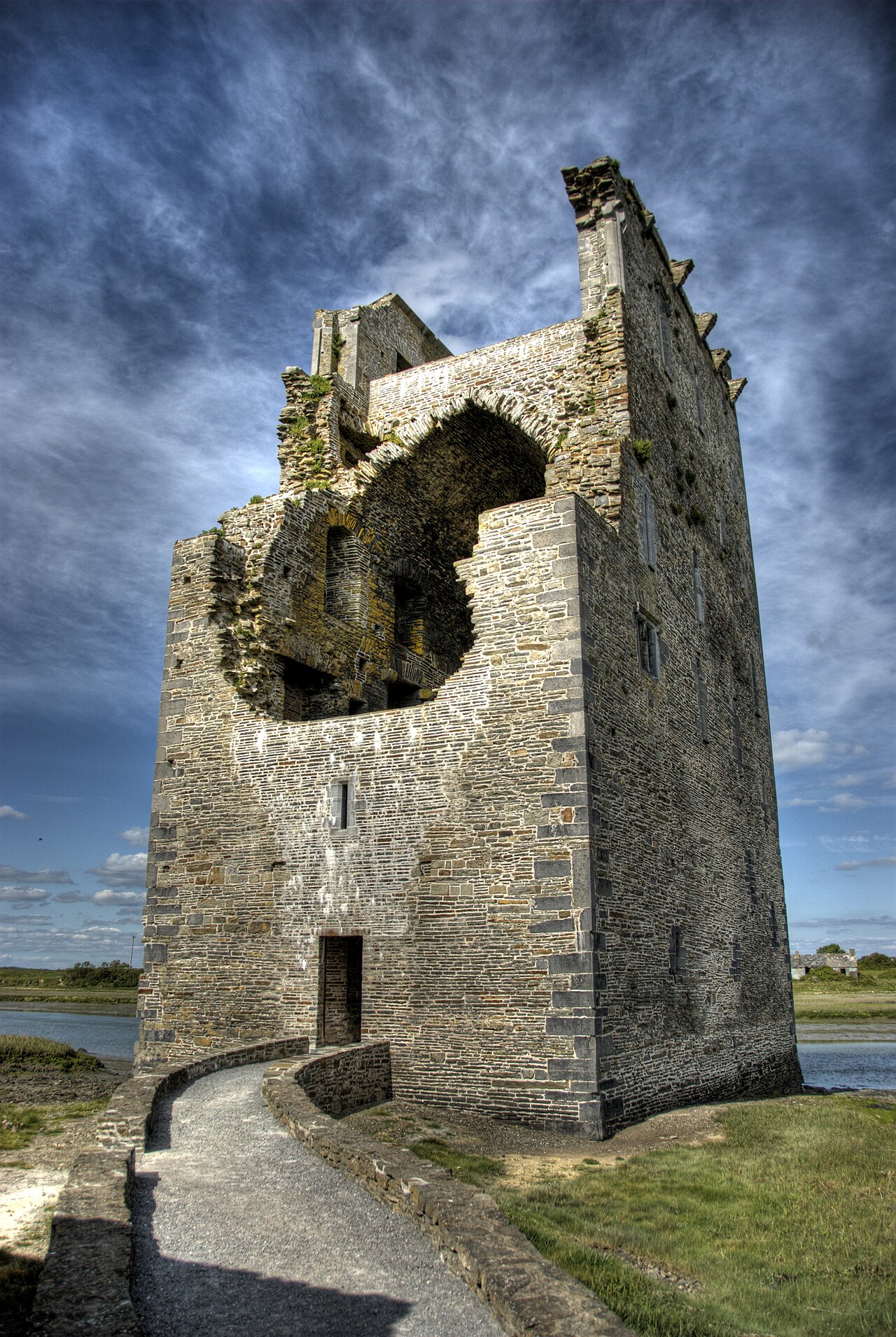
Carrigafoyle Castle exemplifies the tower house typology that was prevalent in Ireland during the late medieval period. The castle’s main tower rises to about 86 feet (over 24 meters), dominating the surrounding landscape and providing extensive views of the Shannon estuary. This tower was the heart of the castle’s defense and residential quarters. Surrounding the tower are two concentric stone walls: an inner wall encircles the core structures, while an outer wall protects all but the eastern side, creating layered defenses.
A moat surrounds the castle complex, which was navigable at high tide by vessels up to 100 tons, highlighting the castle’s integration with maritime defense. The presence of smaller towers along the outer walls provided additional vantage points and firing positions. The castle’s stone construction reflects typical Irish defensive architecture of the era, combining robust materials with strategic placement.
To the north, the castle benefits from natural protection offered by a wooded island in the adjacent bay, which added an extra layer of defense against attacks from the water. The overall design demonstrates a sophisticated understanding of both natural and man-made defensive measures suitable for controlling river access.
Historical significance and the 1580 siege
The castle played a pivotal role during the Second Desmond Rebellion (1579-1583), a major conflict in Irish history involving the Gaelic Irish and English forces. In Easter 1580, Carrigafoyle Castle was the scene of a significant siege. The castle was defended by approximately 50 Irish soldiers and 16 Spanish troops, who had allied with the Catholic rebellion led by Gerald FitzGerald, 15th Earl of Desmond. The defenses had been reinforced by an Italian engineer named Julian, working under the direction of Countess Eleanor Desmond, a prominent figure in the rebellion.
The English forces, commanded by Sir William Pelham and supported by a naval fleet under Sir William Winter, launched a heavy assault using the largest English military force ever assembled in western Ireland at that time. The attackers employed three land-based cannons and a large naval cannon positioned in the bay, bombarding the castle relentlessly over several days. The artillery fire caused the collapse of the main tower, killing many defenders and ending the castle’s resistance.
Those who attempted to flee were shot, and captured defenders, including the engineer Julian, were executed. The fall of Carrigafoyle Castle was a decisive blow to the Desmond rebellion, leading to the surrender of several other loyalist castles. However, the rebellion persisted until 1583, ending with the death of the Earl of Desmond. The castle was left in ruins after the siege and never rebuilt, with visible scars from the cannon fire still marking the stonework today.
The castle remains and preservation
Today, the ruins of Carrigafoyle Castle remain a powerful testament to its historical and architectural significance. The site retains its two concentric defensive walls and the moat, which still reflects the castle’s maritime strategic importance. The main tower, though partially collapsed, still rises prominently, allowing visitors to appreciate the scale and strength of the original structure.
The visible damage from the 1580 artillery bombardment, including collapsed sections and cannonball marks, provides a tangible connection to the violent history the castle endured. The stonework and layout offer insights into late medieval Irish military architecture, illustrating how natural features and human engineering were combined to create a formidable stronghold.
The castle’s location on the Shannon estuary, with its natural wooded island to the north, continues to highlight the strategic importance of waterways in medieval warfare and settlement patterns. Carrigafoyle Castle remains a significant cultural heritage site, attracting visitors interested in Irish history, military architecture, and the complex history of the Desmond rebellions.
Cultural and historical context
Carrigafoyle Castle is emblematic of the Gaelic Irish resistance during the late 15th and 16th centuries in Ireland. Its construction by Conor Liath O’Connor Kerry reflects the assertion of local Gaelic power in a period marked by increasing English influence and military campaigns in Ireland. The castle’s role in the Second Desmond Rebellion situates it within the broader narrative of Irish resistance against English rule and the complex alliances involving Spanish forces and Catholic interests.
The siege and destruction of the castle illustrate the military technologies and tactics of the period, including the use of heavy artillery and naval support. The involvement of foreign engineers like Julian highlights the international dimensions of Irish conflicts during the Renaissance era.
As a ruin, Carrigafoyle Castle serves as a historical monument that encapsulates the turbulent history of late medieval Ireland and the struggle for control over strategic river routes and territories. It remains an important site for understanding the intersection of military architecture, Gaelic culture, and colonial conflict.
Frequently asked questions (FAQ)
- How do I get to Carrigafoyle Castle?
- Carrigafoyle Castle is located in Ballylongford, a charming village in County Kerry, Ireland. Visitors can reach the castle by car, with ample parking available nearby, or by using public transport options that connect to Ballylongford.
- What is the historical significance of Carrigafoyle Castle?
- Carrigafoyle Castle dates back to the 15th century and is an important example of Irish medieval architecture. It was built by the McMahon clan and played a significant role in the region's history, including during the conflicts of the 16th century.
- When was Carrigafoyle Castle built?
- Construction of Carrigafoyle Castle began in 1460 and was completed in the late 15th century. The castle's design reflects the defensive needs of the time, showcasing features typical of the era.
- Can I explore the castle grounds?
- Yes, visitors are welcome to explore the castle grounds, which provide a fascinating glimpse into its medieval architecture and historical context. While the interior may have limited access, the surrounding area is open for walking and photography.
- Why is Carrigafoyle Castle a popular tourist attraction?
- Carrigafoyle Castle attracts visitors due to its rich history, stunning architecture, and picturesque location along the Shannon estuary. Its dramatic ruins offer a unique backdrop for photography and a chance to learn about Ireland's medieval past.
- Is it possible to visit Carrigafoyle Castle year-round?
- Yes, Carrigafoyle Castle is open to visitors year-round, although it's advisable to check for any seasonal changes in accessibility. The castle is best enjoyed during daylight hours, so plan your visit accordingly.
- What are the best times to visit Carrigafoyle Castle?
- The best times to visit Carrigafoyle Castle are during the spring and summer months when the weather is generally mild and favorable for outdoor exploration. Additionally, visiting during weekdays can help you avoid larger crowds typically seen on weekends.
- Are there any nearby attractions to visit?
- Yes, nearby attractions include the scenic village of Ballylongford and the beautiful beaches along the Wild Atlantic Way. Visitors can also explore other historical sites in the region, making it a great destination for a full day of exploration.
- What are the ticket prices for Carrigafoyle Castle?
- Entry to Carrigafoyle Castle is free, allowing everyone to explore its historic grounds without any cost. This makes it an excellent option for families and history enthusiasts alike.
- What are the opening hours of Carrigafoyle Castle?
- Carrigafoyle Castle is open for visitors at all times, as there are no specific opening hours. However, it's recommended to visit during daylight hours to fully appreciate the site and its surroundings.
Information
Website
Visit websiteSources & official resources
Verify the information above using these authoritative references.
Loading map...
Visitor reviews
No reviews yet. Been here? Write the first review and help other travelers!
Write the first reviewVisited this castle? Share your experience
Your review helps other travelers and adds first-hand knowledge to our encyclopedia.