Carrigafoyle Castle
Carrigafoyle Castle is a significant example of a 16th-century Irish tower house, situated on the banks of the River Shannon in County Kerry, Ireland. Its name, derived from the Irish 'Carraig an Phoill', meaning 'rock of the hole', reflects its strategic position on a rocky outcrop overlooking the river. The castle's location was chosen for its defensive advantages, controlling river traffic and serving as a stronghold for the powerful FitzGerald family during the tumultuous Elizabethan era.
Architectural features and layout
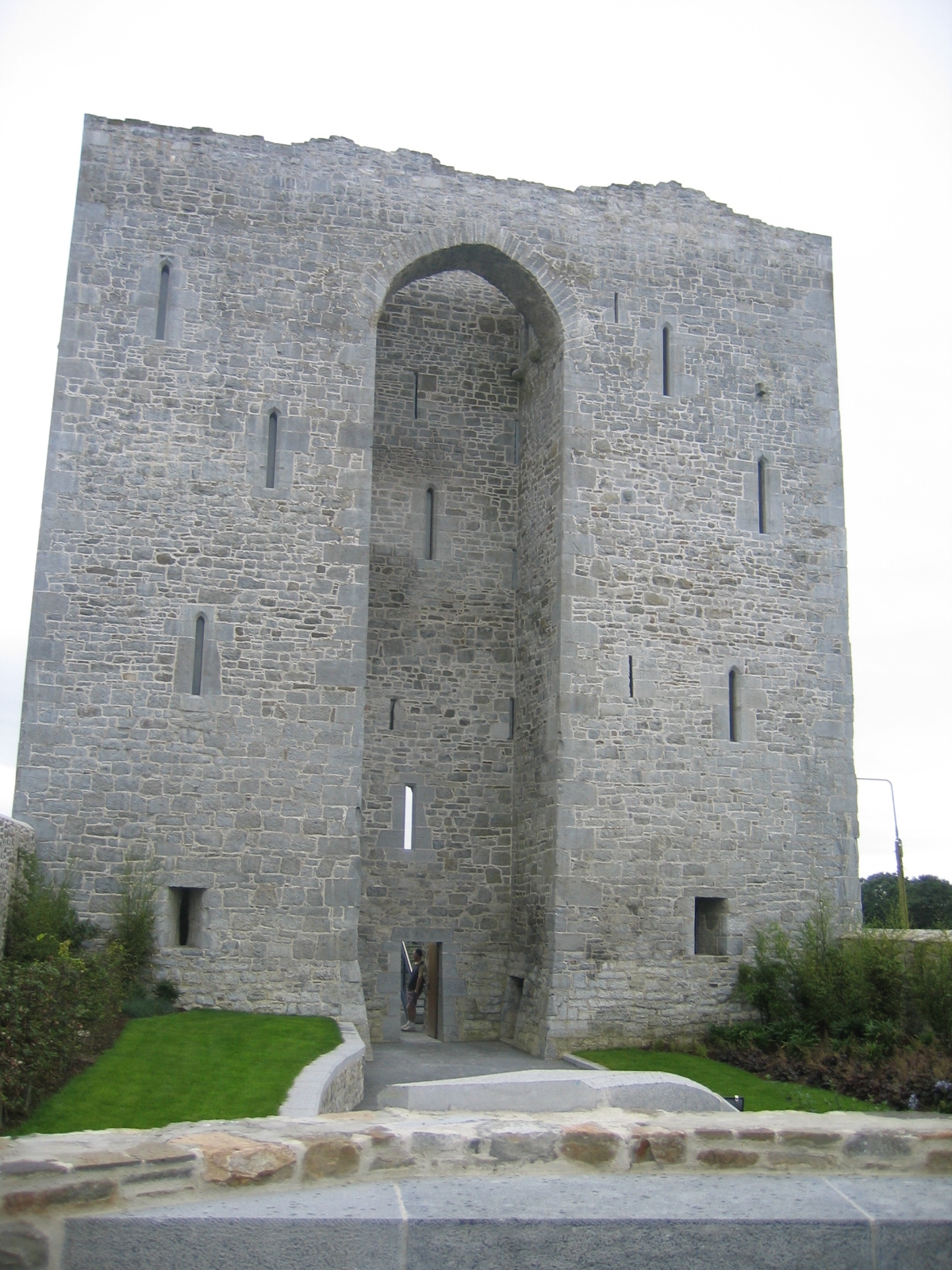
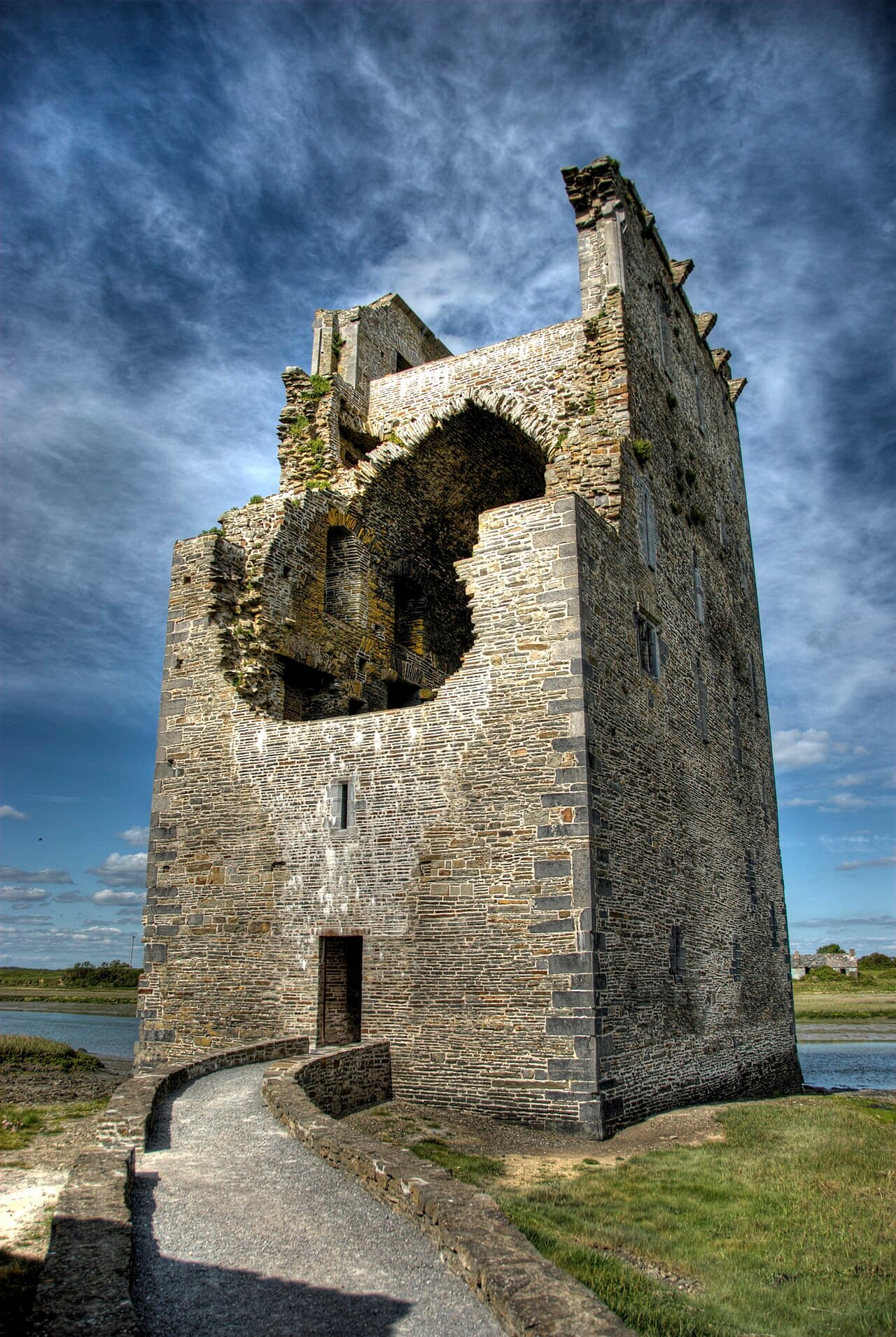
The castle is primarily a tower house, a common form of fortified residence in Ireland during the late medieval period. It features a rectangular plan with thick stone walls designed to withstand artillery attacks, which became increasingly common in the 16th century. The structure includes several defensive elements such as battlements, arrow slits, and a protecting the entrance. The tower rises several stories high, with narrow windows and a vaulted basement used for storage and defense.
Surrounding the main tower is a curtain wall enclosing a small courtyard, which would have contained ancillary buildings such as stables and workshops. The castle's position on a rocky promontory enhanced its natural defenses, with steep drops on several sides making direct assault difficult.
Historical context and significance
Constructed in the early 1500s, Carrigafoyle Castle was built by the FitzGeralds of Desmond, a branch of the powerful Geraldine dynasty that played a central role in Irish politics and conflicts during the 16th century. The castle was a key stronghold during the Desmond Rebellions against English rule, reflecting the turbulent nature of the period.
In 1580, the castle was besieged by English forces under the command of Sir William Pelham during the Second Desmond Rebellion. The siege lasted several weeks, ending with the castle's capture after heavy bombardment. The fall of Carrigafoyle marked a significant moment in the suppression of the rebellion and the consolidation of English power in Munster.
Current condition and preservation
Today, Carrigafoyle Castle stands as ruins, with much of the original structure still visible but roofless and partially collapsed. Its walls and defensive features remain largely intact, offering insight into late medieval Irish military architecture. The castle is an important archaeological site, attracting historians, archaeologists, and visitors interested in Ireland's Elizabethan military history.
Efforts have been made to preserve the site, though it remains largely in its ruined state, providing a tangible connection to Ireland's turbulent past and the evolution of castle architecture during the transition from medieval to early modern warfare.
Visiting carrigafoyle castle
The castle is accessible to the public, located near the town of Ballylongford in County Kerry. Visitors can explore the ruins and enjoy views of the River Shannon estuary. The site offers a quiet, evocative atmosphere for those interested in history and architecture, with interpretive signage providing context about the castle's construction, use, and role in Irish history.
While there are no formal visitor facilities on site, the surrounding area includes amenities in nearby towns. The best time to visit is during the warmer months when the weather is favorable for outdoor exploration.
Frequently asked questions (FAQ)
- What is the historical significance of Carrigafoyle Castle?
- Carrigafoyle Castle was a key stronghold of the FitzGeralds during the 16th-century Desmond Rebellions against English rule, marking important events in Irish history.
- Can I visit Carrigafoyle Castle?
- Yes, the castle is accessible to the public and located near Ballylongford in County Kerry, Ireland. Visitors can explore the ruins and enjoy views of the River Shannon.
- What architectural features does Carrigafoyle Castle have?
- The castle features a rectangular tower house design with thick stone walls, battlements, arrow slits, a vaulted basement, and a surrounding curtain wall enclosing a courtyard.
- When was Carrigafoyle Castle built?
- Carrigafoyle Castle was constructed in the 16th century, during the late medieval period, by the FitzGeralds of Desmond.
- Why is Carrigafoyle Castle in ruins?
- The castle was heavily damaged during the siege by English forces in 1580, and it has remained a ruin since, reflecting its turbulent history and the passage of time.
Photo gallery

Information
Loading map...
Visitor reviews
No reviews yet. Been here? Write the first review and help other travelers!
Write the first reviewVisited this castle? Share your experience
Your review helps other travelers and adds first-hand knowledge to our encyclopedia.