Lipa
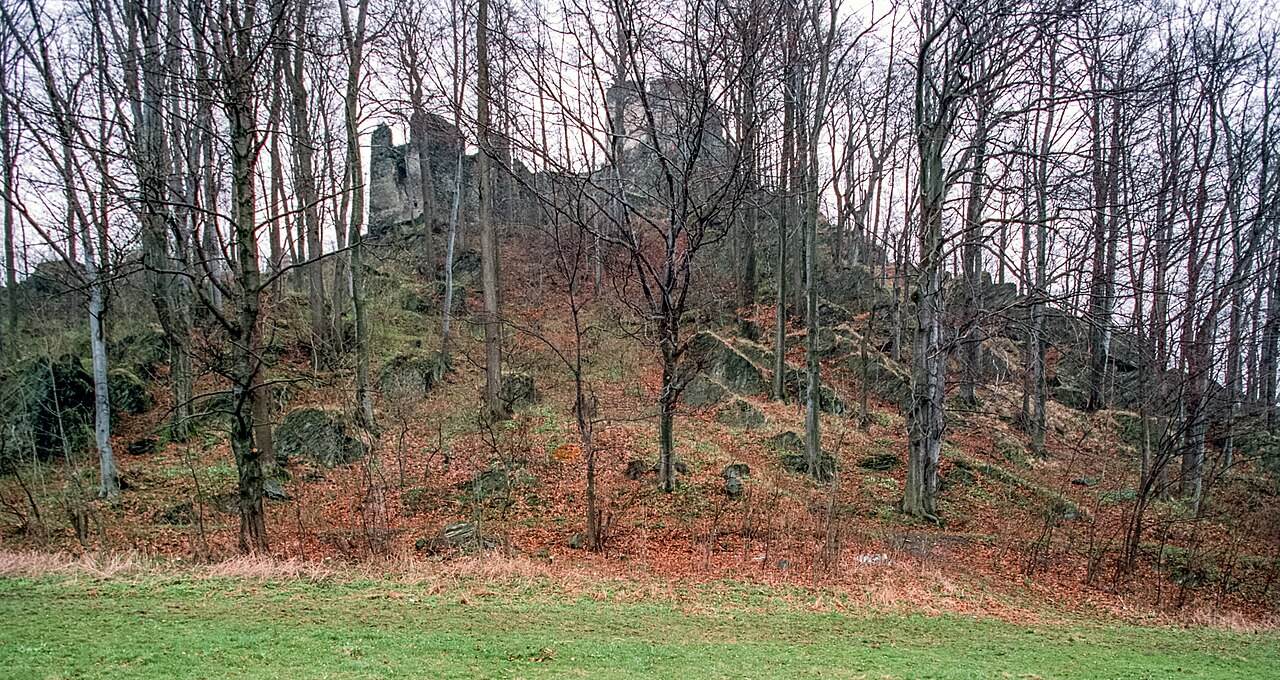
Lipa Castle stands as a fascinating example of a hill castle perched on a steep rocky outcrop overlooking the village of Lipa in Poland. The earliest mentions of the village date back to the year 1300, and the castle itself likely originated in the late 13th century, although precise dating remains uncertain due to limited archaeological research. While some legends attribute the castle's foundation to the Templars, historical evidence suggests it was more plausibly established by local knightly families, with Caspar von Crakav of the Swoynicz lineage often credited as the founder in the late 14th century.
Medieval origins and initial construction
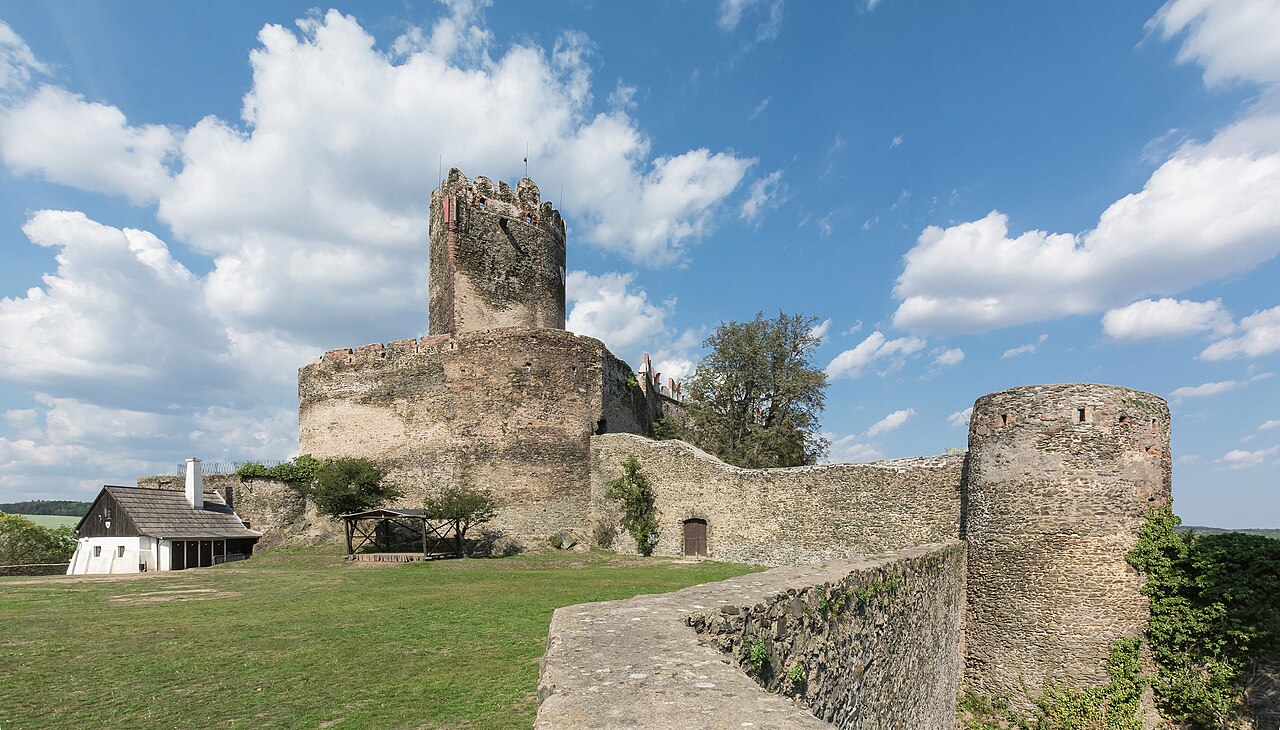
The original castle was modest in scale, reflecting the status of its early owners as lesser nobility. It consisted primarily of a with three floors, measuring approximately 6.9 by 6.8 meters, surrounded by an oval defensive wall. This compact layout was typical of early medieval fortifications designed for basic defense and residence. The castle's location on a steep rock provided natural protection, a strategic choice for a hill castle.
Architectural features of the early castle
The tower served as the main residential and defensive structure. Its relatively small footprint indicates a focus on vertical defense and limited living space. The surrounding wall enclosed a courtyard, though its exact extent is uncertain due to subsequent modifications and the rocky terrain. The absence of extensive outbuildings or large halls suggests the castle was primarily a fortified residence rather than a large military fortress.
Expansion under the von Zedlitz family
In the mid-15th century, ownership transferred to the von Zedlitz family, who undertook significant expansions to accommodate their needs. The southern section of the original wall was repurposed as the foundation for a new residential building, which was partially vaulted and adjoined the tower. This addition included what is considered the oldest preserved kitchen in Silesia, notable for its pointed arch vaulting transitioning into a chimney structure. The kitchen also contained a well, an unusual feature for medieval castle kitchens, and a stone gutter designed to channel wastewater outside the castle walls.
Water management and defensive improvements
Behind the kitchen, a cistern was carved directly into the rock, demonstrating advanced water storage solutions for the period. The western section of the defensive wall was rebuilt in a straight line, incorporating a tall gate that served as the main entrance to the castle. In the northwest corner of the courtyard, evidence of another building is suggested by the remains of a cellar, though its exact function remains unclear. The castle's irregular and somewhat chaotic layout reflects the constraints imposed by the small and rocky hilltop.
Later history and neogothic restoration
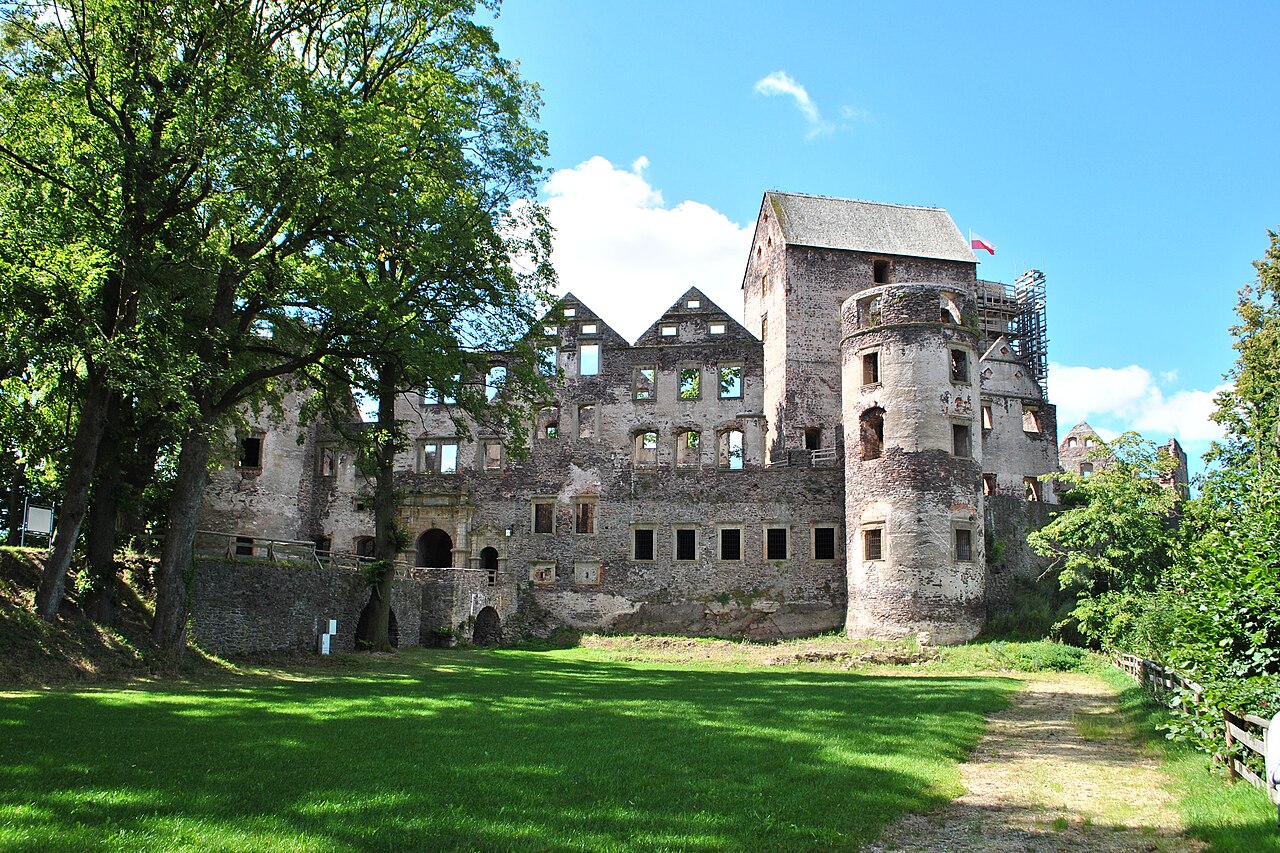
Following the von Zedlitz tenure, the castle passed through the hands of the von Reibnitz and von Nimptsch families. By the early 19th century, the castle had fallen into partial ruin. It was purchased by a new owner named Fischer, who partially dismantled the structure to reuse the stone for a distillery. Fortunately, the castle was saved from complete destruction by Rudolph, Count von Stillfried-Rattonitz, who undertook a restoration in line with the 19th-century neogothic revival. This restoration gave the castle a romanticized Gothic appearance but also resulted in the loss of many original medieval details.
Post-World War II status and current condition
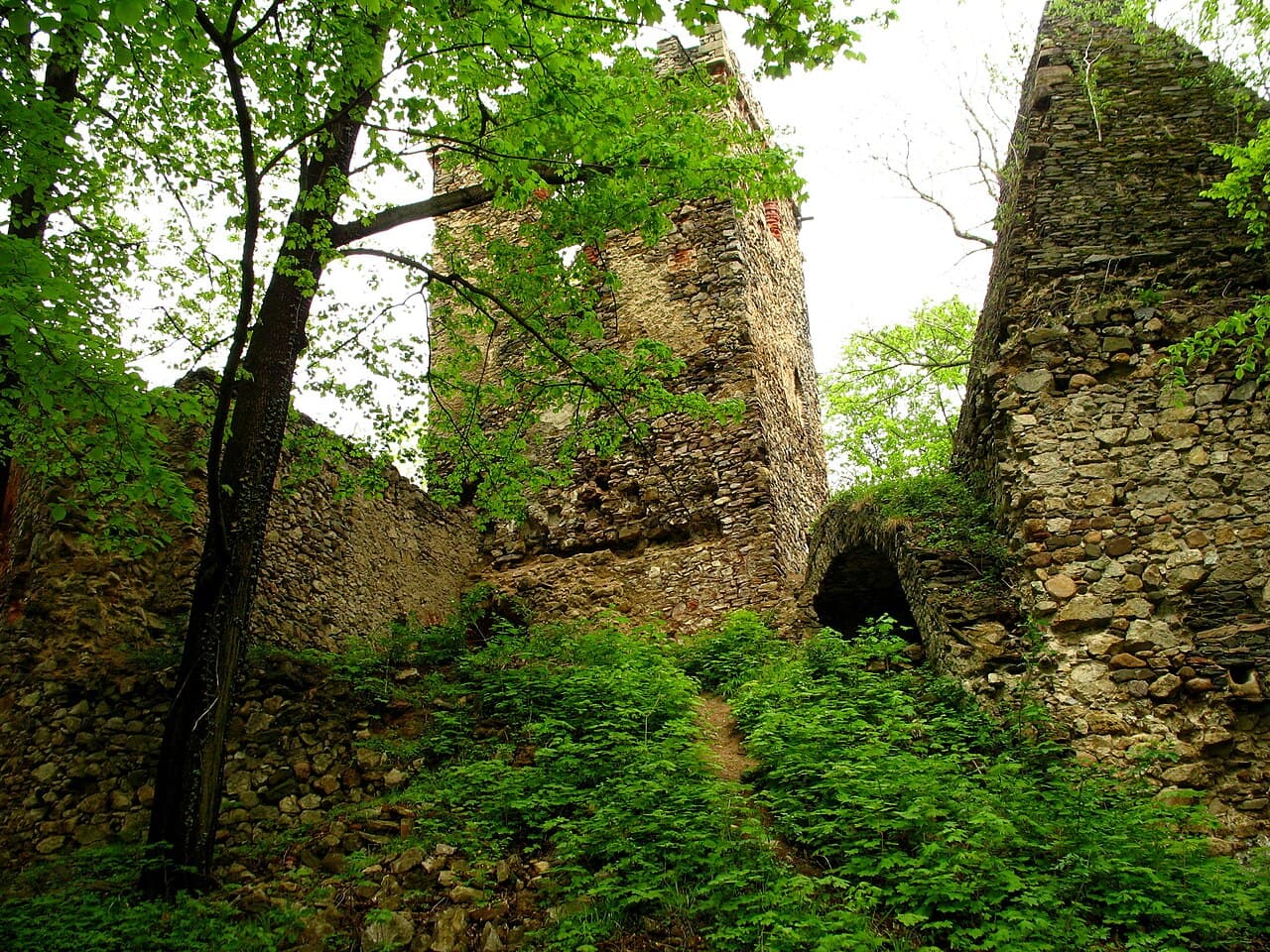
After World War II, the castle remained unused and gradually deteriorated. In 1970, it was acquired by Bogna Rosnowska-Maag, a private owner residing in Switzerland. Despite ownership, no restoration or conservation efforts have been undertaken, and the castle remains a picturesque ruin overgrown with vegetation. Warning signs indicate its private status, discouraging visitors. The lack of maintenance poses a threat to the castle's long-term preservation.
Architectural significance and heritage value
Lipa Castle is significant for its medieval hilltop location and its evolution from a small fortified tower to a more complex residence. The survival of the oldest kitchen in Silesia with its distinctive vaulted ceiling and integrated well is a rare feature in the region's castle architecture. The castle's adaptive reuse over centuries, including its neogothic restoration, illustrates changing tastes and functions of noble residences in Silesia.
Challenges of preservation
The castle's location on a steep rock and its small footprint have always limited its expansion potential, resulting in an irregular plan. Its current ruinous state, combined with overgrowth and lack of conservation, threatens the survival of its unique architectural elements. Preservation efforts would need to balance maintaining the romantic ruin aesthetic with stabilizing the structure to prevent further decay.
Frequently asked questions (FAQ)
- When was Lipa Castle originally built?
- Lipa Castle was likely built in the late 13th century, although exact dates are uncertain due to limited archaeological evidence.
- What architectural style characterizes Lipa Castle?
- The castle features medieval defensive architecture with later 19th-century neogothic restoration elements that altered some original details.
- Can visitors access Lipa Castle today?
- Lipa Castle is privately owned and not open to the public. Warning signs indicate restricted access, and no restoration work is currently underway.
- What is unique about the kitchen in Lipa Castle?
- The castle's kitchen is the oldest preserved in Silesia, notable for its pointed arch vaulting and an integrated well, which is rare in medieval castles.
- Who were some notable owners of Lipa Castle?
- Notable owners include Caspar von Crakav, the von Zedlitz family, von Reibnitz, von Nimptsch, Fischer, and Rudolph Count von Stillfried-Rattonitz.
Photo gallery

Information
Current owner
Private owner
Loading map...
Visitor reviews
No reviews yet. Been here? Write the first review and help other travelers!
Write the first reviewVisited this castle? Share your experience
Your review helps other travelers and adds first-hand knowledge to our encyclopedia.