Linn Castle
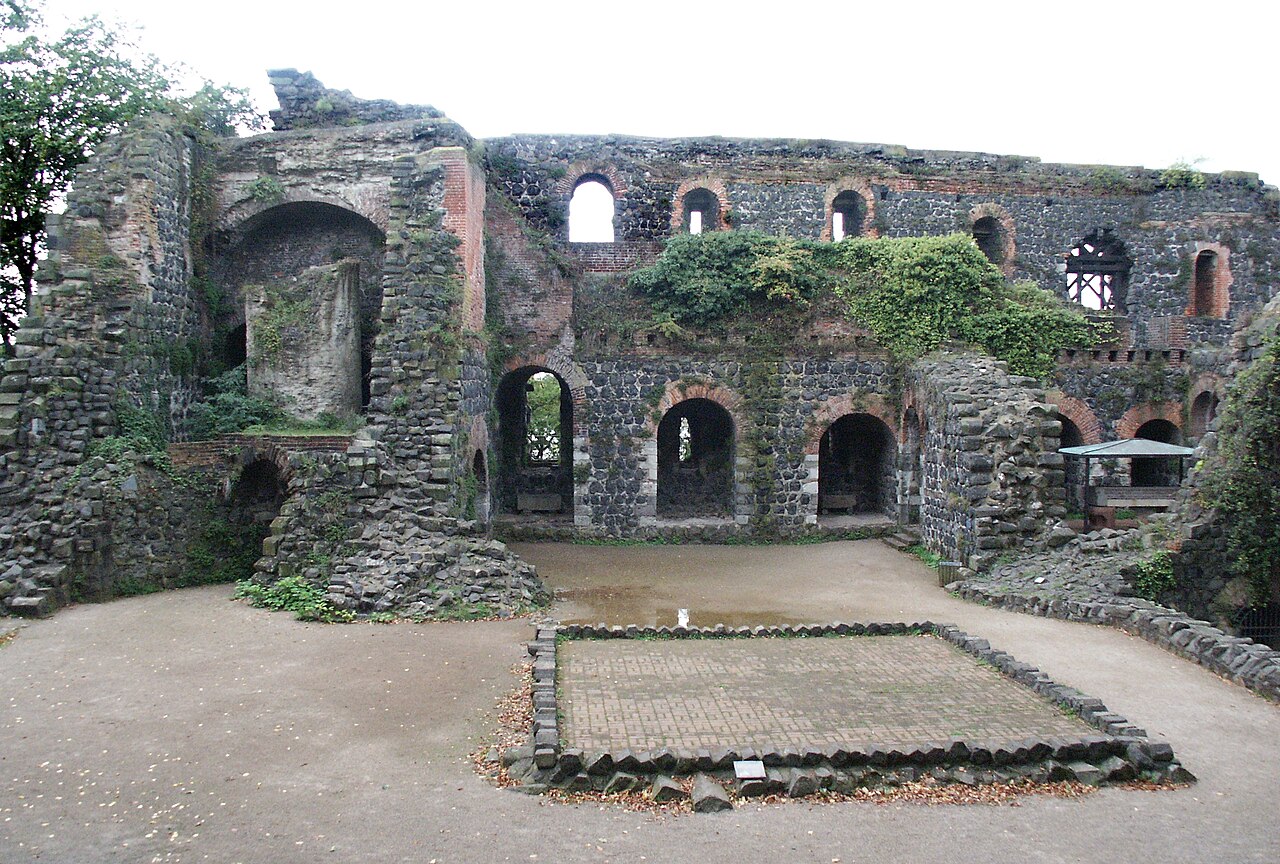
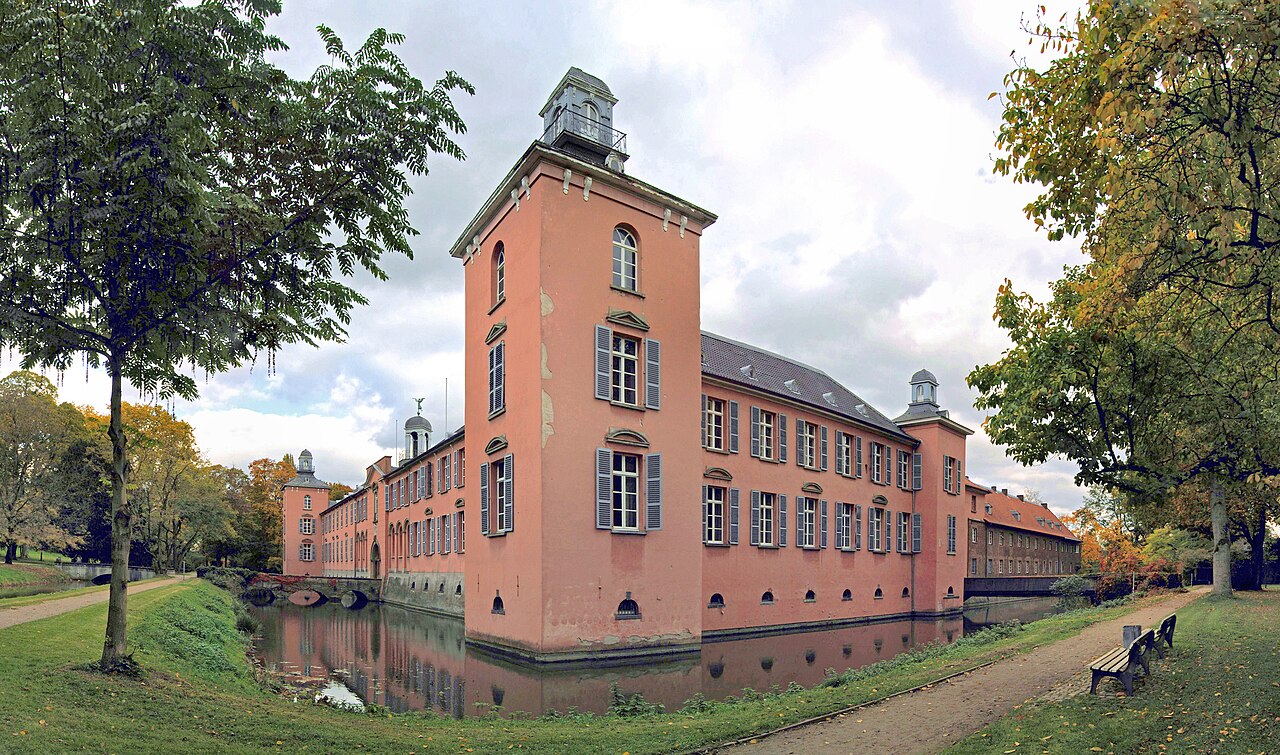
Linn Castle stands as a remarkable example of a medieval water castle located in the historic suburb of Linn within the city of Krefeld, in North Rhine-Westphalia, Germany. Its origins trace back to around the year 1000 AD, when the site initially featured a wooden fortification typical of the motte-and-bailey design, characterized by a man-made hill or motte, surrounded by a water-filled moat and protected by wooden palisades topped with a watchtower. This early defensive structure reflected the military architectural practices of the early High Medieval period in the Lower Rhine region.
The transition from wood to stone fortification occurred in the 12th century, when Otto and Gerlachus von Linn, noble brothers, constructed a substantial stone residential and defensive tower measuring approximately 8.5 by 14.5 meters. Built from durable tuff stone and flint, this tower replaced the earlier wooden buildings and marked a significant development in the castle's architecture, signaling a shift towards permanence and enhanced defense. This stone keep formed the core of the castle and served as both a residence and a stronghold.
Historical development and ownership
The castle's history is deeply intertwined with the political and military dynamics of the Lower Rhine. In 1188, Otto von Linn sold the allodial estate to Archbishop Philip I of Cologne but retained the castle as a fief, maintaining his influence over the site. Otto's participation in the Third Crusade inspired significant expansions between 1195 and 1250, including the construction of a distinctive six-sided ring wall in phases. This ring wall, initially planned as a symmetrical hexagon, was completed with some asymmetry due to design changes after Otto's death. His son Gerhard further enhanced the defenses by raising the wall's height by about three meters at the end of the 13th century.
Throughout the early 14th century, Linn Castle became part of the County of Cleves and played a crucial administrative and defensive role for the Electorate of Cologne. Its strategic location made it a focal point in regional conflicts, including raids on the nearby town of Krefeld. The castle's control shifted following a joint siege by Cologne and Cleves forces in 1392, which reaffirmed Cologne's dominance over the fortress.
Architectural evolution and military significance
Fortifications and expansions
From the 15th to the 17th centuries, Linn Castle underwent continuous modernization to adapt to evolving military technologies. In 1488, an outer defensive wall replaced an older moat, and a new, larger moat was excavated beyond this wall to enhance the castle's protection. During the Thirty Years' War (1618-1648), the castle's defenses were further reinforced to withstand cannon fire, including thickening the ring wall by filling the space between the inner and outer walls. By the early 1600s, Linn Castle had developed into one of the largest water castles along the Lower Rhine, integrated into a fortified complex featuring five bastions and earthworks.
The butterturm and chapel
A notable architectural feature is the Butterturm, the castle's prominent keep, which served as a prison after the noble residence was abandoned in the 18th century. Restoration efforts in the 20th century heightened the Butterturm to function as a viewing tower, with a reconstructed roof featuring a steeper pitch than the original, blending medieval aesthetics with modern construction standards.
The castle also houses a 14th-century Gothic chapel in the basement of the gatehouse tower. This chapel includes a rectangular nave and a pentagonal altar space within its tower, illuminated by lancet windows and connected to the adjacent palas hall by a broad pointed arch. Evidence suggests the presence of a second chapel on an upper floor of the battery tower, highlighting the castle's religious and ceremonial functions.
Damage, restoration, and current use
Linn Castle suffered significant damage during the Spanish War of Succession in 1702 and 1715, when fire and artillery attacks devastated much of the complex. Following these events, the castle was abandoned as a noble residence by 1728, although the Butterturm continued to be used as a prison. In the 18th century, Elector Clemens August converted the outer buildings into a hunting lodge, which saw limited use.
The French occupation in 1794 led to the confiscation of the castle and its lands. In 1806, silk manufacturer Isaak de Greiff purchased the property, repurposing it as a summer residence and hunting retreat. The estate remained in private hands until 1924, when the city of Krefeld acquired it.
After falling into neglect post-World War II, extensive restoration began in the 1950s. Restoration included rebuilding floors, installing a new roof in the 1980s, and reinforcing structural elements while respecting the castle's historical character. Today, Linn Castle functions as a museum complex, incorporating the main castle, a hunting lodge, and an archaeological museum. It hosts cultural events such as medieval fairs and concerts, utilizing the castle's great hall and scenic grounds.
Castle grounds and archaeological significance
The castle complex includes expansive parklands designed in the 19th century by landscape architect Maximilian Friedrich Weyhe. These grounds reflect the English landscape garden style, emphasizing naturalistic scenery and incorporating remnants of medieval moats and bastions. This park is an important example of garden art from the period and provides an atmospheric setting for events.
Archaeological excavations at Linn Castle and the surrounding Lower Rhine region have uncovered artifacts from Roman times through the Frankish era. The castle's museum displays include gilded burial items from the largest continuous and well-preserved princely burial site at Gellep-Stratum, as well as a medieval barge dating to the era of Charlemagne. These findings underscore the site's long-standing cultural and historical significance.
Visitor experience and cultural events
Today, Linn Castle is a vibrant cultural venue offering visitors a rich historical experience. The castle's well-preserved structures, including the main keep (Butterturm), ring walls, and Gothic chapel, provide insight into medieval military architecture and noble life. The surrounding park and museum exhibitions deepen understanding of the region's history from Roman times through the Middle Ages.
The castle regularly hosts concerts, readings, and the annual Flax Market, a medieval-themed fair that celebrates the area's heritage. These events utilize the castle's great hall and picturesque grounds, attracting visitors interested in history, architecture, and cultural festivities.
Frequently asked questions (FAQ)
- How do I get to Linn Castle?
- Linn Castle is located in Krefeld, Germany, and can be easily reached by public transport or car. If you're using public transport, the nearest tram stop is just a short walk away. For those driving, ample parking is available near the castle.
- What is the historical significance of Linn Castle?
- Linn Castle, built in the 13th century, is an important example of medieval architecture in the region. It served as a fortress and residence for noble families over the centuries, reflecting the area's rich history. The castle also played a role in various local conflicts, making it a key historical landmark.
- When was Linn Castle built?
- Linn Castle was constructed in the early 13th century, with its initial foundation dating back to around 1250. Over the years, it has undergone several renovations and restorations, showcasing different architectural styles. Its enduring presence highlights the castle's historical importance in Krefeld.
- Can I visit Linn Castle year-round?
- Yes, Linn Castle is open to visitors throughout the year, though opening hours may vary by season. It's advisable to check the official website for specific hours and any special events. Guided tours are often available to enhance your experience.
- Why is Linn Castle considered an architectural gem?
- Linn Castle is renowned for its impressive medieval architecture, featuring well-preserved towers and fortifications. The blend of Gothic and Renaissance styles provides a fascinating insight into the architectural evolution of the period. Its scenic location and surrounding parkland add to its charm.
- Is it possible to take guided tours at Linn Castle?
- Yes, guided tours are available at Linn Castle, offering visitors a deeper understanding of its history and architecture. These tours are typically led by knowledgeable guides who share intriguing stories about the castle's past. It's recommended to book in advance, especially during peak tourist seasons.
- What are the ticket prices for visiting Linn Castle?
- Ticket prices for Linn Castle are quite reasonable, with discounts available for students and seniors. Children under a certain age may enter for free. Be sure to check the official website for the latest pricing and any special promotions.
- When is the best time to visit Linn Castle?
- The best time to visit Linn Castle is during the spring and early autumn when the weather is mild and the surrounding gardens are in full bloom. Summer can also be a great time, but it may attract larger crowds. Planning your visit during weekdays can help you avoid the busiest times.
- Are there any nearby attractions to visit?
- Yes, there are several attractions near Linn Castle, including local parks, museums, and historic sites. The nearby city of Krefeld offers a variety of cultural experiences, including art galleries and shopping. Exploring the surrounding area can provide a well-rounded visit to this charming region.
Information
Website
Visit websiteSources & official resources
Verify the information above using these authoritative references.
Loading map...
Visitor reviews
No reviews yet. Been here? Write the first review and help other travelers!
Write the first reviewVisited this castle? Share your experience
Your review helps other travelers and adds first-hand knowledge to our encyclopedia.