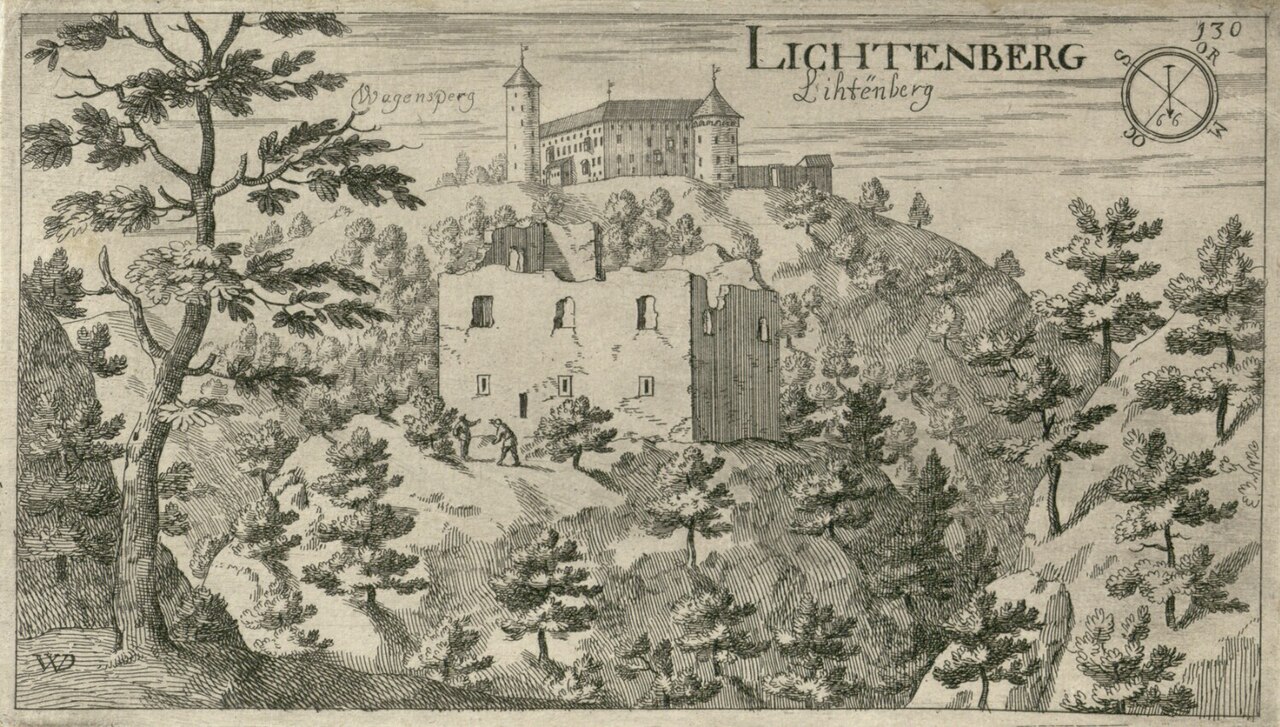
Lihtenberk Castle is a historic medieval hill castle located in Lihtenberk, Slovenia. The castle's origins date back to at least 1223, when it is first mentioned in historical records relating to its acquisition by Albert de Lihtenberc. Strategically perched on a steep hill, the castle was designed as a three-story building surrounded by a defensive wall, a typical feature of hill castles constructed during the High to Late Medieval periods. This elevated position provided a commanding view of the surrounding landscape, essential for defense and control.
Medieval origins and architectural features
The castle's original structure included robust stone walls and multiple floors, reflecting the architectural style and defensive needs of the time. The hill castle type was favored for its natural fortification, utilizing the steep terrain to enhance protection against invaders. The castle's layout was constrained by the narrowness of the hilltop, limiting expansion possibilities.
Historical significance and lineage
In the late 15th century, around 1470, Veronika of Lihtenberk married Boltežar Wagen, bringing the castle as part of her dowry. This union linked the Lihtenberk family to the Wagen lineage. Several decades later, the Wagen family constructed a new family residence nearby called Wagensberg or Bogenšperk in Slovenian. The decision to build a new castle rather than expand Lihtenberk was influenced by the limited space on the hill and the damage caused by a catastrophic earthquake in 1511, one of the strongest seismic events in Slovenian history.
Earthquake damage and decline
The 1511 earthquake severely damaged Lihtenberk Castle, rendering it unsafe for habitation. The castle no longer met the evolving standards of comfort and security expected by its owners. This natural disaster marked the beginning of the castle's decline, as maintaining and repairing the structure became increasingly impractical.
Reuse of materials and partial demolition
By 1630, the then-owner Jurij Kheysell repurposed building materials from the castle ruins to expand and repair the nearby Bogenšperk Castle. This practice of scavenging stone and other materials continued with subsequent owners, leading to the near-complete dismantling of the original Lihtenberk Castle. Such reuse of materials was common in the region, reflecting economic and practical considerations of the time.
19th-century chapel and current state
In the mid-19th century, a chapel dedicated to the Blessed Virgin Mary Help of Christians was constructed on the castle hill, symbolizing the site's continued cultural and religious significance. Today, the remnants of Lihtenberk Castle are largely obscured by vegetation. Only small fragments of the stone walls at the base remain visible, serving as silent witnesses to the castle's medieval past.
Architectural and cultural heritage
Lihtenberk Castle exemplifies the typical medieval hill castle architecture found in Slovenia, characterized by its strategic location and defensive design. Although now in ruins, the site offers valuable insights into the region's feudal history, architectural evolution, and the impact of natural disasters on medieval fortifications. The castle's connection to prominent families like the Lihtenberks and Wagens enriches its historical narrative.
Visiting the ruins today
While the castle is mostly in ruins and overgrown, the site remains a point of interest for history enthusiasts and hikers exploring the Slovenian countryside. The chapel from the 19th century adds a layer of historical continuity to the location. Visitors can appreciate the natural beauty of the hill and imagine the castle's former grandeur amidst the tranquil landscape.
Frequently asked questions (FAQ)
- When was Lihtenberk Castle first mentioned in historical records?
- Lihtenberk Castle was first mentioned in historical documents in 1223, relating to its acquisition by Albert de Lihtenberc.
- What caused the decline of Lihtenberk Castle?
- The castle was severely damaged by a major earthquake in 1511, which made it unsafe and unsuitable for habitation, leading to its decline.
- Can visitors see any remains of Lihtenberk Castle today?
- Yes, visitors can see small fragments of the castle's stone walls at the base of the hill, although much of the site is overgrown with vegetation.
- What is the significance of the chapel on the castle hill?
- The chapel, built in the mid-19th century, is dedicated to the Blessed Virgin Mary Help of Christians and marks the continued cultural importance of the site.
- Why was a new family residence built near Lihtenberk Castle?
- The new residence, Bogenšperk Castle, was built nearby due to limited space for expansion at Lihtenberk and damage from the 1511 earthquake.
Information
Loading map...
Visitor reviews
No reviews yet. Been here? Write the first review and help other travelers!
Write the first reviewVisited this castle? Share your experience
Your review helps other travelers and adds first-hand knowledge to our encyclopedia.