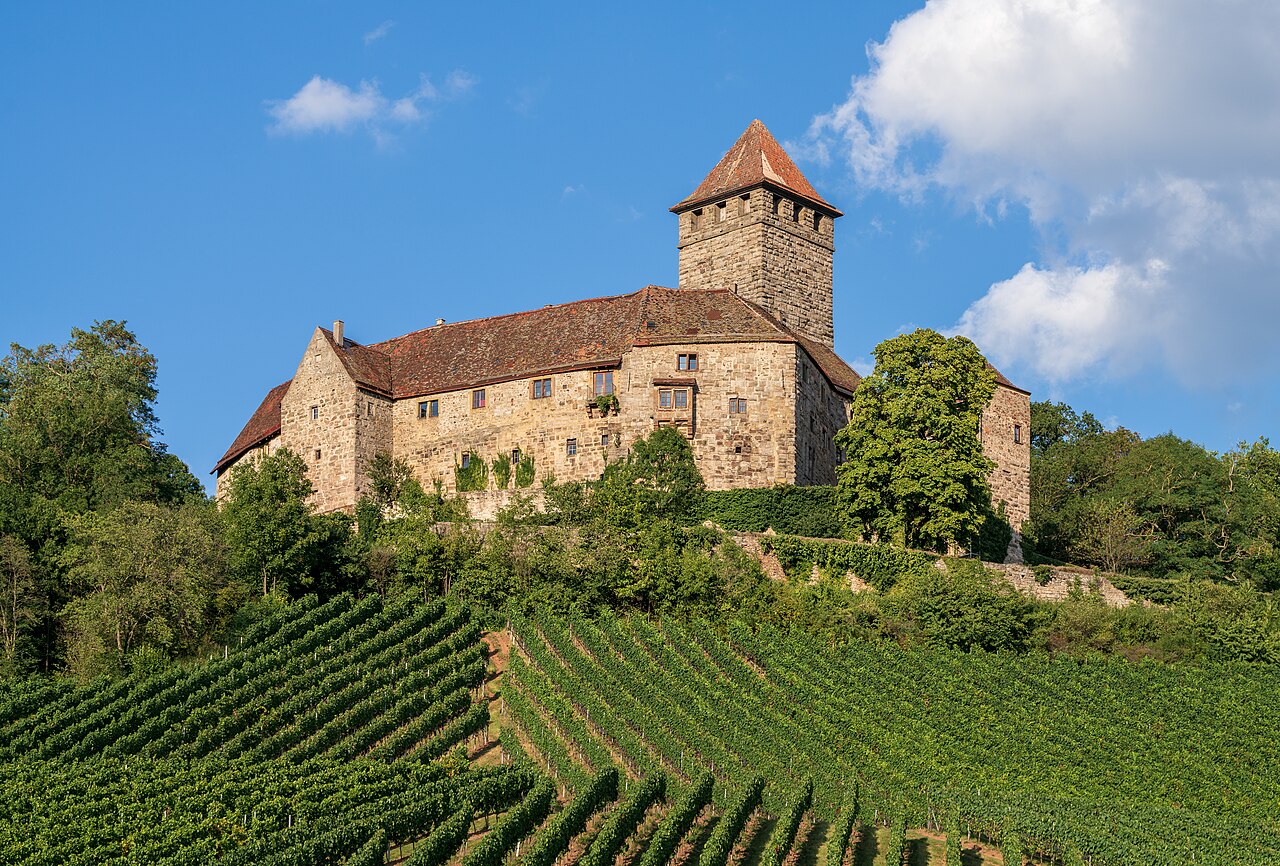
Liebenburg Castle

Liebenburg Castle in Namborn, Germany
Namborn, Saarland, Germany
High Medieval (11th–13th c.)
Ruins

Liebenburg Castle stands as a notable hill castle ruin near the village of Eisweiler in the municipality of Namborn, Germany. Constructed at the close of the 12th century, this medieval fortress was originally commissioned by the Bliesgaugrafen von Castel under the authority of the diocese of Verdun. The castle's strategic location atop the Schlossberg hill provided commanding views over the surrounding landscape, including the expanse of Sankt Wendel County. Its prominent tower and surviving portions of the fortification walls remain key features marking its historical presence.

Historical background and ownership

The earliest documentary mention of Liebenburg Castle dates to 1220, when the Bishop of Verdun appointed the knight Boemund de Lievenberc as the castle's custodian. This appointment reflects the castle's role as a defensive and administrative center under ecclesiastical control during the High Medieval period. Around the year 1400, the castle transitioned into the possession of the archbishops of Trier. Due to financial difficulties, the archbishops frequently pledged the castle to various noble families who were capable of maintaining it. Among these were the lords of Sötern, who held ownership from 1677 to 1696.

Architectural features and layout

Liebenburg Castle was constructed primarily as a hill castle, utilizing the natural elevation of Schlossberg to enhance its defensive capabilities. The surviving castle tower is a prominent vertical structure which would have served as a lookout and last refuge during sieges. The remains of the curtain walls indicate a fortified enclosure designed to protect the inner courtyard and living quarters. The castle's design reflects typical medieval military architecture emphasizing defense, with thick stone walls and limited access points.

The castle tower

The tower remains the most visible and intact part of the castle ruins. Its elevated position offers a wide panoramic view of the surrounding countryside, including the Sankt Wendel region. This vantage point would have been critical for early warning against approaching enemies and for overseeing the territory controlled by the castle's occupants.

Decline and destruction

During the late 17th century, specifically between 1677 and 1696, the castle was under the ownership of the lords of Sötern. It was in this period that Liebenburg Castle suffered its final destruction. The exact circumstances of its ruin are not fully documented, but it aligns with the turbulent military and political conflicts of the era which saw many fortifications damaged or abandoned. Following this destruction, the castle fell into ruin and was no longer maintained as a residence or defensive site.

Modern significance and preservation

Today, Liebenburg Castle is recognized as a landmark of the municipality of Namborn. The ruins, especially the tower and remaining walls, attract visitors interested in medieval history and architecture. The site offers educational opportunities and scenic views, contributing to the cultural heritage of the region. Preservation efforts focus on maintaining the ruins as a historical monument while allowing public access to experience the castle's legacy.

Visitor experience

Visitors to Liebenburg Castle can explore the remains of the castle walls and climb the tower area for extensive views of the Sankt Wendel County. The castle's elevated position on Schlossberg provides a unique perspective on the surrounding landscape, making it a favored spot for both history enthusiasts and nature lovers. Interpretive signage and local guides often provide context about the castle's history and architectural features.

Architectural and historical context

Liebenburg Castle exemplifies the characteristics of High Medieval hill castles built in the 12th century in the region that is now western Germany. Its construction under the auspices of a diocese reflects the interplay between ecclesiastical power and feudal nobility during this period. The castle's later ownership by the archbishops of Trier and noble families illustrates the common medieval practice of pledging properties to secure financial or political support.

The castle's eventual destruction in the late 17th century corresponds with the decline of many medieval fortifications that were rendered obsolete by advances in military technology and changing political landscapes. As a ruin, Liebenburg provides valuable insights into medieval castle construction, feudal administration, and regional history.

Frequently asked questions (FAQ)

What are the opening hours of Liebenburg Castle?
Liebenburg Castle is typically open to visitors from 10 AM to 6 PM during the peak season, which runs from April to October. In the off-season, the hours may vary, so it's advisable to check the official website before planning your visit.
How do I get to Liebenburg Castle?
Liebenburg Castle is located in Namborn, Germany, and can be reached by car or public transportation. If traveling by car, there is parking available nearby, and the castle is also accessible via local bus services from nearby towns.
What is the historical significance of Liebenburg Castle?
Liebenburg Castle dates back to the 14th century and played a vital role in the region's history as a stronghold and residence for noble families. Its well-preserved architecture and rich history make it an important landmark for understanding medieval life in Germany.
Can I take guided tours of Liebenburg Castle?
Yes, guided tours are available and are highly recommended for a deeper understanding of the castle's history and architecture. These tours are typically offered in multiple languages, and advance booking is recommended to secure a spot.
Is Liebenburg Castle accessible for visitors with disabilities?
Yes, Liebenburg Castle is committed to providing accessibility for all visitors. The main areas of the castle have been adapted for wheelchair access, though some historical sections may have limited access due to their original design.
When is the best time to visit Liebenburg Castle?
The best time to visit Liebenburg Castle is during the spring and summer months, from April to September, when the weather is pleasant and the castle grounds are in full bloom. Additionally, special events and activities often take place during this peak season, enhancing the visitor experience.
What are the ticket prices for visiting Liebenburg Castle?
Ticket prices for Liebenburg Castle vary, with discounts available for children, students, and seniors. Typically, an adult ticket costs around €8, while children under 12 may enter for free, making it an affordable option for families.
Are there any nearby attractions to visit along with Liebenburg Castle?
Yes, there are several nearby attractions worth visiting, including the beautiful natural parks and hiking trails in the Namborn area. Additionally, you can explore other historical sites such as the nearby towns with their charming architecture and local museums.

Information

Hill Castle

Loading map...

Visitor reviews

No reviews yet. Been here? Write the first review and help other travelers!

Write the first review

Visited this castle? Share your experience

Your review helps other travelers and adds first-hand knowledge to our encyclopedia.

Write a review

(5/5)

0/2000 characters

Your review will be visible after admin approval

Nearby castles

8.3 km

Veldenz Castle

Nohfelden, Germany

Veldenz Castle is a significant medieval fortress located on a prominent spur above the village of Nohfelden in Germany. Established in the 13th century, this hill castle served as a strategic stronghold and administrative center throughout the High Medieval period. Its imposing ruins today reflect a turbulent history marked by feudal conflicts, noble intrigues, and military engagements spanning several centuries. Early history and foundation The earliest documented mention of Veldenz Castle dates back to 1285, although some sources suggest the castle existed slightly earlier, potentially in the mid-12th century. The castle was originally built by Count William Bossel II of Stein from Oberstein an der Nahe. A notable early record stipulates that he was obligated to allow his liege lord, the Count of Veldenz, to use the castle in times of war or feuds, indicating its military importance from the outset. Historically, the castle and its surrounding lands were under the feudal authority of the Counts of Veldenz, who established the site as the center of their county. In 1156, Emperor Frederick I Barbarossa confirmed the holding of Veldenz Castle and its lands by Bishop Albert I of Verdun, reinforcing the castle's significance in regional power structures. By 1286, the nearby town of Veldenz was granted city and market charters by Rudolf von Habsburg, underscoring the castle's role in local governance and commerce. Ownership and political significance In the mid-15th century, the castle and the Lordship of Nohfelden came under the control of the Dukes of Palatinate-Zweibrücken. This transition occurred after the extinction of the male line of the Counts of Veldenz. The Palatinate-Zweibrücken dynasty retained possession of Veldenz Castle and its territories until the late 17th century. One of the most notable episodes in the castle's history occurred in 1490, following the death of Duke Louis the Black. His sons, Kaspar and Alexander, initially ruled jointly. However, Alexander imprisoned Kaspar in Veldenz Castle, alleging insanity. Kaspar remained confined in the castle until his death in 1527, even surviving Alexander himself. This event marks a dark chapter in the castle's legacy and reflects the intense dynastic struggles typical of the period. Architectural features and layout The castle's grounds extend approximately 100 meters in length and about 30 meters in width, situated on a steep hill spur that drops sharply on three sides. This natural topography provided strong defensive advantages. The castle is classified as a hill castle, designed primarily for defense and control over the surrounding territory. Significant portions of the castle's surrounding curtain walls remain intact, enclosing the complex. The 21-meter-high keep (bergfried) still stands prominently, though its roof is missing. This tower served as the last line of defense and a lookout point. The castle also features a palas with a distinctive stepped gable, which has been restored and repurposed as a restaurant, allowing visitors to experience the historic ambiance. Defensive bastions are located on the northern and southern flanks of the castle, strategically positioned to protect the main entrance and vulnerable approaches. The castle's basement was made accessible to the public in 1971, offering insight into the medieval construction techniques and daily life within the fortress. Construction materials and style Veldenz Castle exhibits typical High Medieval architectural features, with robust stone masonry walls designed to withstand sieges. The style reflects functional military architecture rather than ornate aesthetics, prioritizing thick walls, narrow windows for archers, and elevated towers for surveillance. Wars, damage, and restoration The castle endured significant damage during the numerous conflicts of the 17th century, including the Thirty Years' War and the Palatinate Succession War. It was occupied at different times by Swedish, Spanish, and French troops, reflecting the strategic importance of the site in regional power struggles. In 1681, Veldenz Castle was largely destroyed. Subsequently, the owners relocated, and the castle fell into ruin. Over the following decades, it was used as a quarry for building materials, accelerating its decay. The French state nationalized the property in 1804, and it was sold to private owners who continued to dismantle parts of the structure. Despite this decline, parts of the castle were underpinned and partially rebuilt in the 19th century. Today, the ruins are well-preserved relative to many other medieval castles, with ongoing conservation efforts led by the municipality of Nohfelden, which currently owns the site. Cultural significance and tourism Veldenz Castle holds a prominent place in the cultural heritage of the Central Moselle region. In the 15th century, it was considered the largest castle in this area, reflecting its importance as a political and military center. The German term "Schloss" used in some contexts for Veldenz hints at its status not only as a fortress but also as a noble residence. Today, the castle is accessible to the public, with the keep open from April to October. Visitors can explore the accessible basement and climb the tower to enjoy panoramic views of the surrounding landscape. Guided tours are available through the local tourist office, providing historical context and architectural insights. The castle's palas, now functioning as a restaurant, offers a unique opportunity to dine within a historical setting, blending cultural tourism with local gastronomy. The site is a popular destination for history enthusiasts, architecture students, and travelers interested in medieval fortifications. Visitor information The castle is open seasonally, typically from April through October. Guided tours can be arranged via the Nohfelden tourist office, enhancing the visitor experience with expert commentary. The palas restaurant provides refreshments and meals within the historic castle walls. Access to the tower requires moderate physical ability due to stairs and uneven surfaces.

High Medieval (11th–13th c.)
Details
15.1 km

Lichtenberg Castle

Thallichtenberg, Germany

Lichtenberg Castle, located in Thallichtenberg, Germany, is renowned as the largest castle ruin in Germany, stretching an impressive 425 meters in length. This hill castle is a monumental example of medieval fortification and architectural evolution, offering a rich tapestry of history, culture, and restoration efforts that span centuries. Its strategic position atop a ridge rising to about 394 meters above sea level provided natural defenses complemented by formidable manmade fortifications. First mentioned in 1197, Lichtenberg Castle is among the oldest castles associated with the Staufer family in Germany. Built in the high medieval period, primarily during the 13th century, the castle's origins are closely tied to the Counts of Veldenz, who established it on land belonging to the Benedictine Abbey of Saint Remigius. Despite ecclesiastical opposition, the castle remained a symbol of feudal power and resilience, never succumbing to destruction through warfare. Historical significance and ownership The castle's history reflects the complex feudal and religious dynamics of the region. Its first recorded legal mention in 1214 highlights disputes over its construction on abbey territory, showcasing the tension between secular and ecclesiastical authorities. Ownership transitioned from the Counts of Veldenz to the Dukes of Palatinate-Zweibrücken after the Veldenz line ended in 1444, marking a new chapter in the castle's role as both a military stronghold and administrative center. Throughout the 15th and 16th centuries, Lichtenberg Castle served multiple functions: a defensive fortress, a secondary ducal residence, an agricultural estate hub, and the seat of local governance and justice until 1755. It notably hosted prominent figures of the Protestant Reformation in 1529, including Ulrich Zwingli, Johannes Oecolampadius, Martin Bucer, and Johannes Sturm, who were en route to the significant Marburg Colloquy. Although briefly occupied by French forces in 1693 during the War of the League of Augsburg, the castle remarkably avoided destruction. However, a devastating fire in 1799 caused severe damage, sparing only a few outbuildings such as the castle chapel and the land registry building. Subsequent centuries saw political shifts with the castle lands becoming part of the Duchy of Saxe-Coburg-Saalfeld and later the Kingdom of Prussia. Restoration efforts began in the early 20th century, preserving the castle as a protected monument and adapting parts for cultural use. Architectural features and layout Upper castle (oberburg) The Upper Castle occupies the highest eastern point of the ridge and dates back to the late 12th or early 13th century. Its centerpiece is a massive square bergfried approximately 33 meters tall, which served as a lookout and last line of defense. This tower, restored and roofed in modern times, offers panoramic views of the surrounding landscape including the town of Kusel and the Prussian Mountains. Surrounding the bergfried is an oval curtain wall enclosing residential and service buildings arranged around a narrow courtyard. The courtyard's access was controlled by a single gate, emphasizing the castle’s defensive design. The late Romanesque chapel, constructed between 1220 and 1230, stands out for its well-preserved mid-14th century murals, offering valuable insights into medieval religious art and architecture. Lower castle (unterburg) About 130 meters west lies the Lower Castle, established in the 14th century. It features a roughly rectangular layout with enclosing walls and a citadel. Today, much of this section remains in ruins except for the gate complex topped by the original castle chapel, which survived the 1799 fire intact. This chapel replaced an earlier St. George’s Chapel and remains a significant architectural and historical element of the site. Defensive structures and expansions In the late 15th and 16th centuries, the castle underwent significant fortification upgrades. A new outer wall unified the Upper and Lower Castles, enclosing the space between them and incorporating auxiliary buildings such as the tithe barn, rebuilt in 1738 and later restored to house the Palatinate Music Museum. Defensive enhancements included the construction of zwingermauern (outer walls) and bastions, particularly on vulnerable approaches, alongside a tall shield wall (schildmauer) to repel assaults. The castle’s natural steep slopes on three sides further augmented its formidable defenses. Modern restoration and cultural significance After centuries of decline and damage, Lichtenberg Castle was recognized as a protected architectural monument in 1895. Restoration efforts initiated in 1922 transformed parts of the castle, including converting the forecourt into a youth hostel and restoring the bergfried tower. The late 20th century saw the reconstruction of the tithe barn and the establishment of the Regional Music Museum, enhancing the castle’s role as a cultural venue. Today, the castle is managed as a historical landmark within the Kusel district of Rhineland-Palatinate. It continues to attract visitors interested in medieval architecture, history, and cultural events. The castle's extensive ruins, combined with restored elements, provide a vivid window into the region's feudal past and architectural heritage. Visiting lichtenberg castle Visitors to Lichtenberg Castle can explore its expansive grounds, including the restored bergfried tower with its panoramic views, the castle chapel with its historic murals, and the Palatinate Music Museum housed in the renovated tithe barn. The castle also hosts a restaurant and offers youth hostel accommodations, making it a versatile destination for cultural tourism and historical exploration. The castle's combination of natural setting, architectural grandeur, and rich history makes it a unique and compelling destination in Germany's Palatinate region.

High Medieval (11th–13th c.)
Details
15.5 km
Burg Lichtenberg — Germany castle

Burg Lichtenberg

Thallichtenberg, Germany

Burg Lichtenberg is a prominent hill castle situated near Thallichtenberg in the Palatinate region of Germany. Constructed around 1200 during the High Medieval period, it stands as the largest castle in the Palatinate and one of the largest in Germany. Its extensive fortifications and imposing walls have endured for more than eight centuries, bearing witness to the region's turbulent history and architectural evolution. Historical significance and origins The castle was originally built as a strategic fortress to control key trade routes and assert dominance over the surrounding territory. Its location atop a hill provided natural defense advantages, allowing its occupants to monitor the landscape and repel attackers effectively. Throughout the centuries, Burg Lichtenberg played a vital role in regional conflicts and power struggles, reflecting the shifting political landscape of the Holy Roman Empire. Architectural features and layout Burg Lichtenberg exhibits typical characteristics of High Medieval hill castles, including massive stone walls, towers, and fortified gatehouses. The castle complex includes multiple defensive layers, with a large outer bailey and a well-protected inner ward. The walls, constructed from local stone, have been remarkably well preserved, showcasing medieval masonry techniques. The castle's design reflects both military and residential functions, with living quarters, a chapel, and storage facilities integrated within its walls. Notable architectural elements include battlements, arrow slits, and a keep that served as the last line of defense. The chapel and residential quarters The castle chapel, a key feature of Burg Lichtenberg, served both religious and ceremonial purposes. Its architecture is consistent with the Gothic style that became prevalent in later medieval periods, indicating modifications and expansions after the initial construction. Residential quarters were designed to accommodate the noble family and their retinue, balancing comfort with security. Preservation and modern use Listed as a protected historic monument since 1895, Burg Lichtenberg has undergone various restoration efforts to maintain its structural integrity and historical character. Today, the castle is well preserved and functions as a cultural hub, offering visitors a rich experience that combines history, gastronomy, and hospitality. The castle hosts numerous events, including medieval festivals, concerts, and exhibitions, attracting tourists and locals alike. Its location in the heart of the Palatinate mountains adds to its appeal, offering scenic views and a romantic atmosphere for visitors who wish to explore the castle grounds or stay overnight in its accommodations. Visitor experience and attractions Visitors to Burg Lichtenberg can explore the extensive castle grounds, including the ramparts, towers, and courtyards. Informative displays and guided tours provide insights into the castle's history, architecture, and the lives of its former inhabitants. The castle's gastronomic offerings, including a restaurant and café, complement the cultural experience with regional cuisine. The surrounding Palatinate region offers hiking trails and natural beauty, making Burg Lichtenberg an ideal destination for combining cultural heritage with outdoor activities. Accessibility and facilities The castle is accessible by road, with parking available nearby. Facilities are designed to accommodate visitors comfortably, including event spaces and overnight lodging options within the castle complex. Seasonal opening hours and ticket prices vary, and visitors are encouraged to check ahead for current information.

High Medieval (11th–13th c.)
Details