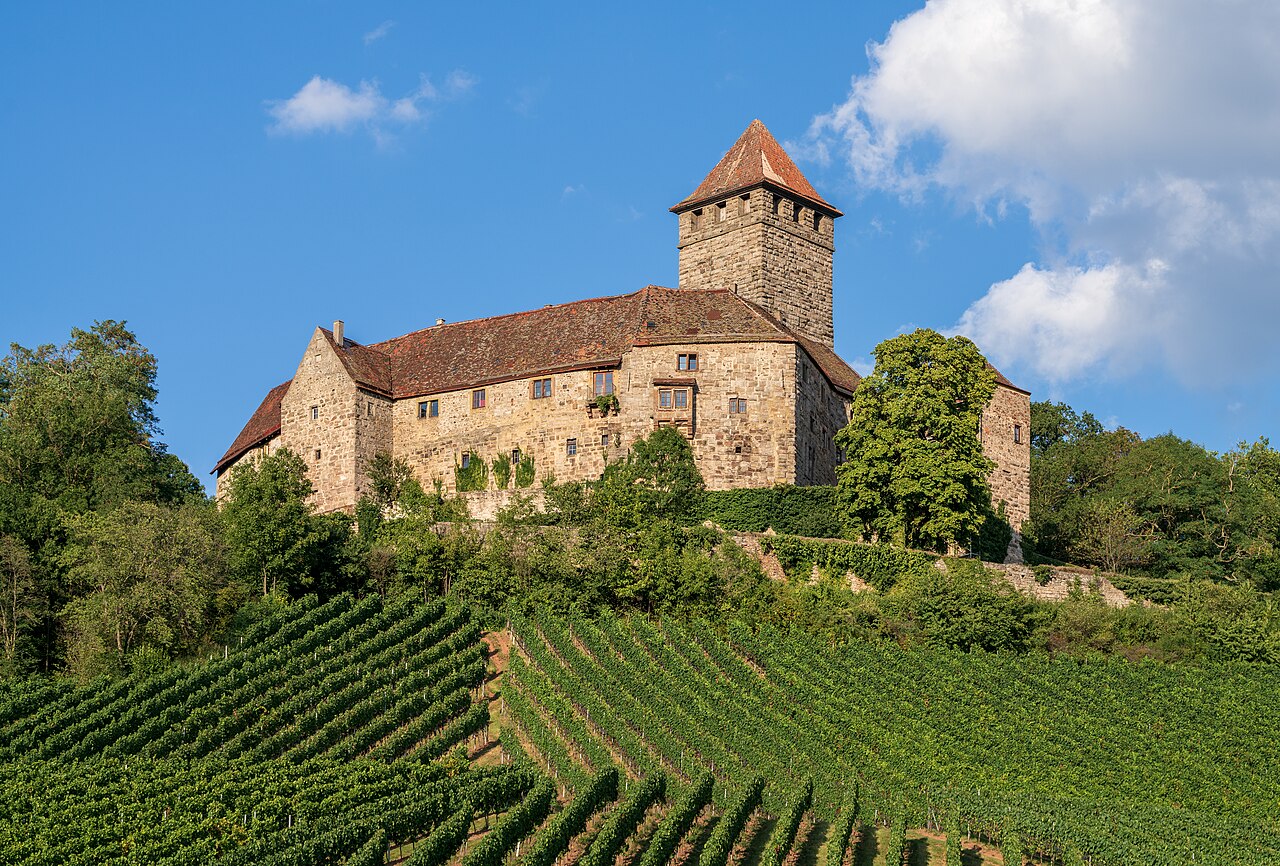
Lichtenberg Castle
Lichtenberg Castle, located in Thallichtenberg, Germany, is renowned as the largest castle ruin in Germany, stretching an impressive 425 meters in length. This hill castle is a monumental example of medieval fortification and architectural evolution, offering a rich tapestry of history, culture, and restoration efforts that span centuries. Its strategic position atop a ridge rising to about 394 meters above sea level provided natural defenses complemented by formidable manmade fortifications.
First mentioned in 1197, Lichtenberg Castle is among the oldest castles associated with the Staufer family in Germany. Built in the high medieval period, primarily during the 13th century, the castle's origins are closely tied to the Counts of Veldenz, who established it on land belonging to the Benedictine Abbey of Saint Remigius. Despite ecclesiastical opposition, the castle remained a symbol of feudal power and resilience, never succumbing to destruction through warfare.
Historical significance and ownership
The castle's history reflects the complex feudal and religious dynamics of the region. Its first recorded legal mention in 1214 highlights disputes over its construction on abbey territory, showcasing the tension between secular and ecclesiastical authorities. Ownership transitioned from the Counts of Veldenz to the Dukes of Palatinate-Zweibrücken after the Veldenz line ended in 1444, marking a new chapter in the castle's role as both a military stronghold and administrative center.
Throughout the 15th and 16th centuries, Lichtenberg Castle served multiple functions: a defensive fortress, a secondary ducal residence, an agricultural estate hub, and the seat of local governance and justice until 1755. It notably hosted prominent figures of the Protestant Reformation in 1529, including Ulrich Zwingli, Johannes Oecolampadius, Martin Bucer, and Johannes Sturm, who were en route to the significant Marburg Colloquy.
Although briefly occupied by French forces in 1693 during the War of the League of Augsburg, the castle remarkably avoided destruction. However, a devastating fire in 1799 caused severe damage, sparing only a few outbuildings such as the castle chapel and the land registry building. Subsequent centuries saw political shifts with the castle lands becoming part of the Duchy of Saxe-Coburg-Saalfeld and later the Kingdom of Prussia. Restoration efforts began in the early 20th century, preserving the castle as a protected monument and adapting parts for cultural use.
Architectural features and layout
Upper castle (oberburg)
The Upper Castle occupies the highest eastern point of the ridge and dates back to the late 12th or early 13th century. Its centerpiece is a massive square bergfried approximately 33 meters tall, which served as a lookout and last line of defense. This tower, restored and roofed in modern times, offers panoramic views of the surrounding landscape including the town of Kusel and the Prussian Mountains.
Surrounding the bergfried is an oval curtain wall enclosing residential and service buildings arranged around a narrow courtyard. The courtyard's access was controlled by a single gate, emphasizing the castle’s defensive design. The late Romanesque chapel, constructed between 1220 and 1230, stands out for its well-preserved mid-14th century murals, offering valuable insights into medieval religious art and architecture.
Lower castle (unterburg)
About 130 meters west lies the Lower Castle, established in the 14th century. It features a roughly rectangular layout with enclosing walls and a citadel. Today, much of this section remains in ruins except for the gate complex topped by the original castle chapel, which survived the 1799 fire intact. This chapel replaced an earlier St. George’s Chapel and remains a significant architectural and historical element of the site.
Defensive structures and expansions
In the late 15th and 16th centuries, the castle underwent significant fortification upgrades. A new outer wall unified the Upper and Lower Castles, enclosing the space between them and incorporating auxiliary buildings such as the tithe barn, rebuilt in 1738 and later restored to house the Palatinate Music Museum. Defensive enhancements included the construction of zwingermauern (outer walls) and bastions, particularly on vulnerable approaches, alongside a tall shield wall (schildmauer) to repel assaults. The castle’s natural steep slopes on three sides further augmented its formidable defenses.
Modern restoration and cultural significance
After centuries of decline and damage, Lichtenberg Castle was recognized as a protected architectural monument in 1895. Restoration efforts initiated in 1922 transformed parts of the castle, including converting the forecourt into a youth hostel and restoring the bergfried tower. The late 20th century saw the reconstruction of the tithe barn and the establishment of the Regional Music Museum, enhancing the castle’s role as a cultural venue.
Today, the castle is managed as a historical landmark within the Kusel district of Rhineland-Palatinate. It continues to attract visitors interested in medieval architecture, history, and cultural events. The castle's extensive ruins, combined with restored elements, provide a vivid window into the region's feudal past and architectural heritage.
Visiting lichtenberg castle
Visitors to Lichtenberg Castle can explore its expansive grounds, including the restored bergfried tower with its panoramic views, the castle chapel with its historic murals, and the Palatinate Music Museum housed in the renovated tithe barn. The castle also hosts a restaurant and offers youth hostel accommodations, making it a versatile destination for cultural tourism and historical exploration.
The castle's combination of natural setting, architectural grandeur, and rich history makes it a unique and compelling destination in Germany's Palatinate region.
Frequently asked questions (FAQ)
- How do I get to Lichtenberg Castle?
- Lichtenberg Castle is located in Thallichtenberg, Rhineland-Palatinate, Germany. It is accessible by car and public transportation, with parking available nearby and bus connections from Kusel.
- What is the historical significance of Lichtenberg Castle?
- Lichtenberg Castle is one of the oldest Staufer family castles in Germany, notable for its role in feudal administration, its connection to the Protestant Reformation, and its survival through centuries without destruction.
- Can I visit the bergfried tower?
- Yes, the bergfried tower at Lichtenberg Castle has been restored and is open to visitors. It offers panoramic views of Kusel and the surrounding Prussian Mountains.
- Is there a museum at Lichtenberg Castle?
- Yes, the Palatinate Music Museum is housed in the restored tithe barn within the castle grounds, showcasing regional musical heritage.
- Are there facilities for tourists at the castle?
- The castle features a restaurant and a youth hostel, providing dining and accommodation options for visitors.
- When is the best time to visit Lichtenberg Castle?
- The castle is open daily from 9:00 to 18:00, making spring through autumn the ideal seasons to enjoy the outdoor views and explore the extensive ruins comfortably.
Information
Opening hours
9:00-18:00, daily
Ticket prices
€5 adult, €3 child
Current owner
Municipality of Thallichtenberg
Website
Visit websiteSources & official resources
Verify the information above using these authoritative references.
Loading map...
Visitor reviews
No reviews yet. Been here? Write the first review and help other travelers!
Write the first reviewVisited this castle? Share your experience
Your review helps other travelers and adds first-hand knowledge to our encyclopedia.