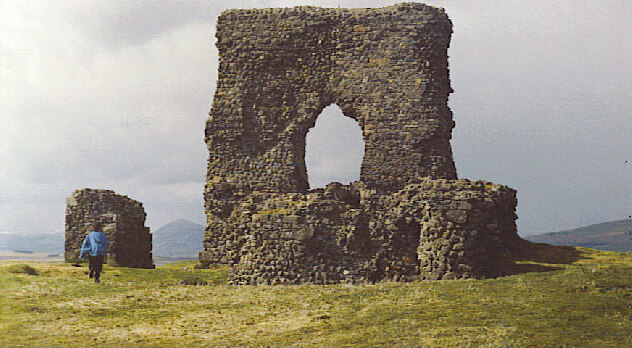
Lickleyhead Castle
Lickleyhead Castle stands as a remarkable example of early 17th-century Scottish tower house architecture, embodying centuries of history and architectural evolution. Located in Premnay, Aberdeenshire, Scotland, this castle reflects the legacy of prominent Scottish families such as the Leslie, Leith, Forbes, and Hay clans. Its strategic position on a hill and distinctive L-shaped layout underscore its role as both a defensive stronghold and a noble residence.
The castle's origins trace back to the 13th century when the estate was acquired by William Leith from George Leslie, marking the beginning of a long-standing association with the Leith family. The current structure, however, was primarily constructed around 1600, during a period of significant architectural development in Scotland. In 1625, ownership transferred to William Forbes of Leslie, who undertook substantial restoration and expansion work, evidenced by the dated inscription of 1629 on the oldest visible part of the castle, alongside the initials of Forbes and his wife.
Historical context and ownership lineage
The castle's history is intertwined with notable events and figures. William Forbes’s life was marked by tragedy and controversy; he lost his hand in an accidental shooting, an event contemporaneously interpreted as divine punishment for his involvement in the murder of Alexander Irvine. Following the restoration of the monarchy, Forbes was executed for this crime, illustrating the turbulent political and social climate of 17th-century Scotland.
Throughout the late 17th and early 18th centuries, Lickleyhead Castle passed through several hands, including the Hay family and later Patrick Duff of Craigston, who acquired the property in 1723. The Duff family contributed to the castle's evolution by adding a new wing and remodeling the interiors to suit contemporary tastes and needs. Further modifications were made in the 1820s when Henry Lumsden purchased the estate, continuing the tradition of adapting the castle to changing residential requirements.
In the 20th century, the castle gained an international dimension when Don Guillermo de Landa y Escandon, Governor of Mexico City, purchased it in 1922 as a wedding gift for his daughter Maria Luiz. Her marriage into the Leslie family brought the castle back into the extended Leslie lineage. Notably, actress Rose Leslie, Maria Luiz’s great-granddaughter, spent part of her childhood at Lickleyhead Castle, linking the site to contemporary cultural heritage.
Architectural features and design
Layout and exterior elements
Lickleyhead Castle exhibits a traditional L-shaped plan, typical of Scottish tower houses of the early 1600s. The main block extends along an east-west axis, with a southward projecting wing creating two prominent facades. The northern front of the main block is distinguished by two-storey turrets supported by corbels, featuring rare oval windows on their upper floors, which add a refined architectural detail uncommon in similar structures.
A notable feature is the semi-circular stair turret positioned at the western angle between the two wings. This turret is heavily corbelled and uniquely transitions from a round base to a square upper section. It houses a spiral staircase providing access to a watch room situated in the south wing, highlighting the castle’s dual defensive and residential functions. The building is crowned with crow-stepped gables, a characteristic element of Scottish architecture, and its exterior walls are finished with traditional harling plaster, topped with a slated roof.
Defensive and interior aspects
The tower rises to three storeys plus an attic and garret, lacking gun loops but equipped with twelve shot holes for defense. Decorative pediments above doors and windows enhance the castle's aesthetic appeal, reflecting architectural trends of the early 17th century. The vaulted basement contains essential service areas such as the kitchen and cellar, illuminated by narrow slit windows designed for security.
Access to the basement is through a doorway located in the main re-entrant angle on the south side. A turnpike stair ascends from the basement to the first floor, with further vertical circulation provided by the turret stair. Internally, the castle features an excellent hall serving as the principal living and gathering space, with interiors remodeled during the 18th and 19th centuries to reflect evolving tastes.
Comparative architectural significance
Architecturally, Lickleyhead Castle shares similarities with Craigievar Castle, another notable Scottish tower house historically connected to the Forbes family. Both castles exemplify the refined Scottish baronial style of the period, combining defensive features with elegant residential design. The preservation of original elements such as vaulted basements, stair turrets, and pediments after restorations around 1876 has ensured that Lickleyhead Castle remains a valuable example of its architectural type.
Preservation and current status
Today, Lickleyhead Castle is recognized as a Category A listed building, underscoring its importance as a well-preserved Scottish tower house with significant historical and architectural value. The castle is in well-preserved condition, maintaining much of its original character despite centuries of modifications and restorations. Its continued private ownership and recent acquisition by the Davies family reflect ongoing efforts to conserve this heritage site.
Cultural and historical legacy
Lickleyhead Castle's rich history, from its medieval origins through its 17th-century reconstruction and later adaptations, illustrates the dynamic nature of Scottish noble residences. Its connections to prominent families, tragic historical events, and links to contemporary figures such as Rose Leslie contribute to its cultural resonance. The castle stands not only as an architectural monument but also as a testament to the layered history of Scotland's aristocracy and their estates.
Frequently asked questions (FAQ)
- When was Lickleyhead Castle built?
- Lickleyhead Castle was primarily constructed around 1600, with significant restoration and expansion completed in 1629.
- What architectural style characterizes Lickleyhead Castle?
- The castle features a mixed architectural style typical of Scottish tower houses from the early 17th century, including crow-stepped gables and corbelled turrets.
- Is Lickleyhead Castle open to the public?
- Lickleyhead Castle is privately owned and not generally open to the public, so visitors should check for any special events or private tours.
- What are the notable features of Lickleyhead Castle's design?
- Notable features include its L-shaped layout, two-storey corbelled turrets with oval windows, a semi-circular stair turret, vaulted basement, and decorative pediments.
- Who were the historical owners of Lickleyhead Castle?
- The castle was historically owned by the Leslie, Leith, Forbes, Hay, Duff, and Lumsden families, with connections to Mexican Governor Don Guillermo de Landa y Escandon in the 20th century.
Information
Sources & official resources
Verify the information above using these authoritative references.
Loading map...
Visitor reviews
No reviews yet. Been here? Write the first review and help other travelers!
Write the first reviewVisited this castle? Share your experience
Your review helps other travelers and adds first-hand knowledge to our encyclopedia.