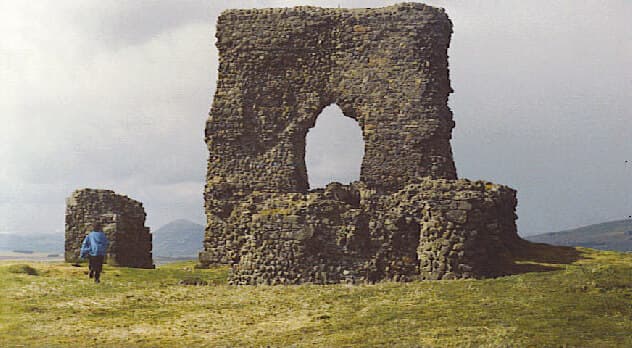
Dunnideer Castle Ruins
Dunnideer Castle ruins stand near the village of Insch in Aberdeenshire, Scotland, representing a significant example of a 13th-century tower house constructed within the remains of an ancient prehistoric fortification. The castle was built around c. 1260, during the High Medieval period, reusing stone from an earlier vitrified hillfort dating back to approximately 250 BC. This combination of prehistoric and medieval defensive architecture makes Dunnideer a unique site in Scottish heritage.
Historical context and origins
The site of Dunnideer Castle has a long history of occupation and defense. The original prehistoric hillfort, characterized by vitrified stone walls—a rare form of ancient construction where stone was subjected to intense heat causing partial melting and fusion—dates to the Iron Age, around 250 BC. The vitrification process suggests a significant effort in fortification, possibly intended to strengthen the ramparts against attack.
During the 13th century, a period marked by the consolidation of feudal power and the construction of fortified residences in Scotland, the tower house of Dunnideer was erected. The builders incorporated the remains of the prehistoric fort into their design, utilizing the elevated position and existing defensive earthworks.
Architectural features of the tower house
The medieval structure at Dunnideer was a rectangular tower house measuring approximately 15 metres by 12.5 metres (49 by 41 feet). The walls were notably thick, about 1.9 metres (6.2 feet), typical of defensive architecture intended to withstand attacks and sieges. The tower likely rose several stories, with archaeological evidence indicating the presence of a first-floor hall, which would have served as the main living and reception area.
The internal layout probably included multiple floors connected by narrow staircases or ladders, common in Scottish tower houses of the period. The tower’s elevated position atop the hillfort provided commanding views of the surrounding landscape, serving both defensive and symbolic purposes.
Defensive elements and construction techniques
The reuse of vitrified stone from the prehistoric fort was both practical and symbolic, linking the medieval occupants to the ancient heritage of the site. The thick stone walls were constructed using local materials, bonded with lime mortar. The tower’s design emphasized verticality and compactness, typical of Scottish tower houses intended for both residence and defense.
While much of the castle is now in ruins, remnants of the thick walls and foundations remain visible, allowing for study of medieval masonry techniques and defensive planning.
The prehistoric vitrified hillfort
The earlier fortification beneath Dunnideer Castle is one of the few known examples of vitrified forts in Scotland. These forts are characterized by walls that have been subjected to intense heat, causing the stones to fuse together. The exact purpose and method of vitrification remain subjects of archaeological research, but it is generally believed to have been a deliberate process to strengthen the defenses.
The prehistoric hillfort enclosed a strategic hilltop location, providing natural defensive advantages. Its presence indicates the long-term significance of this site in controlling local territory and monitoring surrounding areas.
Preservation and current status
Today, Dunnideer Castle is classified as ruins and is recognized as a scheduled monument, reflecting its importance as a cultural heritage site. The remains of the tower house and the underlying vitrified hillfort are protected by law, ensuring their conservation for future generations.
Visitors to the site can observe the surviving stone walls and foundations, gaining insight into both prehistoric and medieval fortification methods. The remote location and exposed hilltop setting contribute to the castle’s atmospheric ruins.
Access and visitor information
Dunnideer Castle ruins are accessible to the public, although facilities are minimal due to the site's archaeological nature. Visitors are advised to wear appropriate footwear for uneven terrain and to respect the preservation efforts by not disturbing the stonework.
Significance in Scottish castle history
Dunnideer Castle provides a rare example of a medieval tower house integrated within a prehistoric fortification, illustrating continuity of defensive use across centuries. It reflects the architectural evolution from ancient hillforts to more compact, vertical stone residences typical of the Scottish medieval landscape.
The site offers valuable insights into construction techniques, defensive strategies, and the adaptation of earlier sites for medieval purposes. It stands as a testament to the layered history of Scotland's fortifications and the enduring importance of strategic hilltop locations.
Frequently asked questions (FAQ)
- What is the historical significance of Dunnideer Castle Ruins?
- Dunnideer Castle Ruins are a significant historical site, dating back to the late 12th century. It is believed to have served as a fortress and residence for the local nobility, playing a crucial role in the region's medieval history.
- When was Dunnideer Castle built?
- Dunnideer Castle was constructed in the late 12th century, with evidence suggesting it was built around 1180. Its strategic location provided a vantage point for defense and control over the surrounding landscape.
- Is it possible to access Dunnideer Castle Ruins?
- Yes, Dunnideer Castle Ruins are accessible to the public, allowing visitors to explore the remnants of this historical structure. Please be aware that there are no formal visitor facilities, so it is advisable to wear appropriate footwear and exercise caution while exploring.
- What are the opening hours for Dunnideer Castle?
- Dunnideer Castle Ruins are open to visitors year-round, with no specific opening hours. As an outdoor site, it is best to visit during daylight hours for safety and to fully appreciate the views and surroundings.
- Can I take photos at Dunnideer Castle Ruins?
- Absolutely! Visitors are encouraged to take photos of the stunning ruins and surrounding landscapes. The site offers picturesque views, making it a perfect spot for photography enthusiasts.
- When is the best time to visit Dunnideer Castle?
- The best time to visit Dunnideer Castle Ruins is during the spring and early autumn months when the weather is mild and the landscape is at its most vibrant. Visiting during these seasons also helps to avoid the harsh winter weather.
- Are there any nearby attractions to explore?
- Yes, there are several nearby attractions, including the charming village of Insch and the scenic Aberdeenshire countryside. Additionally, visitors can explore other historical landmarks and nature trails in the region, making it a great day out.
- What are the ticket prices for visiting Dunnideer Castle?
- There is no admission fee to visit Dunnideer Castle Ruins, making it an accessible destination for all visitors. However, donations to help maintain the site are always appreciated.
- How do I get to Dunnideer Castle Ruins?
- Dunnideer Castle Ruins can be accessed by car or on foot from nearby Insch. It is advisable to check local maps or GPS for the best routes, as the castle is situated on a hillside, requiring a short walk to reach the ruins.
Photo gallery

Information
Loading map...
Visitor reviews
No reviews yet. Been here? Write the first review and help other travelers!
Write the first reviewVisited this castle? Share your experience
Your review helps other travelers and adds first-hand knowledge to our encyclopedia.


