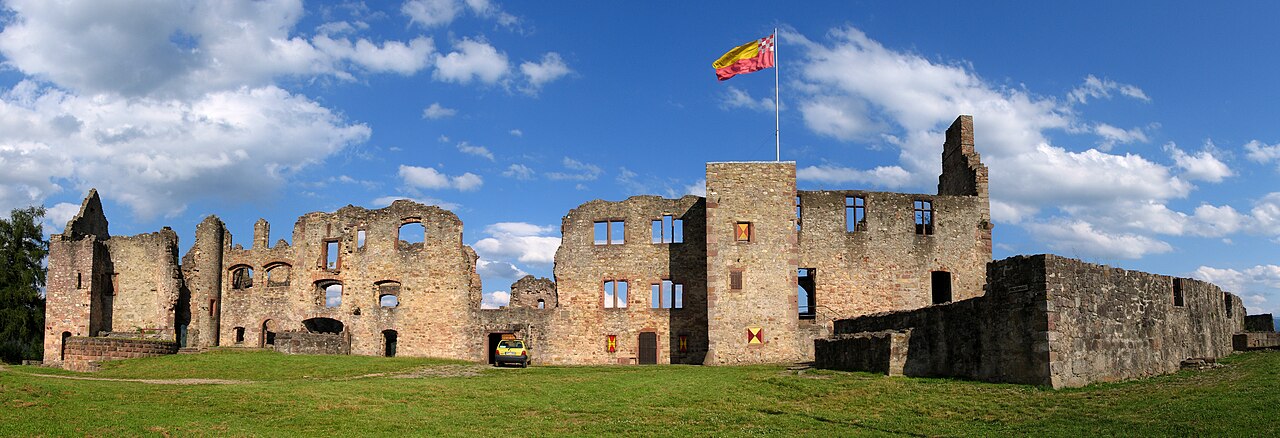
Lichteneck Castle Ruins
Lichteneck castle ruins are located in the town of Hecklingen, Germany. The castle was first documented in 1282, marking its origins in the high medieval period. It was originally a property of the Counts of Freiburg, a noble family with significant influence in the region during the Middle Ages. The castle served as a strategic stronghold and residence, typical of medieval fortifications designed to control the surrounding territory and assert feudal power.
Historical background and significance
The castle's earliest mention in 1282 places it firmly within the high medieval era, a time characterized by the construction of many stone castles across Europe. These fortifications were essential for defense, administration, and symbolizing noble authority. Lichteneck castle was no exception, functioning as a seat for the Counts of Freiburg and playing a role in regional power dynamics.
Throughout its existence, the castle witnessed various political and military events typical of the period. Its location in Hecklingen, within the historical boundaries of the Holy Roman Empire, made it a valuable asset for controlling trade routes and local governance.
Destruction and current condition
On 15 April 1675, Lichteneck castle was destroyed by forces under General Vaubrun. This event occurred during a period of frequent conflicts in the region, including the Thirty Years' War and subsequent military struggles that reshaped territorial control in Central Europe.
The destruction left the castle in ruins, and it has remained so ever since. Today, Lichteneck is classified as ruins, with remnants of its stone walls and foundations still visible. These ruins provide valuable insights into medieval castle architecture and the historical context of the region.
Architectural features and layout
While much of the original structure has been lost, archaeological studies and remaining ruins suggest that Lichteneck castle featured typical high medieval defensive architecture. It likely included thick stone walls, a keep or donjon as the main fortified tower, and possibly a courtyard surrounded by various outbuildings.
The castle's design would have incorporated arrow slits, battlements, and other defensive elements common in the 13th century. Its elevated position in Hecklingen would have provided strategic views over the surrounding landscape, enhancing its defensive capabilities.
Preservation and cultural importance
Today, Lichteneck castle ruins serve as a cultural and historical landmark in Hecklingen. Efforts to preserve the site focus on maintaining the remaining stonework and providing access for visitors interested in medieval history and architecture.
The ruins offer educational opportunities and a tangible connection to the region's medieval past. They attract historians, archaeologists, and tourists who seek to explore the legacy of the Counts of Freiburg and the architectural styles of the high medieval period.
Visiting Lichteneck castle ruins
Visitors to the Lichteneck castle ruins can explore the site and enjoy views of the surrounding countryside. While the castle is in ruins, informational signage and guided tours may be available to enhance understanding of its history and architecture.
The site is accessible year-round, though visitors should be prepared for uneven terrain typical of castle ruins. Lichteneck provides an evocative glimpse into medieval fortifications and the historical landscape of Hecklingen.
Frequently asked questions (FAQ)
- What is the historical significance of Lichteneck Castle Ruins?
- Lichteneck Castle Ruins date back to the 12th century and serve as a testament to the medieval architecture and feudal history of the region. Once an important stronghold, it played a key role in local defense and governance. Today, it stands as a popular site for visitors interested in history and architecture.
- When was Lichteneck Castle built?
- Lichteneck Castle was constructed in the early 12th century, with its exact date of establishment often debated among historians. The castle was strategically built on a hill to oversee the surrounding area, reflecting the military needs of its time. Over the centuries, it underwent various modifications and expansions.
- Can I visit Lichteneck Castle Ruins?
- Yes, Lichteneck Castle Ruins are open to the public, and visitors can explore the remains at their leisure. It's a great spot for hiking and photography, offering stunning views of the surrounding landscape. However, be sure to check local guidelines for any specific visiting restrictions.
- What are the opening hours for Lichteneck Castle Ruins?
- The castle ruins are typically open year-round, allowing visitors to explore at their convenience. However, it's wise to check local resources or the official tourism website for any seasonal changes in hours or special events that may affect access.
- Is it possible to access Lichteneck Castle by public transport?
- While public transport options may be limited, visitors can reach Hecklingen by train or bus and then take a short walk to the castle ruins. For more convenience, consider using a bicycle or car rental service available in nearby towns. Always check local transport schedules for the most accurate information.
- What is the best time to visit Lichteneck Castle Ruins?
- The best time to visit Lichteneck Castle Ruins is during the spring and early autumn months when the weather is mild and the surrounding nature is at its most beautiful. Summer can also be pleasant, but it may attract more visitors. Consider visiting during weekdays for a quieter experience.
- Are there any nearby attractions to visit along with Lichteneck Castle?
- Yes, several attractions are located near Lichteneck Castle, including the charming town of Hecklingen and various hiking trails in the region. You can also explore other historical sites, such as nearby churches and museums that highlight the area’s cultural heritage. These make for a well-rounded day of exploration.
- What are the ticket prices for visiting Lichteneck Castle Ruins?
- Lichteneck Castle Ruins are generally free to visit, making it an accessible option for anyone interested in history and architecture. However, there may be guided tours or special events that require a ticket fee. Always check ahead for any updates on pricing or special access.
Loading map...
Visitor reviews
No reviews yet. Been here? Write the first review and help other travelers!
Write the first reviewVisited this castle? Share your experience
Your review helps other travelers and adds first-hand knowledge to our encyclopedia.