Libochovice Castle
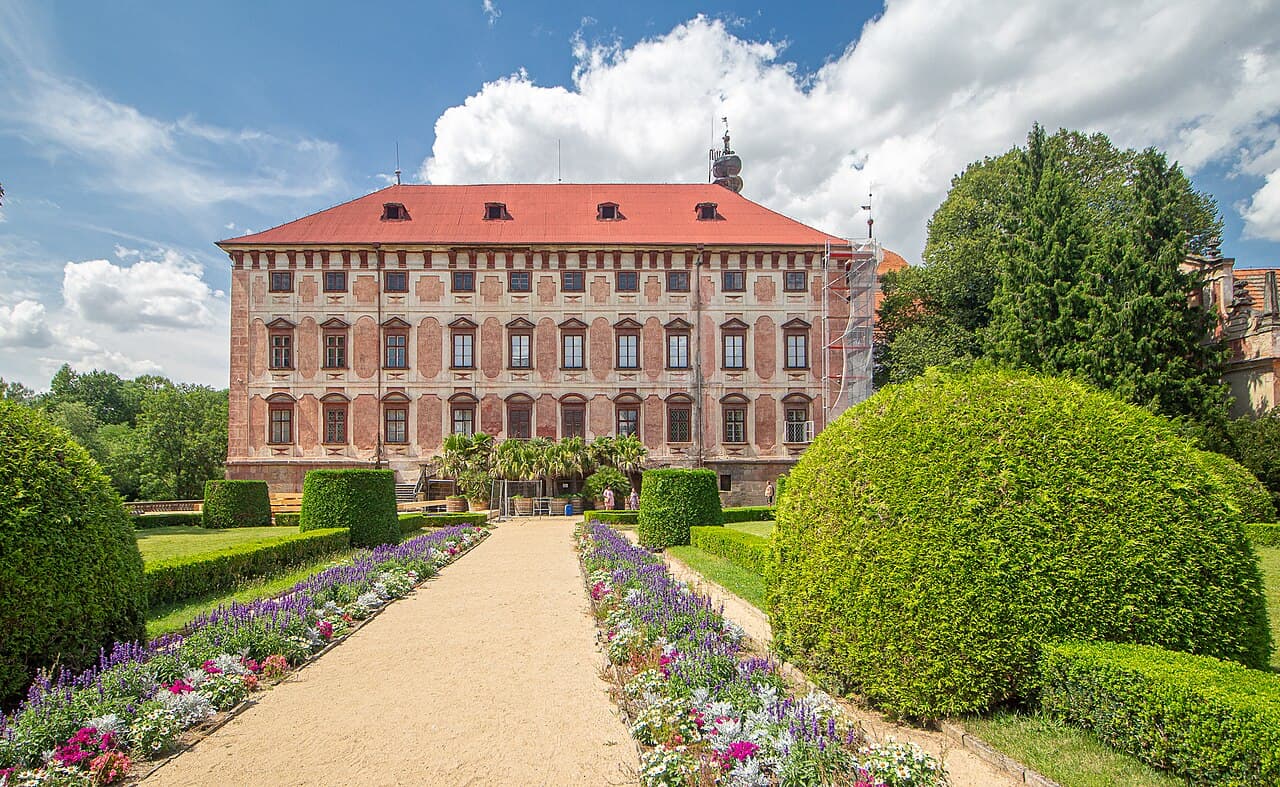
Libochovice Castle stands as a remarkable example of architectural evolution in the Czech Republic, showcasing a transition from Renaissance origins to one of the country's most significant early Baroque reconstructions. Situated in the centre of Libochovice town in the Ústí nad Labem Region, this castle occupies the site of a former Gothic fort. The transformation into a Renaissance castle was initiated by Jan z Lobkowicz between 1560 and 1564, reflecting the stylistic preferences of the period with its balanced proportions and classical elements.
The renaissance foundation and early history
The original Gothic fortification that once stood on this site was replaced in the mid-16th century, marking a significant shift in architectural style and function. The Renaissance castle built by Jan z Lobkowicz emphasized residential comfort and aesthetic appeal while retaining defensive features typical of the era. However, by the end of the 16th century, the castle was confiscated and became property of the royal family, indicating its strategic and political importance within the region.
Baroque transformation under the Dietrichstein family
In 1613, the property was acquired by High Burgrave Adam ze Štenberka, but it was the purchase by Gundakar z Dietrichsteina in 1676 that marked a new chapter. Between 1682 and 1690, the castle underwent a comprehensive Baroque reconstruction under the direction of the renowned architect and builder Antonio della Porta. This renovation introduced dynamic forms, grandiose decorations, and a more theatrical spatial arrangement characteristic of the Baroque style.
Architectural features of the Baroque period
The Baroque redesign included the addition of richly decorated facades, ornate interiors, and the creation of formal gardens that enhanced the castle's grandeur. The gardens, initially laid out in the French formal style in 1685, featured geometric patterns, parterres, and carefully sculpted greenery designed to complement the castle's imposing structure.
Later garden developments
In the mid-19th century, specifically after 1853, the gardens were extended and transformed into the English landscape style. This shift reflected changing tastes toward more naturalistic and romantic garden designs, with winding paths, varied plantings, and a more informal layout that contrasted with the original French formalism.
Interior collections and cultural significance
Libochovice Castle houses an impressive collection of period furnishings, including valuable tapestries, glassware, porcelain, and a unique Baroque tile stove. These collections provide insight into the lifestyle and artistic preferences of the castle's historical inhabitants. The interiors reflect the Baroque emphasis on luxury, comfort, and artistic expression.
Birthplace of Jan Evangelista Purkyně
A notable historical figure associated with the castle is Jan Evangelista Purkyně, a prominent Czech scientist and scholar born here in 1787. His contributions to physiology and biology mark an important chapter in Czech scientific history, adding cultural and intellectual significance to the castle's heritage.
Current status and visitor information
Today, Libochovice Castle is owned by the state and protected as a national cultural monument. It is open to the public with guided tours that allow visitors to explore its richly decorated rooms and extensive collections. The castle's preservation and presentation highlight its architectural and historical importance within the Czech Republic.
Visiting experience
Visitors can admire the blend of Renaissance and Baroque architectural elements, stroll through the English-style gardens, and view the castle's collections of tapestries and porcelain. The castle's location in the Ústí nad Labem Region makes it accessible for those interested in exploring Czech cultural landmarks beyond the major cities.
Frequently asked questions (FAQ)
- When was Libochovice Castle originally built?
- Libochovice Castle was originally constructed as a Renaissance castle between 1560 and 1564 on the site of a former Gothic fort.
- What architectural styles are represented in Libochovice Castle?
- The castle features Renaissance foundations with a significant Baroque transformation carried out between 1682 and 1690 by Antonio della Porta.
- Who was Jan Evangelista Purkyně and what is his connection to the castle?
- Jan Evangelista Purkyně was a prominent Czech scientist born in Libochovice Castle in 1787, known for his contributions to physiology and biology.
- Are the gardens at Libochovice Castle open to visitors?
- Yes, visitors can explore the castle's gardens, which were originally designed in the French style and later transformed into English landscape gardens in the 19th century.
- Is Libochovice Castle open for guided tours?
- The castle is owned by the state and offers guided tours that showcase its historic interiors and collections.
Photo gallery

Information
Sources & official resources
Verify the information above using these authoritative references.
Loading map...
Visitor reviews
No reviews yet. Been here? Write the first review and help other travelers!
Write the first reviewVisited this castle? Share your experience
Your review helps other travelers and adds first-hand knowledge to our encyclopedia.