Lezhë Castle
Lezhë Castle, locally known as Kalaja e Lezhës, stands as a significant historical fortress overlooking the town of Lezhë in northern Albania. Perched on a hill approximately 180 meters above sea level on the left bank of the Drin River, this castle occupies a site rich in history dating back to antiquity. The castle's origins trace to the 4th-3rd century B.C., when the Illyrian city of Lissos established an acropolis here, serving as a strategic and cultural center in the region.
The castle itself was initially constructed during the Byzantine Empire in the 8th or 9th century atop the ruins of the Illyrian acropolis. It is one of the enduring examples of fortifications that reflect the complex history of the Balkans, bearing architectural imprints from multiple eras and rulers. The castle was referenced in the early 12th century by the Byzantine princess and historian Anna Komnene in her work, the Alexiad, under the name "Elissonit," highlighting its importance during the Byzantine period.
Architectural evolution and strategic significance
Throughout the Middle Ages, Lezhë Castle underwent numerous changes reflecting the shifting political landscape. In the 14th century, as the Byzantine Empire weakened, local aristocratic families vied for control of the castle and the surrounding town. This period of instability saw the fortress change hands multiple times among regional powers.
In 1393, to resist the advancing Ottoman Empire, the castle came under the control of the Venetian Republic, facilitated by the Dukagjini family, a prominent Albanian noble house. The Venetians referred to it as Alessio Castle and undertook significant reconstruction efforts in the early 15th century, enhancing its defensive capabilities with updated fortifications and adapting it to contemporary military needs.
The league of Lezhë and Skanderbeg
One of the castle's most notable historical moments occurred in 1444 when it became the founding site of the League of Lezhë. This alliance of Albanian principalities was orchestrated by the national hero Gjergj Kastrioti Skanderbeg to mount a united resistance against the Ottoman Empire. The formation of the league marked a significant chapter in Albanian history, symbolizing national unity and defiance.
Ottoman rule and later modifications
The Ottomans captured Lezhë Castle in 1478, incorporating it into their expanding empire. Under the reign of Sultan Suleiman the Magnificent, the fortress was reconstructed again in 1521 to strengthen its defenses and adapt it to the evolving military technologies of the time. Ottoman architectural influences became evident in the additions, including the construction of a mosque within the castle grounds, reflecting the cultural and religious changes under Ottoman administration.
Architectural features and ruins
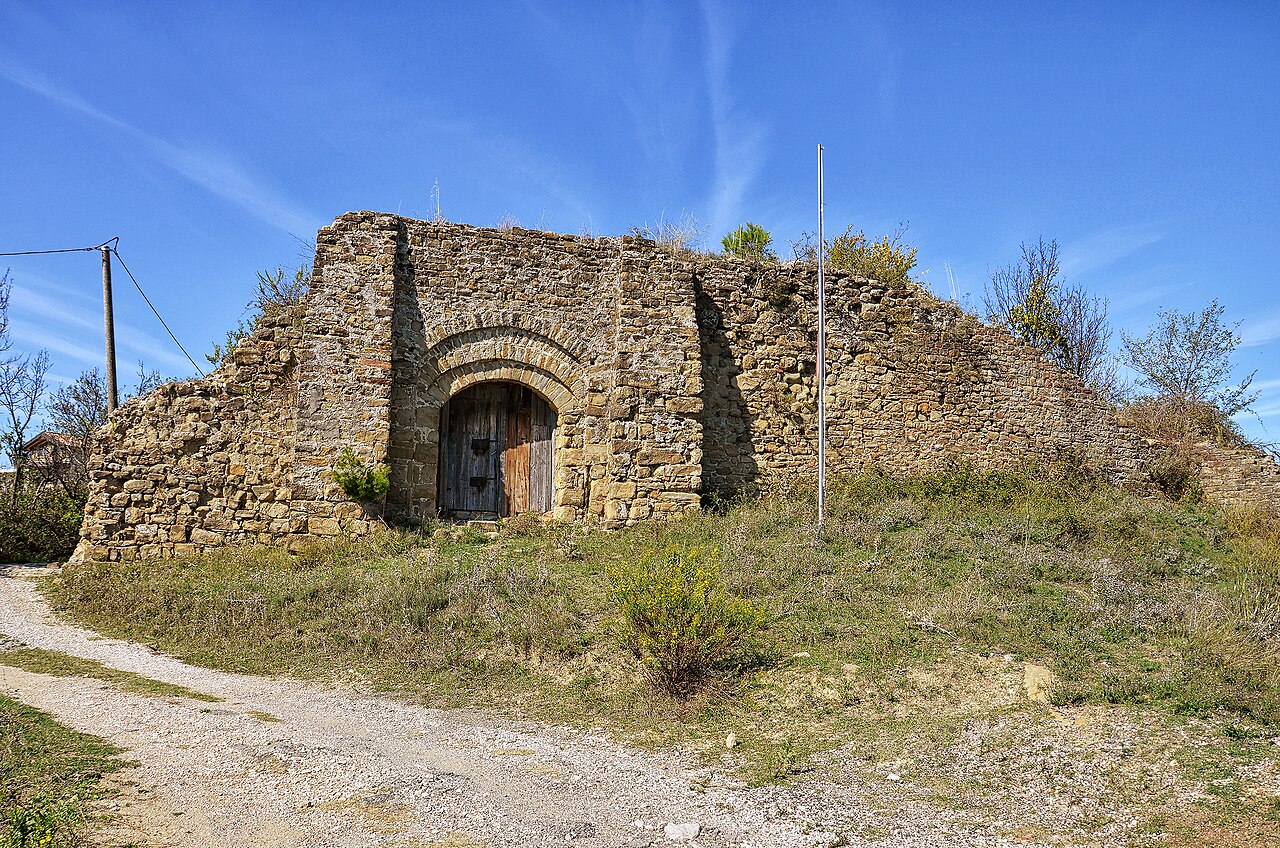
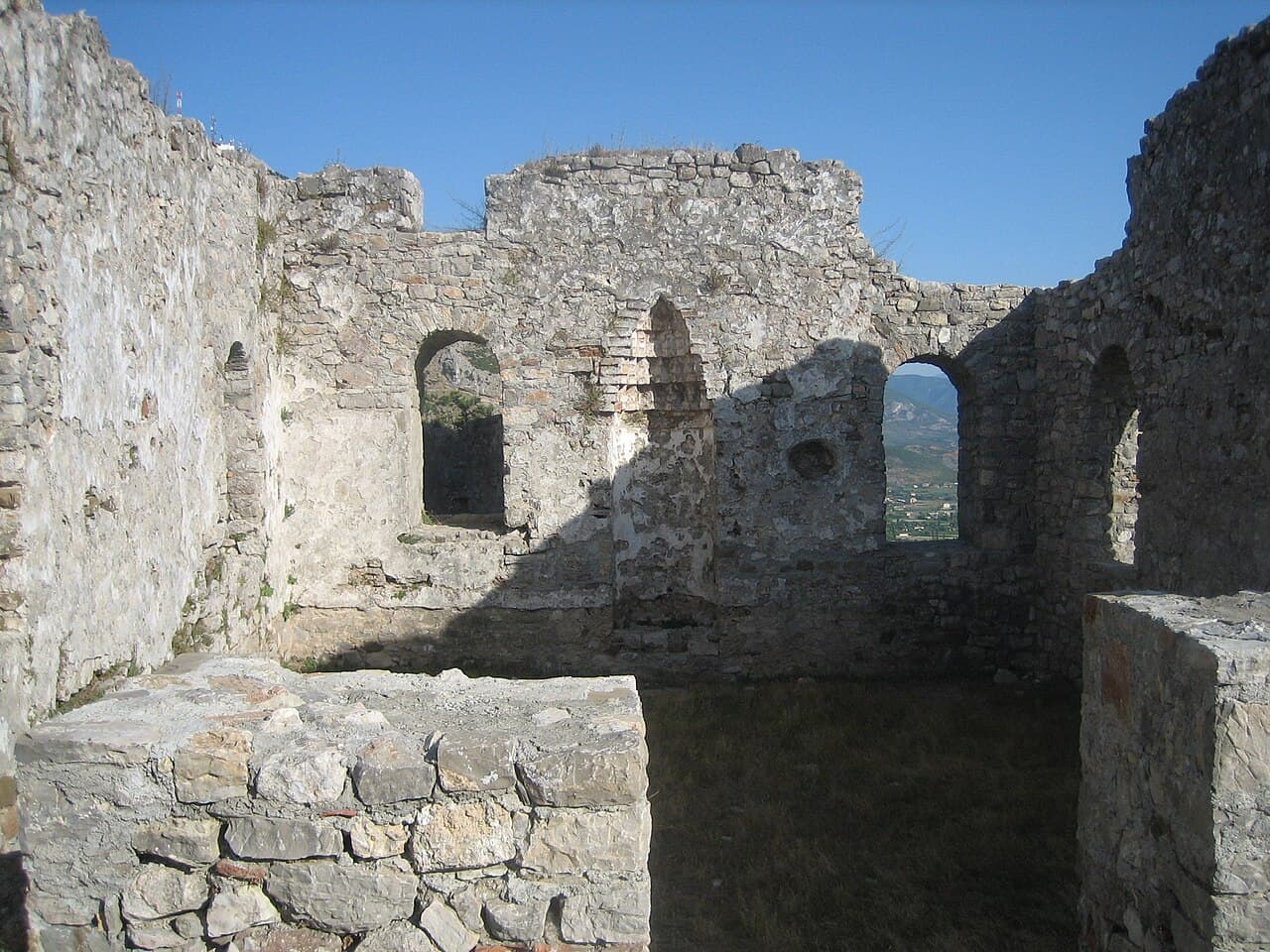
The castle today is classified as archaeological ruins, with remnants that showcase a blend of Illyrian, Roman, Byzantine, Venetian, and Ottoman architectural styles. Among the notable features are the ruins of Ottoman buildings, the remains of a mosque, and defensive towers. One prominent structure is the tower on the southeastern wall, distinguished by a Roman arch, while the southern wall features an Illyrian tower, underscoring the site's long history of fortification.
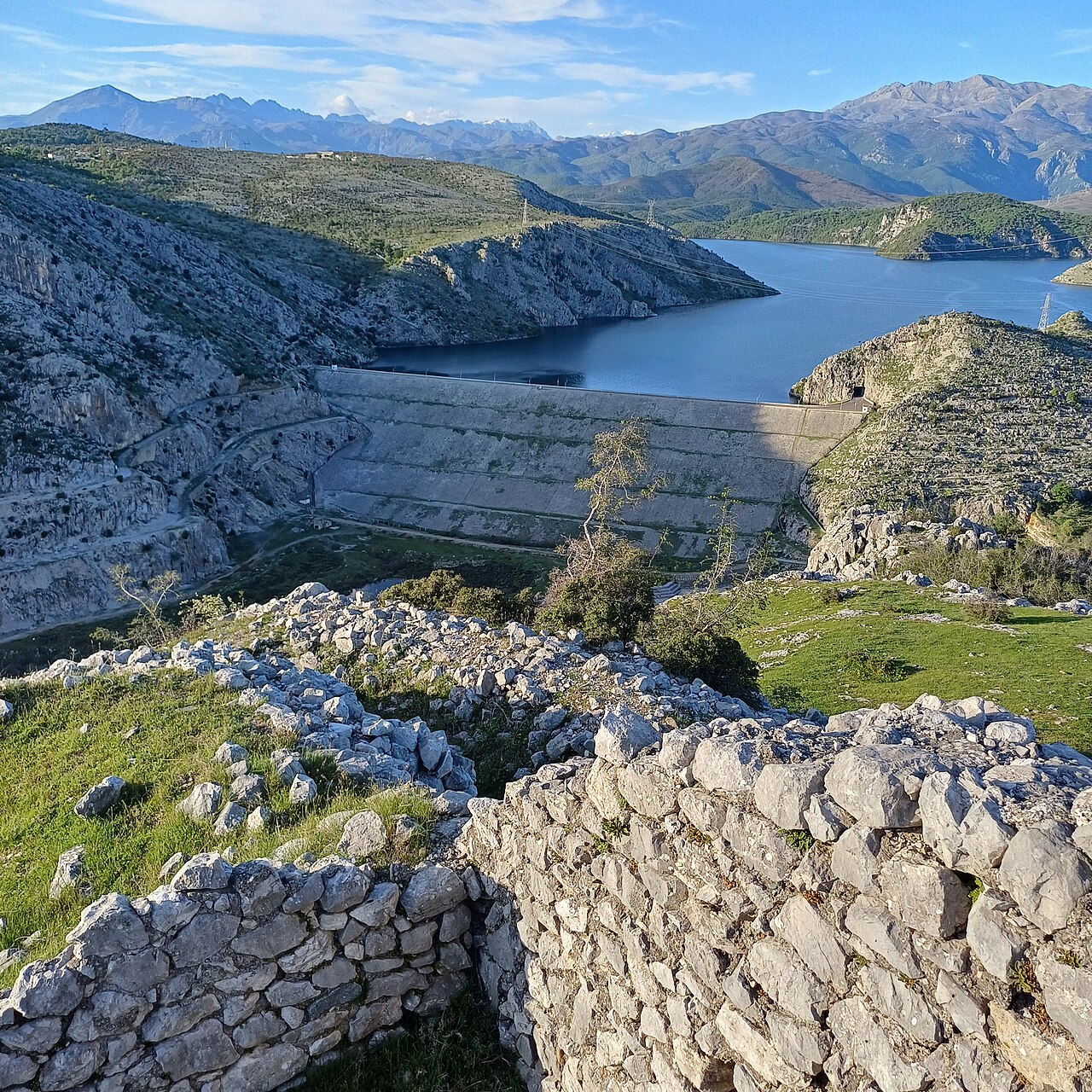
The castle's walls and battlements, though partially ruined, still offer insight into medieval military architecture. The location provides commanding views over the Drin River valley, the fertile Lezhë plain, and the Adriatic Sea coast, highlighting its strategic importance for controlling trade routes and regional defense.
Decline and preservation
The castle's strategic importance declined after an earthquake in 1729 caused significant damage. Following this natural disaster, the fortress was gradually abandoned. The last military occupants left in 1913, marking the end of its active use as a defensive structure. Further damage occurred during the 1979 Montenegro earthquake, which affected the structural integrity of the remaining ruins.
Today, Lezhë Castle is recognized as a cultural monument and is accessible to visitors for a small fee during working hours. It remains a site of historical and archaeological interest, attracting tourists who come to explore its ruins and enjoy panoramic views of northern Albania's landscape.
Historical context and significance
Lezhë Castle's history reflects the broader geopolitical shifts in the Balkans over more than two millennia. From its Illyrian origins to its role in Byzantine, Venetian, and Ottoman rule, the castle has been a focal point of military and political activity. Its association with Skanderbeg and the League of Lezhë cements its place in Albanian national identity and heritage.
The castle also provides valuable archaeological insights into the evolution of fortification techniques and architectural styles across different eras. Its ruins serve as a tangible link to the past civilizations that shaped the region's culture and history.
Visitor experience and accessibility
Visitors to Lezhë Castle can explore the extensive ruins, including towers, walls, and remnants of buildings from various historical periods. The site offers excellent vantage points for photography and sightseeing, with views extending over the Adriatic coast and the surrounding plains.
The castle is open during regular working hours, with a modest entrance fee. It is advisable to visit during daylight to fully appreciate the site's historical features and the natural beauty of the landscape. Nearby, visitors can explore the town of Lezhë, which offers additional cultural and historical attractions.
Frequently asked questions (FAQ)
- When was Lezhë Castle originally built?
- Lezhë Castle was originally built in the 8th or 9th century on the site of an ancient Illyrian acropolis dating back to the 4th-3rd century B.C.
- What is the historical significance of Lezhë Castle?
- Lezhë Castle is historically significant as the site where the League of Lezhë was formed in 1444 by Skanderbeg to unite Albanian principalities against the Ottoman Empire.
- Can visitors access Lezhë Castle today?
- Yes, Lezhë Castle is accessible to visitors for a small fee during working hours, offering views of the Drin River, Lezhë plain, and the Adriatic coast.
- What architectural styles are represented in Lezhë Castle?
- The castle exhibits a blend of Illyrian, Roman, Byzantine, Venetian, and Ottoman architectural styles due to its long history and multiple reconstructions.
- Why did Lezhë Castle lose its strategic importance?
- The castle lost its strategic importance after it was damaged by an earthquake in 1729 and was gradually abandoned thereafter.
Photo gallery

Photo by Belgian man•Public domain
Information
Loading map...
Visitor reviews
No reviews yet. Been here? Write the first review and help other travelers!
Write the first reviewVisited this castle? Share your experience
Your review helps other travelers and adds first-hand knowledge to our encyclopedia.