Lemberg Castle
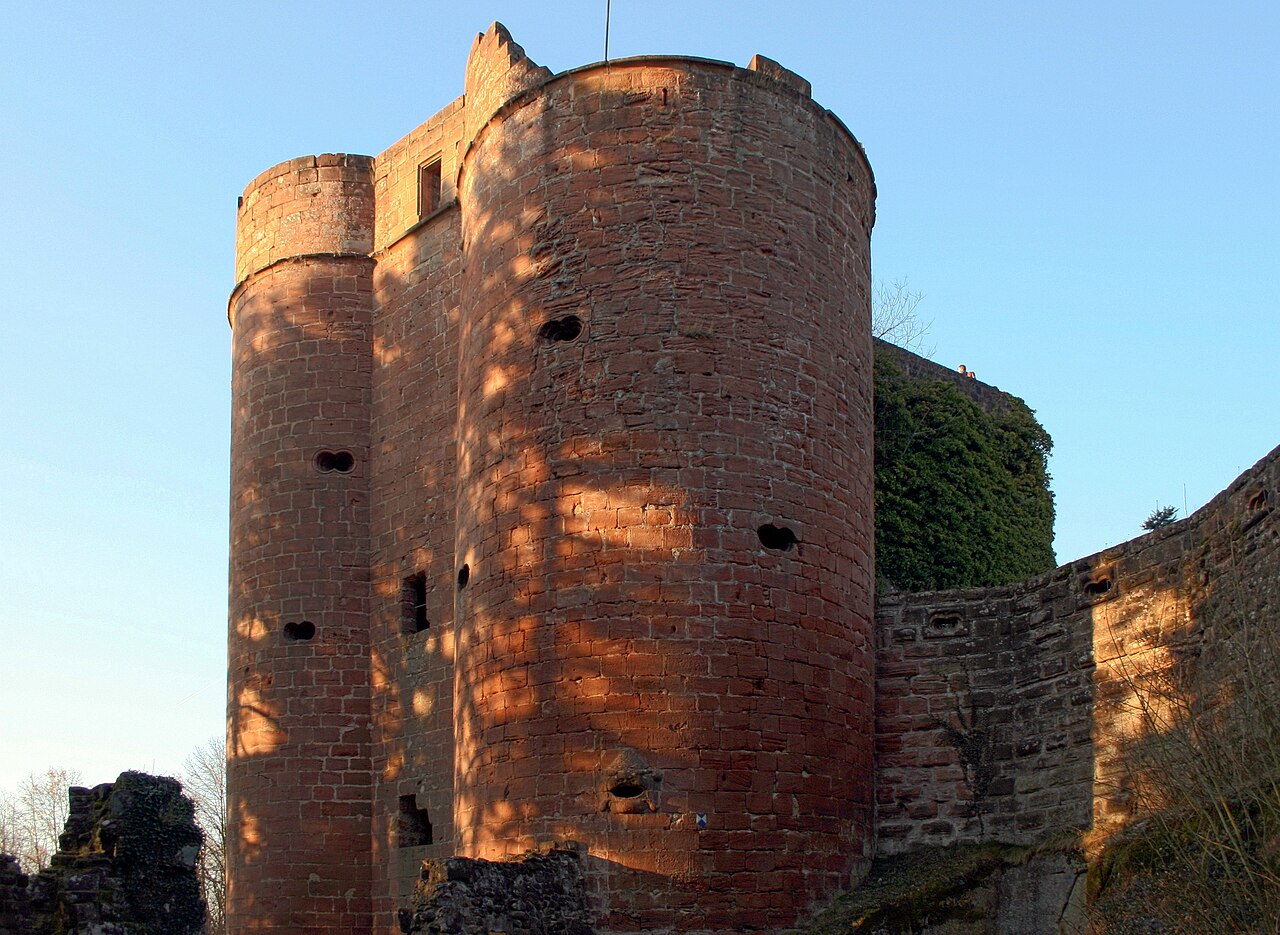
Lemberg Castle, known locally as Burg Lemberg, is a historic medieval fortress situated on the Schlossberg hill near the village of Lemberg in the Rhineland-Palatinate region of Germany. Constructed around the year 1200, this hill castle was originally established by Henry I, Count of Zweibrücken, following the grant of the surrounding hills by the Hornbach Abbey in 1198. The castle’s earliest documented mention dates to 1230, under the name Castrum Lewenberc, marking its early significance in the region.
Early history and medieval origins
The castle was strategically built on two hills, the Gutinberc and Ruprehtisberc, to serve as a fortified residence and administrative center for the Counts of Zweibrücken. The first known castellan, Gozo of Lemberg, is recorded in 1269, indicating the castle's role in local governance and defense. By 1333, the castle passed to the Counts of Zweibrücken-Bitsch, a branch of the noble family, further cementing its importance in the feudal landscape of the high medieval period.
Renaissance transformation and feudal conflicts
Between 1535 and 1541, under the reign of Count James of Zweibrücken-Bitsch, the medieval fortress underwent a significant transformation into a Renaissance schloss. This remodeling reflected the evolving architectural tastes and the shift from purely defensive structures to more comfortable noble residences. The castle’s layout was adapted to include more refined living quarters, indicative of Renaissance influences.
Following Count James’s death in 1570, an inheritance dispute arose, culminating in the occupation of the castle by Duke Charles III of Lorraine in 1572. This military intervention ended with a 1606 agreement that restored the Lemberg estate to James’s grandson, Count John Reinhard I of Hanau-Lichtenberg, while the lordship of Bitche remained with the Dukes of Lorraine.
Destruction and decline during 17th century wars
The Thirty Years' War brought repeated devastation to Lemberg Castle. It was occupied and plundered in 1634 and 1635, and in 1636 the fortress was razed. Only makeshift repairs were attempted thereafter, leaving the castle in a weakened state. Later, during the War of the Palatine Succession (1688-1697), French troops under the orders of Louis XIV likely slighted the castle in 1689, deliberately demolishing key defensive structures including the bergfried, or main tower, marking the end of its military relevance.
Subsequently, the ruins were gradually dismantled by locals who repurposed stones for other buildings, such as the reconstruction of a village church in 1746. The castle site transitioned from a strategic stronghold to a historical relic over the centuries.
Architectural features and archaeological significance
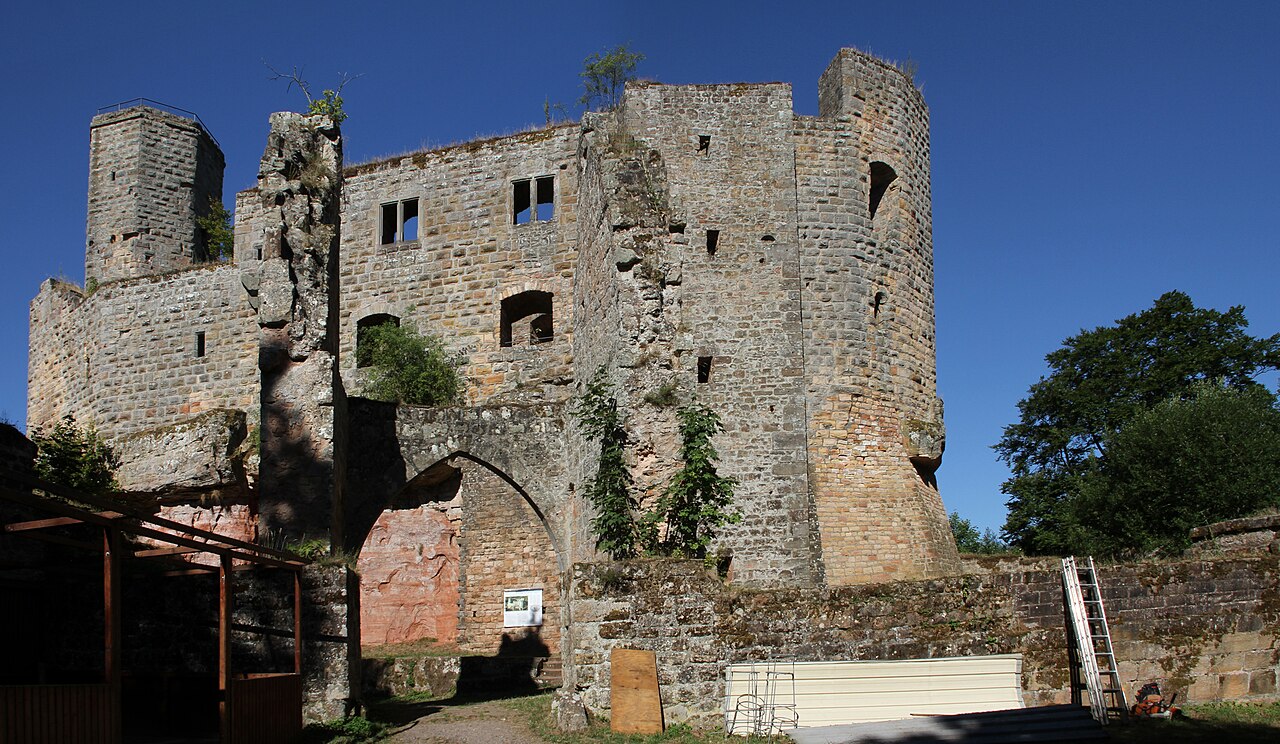
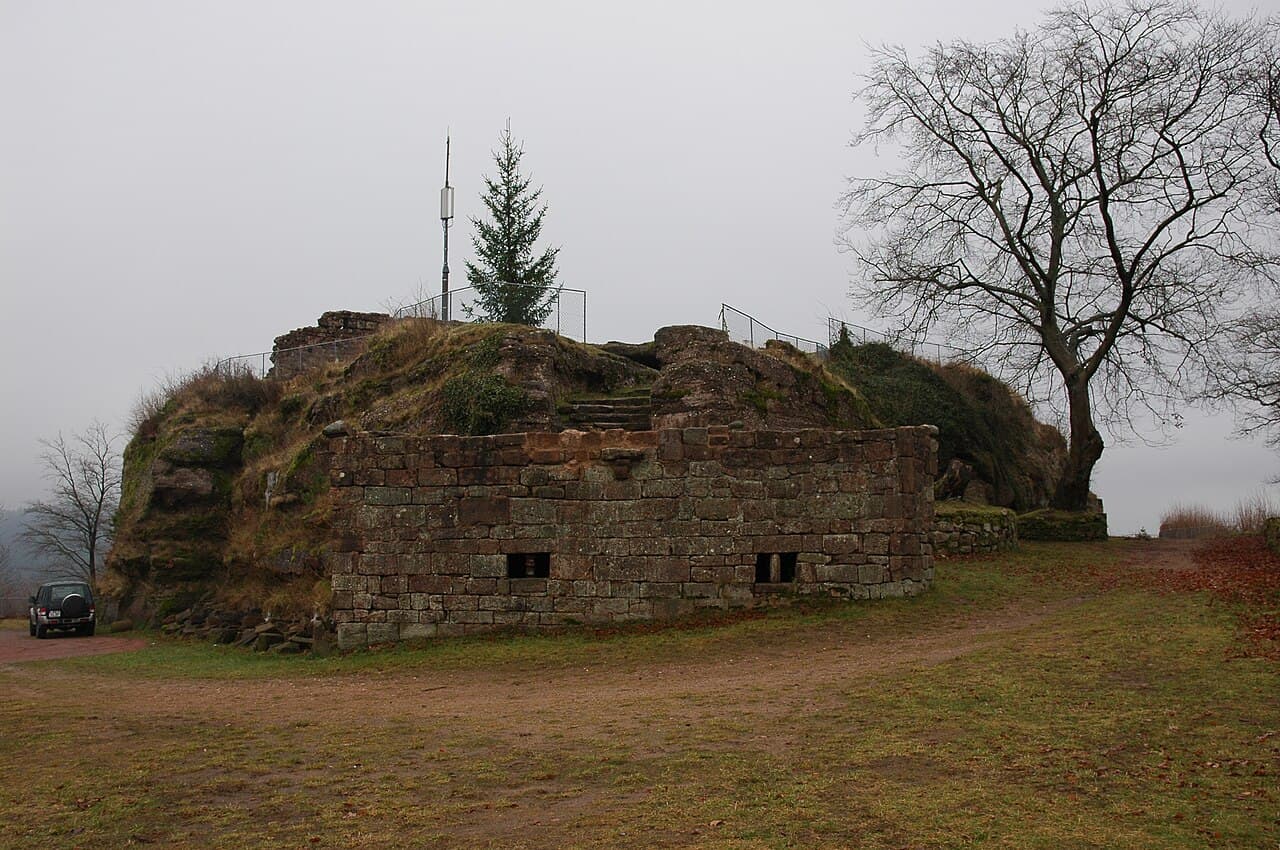
Lemberg Castle was originally constructed atop natural rock formations, with a robust ring wall made of roughly hewn quarry stone enclosing the upper castle. The complex included living quarters, cellars, stables, a gate tower, and a bridge controlling access. These features highlight its dual role as a defensive fortress and noble residence.
One of the castle’s most remarkable engineering feats is its shaft cistern, often mistaken for a deep well. After digging nearly 95 meters without reaching groundwater, medieval builders converted the shaft into a cistern by excavating a nearly horizontal tunnel approximately 200 meters long from the hillside. This tunnel intersected the shaft at about 60 meters depth, allowing spring water to flow into the cistern, demonstrating advanced medieval water management achieved with only manual tools.
Excavations in the 1990s revealed that the cistern area also served as an archaeological site, uncovering graves and burial remains near the foundations of a chapel dating back to the late 13th century. The chapel was first mentioned in records from 1502, and artifacts such as coins and pottery shards have been found there, indicating continuous use during the castle’s active period.
Modern preservation and tourism
Today, the ruins of Lemberg Castle offer a glimpse into its historical grandeur, with remaining sections of the ring wall and chapel foundations visible atop Schlossberg hill at an elevation of 458 meters. Although much of the original structure has been lost to time and quarrying, restoration efforts initiated in the 20th century, including work by the Palatine Forest Club since 1953, have stabilized parts of the ruins and established a café and an information center for visitors.
The site now serves as a cultural landmark and venue for medieval events, attracting tourists interested in the castle’s rich history and architectural heritage. Visitors can explore the ruins freely, appreciating the blend of medieval fortification and Renaissance residential architecture that defines Lemberg Castle’s unique character.
Frequently asked questions (FAQ)
- What is the historical significance of Lemberg Castle?
- Lemberg Castle, built in the 13th century, served as a strategic military stronghold and residence for noble families. Its architecture reflects the turbulent history of the region, showcasing influences from different eras and styles, making it a fascinating site for history enthusiasts.
- When was Lemberg Castle built?
- Lemberg Castle was constructed in the early 13th century, with various modifications and expansions occurring over the centuries. Its long history has allowed it to evolve architecturally while retaining its original charm.
- Can I visit Lemberg Castle year-round?
- Yes, Lemberg Castle is open to visitors throughout the year, though specific access may vary depending on the season and weather conditions. It’s advisable to check the castle's official website for any seasonal events or temporary closures.
- What are the opening hours for Lemberg Castle?
- Lemberg Castle typically opens at 10 AM and closes at 6 PM during the high season, with reduced hours in the winter months. Visitors are encouraged to verify the current opening hours before planning their visit.
- Is it possible to take guided tours of Lemberg Castle?
- Yes, guided tours are available and provide an in-depth look at the castle's history and architecture. These tours are led by knowledgeable guides who can share fascinating stories and insights about the castle's past.
- What are the ticket prices for visiting Lemberg Castle?
- Ticket prices for Lemberg Castle are generally affordable, with discounts available for students and seniors. Children under a certain age may enter for free, making it a great family-friendly destination.
- When is the best time to visit Lemberg Castle?
- The best time to visit Lemberg Castle is during the spring and early autumn months when the weather is mild and the surrounding landscapes are particularly beautiful. Additionally, these seasons often feature fewer crowds compared to the peak summer months.
- What nearby attractions can I explore while visiting Lemberg Castle?
- Visitors to Lemberg Castle can also explore nearby attractions such as the picturesque town of Lemberg, local museums, and beautiful walking trails. The region is rich in history and natural beauty, offering a variety of experiences for all interests.
- How do I get to Lemberg Castle using public transport?
- Lemberg Castle is accessible via local public transport, with bus services connecting the castle to nearby towns and cities. Visitors can check local transit schedules for the most convenient routes and times to ensure a smooth journey.
Photo gallery

Information
Address
Landgrafenstraße, Lemberg, Germany
Loading map...
Visitor reviews
No reviews yet. Been here? Write the first review and help other travelers!
Write the first reviewVisited this castle? Share your experience
Your review helps other travelers and adds first-hand knowledge to our encyclopedia.