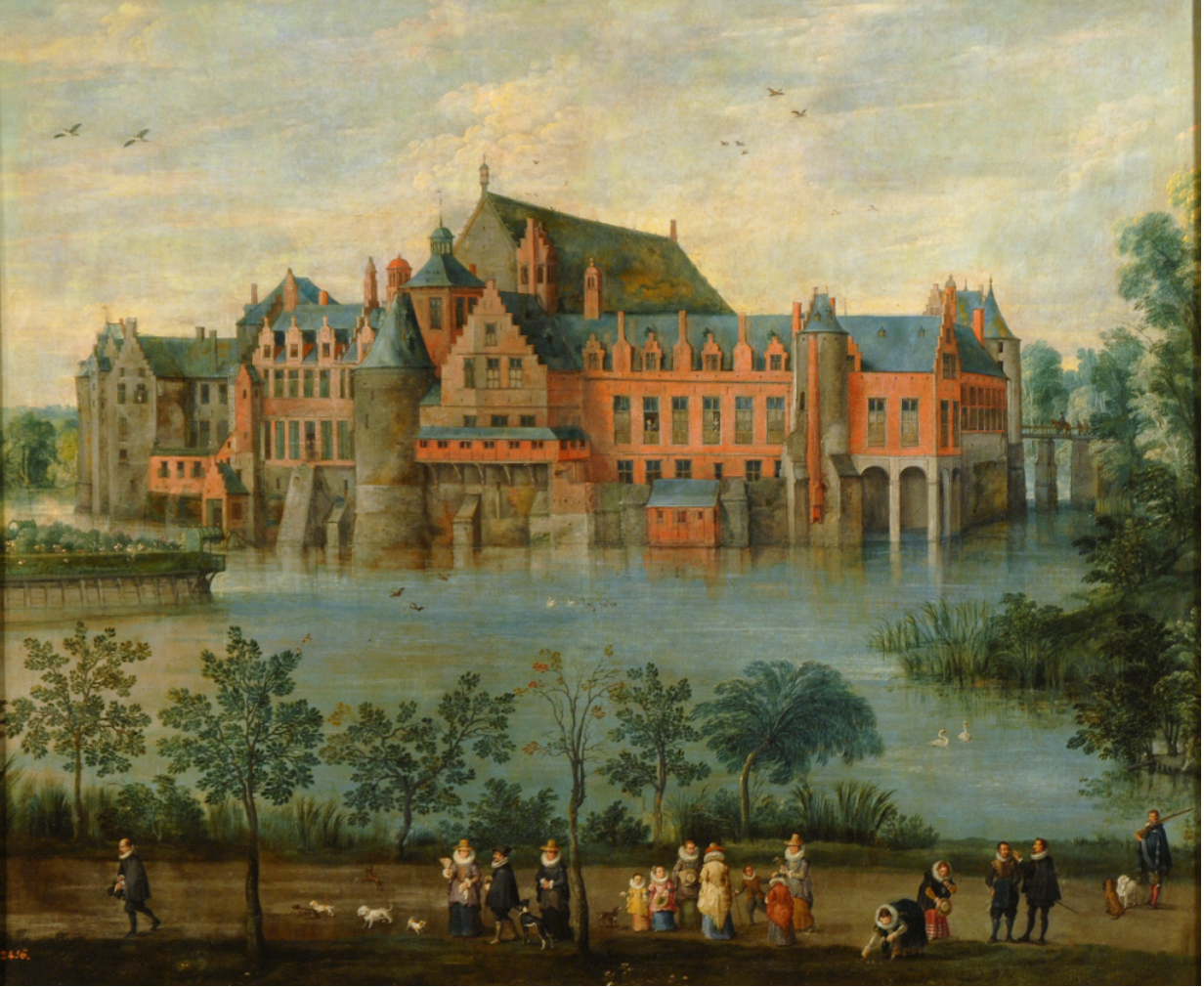
Leefdaal Castle

Leefdaal Castle in Bertem, Belgium
Bertem, Belgium
Late Medieval (14th–15th c.)

Leefdaal Castle is a historic fortress located in Bertem, Belgium, with origins that trace back to the 12th century. Although the castle was first mentioned in medieval records during this early period, its current architectural form primarily reflects the late medieval era and significant modifications made in the 17th century. This blend of periods provides a unique insight into the evolution of castle construction and residential fortifications in the region.

Historical background and significance

The earliest references to Leefdaal Castle date from the 1100s, indicating its longstanding presence in the Flemish landscape. Originally, it likely served as a fortified residence for local nobility or a feudal lord, functioning both as a defensive stronghold and a symbol of territorial control. Over the centuries, the castle underwent several changes, reflecting shifts in military technology, architectural styles, and residential needs.

During the late medieval period, roughly the 14th and 15th centuries, Leefdaal Castle was substantially rebuilt or remodeled, which gave it much of its present-day structural character. This period was marked by the transition from purely defensive castles to more comfortable noble residences that still retained fortification elements.

Architectural features and style

The castle's architecture is characteristic of late medieval fortifications, with thick stone walls, narrow windows for defense, and possibly a moat or defensive ditch, although specific details about these features at Leefdaal are limited due to restricted public access. The 17th-century renovations introduced elements that softened the fortress-like appearance, adapting the castle for more domestic and aesthetic purposes rather than purely military ones.

While the exact style classification is not definitively recorded, the castle likely exhibits features typical of late medieval Flemish architecture, with possible Renaissance influences in the later additions. The combination of medieval defensive structures with early modern residential improvements illustrates the castle's adaptation over time.

Current condition and accessibility

Leefdaal Castle is currently not open to the public, which limits detailed study and visitor access. Its preservation status is consistent with many privately owned or less publicly prominent castles in Belgium, where access is restricted to protect the site or due to private ownership. The castle's condition is generally stable, but detailed information about restoration or conservation efforts is not widely available.

Location and surroundings

Situated in the municipality of Bertem within the Flemish Brabant province, Leefdaal Castle is part of a region rich in historical sites and castles. The surrounding landscape is typical of the Belgian countryside, with agricultural land and small villages, providing a picturesque setting that reflects the castle's historical role in local governance and rural defense.

Architectural and cultural context

The castle fits within the broader context of Belgian medieval castles that evolved from military fortifications into noble residences. Its late medieval origins and later adaptations exemplify how castles in this region were continuously modified to meet changing social and political needs. While it lacks the extensive public facilities of some larger Belgian castles, Leefdaal remains an important piece of the architectural heritage of Flemish Brabant.

Frequently asked questions (FAQ)

How do I get to Leefdaal Castle?
Leefdaal Castle is located in Bertem, Belgium, and can be easily reached by car or public transport. If you are driving, parking is available nearby. For public transport, check local bus routes that service the area.
What is the historical significance of Leefdaal Castle?
Leefdaal Castle dates back to the 13th century and is a prime example of medieval architecture in Belgium. It has witnessed numerous historical events and has been beautifully preserved, making it a significant landmark in the region.
When was Leefdaal Castle built?
Leefdaal Castle was originally constructed in the late 1200s, showcasing architectural styles that evolved over the centuries. Its rich history reflects the changes in society and the influence of noble families in Belgium.
Can I visit Leefdaal Castle?
Yes, Leefdaal Castle is open to visitors, typically during the weekends and on public holidays. It’s best to check the official website for specific opening hours and any special events that might be taking place.
Why is the architecture of Leefdaal Castle noteworthy?
The architecture of Leefdaal Castle features a blend of Gothic and Renaissance styles, making it an interesting study for architecture enthusiasts. Its well-preserved towers and walls provide insight into the defensive strategies employed during the medieval period.
Is it possible to host events at Leefdaal Castle?
Yes, Leefdaal Castle is available for private events, including weddings and corporate gatherings. Interested parties should contact the castle management for details on availability and services offered.
What are the ticket prices for visiting Leefdaal Castle?
Ticket prices for Leefdaal Castle vary depending on the season and any special exhibitions. It’s advisable to check the castle's official website for the most current pricing and any family or group discounts that may be available.
What is the best time to visit Leefdaal Castle?
The best time to visit Leefdaal Castle is during the spring and fall when the weather is mild and the gardens are in bloom. Additionally, visiting during special events or guided tours can enhance your experience.
Are there any nearby attractions to Leefdaal Castle?
Yes, there are several attractions near Leefdaal Castle, including beautiful parks and local museums. Exploring the surrounding area can provide a richer understanding of the region's history and culture.
What are the opening hours for Leefdaal Castle?
Leefdaal Castle generally opens its doors to visitors from 10 AM to 5 PM on weekends and public holidays. For the most accurate and updated information, it is recommended to check the official website before planning your visit.

Loading map...

Visitor reviews

No reviews yet. Been here? Write the first review and help other travelers!

Write the first review

Visited this castle? Share your experience

Your review helps other travelers and adds first-hand knowledge to our encyclopedia.

Write a review

(5/5)

0/2000 characters

Your review will be visible after admin approval

Nearby castles

5.2 km

Kasteel van Arenberg

Heverlee, Belgium

Kasteel van Arenberg stands as a remarkable example of Flemish chateau architecture nestled in Heverlee, Belgium. This historic castle's origins trace back to the 12th century, when the original fortress was constructed by the lords of Heverlee. Although the initial medieval castle was sold in 1445 to the influential Croy family, its legacy was transformed under their stewardship into the present-day chateau renowned for its architectural grandeur and historical significance. The evolution from medieval fortress to Renaissance chateau The original castle built by the lords of Heverlee served as a medieval stronghold typical of the High to Late Medieval period. However, after the estate was acquired by the Croy family in the mid-15th century, a significant transformation began. In 1455, Antoon van Croy undertook the demolition of the medieval structure, initiating construction of the new chateau that would reflect the changing tastes and defensive needs of the era. The building project extended over several decades, culminating in 1515 under the direction of Willem van Croy. This period marked the transition from purely defensive castles to more comfortable and prestigious residences, blending fortification with elegant living spaces. Willem van Croy also enhanced the estate's spiritual stature by founding a Benedictine Celestine monastery on the grounds, reflecting the intertwined nature of noble power and religious patronage during the Late Medieval period. Architectural features and stylistic influences Flemish tradition and materials The architectural style of Kasteel van Arenberg is predominantly Flemish, characterized by the use of brick walls combined with sandstone window frames. This combination is typical of the region and period, providing both durability and aesthetic appeal. The chateau's layout includes a central courtyard, surrounded by buildings that incorporate defensive elements such as thick walls and narrow windows, yet also display ornamental details indicative of evolving tastes. Gothic, Renaissance, and Neo-Gothic elements Though the core structure dates from the 15th and early 16th centuries, the castle exhibits a mixture of architectural styles due to subsequent alterations. The original construction bears Gothic hallmarks, including pointed arches and vaulted ceilings in some chambers. Renaissance influences are evident in the symmetry and proportion of the facades, as well as in decorative motifs that emphasize classical harmony. Later modifications introduced Neo-Gothic elements, particularly in restoration and renovation efforts during the 19th century. These additions sought to revive medieval Gothic aesthetics, often emphasizing verticality and ornate stonework, thereby enriching the castle's architectural narrative and visual complexity. Historical significance and ownership Kasteel van Arenberg has been closely tied to prominent noble families and religious institutions throughout its history. The Croy family's acquisition and redevelopment of the estate signaled their rising influence in the region. The establishment of the Benedictine Celestine monastery on the grounds also highlights the castle's role as a center of both secular and spiritual power. Over the centuries, the castle has witnessed various historical events and shifts in ownership, reflecting broader social and political changes in Belgium and the Low Countries. Its preservation today offers valuable insights into the architectural and cultural evolution from medieval fortifications to Renaissance chateaux and beyond. Preservation and current status Currently, Kasteel van Arenberg is recognized for its well-preserved state, allowing visitors and scholars to appreciate its layered architectural styles and historical context. The castle remains a significant heritage site within the Flemish Brabant region, contributing to the cultural landscape of Heverlee and attracting interest for its blend of medieval and renaissance architectural features. While the castle has undergone various restorations, these have been carried out with respect to its original design and materials, ensuring the integrity of its historic fabric. The presence of the former monastery site adds an additional dimension to the estate, enriching its appeal as a multifaceted historical monument. Visiting kasteel van arenberg Visitors to Kasteel van Arenberg can explore its impressive exterior and surrounding grounds, which showcase the castle's strategic placement and architectural grandeur. Although access to the interior may be limited depending on current use and preservation efforts, the castle's exterior and the nearby historical sites offer a compelling glimpse into Belgium's noble past. The castle's location in Heverlee makes it accessible from the nearby city of Leuven, a hub of cultural and historical tourism. Visitors are encouraged to explore the broader region, which includes other castles, religious sites, and natural landscapes that together paint a rich picture of Flemish history. Frequently asked questions about kasteel van arenberg When was kasteel van arenberg built? Construction of the current chateau began in 1455 and was completed in 1515, replacing an earlier 12th-century castle. What architectural styles are visible at the castle? The castle features a blend of Gothic, Renaissance, and Neo-Gothic architectural elements, reflecting its long construction and renovation history. Is the castle open to the public? Public access may be limited; visitors should check local tourism resources for current visiting hours and tours. Where is kasteel van arenberg located? It is located in Heverlee, near the city of Leuven in the Flemish Brabant region of Belgium. What is the significance of the Benedictine Celestine monastery? Founded by Willem van Croy, the monastery underscores the castle's role in religious patronage during the Late Medieval period.

Late Medieval (14th–15th c.)
Details
6.1 km
Tervuren Castle — Belgium castle

Tervuren Castle

Tervuren, Belgium

Tervuren Castle (Dutch: Kasteel van Tervuren; French: Château de Tervueren) was a significant moated castle built by the dukes of Brabant during the medieval period. Situated in Tervuren, Belgium, just outside the capital city of Brussels, it served various roles throughout its existence, including as a fortified residence, a royal hunting lodge, and a symbol of ducal and later Habsburg power in the region. Although the castle itself was demolished in 1782, its historical footprint remains important for understanding the architectural and political history of the area. Medieval origins and architectural features The castle was originally constructed as a moated fortress, a common defensive structure designed to protect its inhabitants against attack. The moat surrounded the castle, providing a natural barrier that enhanced its defensive capabilities. As a hill castle, it was strategically positioned to oversee the surrounding landscape, which included dense forests and hunting grounds favored by the nobility. While detailed architectural plans of the original castle have not fully survived, it is known that the structure included typical medieval features such as towers, curtain walls, and a gatehouse. The castle's design reflected the military and residential needs of its ducal owners, combining fortification with elements suitable for courtly life. Transition to a royal residence and hunting lodge Following its initial use by the dukes of Brabant, Tervuren Castle evolved into a royal residence and hunting lodge under the governance of the Habsburg Netherlands. The castle's location within extensive wooded parks made it an ideal base for hunting expeditions, a favored pastime among European nobility. The castle was part of a larger estate that included hunting grounds and landscaped parks. These grounds were maintained to support game and provide a scenic environment for leisure and royal ceremonies. The castle's role as a hunting lodge highlighted its importance beyond mere military defense, serving as a center for aristocratic social life. Demolition and legacy Despite its historical significance, Tervuren Castle was demolished in 1782, likely due to changing political circumstances and the high cost of maintenance. Today, only some foundations remain visible at the site, marking the former location of the castle. Among the surviving structures related to the castle estate are the St. Hubertus Chapel and the stables, which provide a glimpse into the estate's former grandeur. The chapel, dedicated to the patron saint of hunters, underscores the castle's long association with hunting culture. The park and later developments The extensive park that once surrounded the castle covers an area of approximately 207 hectares. It is divided into distinct sections reflecting different landscaping styles. The northern part of the park is laid out in the French formal garden style, characterized by a series of ponds arranged in geometric succession, typical of 17th and 18th-century aristocratic gardens. The central area of the park features a wooded ridge, providing a more naturalistic landscape, while the southern part of the park remains largely natural woodland. This diversity in landscaping styles illustrates changing tastes in garden design from formal to naturalistic approaches. In the 19th century, the park became the site of the Pavilion of Tervuren, a summer palace built for the prince of Orange, who later became King William II of the Netherlands. Unfortunately, this pavilion was destroyed by fire in 1879. The park gained international attention when it hosted the 1897 Brussels International Exposition, a world's fair that showcased innovations in industry, art, and culture. This event further enhanced the park's historical importance and public profile. In 1910, the Royal Museum for Central Africa was constructed within the park grounds. This museum remains a major cultural institution, attracting visitors interested in African art, ethnography, and colonial history. Cultural and historical significance Though Tervuren Castle itself no longer stands, its legacy endures through the park, surviving ancillary buildings, and the cultural institutions established on its grounds. The site reflects the layered history of the region, from medieval ducal power through Habsburg rule to modern cultural developments. The castle's history is intertwined with the political and social transformations of Belgium and the Low Countries. Its role as a hunting lodge and royal residence highlights the lifestyle and priorities of European nobility over several centuries. Visitors to the site today can explore the park's varied landscapes, visit the St. Hubertus Chapel, and experience the Royal Museum for Central Africa, all of which contribute to understanding the rich heritage of the area formerly dominated by Tervuren Castle.

Details
6.5 km

Arenberg Castle

Leuven, Belgium

Arenberg Castle, located in Heverlee near Leuven, Belgium, is a remarkable example of a Flemish Renaissance château with a complex architectural and historical legacy. The site originally hosted a medieval fortress from the 12th century, belonging to the lords of Heverlee. Financial difficulties led to the sale of the estate in 1445 to the noble Croÿ family from Picardy. Shortly after acquisition, Antoon van Croÿ demolished most of the medieval castle, preserving only one tower, and commenced construction of the current château in 1455. This marked the beginning of a significant transformation that blended medieval fortification concepts with Renaissance aesthetics. Completed in 1515 by Willem van Croÿ, the château reflects the architectural tastes of the late medieval and early Renaissance periods. Willem also founded a Benedictine Celestine monastery on the grounds, the only establishment of this order in the Southern Netherlands, which highlights the site's religious and cultural importance. The château remained under Croÿ ownership until 1612, when it passed to the House of Arenberg through marriage, a family with close ties to the Habsburg monarchy. Architectural features and style The château is primarily constructed of brick with characteristic sandstone window frames, typical of the Flemish Renaissance style. Its large, square corner towers originally bore German eagles, including a distinctive double-headed eagle atop the bulbous roofs, symbolizing the Arenberg family's imperial connections. The building's architecture is a tapestry of styles, incorporating Gothic elements such as pointed arches and ribbed vaults, Renaissance symmetry and proportions, and later Baroque and 19th-century Neo-Gothic modifications. These successive layers of architectural evolution reflect the château's long history and changing functions. Structural layout and fortifications The château is a hill castle, situated on a slight elevation in a flat valley approximately 24 meters above sea level. The layout includes a central residential block flanked by the imposing corner towers, which served both defensive and symbolic purposes. The surrounding park, covering about 29 hectares, provides a scenic setting that enhances the château's grandeur and historic atmosphere. Historical significance and ownership The castle's history is closely tied to the noble families who owned it. The Croÿ family played a pivotal role in its development during the 15th and early 16th centuries. The transition to the Arenberg family in the early 17th century marked a new chapter, as the château became a symbol of their status and influence in the region. The Arenbergs maintained residence until the upheavals of the 20th century. During World War I, the château and its grounds were occupied by German and Austrian forces. After the war, the Belgian government confiscated the property due to the Arenberg family's close ties to the Habsburg monarchy, which ruled Austria-Hungary. This political shift led to the château's transfer to the University of Leuven in 1921. Modern use and preservation Today, Arenberg Castle is an integral part of the Katholieke Universiteit Leuven (KU Leuven) campus. Following the university's linguistic split in 1968, the château remained with the Dutch-speaking half. It now houses the Faculty of Engineering, including departments dedicated to architecture, urbanism, and urban planning. The building contains lecture halls, studios, and research centers such as the Post-Graduate Centre Human Settlements and the Raymond Lemaire International Centre for Conservation. The former Benedictine Celestine monastery on the château grounds has been converted into the university library, preserving the site's religious heritage within an academic context. The street adjacent to the campus, Celestijnenlaan, commemorates the monastic order that once inhabited the estate. Preservation status The château is well preserved and has been carefully adapted for academic use without compromising its historic fabric. Its original materials, including brickwork and sandstone detailing, remain largely intact. The site offers visitors a unique opportunity to explore a castle that embodies centuries of architectural styles and historical narratives while serving a vibrant educational role. Visiting Arenberg Castle The castle is open to the public, allowing visitors to appreciate its architectural splendor and historical significance. The combination of medieval remnants, Renaissance grandeur, and later stylistic additions makes Arenberg Castle a fascinating destination for those interested in European castle architecture and history. Its role as a university building also means that the château is a living monument, continuously contributing to knowledge and culture. Visitors can explore the castle's exterior, its park, and occasionally access interior spaces during special events or guided tours.

Late Medieval (14th–15th c.)
Details