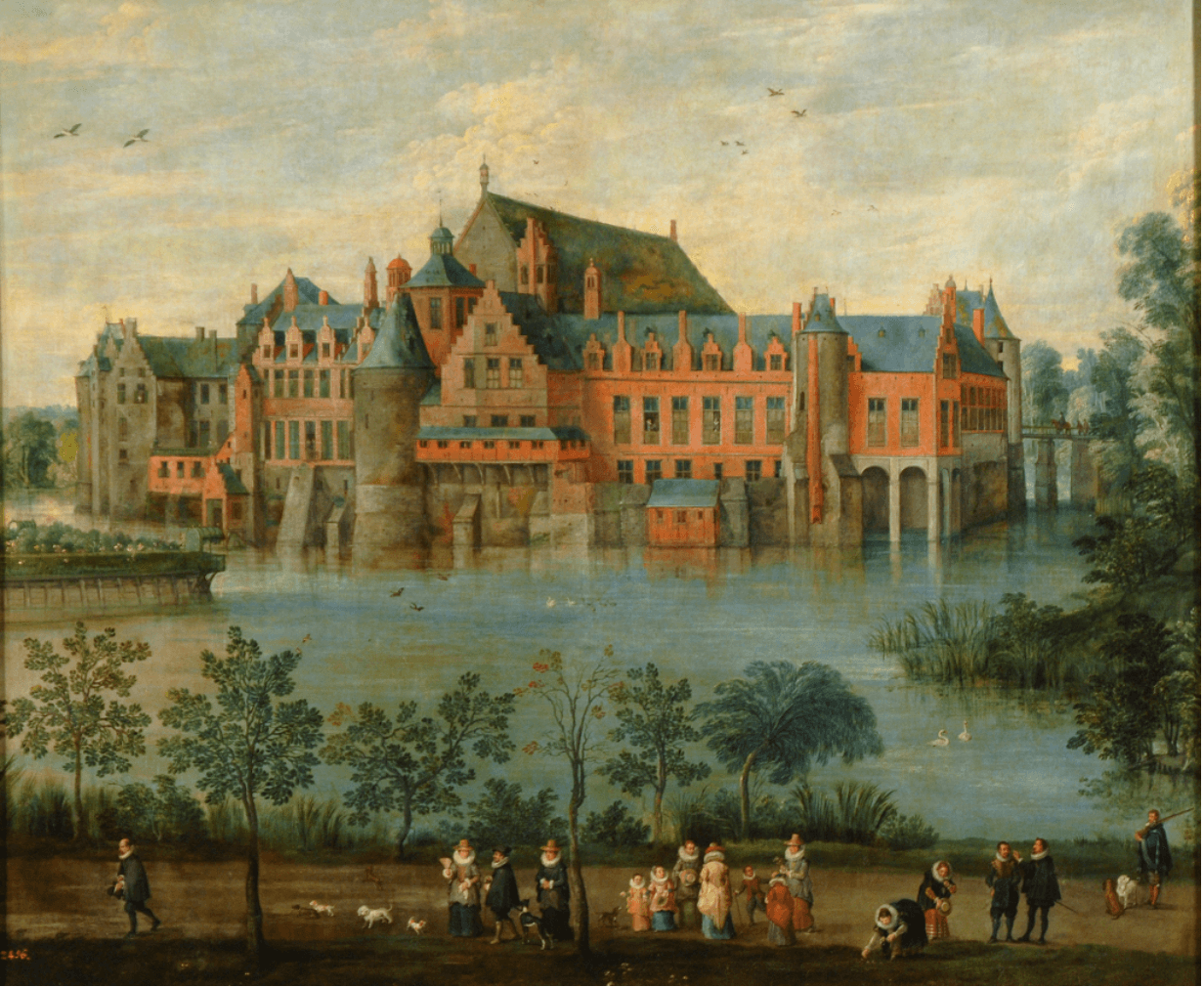
Tervuren Castle
Tervuren Castle (Dutch: Kasteel van Tervuren; French: Château de Tervueren) was a significant moated castle built by the dukes of Brabant during the medieval period. Situated in Tervuren, Belgium, just outside the capital city of Brussels, it served various roles throughout its existence, including as a fortified residence, a royal hunting lodge, and a symbol of ducal and later Habsburg power in the region. Although the castle itself was demolished in 1782, its historical footprint remains important for understanding the architectural and political history of the area.
Medieval origins and architectural features
The castle was originally constructed as a moated fortress, a common defensive structure designed to protect its inhabitants against attack. The moat surrounded the castle, providing a natural barrier that enhanced its defensive capabilities. As a hill castle, it was strategically positioned to oversee the surrounding landscape, which included dense forests and hunting grounds favored by the nobility.
While detailed architectural plans of the original castle have not fully survived, it is known that the structure included typical medieval features such as towers, curtain walls, and a gatehouse. The castle's design reflected the military and residential needs of its ducal owners, combining fortification with elements suitable for courtly life.
Transition to a royal residence and hunting lodge
Following its initial use by the dukes of Brabant, Tervuren Castle evolved into a royal residence and hunting lodge under the governance of the Habsburg Netherlands. The castle's location within extensive wooded parks made it an ideal base for hunting expeditions, a favored pastime among European nobility.
The castle was part of a larger estate that included hunting grounds and landscaped parks. These grounds were maintained to support game and provide a scenic environment for leisure and royal ceremonies. The castle's role as a hunting lodge highlighted its importance beyond mere military defense, serving as a center for aristocratic social life.
Demolition and legacy
Despite its historical significance, Tervuren Castle was demolished in 1782, likely due to changing political circumstances and the high cost of maintenance. Today, only some foundations remain visible at the site, marking the former location of the castle.
Among the surviving structures related to the castle estate are the St. Hubertus Chapel and the stables, which provide a glimpse into the estate's former grandeur. The chapel, dedicated to the patron saint of hunters, underscores the castle's long association with hunting culture.
The park and later developments
The extensive park that once surrounded the castle covers an area of approximately 207 hectares. It is divided into distinct sections reflecting different landscaping styles. The northern part of the park is laid out in the French formal garden style, characterized by a series of ponds arranged in geometric succession, typical of 17th and 18th-century aristocratic gardens.
The central area of the park features a wooded ridge, providing a more naturalistic landscape, while the southern part of the park remains largely natural woodland. This diversity in landscaping styles illustrates changing tastes in garden design from formal to naturalistic approaches.
In the 19th century, the park became the site of the Pavilion of Tervuren, a summer palace built for the prince of Orange, who later became King William II of the Netherlands. Unfortunately, this pavilion was destroyed by fire in 1879.
The park gained international attention when it hosted the 1897 Brussels International Exposition, a world's fair that showcased innovations in industry, art, and culture. This event further enhanced the park's historical importance and public profile.
In 1910, the Royal Museum for Central Africa was constructed within the park grounds. This museum remains a major cultural institution, attracting visitors interested in African art, ethnography, and colonial history.
Cultural and historical significance
Though Tervuren Castle itself no longer stands, its legacy endures through the park, surviving ancillary buildings, and the cultural institutions established on its grounds. The site reflects the layered history of the region, from medieval ducal power through Habsburg rule to modern cultural developments.
The castle's history is intertwined with the political and social transformations of Belgium and the Low Countries. Its role as a hunting lodge and royal residence highlights the lifestyle and priorities of European nobility over several centuries.
Visitors to the site today can explore the park's varied landscapes, visit the St. Hubertus Chapel, and experience the Royal Museum for Central Africa, all of which contribute to understanding the rich heritage of the area formerly dominated by Tervuren Castle.
Frequently asked questions (FAQ)
- When was Tervuren Castle demolished?
- Tervuren Castle was demolished in 1782, and today only some foundations remain visible at the site.
- What remains of Tervuren Castle today?
- The castle itself no longer stands, but the St. Hubertus Chapel and the stables survive, along with some foundations.
- What is the significance of the park surrounding Tervuren Castle?
- The park covers 207 hectares and features a French formal garden style in the north, a wooded ridge in the center, and natural woodland to the south, reflecting changing landscape design styles.
- What notable buildings were constructed in the Tervuren park after the castle's demolition?
- The Pavilion of Tervuren, a summer palace for the prince of Orange, was built in the park but burned down in 1879. The Royal Museum for Central Africa was constructed in 1910 and still stands today.
- Is the Royal Museum for Central Africa located on the former castle grounds?
- Yes, the Royal Museum for Central Africa was built within the park that once surrounded Tervuren Castle and remains a major cultural institution.
Photo gallery

Photo by Jan Brueghel the Elder / Jan Brueghel the Younger•Public domain
Information
Loading map...
Visitor reviews
No reviews yet. Been here? Write the first review and help other travelers!
Write the first reviewVisited this castle? Share your experience
Your review helps other travelers and adds first-hand knowledge to our encyclopedia.



