Leeds Castle
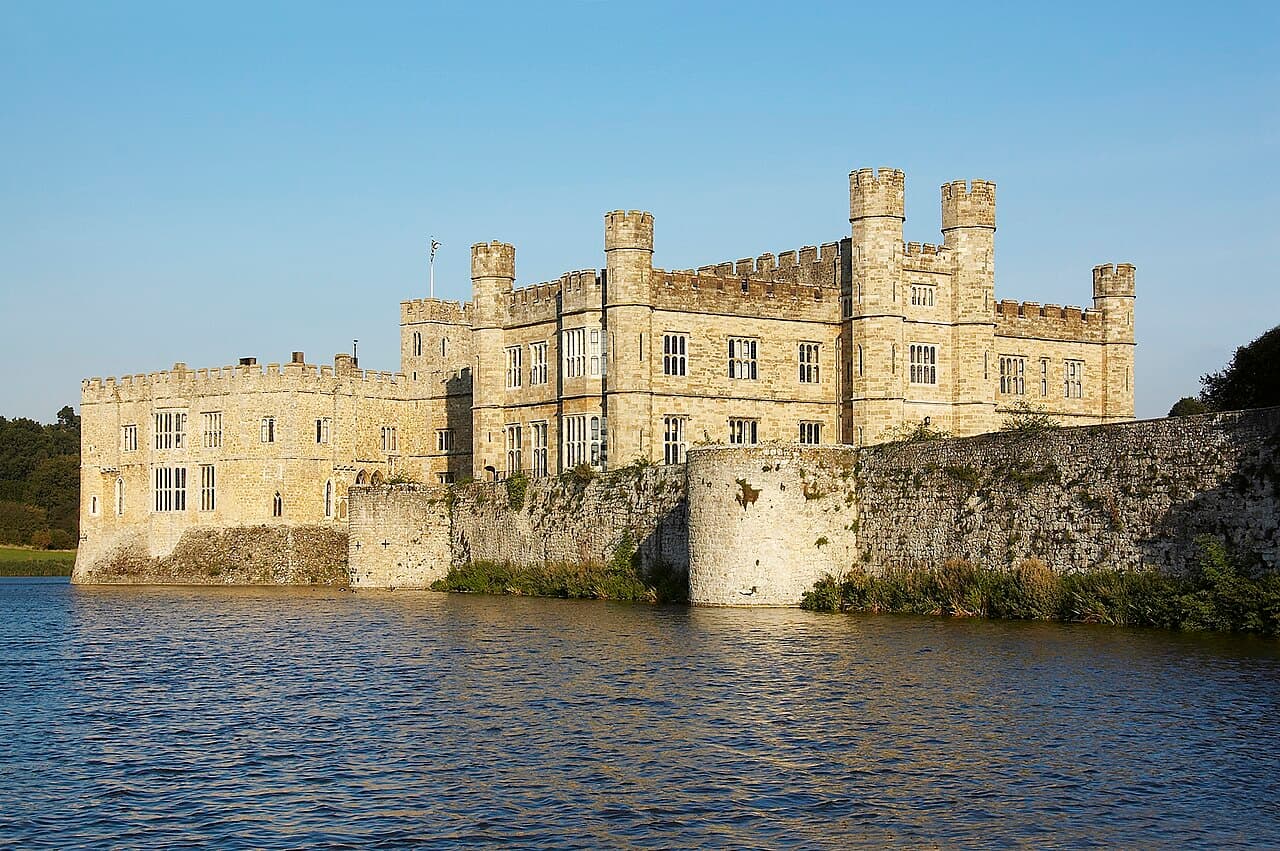
Leeds Castle stands as one of England's most iconic and historically rich castles, located in Maidstone, Kent. This hill castle is uniquely situated on two islands in a lake formed by the River Len, offering both natural defense and scenic beauty. The castle's origins date back to at least 1119, when Robert de Crevecoeur, a Norman nobleman, began construction of the first stone fortress, replacing an earlier Saxon wooden fortification possibly founded during the reign of Ethelbert IV in the 9th century. Over the centuries, Leeds Castle evolved through numerous architectural phases, reflecting the tastes and needs of its royal and noble occupants.
Early medieval origins and norman foundations
The site initially served as a Saxon royal manor, named after a Saxon chief known as Led or Leed. The earliest fortifications were simple earthworks with wooden palisades, which were gradually replaced by stone structures in the Norman period. The castle's original stone keep, or donjon, was established by Robert de Crevecoeur around 1119, marking the transition to a more formidable defensive stronghold. Archaeological evidence includes vaulted cellars and remnants of a Norman gatehouse, indicating the castle's early military and residential functions.
Medieval royal residence and fortification enhancements
In 1278, King Edward I acquired Leeds Castle, initiating extensive rebuilding and enlargement efforts. Edward I's works included the construction of a robust outer stone curtain wall encircling the larger island, featuring cylindrical open-backed flanking towers and a square-plan water-gate on the southeast side. The castle's gatehouse was improved with a single tower pierced by an arched passage, enhancing its defensive capabilities. These fortifications reflected the military architecture trends of the high medieval period, combining defense with residential comfort.
The gloriette and queen's apartments
The Gloriette, dating mainly from the late 13th century, served as the queen's apartments and included a great hall (now the ballroom), a chapel, and living quarters. The structure was later modified by Henry VIII who added a second floor and enriched the interiors with Tudor features such as a large Caen stone fireplace, carved wooden ceilings, and ebony flooring. The chapel contains tapestries and woodcarvings from the 15th and 16th centuries depicting biblical scenes, highlighting the castle's dual role as a residence and a place of worship.
Henry viii and the tudor transformation
Henry VIII is among the most famous owners of Leeds Castle, using it as a residence for his first wife, Catherine of Aragon, between 1517 and 1523. During his reign, Henry VIII invested heavily in enlarging and beautifying the castle, blending its medieval defensive structures with Tudor architectural elegance. His alterations included the introduction of distinctive Tudor windows and richly decorated interiors, while maintaining the castle's fortifications due to ongoing fears of invasion from France and Spain. These renovations were overseen by Sir Henry Guildford, a trusted courtier and friend of the king.
Post-royal ownership and 19th century revival
After leaving royal possession in 1552, Leeds Castle passed through various noble families, including the St Legers, Smythes, Culpepers, Fairfaxes, and Wykeham Martins. Each owner adapted the castle for different uses, ranging from noble residence to arsenal and prison, reflecting the changing political and social contexts of England. In the 19th century, the castle underwent significant remodeling under architect William Basket, commissioned by Fiennes Wykeham, who embraced the Tudor revival style. This period saw the reconstruction of the main house on the larger island and restoration of historic features like the Gloriette and moat, blending historical authenticity with Victorian tastes.
20th century restoration and modern legacy
The castle's last private owner, Olive, Lady Baillie, acquired Leeds Castle in 1926 and initiated major restoration projects. She enlisted French designers Armand-Albert Rateau and Stéphane Boudin to redesign the interiors, creating elegant spaces that hosted European royalty and prominent political figures. During World War II, Leeds Castle served as a hospital for wounded airmen and was involved in secret weapons research. After Lady Baillie's death in 1974, the castle was entrusted to the Leeds Castle Foundation and opened to the public in 1976, becoming a popular tourist attraction and venue for historic diplomatic meetings, including preparatory talks for the 1978 Camp David Accords.
Architectural features and landscape
Leeds Castle's layout is defined by its two islands connected by a drawbridge, with the smaller island hosting the Gloriette and the larger island containing auxiliary buildings and the 19th-century "new castle." The castle retains elements from multiple periods, including Norman vaulted cellars, a 13th-century barbican, and curtain walls up to 10 meters high. The moat, deepened in medieval times, remains a prominent landscape feature, though it no longer serves defensive purposes.
Gardens, parkland, and collections
The castle is surrounded by over 200 hectares of parkland featuring a medieval-style garden, a maze planted with 2,400 yew trees, and an aviary housing more than 100 bird species. Ornamental lakes with swans and peacocks add to the picturesque setting. Leeds Castle also houses an impressive collection of paintings by artists such as Cranach the Younger and Giovanni Battista Tiepolo, 16th-century tapestries from Enghien and Tournai, and a unique assortment of dog collars dating from the 15th to 17th centuries. The castle is a Grade I listed building, recognizing its architectural and historical significance across centuries.
Historical significance and cultural impact
Leeds Castle's association with six English queens, including Eleanor of Castile, Margaret of France, Anne of Bohemia, Joanna of Navarre, Catherine of Valois, and Catherine of Aragon, underscores its importance as a royal residence and political center. The castle witnessed key historical events such as the 1321 siege by King Edward II during a noble dispute, and its use as a prison during the English Civil War and Napoleonic Wars reflects its strategic role in English history. Today, Leeds Castle remains a symbol of England's medieval heritage and Tudor grandeur, attracting visitors worldwide to explore its rich past and stunning architecture.
Frequently asked questions (FAQ)
- How do I get to Leeds Castle?
- Leeds Castle is easily accessible by car and public transport. If you're driving, it’s located just off the M20 motorway, with ample parking available on-site. For public transport, take a train to Maidstone East and then a bus directly to the castle.
- What is the historical significance of Leeds Castle?
- Leeds Castle, known as the "loveliest castle in the world," has a rich history dating back to the 9th century. It has served as a royal residence, a palace for Queen Catherine of Aragon, and a military headquarters during various conflicts. Today, it stands as a symbol of England's medieval past and is a testament to its architectural evolution.
- When was Leeds Castle built?
- Leeds Castle was originally built in 857 AD as a stronghold and has undergone numerous renovations over the centuries. The castle we see today reflects various architectural styles, primarily from the 13th century onward. Its transformation into a luxurious residence began in the 16th century.
- Can I take guided tours of Leeds Castle?
- Yes, Leeds Castle offers guided tours led by knowledgeable staff who provide insights into the castle's history and architecture. These tours are available at specific times throughout the day and enhance your visit by providing a deeper understanding of the castle's significance and stories. Audio guides are also available for those who prefer exploring at their own pace.
- Why is Leeds Castle a popular tourist attraction?
- Leeds Castle is renowned not only for its beautiful setting on the island in a lake but also for its rich history and stunning architecture. Visitors are drawn to its picturesque gardens, historic interiors, and the variety of events held throughout the year, including jousting tournaments and outdoor concerts. Its family-friendly activities make it a great destination for all ages.
- Is it possible to access Leeds Castle with a wheelchair?
- Yes, Leeds Castle is committed to making the site accessible for all visitors. Wheelchair users can access most areas of the castle, including the gardens, and there are facilities available for those with mobility challenges. It's recommended to check with the visitor services for any specific needs or to learn about accessibility options before your visit.
- What are the opening hours of Leeds Castle?
- Leeds Castle typically opens from 10:00 AM to 5:00 PM, although hours may vary seasonally, so it's best to check their official website for the most current information. The castle is open throughout the year, with extended hours during the summer months to accommodate more visitors. Planning your visit ahead can help ensure you make the most of your time there.
- What are the ticket prices for Leeds Castle?
- Ticket prices for Leeds Castle vary depending on the season and the type of experience you choose. Generally, adult tickets cost around £30, with discounts available for children, seniors, and families. It's advisable to purchase tickets online in advance to secure the best rates and avoid queues on the day of your visit.
- What are some nearby attractions to Leeds Castle?
- Nearby attractions include the historic town of Maidstone, the beautiful gardens at Mote Park, and the unique attractions at the Kent Life Heritage Farm Park. For those interested in more history, the nearby Allington Castle and the Kent Museum of Freemasonry offer additional insights into the region's rich heritage. Combining these sites can make for a wonderful day out in Kent.
Photo gallery

Information
Website
Visit websiteSources & official resources
Verify the information above using these authoritative references.
Loading map...
Visitor reviews
No reviews yet. Been here? Write the first review and help other travelers!
Write the first reviewVisited this castle? Share your experience
Your review helps other travelers and adds first-hand knowledge to our encyclopedia.