Leacanabuaile Stone Fort
Leacanabuaile Stone Fort is a notable example of an early medieval ringfort situated on a hillside west of Cahersiveen in County Kerry, Ireland. This stone fort dates back to the 9th or 10th century, a period marked by the construction of fortified farmsteads across Ireland as a response to social and political instability. The name Leacanabuaile translates to "Slope of the summer cow pasture," reflecting its agricultural origins and the pastoral lifestyle of its inhabitants.
The fort is smaller than its nearby counterpart, Cahergall Stone Fort, located just 200 meters to the south, but it remains an important archaeological site demonstrating typical ringfort construction. The fort features a roughly circular stone curtain wall enclosing the site, with a single entrance oriented to the east. This orientation likely served practical purposes, such as protection from prevailing westerly winds and strategic defense.
Architectural features and layout
The enclosing wall is constructed from dry stone, characteristic of Irish ringforts, and stands as a testament to the skilled masonry of the early medieval period. Inside the fort's courtyard lie the remains of a round house, which is the only surviving example among what were once several such dwellings. This round house is notable for its robust stone walls and traditional circular plan, typical of domestic buildings from the era.
Attached to the round house is a later square house, indicating a phase of architectural evolution or adaptation within the fort's occupation. The presence of both round and square structures within the same enclosure reflects changing building styles or functional needs over time.
Underground passage
One of the most intriguing features of Leacanabuaile is the entrance inside the round house to an underground passage. This passage extends beneath the fort and emerges through a small opening on the outside of the ring wall. Such passages, often referred to as souterrains, were common in early medieval Ireland and are believed to have served as places of refuge, storage, or secret escape routes during times of attack or unrest.
Additional structures
Besides the round and square houses, the remains of two additional buildings are found abutting the inner side of the curtain wall. These structures likely served various domestic or agricultural purposes, contributing to the self-sufficiency of the fortified farmstead.
Historical context and significance
Leacanabuaile Stone Fort provides valuable insight into the lifestyle and defensive strategies of early medieval rural communities in Ireland. Ringforts like Leacanabuaile were common from the 5th to 12th centuries and typically functioned as farmsteads protected by earthen or stone banks. The stone construction at Leacanabuaile suggests a higher status or a need for stronger defense compared to simpler earthen ringforts.
While the exact builders of Leacanabuaile remain unknown, the fort is representative of the Gaelic Irish society that dominated the region before the Norman invasions. Its preservation allows for the study of settlement patterns, domestic architecture, and defensive features from this formative period in Irish history.
Visiting Leacanabuaile and nearby sites
Today, Leacanabuaile Stone Fort is freely accessible to the public, making it a popular destination for those interested in Ireland's early medieval heritage. The site offers visitors a tangible connection to the past through its well-preserved walls and structures.
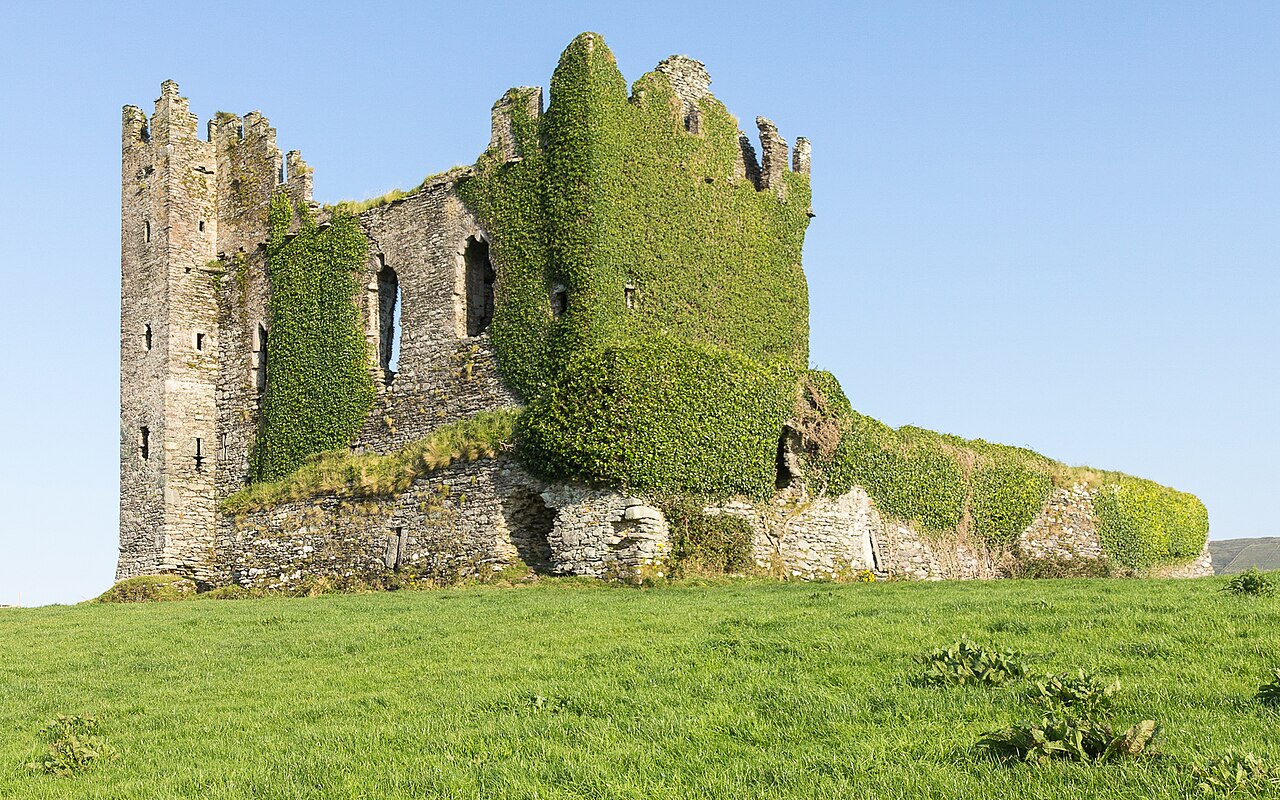
The fort is part of a cluster of historic sites in the area, including the ruins of Ballycarbery Castle, the Old Barracks, and the reconstructed Sive Stone Fort. This concentration of heritage sites provides a rich and varied experience for visitors exploring the history and architecture of County Kerry.
Visitors can walk around the fort's perimeter and enter the courtyard to observe the architectural remains closely. The tranquil rural setting enhances the experience, allowing an appreciation of the fort's strategic hillside location and its relationship to the surrounding landscape.
Frequently asked questions (FAQ)
- How do I get to Leacanabuaile Stone Fort?
- Leacanabuaile Stone Fort is located west of Cahersiveen in County Kerry, Ireland. It can be reached by car or local transport from Cahersiveen town, with signage directing visitors to the site.
- What is the historical significance of Leacanabuaile Stone Fort?
- Leacanabuaile Stone Fort is an early medieval ringfort dating from the 9th or 10th century. It provides insight into the defensive and domestic architecture of Gaelic Ireland during this period.
- Can visitors enter the fort and explore inside?
- Yes, the fort is freely accessible to the public. Visitors can walk within the courtyard, view the remains of the round and square houses, and observe the stone walls closely.
- What other historic sites are nearby Leacanabuaile Stone Fort?
- Nearby historic sites include Ballycarbery Castle ruins, the Old Barracks, and the reconstructed Sive Stone Fort, offering a diverse experience of County Kerry's heritage.
- Is there an entrance fee to visit Leacanabuaile Stone Fort?
- There is no entrance fee; the site is open to the public free of charge.
Information
Loading map...
Visitor reviews
No reviews yet. Been here? Write the first review and help other travelers!
Write the first reviewVisited this castle? Share your experience
Your review helps other travelers and adds first-hand knowledge to our encyclopedia.