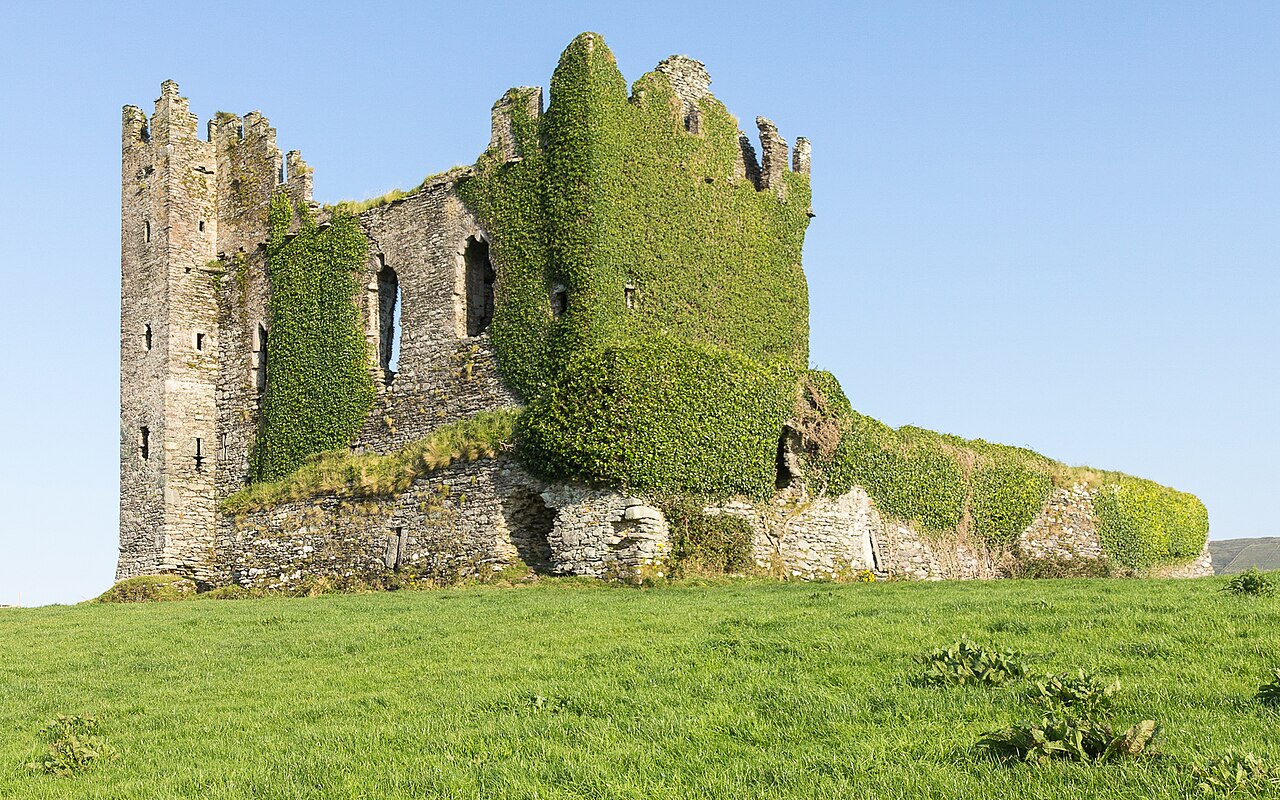
Cahergall Stone Fort
Cahergall Stone Fort is a remarkable example of an early medieval ringfort located on a hill west of Cahersiveen in County Kerry, Ireland. Dating back to the 7th century AD, this ancient fortification provides significant insight into the defensive and domestic architecture of the period. Its name, meaning 'Bright Stone,' reflects the impressive quality of its dry-stone construction, which has survived for over a millennium.
Architectural features and design
The fort is characterized by its massive circular dry-stone ring wall, which encloses a courtyard and serves as a formidable defensive barrier. The wall is constructed without mortar, relying on the precise placement and weight of the stones for stability. It features a single entrance on the eastern side, strategically positioned to face away from prevailing westerly winds, a common consideration in early Irish fort design to provide shelter and protection.
Along the inner face of the wall are several stone stairways, allowing access to the top of the wall. These stairways are similar in construction and function to those found at the nearby Staigue Stone Fort, indicating a shared architectural tradition or cultural connection between these sites.
Within the central courtyard stands a circular stone structure featuring two entrances directly opposite each other. This internal building is believed to have served as a dwelling or a communal space, though its exact function remains uncertain. The layout suggests an emphasis on both defense and habitation within the fort's enclosure.
Historical context and purpose
While the exact builders of Cahergall Stone Fort are unknown, it is generally accepted that it was constructed during the early medieval period, a time when ringforts were common across Ireland. These forts typically served as fortified farmsteads or residences for local chieftains and their families, combining domestic life with defensive capabilities.
The fort's robust construction and strategic location on a hilltop would have provided both protection and visibility over the surrounding landscape, important for monitoring movement and potential threats. Its solitary eastern entrance further emphasizes its defensive design, minimizing vulnerability.
Excavation and restoration efforts
Cahergall Stone Fort underwent archaeological excavation and restoration in the 1990s, which helped to preserve its structure and clarify aspects of its construction and use. These efforts have made it accessible and understandable to visitors, allowing for a deeper appreciation of early medieval Irish fortifications.
Visiting Cahergall and surrounding sites
The fort is freely accessible to the public, offering a tangible connection to Ireland's early medieval past. It lies in close proximity to other notable archaeological sites, including the nearby Leacanabuaile Stone Fort, the ruins of Ballycarbery Castle, the historic Old Barracks, and the reconstructed Sive Stone Fort. This cluster of sites makes the area a rich destination for those interested in medieval architecture and Irish heritage.
Visitors can explore the impressive dry-stone walls, ascend the stairways to gain a vantage point, and examine the central structure within the courtyard. The surrounding landscape enhances the experience, providing scenic views and a sense of the fort's original strategic importance.
Architectural significance and legacy
Cahergall Stone Fort stands as a well-preserved example of early medieval Irish ringfort architecture. Its dry-stone construction technique, circular plan, and internal features reflect the ingenuity and adaptability of early medieval builders. The fort's preservation allows for ongoing study and appreciation of Ireland's historical landscape and the social structures of the time.
Frequently asked questions (FAQ)
- What is the historical significance of Cahergall Stone Fort?
- Cahergall Stone Fort is a remarkable example of early medieval architecture, showcasing the defensive structures used by the ancient Irish. Built around the 8th century, it served as a fortified settlement and is a testament to the strategic importance of the region during that time.
- When was Cahergall Stone Fort built?
- Cahergall Stone Fort was constructed in the 8th century, making it over a thousand years old. Its robust stone walls and unique architecture reflect the engineering skills of its builders and the historical context of Ireland's past.
- What are the opening hours for Cahergall Stone Fort?
- Cahergall Stone Fort is typically open to visitors from 9 AM to 5 PM, but hours may vary seasonally. It is advisable to check the official website or contact local tourism information for the most current visiting hours before your trip.
- Can I visit Cahergall Stone Fort year-round?
- Yes, Cahergall Stone Fort is open for visitors year-round. However, the best time to visit is during the warmer months when the weather is milder, allowing for a more pleasant exploration of the fort and its surroundings.
- Is Cahergall Stone Fort accessible to all visitors?
- Cahergall Stone Fort has some uneven terrain, which may pose challenges for visitors with mobility issues. It is recommended to wear appropriate footwear and to check in advance if any assistance is needed for access to the site.
- What are the ticket prices for visiting Cahergall Stone Fort?
- Entry to Cahergall Stone Fort is typically free, making it an affordable historical attraction to explore. Donations are welcomed to help with the preservation and maintenance of the site.
- Are there any nearby attractions to visit while at Cahergall Stone Fort?
- Yes, nearby attractions include the scenic views of the Ring of Kerry, the charming town of Cahersiveen, and the stunning Valentia Island. Visitors can enjoy a full day of exploration by combining these sites with a visit to Cahergall Stone Fort.
- How do I get to Cahergall Stone Fort?
- Cahergall Stone Fort is easily accessible by car and is located just off the N70 road in Cahersiveen. Public transport options may be limited, so driving or using a taxi service is recommended for convenience.
Information
Loading map...
Visitor reviews
No reviews yet. Been here? Write the first review and help other travelers!
Write the first reviewVisited this castle? Share your experience
Your review helps other travelers and adds first-hand knowledge to our encyclopedia.