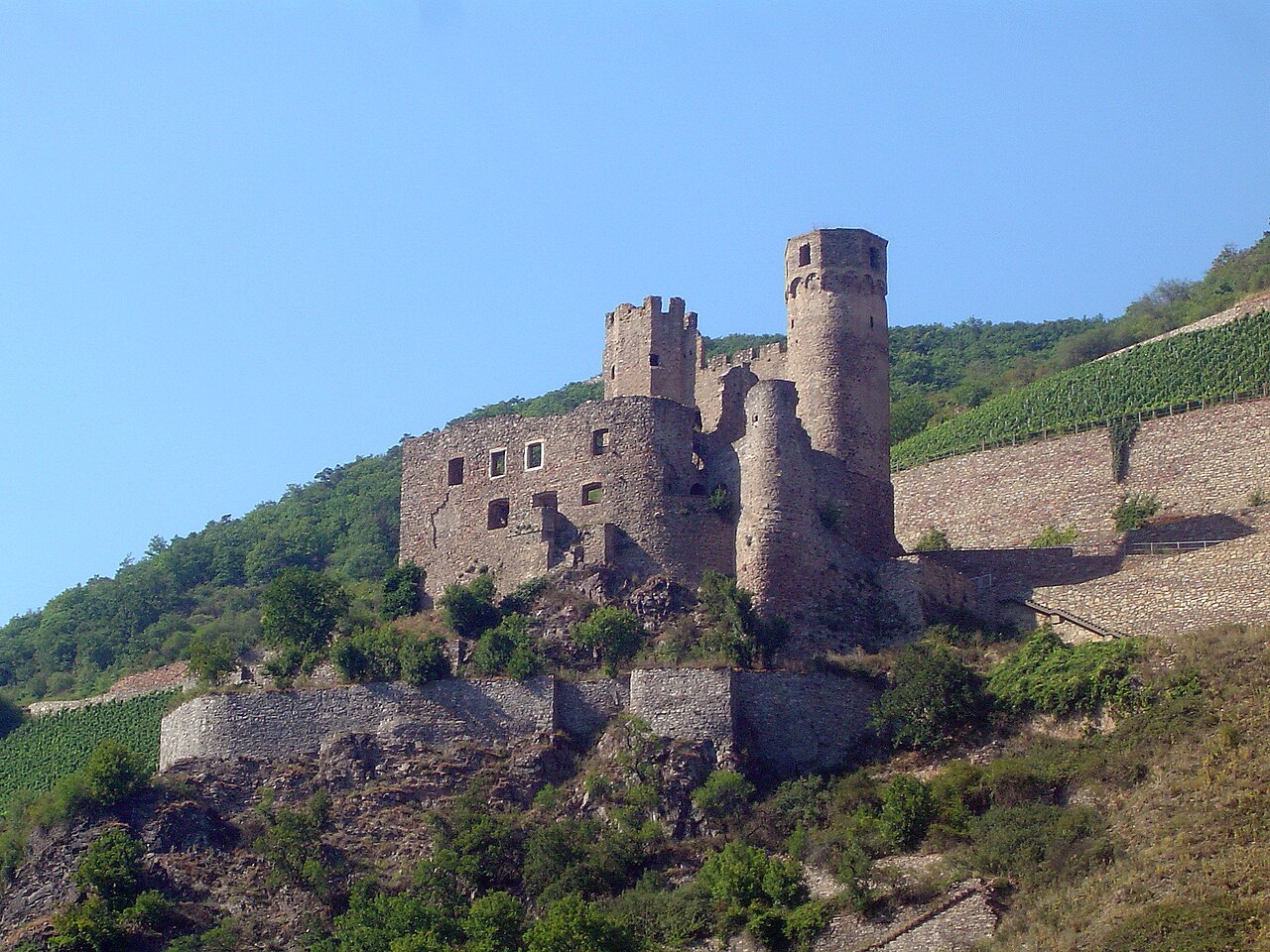
Layern Castle

Layern Castle in Rümmelsheim: medieval tower and ruins
Rümmelsheim, Germany
High Medieval (11th–13th c.)

Layern Castle is a historic medieval fortress located in Rümmelsheim, Germany. First documented in 1169, this high medieval castle represents a typical example of a fortification from the 12th century. Although much of the castle has fallen into ruin, the surviving tower and sections of the castle walls provide valuable insight into medieval defensive architecture in the region.

The origins and historical context of Layern Castle

The castle's earliest known record dates back to the year 1169, situating its construction and use firmly within the high medieval period. This era was characterized by the proliferation of stone castles across Europe, built primarily for defense and as residences for local nobility. Layern Castle likely served as a strategic stronghold for controlling the surrounding territory near the town of Rümmelsheim.

During the 12th century, castles such as Layern were often constructed to assert feudal control and to protect important routes or lands. While specific historical events tied to Layern Castle are not extensively documented, its existence within the Rhineland-Palatinate region places it within a landscape rich in medieval fortifications and noble estates.

Architectural features and surviving structures

The most prominent surviving element of Layern Castle is its tower, which is a key feature of many medieval castles. Towers were typically used both as lookout points and as defensible refuges during attacks. The remaining tower at Layern Castle likely served these functions, providing a vantage point over the surrounding landscape.

In addition to the tower, remnants of the castle walls remain. These walls would have originally enclosed the castle grounds, forming a defensive perimeter. The construction technique and materials used in these walls reflect the building practices of the 12th century, with thick stone masonry designed to withstand siege weaponry of the time.

Given the limited surviving structures, it is probable that Layern Castle was a relatively modest-sized fortress compared to larger royal castles. Its design would have balanced residential needs with military functionality, typical of many castles built by local lords in the high medieval period.

Layern Castle's role in regional history

While detailed records of Layern Castle's involvement in historical conflicts or ownership changes are scarce, its presence contributes to the broader understanding of medieval power structures in the Rhineland-Palatinate. Castles like Layern were integral to the feudal system, serving as centers of administration, justice, and military defense.

The castle's location near Rümmelsheim suggests it may have played a role in controlling local trade routes or agricultural lands. Over time, as political and military needs evolved, Layern Castle likely declined in importance, leading to its partial ruin.

Preservation and current condition

Today, Layern Castle is classified as ruins, with the tower and some walls still standing. These remnants offer a tangible connection to the medieval past and are of interest to historians, archaeologists, and visitors fascinated by castle architecture.

Efforts to preserve the site focus on maintaining the stability of the existing structures and preventing further decay. Although the castle is not fully intact, the ruins provide an evocative glimpse into the defensive architecture and feudal history of the area.

Visiting Layern Castle

The castle ruins are accessible to the public, allowing visitors to explore the surviving tower and castle walls. The site offers an opportunity to appreciate medieval construction techniques and the strategic placement of castles in the Rhineland landscape.

Visitors interested in medieval history and architecture will find Layern Castle a worthwhile destination, especially when combined with exploration of other nearby castles and historical sites in the region.

Frequently asked questions (FAQ)

How do I get to Layern Castle?
Layern Castle is located in Rümmelsheim, Germany, and is easily accessible by car or public transport. If you are traveling by train, the nearest station is in Bingen, from where you can take a bus or a taxi to the castle.
What is the historical significance of Layern Castle?
Layern Castle dates back to the 12th century and has played a crucial role in the region's medieval history. It served as a defensive stronghold and residence for various noble families, reflecting the architectural and social developments of that era.
When was Layern Castle built?
Layern Castle was constructed in the early 12th century, around the year 1100. Its strategic location and robust design were intended to protect the surrounding lands and serve as a symbol of power for its original inhabitants.
Can I take guided tours of Layern Castle?
Yes, guided tours of Layern Castle are available for visitors interested in learning more about its history and architecture. These tours are typically led by knowledgeable guides who provide insights into the castle's significant features and stories.
Why is Layern Castle a popular tourist destination?
Layern Castle is popular due to its stunning architecture, rich history, and picturesque location overlooking the Rhine Valley. Visitors are drawn to its medieval charm, beautiful surroundings, and the opportunity to explore its historical interiors.
Is it possible to visit Layern Castle year-round?
Layern Castle is open to visitors throughout the year, although opening hours may vary by season. It is advisable to check the official website or contact the castle administration for the most current visiting hours and any seasonal events.
What are the ticket prices for visiting Layern Castle?
Ticket prices for Layern Castle are generally affordable, with discounts available for students, seniors, and children. Group rates may also apply, so it's a good idea to check the official website for specific pricing details before your visit.
What is the best time to visit Layern Castle?
The best time to visit Layern Castle is during the spring and early autumn when the weather is mild and the surrounding landscapes are particularly beautiful. Additionally, visiting during special events may enhance your experience with unique activities and exhibitions.
Are there any nearby attractions to Layern Castle?
Yes, Layern Castle is located near several other attractions, including the picturesque towns along the Rhine River and the famous Lorelei rock. Visitors can also explore vineyards, hiking trails, and other historical sites in the region, making it a perfect spot for a day trip.

Loading map...

Visitor reviews

No reviews yet. Been here? Write the first review and help other travelers!

Write the first review

Visited this castle? Share your experience

Your review helps other travelers and adds first-hand knowledge to our encyclopedia.
Write a review

(5/5)

0/2000 characters

Your review will be visible after admin approval

Nearby castles

4.7 km
Klopp Castle — Germany castle

Klopp Castle

Bingen am Rhein, Germany

Klopp Castle stands prominently in the Upper Middle Rhine Valley as a historic symbol of Bingen am Rhein. This castle, perched on a hill overlooking the town, offers a commanding view of the Rhine River and surrounding landscape. Its strategic location has been significant since antiquity, with evidence suggesting that the site may have hosted a Roman fortification built by Drusus around 10 CE. The hill, known locally as Kloppberg, is steeped in legend, including stories that Emperor Henry IV was imprisoned there by his son in the early 12th century, marking the earliest recorded mention of a castle at this location. Medieval origins and strategic importance The current form of Klopp Castle largely dates back to the 13th century, with the first documented reference to Burg Clopp appearing in 1277. It is believed that the castle was constructed between 1240, when Kloppberg was noted as a residence of a church official, and 1281. Klopp Castle was part of a defensive and economic network that included Ehrenfels Castle across the Rhine and the Mouse Tower, enabling the Archbishopric of Mainz to control and levy tolls on river trade along the Rhine, a vital commercial artery of medieval Europe. Castle structure and medieval features The medieval castle featured a bergfried or keep, curtain walls, a moat, and defensive towers. These fortifications were typical of hill castles of the High Medieval period, designed to withstand sieges and control the surrounding territory. The base of the bergfried, parts of the southern curtain wall, and the moat remain as tangible links to the castle's medieval past. Decline, destruction, and rebuilding By the 16th century, Klopp Castle had begun to fall into disrepair. It suffered significant damage during the Thirty Years' War and was rebuilt in 1653. However, the castle's fortunes waned again during the War of the Palatine Succession when French forces destroyed it in 1689. Further damage occurred during the War of the Spanish Succession in 1713 when Mainz troops demolished what remained to prevent enemy occupation. Romantic revival and 19th-century restoration In the early 19th century, Klopp Castle was a picturesque ruin, attracting visitors drawn by the Romantic Rhine landscape. The state of Hesse acquired the site in 1815 and sold it to Hermann Faber, who initiated restoration efforts. Faber enhanced the castle grounds with romantic gardens, walking paths, and an aeolian harp, and created a viewing platform atop the gate tower, which he furnished as a cozy retreat for visitors. This period marked Klopp Castle as a cultural landmark and a favored destination for artists and tourists, including the renowned painter J.M.W. Turner, who sketched the castle in 1844. Architectural transformation and modern use The mid-to-late 19th century saw significant reconstruction under the direction of Eberhard Soherr, the mayor of Bingen. Between 1853 and 1879, the gatehouse, bridge, fortifications, and the bergfried were rebuilt, with the bergfried reconstructed as a crenellated tower standing 26 meters high, complete with four corner turrets. A new Gothic-style building was erected on the site, which has served as the seat of the town government and the mayoral residence since 1897. This building exemplifies the Gothic architectural style popular in the 19th century, blending historical reverence with functional civic use. Preservation and cultural significance Today, Klopp Castle is a well-preserved example of a hill castle that has evolved through centuries of conflict, decay, and restoration. The remaining medieval elements, combined with the 19th-century Gothic additions, offer a layered architectural narrative reflecting the castle's varied history. The bergfried formerly housed a local history museum until 1998, when the collection was moved to a former power station on the waterfront, further emphasizing the castle's role as a cultural landmark. Visitor experience and amenities Visitors to Klopp Castle can explore its historic grounds, enjoy panoramic views of Bingen and the Rhine, and dine at the on-site gourmet restaurant. The castle's romantic gardens and walking paths invite leisurely exploration, while the architectural features provide insight into medieval fortification techniques and 19th-century restoration aesthetics. As the iconic landmark of Bingen, Klopp Castle remains an essential destination for those interested in German history, architecture, and the scenic beauty of the Rhine Valley.

High Medieval (11th–13th c.)
Details
5.2 km
Ehrenfels Castle Ruins — Germany castle

Ehrenfels Castle Ruins

Rüdesheim am Rhein, Germany

Ehrenfels Castle is a significant high medieval hillside castle ruin perched above the Rhine Gorge near Rüdesheim am Rhein in Hesse, Germany. Constructed around 1212 at the behest of the Archbishop of Mainz, it served as a strategic defensive fortress against the ambitions of Elector Palatine Henry V, who sought to diminish the archbishop's influence in the region. The castle's location on the steep eastern bank of the Rhine River amidst extensive vineyards allowed it to control river traffic and collect customs duties, bolstered by the nearby Mouse Tower situated below at the river's edge. Historical context and strategic importance The castle was part of Mainz's efforts to assert dominance over the Rhine trade routes and protect its territorial interests during the turbulent High Medieval period. Staffed by Burgmannen—castle knights or armed retainers—the fortress was a key customs post, monitoring the vital shipping lanes on the Rhine. Its construction reflects the typical medieval hillside castle design, optimized for surveillance and defense. Architectural features and layout Ehrenfels Castle was built as a hill castle with natural steep slopes enhancing its defenses. The ruins today reveal remnants of thick defensive curtain walls and towers that once guarded the approaches. The castle complex included a keep, residential quarters, and storage facilities necessary for sustaining a garrison and managing customs operations. Its position overlooking the river allowed for control of both land and water routes. Relationship with the Mouse Tower The Mouse Tower (Mäuseturm), located downstream, served as an auxiliary watchtower and customs enforcement point complementing Ehrenfels Castle's control over river traffic. Together, these structures formed a defensive network securing the Rhine corridor. Destruction and decline The castle suffered heavy damage during the Thirty Years' War (1618–1648), a devastating conflict that ravaged much of central Europe. Its strategic importance made it a target for opposing forces. Ultimately, Ehrenfels was devastated during the 1689 Siege of Mainz by French troops under Lieutenant General Nicolas Chalon du Blé. The siege led to the castle's ruinous state, from which it has never fully recovered. Present condition and access Today, Ehrenfels Castle remains a ruined archaeological site characterized by partially standing walls and scattered masonry. The site is accessible via a hiking trail through the surrounding vineyards from Rüdesheim, offering scenic views of the Rhine Valley. Visitors can explore the exterior ruins freely; however, the interior is only accessible through guided tours by prior appointment, preserving the fragile remains and enhancing visitor understanding of the site's history. Legacy and cultural significance The castle's name lives on in the local Ehrenfelser grape variety, linking the region's viticultural heritage to its medieval past. Ehrenfels Castle stands as a testament to the complex feudal and territorial struggles along the Rhine and remains an evocative landmark reflecting the region's rich history and architectural heritage.

High Medieval (11th–13th c.)
Details
5.6 km

Rossel Castle Ruins

Rüdesheim am Rhein, Germany

Rossel Castle ruins stand on the highest elevation of the Niederwald near Rüdesheim am Rhein, Germany. Constructed in 1774 by the Duke of Ostein, the castle was strategically positioned to command sweeping views of the Rhine River valley, including the notable Bingen Hole (Binger Loch) and the confluence of the Nahe River. Though now in ruins, Rossel Castle remains a popular destination for visitors seeking both historical insight and panoramic vistas.Historical context and constructionThe castle was built during the post-Renaissance period, a time when fortifications were evolving from purely military structures to also serve as symbols of prestige and leisure. The Duke of Ostein commissioned Rossel Castle to capitalize on the site's natural vantage point, overseeing key river routes and the surrounding landscape. Its construction in 1774 reflects the architectural and social trends of the late 18th century in the Rhineland region.Architectural features and layoutWhile much of Rossel Castle has not survived intact, the ruins suggest a structure designed to blend with the natural topography of the Niederwald hills. The castle's elevated position provided natural defenses, complemented by man-made fortifications typical of the era. Remnants of walls and foundations indicate a compact fortress with lookout points oriented towards the river and valley below.Strategic location and viewsThe castle's placement on the highest point of the Niederwald was deliberate, offering a commanding view of the Rhine and the Nahe confluence. The Bingen Hole, a narrow passage in the Rhine River known for its challenging navigation, was visible from the castle, underscoring its strategic importance. This vantage point made Rossel Castle both a defensive stronghold and a scenic retreat.Present condition and visitor experienceToday, Rossel Castle is classified as ruins, with only fragments of its original structure remaining. Despite this, the site attracts tourists and hikers who come to enjoy the spectacular views and explore the traces of this historical fortress. The castle's ruins are accessible via walking trails in the Niederwald forest, making it a favored spot for day trips and nature excursions.Visitors can appreciate the castle's historical significance while taking in the natural beauty of the Rhine valley. Informational signage at the site provides context about the castle's history and its role in regional defense and leisure during the late 18th century.Significance in regional heritageRossel Castle holds cultural and historical value as part of the Rhineland's rich tapestry of castles and fortifications. Its construction by the Duke of Ostein links it to the noble families that shaped the area's history. The castle's ruins contribute to the understanding of post-Renaissance military architecture adapted for both defense and scenic enjoyment.The site also plays a role in local tourism, drawing visitors who are interested in the intersection of natural landscapes and historical landmarks along the Rhine River.

Post-Renaissance (17th–18th c.)
Details