Klopp Castle
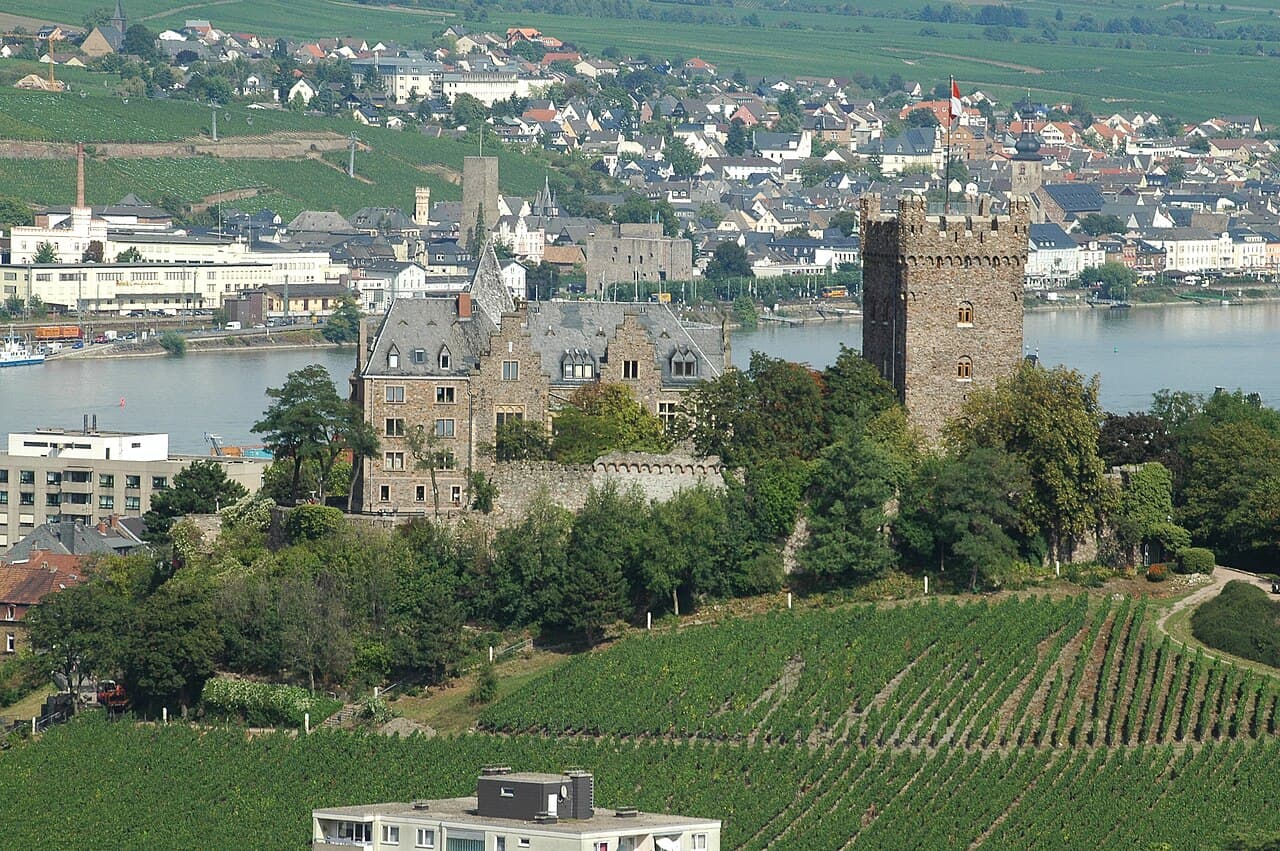
Klopp Castle stands prominently in the Upper Middle Rhine Valley as a historic symbol of Bingen am Rhein. This castle, perched on a hill overlooking the town, offers a commanding view of the Rhine River and surrounding landscape. Its strategic location has been significant since antiquity, with evidence suggesting that the site may have hosted a Roman fortification built by Drusus around 10 CE. The hill, known locally as Kloppberg, is steeped in legend, including stories that Emperor Henry IV was imprisoned there by his son in the early 12th century, marking the earliest recorded mention of a castle at this location.
Medieval origins and strategic importance
The current form of Klopp Castle largely dates back to the 13th century, with the first documented reference to Burg Clopp appearing in 1277. It is believed that the castle was constructed between 1240, when Kloppberg was noted as a residence of a church official, and 1281. Klopp Castle was part of a defensive and economic network that included Ehrenfels Castle across the Rhine and the Mouse Tower, enabling the Archbishopric of Mainz to control and levy tolls on river trade along the Rhine, a vital commercial artery of medieval Europe.
Castle structure and medieval features
The medieval castle featured a bergfried or keep, curtain walls, a moat, and defensive towers. These fortifications were typical of hill castles of the High Medieval period, designed to withstand sieges and control the surrounding territory. The base of the bergfried, parts of the southern curtain wall, and the moat remain as tangible links to the castle's medieval past.
Decline, destruction, and rebuilding
By the 16th century, Klopp Castle had begun to fall into disrepair. It suffered significant damage during the Thirty Years' War and was rebuilt in 1653. However, the castle's fortunes waned again during the War of the Palatine Succession when French forces destroyed it in 1689. Further damage occurred during the War of the Spanish Succession in 1713 when Mainz troops demolished what remained to prevent enemy occupation.
Romantic revival and 19th-century restoration
In the early 19th century, Klopp Castle was a picturesque ruin, attracting visitors drawn by the Romantic Rhine landscape. The state of Hesse acquired the site in 1815 and sold it to Hermann Faber, who initiated restoration efforts. Faber enhanced the castle grounds with romantic gardens, walking paths, and an aeolian harp, and created a viewing platform atop the gate tower, which he furnished as a cozy retreat for visitors. This period marked Klopp Castle as a cultural landmark and a favored destination for artists and tourists, including the renowned painter J.M.W. Turner, who sketched the castle in 1844.
Architectural transformation and modern use
The mid-to-late 19th century saw significant reconstruction under the direction of Eberhard Soherr, the mayor of Bingen. Between 1853 and 1879, the gatehouse, bridge, fortifications, and the bergfried were rebuilt, with the bergfried reconstructed as a crenellated tower standing 26 meters high, complete with four corner turrets. A new Gothic-style building was erected on the site, which has served as the seat of the town government and the mayoral residence since 1897. This building exemplifies the Gothic architectural style popular in the 19th century, blending historical reverence with functional civic use.
Preservation and cultural significance
Today, Klopp Castle is a well-preserved example of a hill castle that has evolved through centuries of conflict, decay, and restoration. The remaining medieval elements, combined with the 19th-century Gothic additions, offer a layered architectural narrative reflecting the castle's varied history. The bergfried formerly housed a local history museum until 1998, when the collection was moved to a former power station on the waterfront, further emphasizing the castle's role as a cultural landmark.
Visitor experience and amenities
Visitors to Klopp Castle can explore its historic grounds, enjoy panoramic views of Bingen and the Rhine, and dine at the on-site gourmet restaurant. The castle's romantic gardens and walking paths invite leisurely exploration, while the architectural features provide insight into medieval fortification techniques and 19th-century restoration aesthetics. As the iconic landmark of Bingen, Klopp Castle remains an essential destination for those interested in German history, architecture, and the scenic beauty of the Rhine Valley.
Frequently asked questions (FAQ)
- How do I get to Klopp Castle?
- Klopp Castle is located in Bingen am Rhein, Germany, and is easily accessible by public transportation. You can take a train to Bingen station, followed by a short walk or a local bus to reach the castle.
- What is the historical significance of Klopp Castle?
- Klopp Castle dates back to the 13th century and served as a strategic fortification overlooking the Rhine River. Its historical importance lies in its role in regional defense and its connection to the local nobility.
- When was Klopp Castle last renovated?
- The most significant renovations of Klopp Castle occurred in the 19th century, although it has undergone various restorations over the years to preserve its structure. The ongoing maintenance ensures that visitors can enjoy its historical architecture.
- Can I visit the interior of Klopp Castle?
- Yes, visitors can explore the interior of Klopp Castle during designated opening hours. Guided tours are often available, providing insights into the castle's history and architecture.
- Why is Klopp Castle a popular tourist attraction?
- Klopp Castle is popular due to its stunning views of the Rhine Valley and its rich history. The picturesque setting and the opportunity to learn about medieval architecture also attract many visitors.
- Is it possible to host events at Klopp Castle?
- Yes, Klopp Castle offers facilities for hosting events, including weddings and corporate gatherings. Potential hosts should contact the castle management for details on availability and services.
- What are the opening hours of Klopp Castle?
- Klopp Castle typically opens to visitors from March to October, with specific hours varying by season. It's best to check the official website for the most current information before planning your visit.
- What are the ticket prices for visiting Klopp Castle?
- Ticket prices for Klopp Castle are generally affordable, with discounts available for students and seniors. Children under a certain age often enter for free, making it a great option for family outings.
- When is the best time to visit Klopp Castle?
- The best time to visit Klopp Castle is during the spring and summer months when the weather is pleasant and the surrounding landscapes are in full bloom. Additionally, special events and festivals are often held during this time, enhancing the visitor experience.
- What nearby attractions should I consider while visiting Klopp Castle?
- While visiting Klopp Castle, you can explore the charming town of Bingen am Rhein, which is rich in history and culture. Nearby attractions include the beautiful Rhine River, vineyards, and other historic sites like the Niederwald Monument.
Photo gallery

Information
Website
Visit websiteSources & official resources
Verify the information above using these authoritative references.
Loading map...
Visitor reviews
No reviews yet. Been here? Write the first review and help other travelers!
Write the first reviewVisited this castle? Share your experience
Your review helps other travelers and adds first-hand knowledge to our encyclopedia.