Lanzada Castle Ruins

Lanzada Castle ruins in A Lanzada, Spain
A Lanzada, Galicia, Spain
Early Medieval (5th–10th c.)
Partially Preserved

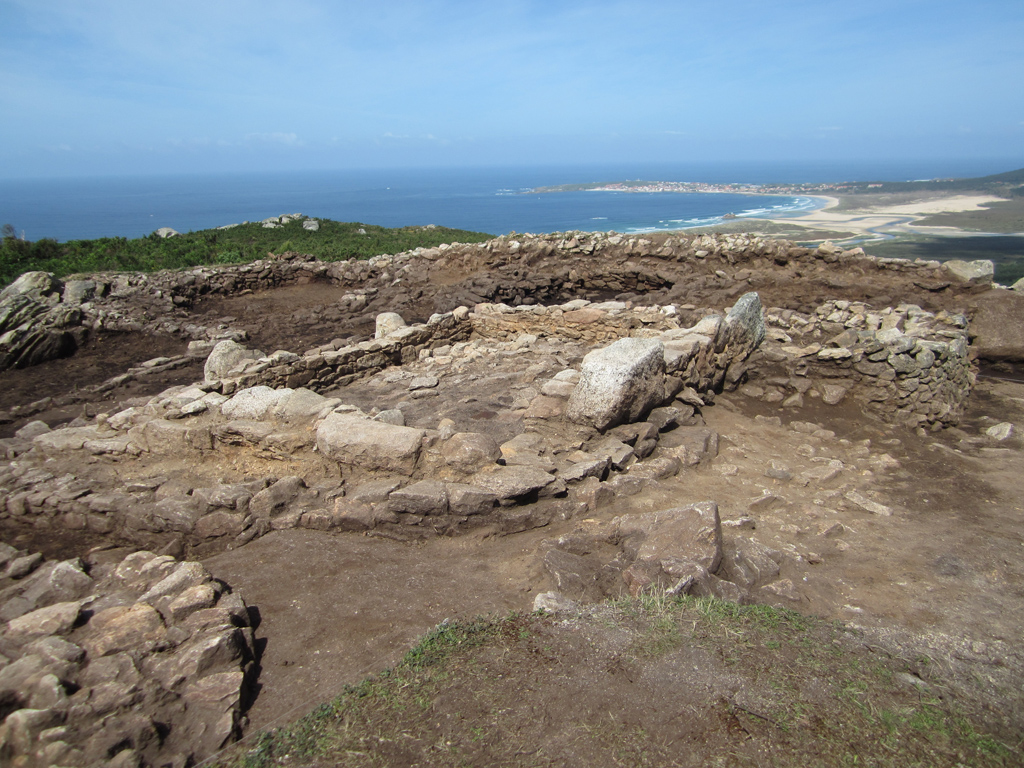
Lanzada Castle stands as a historic site near A Lanzada, Spain, with origins tracing back to around 960 AD. Its location is notable for being built upon the grounds of an ancient Phoenician or Roman lighthouse, indicating the strategic maritime importance of the site long before the castle's construction. The castle's primary role was defensive, serving as a fortification against Viking and Norman raids that threatened the coastal areas during the early medieval period.

Historical context and purpose

Constructed in the early medieval period, Lanzada Castle was a critical element in the coastal defense system of the region. Its position allowed for surveillance of maritime routes and early warning against incoming threats. Following the initial Viking and Norman threats, the castle also played a defensive role against Moorish pirate incursions, which were common in the Iberian Peninsula's coastal waters during the Middle Ages.

Architectural features and construction

The castle was built on a rocky promontory that once hosted a lighthouse, integrating the existing ancient structures into its foundation. While detailed architectural records are scarce, the surviving remains suggest a keep or tower as the main defensive structure. The construction likely included thick stone walls designed to withstand sieges and attacks from both sea and land. The castle's layout would have been typical of early medieval fortifications with a focus on defense rather than residential comfort.

The keep and remaining structures

Today, only part of the original keep remains, along with a hermit's dwelling that has been established within the ruins. The surviving stonework provides insight into the castle's robust construction methods and strategic design. The keep would have served as the last line of defense and a lookout point over the surrounding landscape and sea.

Destruction and later history

Lanzada Castle was destroyed during the Irmandiño revolts in 1467, a series of uprisings in Galicia against the feudal lords. These revolts targeted many castles and fortresses, which were seen as symbols of noble oppression. The destruction left the castle in ruins, and it was never fully rebuilt or restored to its former defensive role.

Current condition and cultural significance

Today, Lanzada Castle exists as partially preserved ruins. The site is of archaeological interest due to its layered history from ancient lighthouse to medieval fortress. It offers visitors a glimpse into the region's defensive strategies against maritime threats over centuries. The presence of a hermit's dwelling adds a unique human element to the site, showing continued albeit modest use of the location long after its military function ended.

Visiting Lanzada Castle ruins

The ruins are accessible to visitors interested in medieval history and coastal fortifications. While the site lacks extensive facilities, it provides an evocative setting overlooking the sea and surrounding landscape. Visitors can explore the remaining stone structures and imagine the castle's role in protecting the coastline from historic threats. The site is also a point of interest for those studying the transition from ancient maritime navigation aids to medieval military architecture.

Frequently asked questions (FAQ)

What is the historical significance of Lanzada Castle Ruins?
Lanzada Castle Ruins are a remarkable testament to medieval military architecture, dating back to the 12th century. This castle played a crucial role in the defense of the region against various invasions and has become a symbol of local heritage and history.
When was Lanzada Castle built?
Lanzada Castle was constructed in the 12th century, during a time when strategic fortifications were essential for protecting territories. Its ruins today reflect the architectural styles and defensive needs of the medieval period.
Can I visit Lanzada Castle Ruins year-round?
Yes, Lanzada Castle Ruins are accessible to visitors year-round. However, it is advisable to check local weather conditions and any specific restrictions that may apply during winter months.
What are the opening hours for Lanzada Castle Ruins?
Lanzada Castle Ruins are open to the public daily, typically from 9 AM to 7 PM. It is recommended to verify the exact hours before your visit as they may vary seasonally or due to special events.
Is it possible to take guided tours at Lanzada Castle Ruins?
Yes, guided tours are often available at Lanzada Castle, providing visitors with in-depth knowledge about its history and architecture. These tours can enhance your experience by offering insights that may not be apparent when exploring the ruins independently.
What is the best time to visit Lanzada Castle Ruins?
The best time to visit Lanzada Castle Ruins is during the spring and fall seasons when the weather is mild and pleasant. These times also tend to attract fewer tourists, allowing for a more peaceful exploration of the site.
Are there any nearby attractions to explore after visiting Lanzada Castle?
Yes, after visiting Lanzada Castle Ruins, you can explore the beautiful beaches of A Lanzada, as well as other historical sites in the area. The nearby town of Sanxenxo offers charming restaurants and shops for a full day of sightseeing.
What are the ticket prices for visiting Lanzada Castle Ruins?
Entry to Lanzada Castle Ruins is generally free, allowing everyone to enjoy this historical site. However, if you opt for a guided tour, there may be a small fee associated with that experience.
How do I get to Lanzada Castle Ruins?
Lanzada Castle Ruins are easily accessible by car, located just a short drive from the town center of A Lanzada. Public transport options may also be available, so check local schedules for the best routes to reach the site.

Information

Hill Castle

Loading map...

Visitor reviews

No reviews yet. Been here? Write the first review and help other travelers!

Write the first review

Visited this castle? Share your experience

Your review helps other travelers and adds first-hand knowledge to our encyclopedia.
Write a review

(5/5)

0/2000 characters

Your review will be visible after admin approval

Nearby castles

17.8 km
Castro of Porto de Baixo — Spain castle

Castro of Porto de Baixo

, Spain

Castro of Porto de Baixo is an archaeological site situated within the Dunes of Corrubedo Natural Park in Galicia, Spain. This ancient settlement, classified as a hill castle type, was inhabited during the Late Iron Age, specifically between the 4th century BC and 2nd century BC. It represents one of the many castros—fortified settlements typical of the northwestern Iberian Peninsula during this period.Historical context and significanceThe Castro of Porto de Baixo was part of a network of similar fortified sites that dotted the Galician landscape in prehistoric times. These castros were primarily occupied by Celtic tribes who built them for defensive purposes and as centers of local social and economic activity. The location within the Dunes of Corrubedo Natural Park suggests a strategic choice, providing natural protection and access to coastal resources.The settlement's occupation during the Late Iron Age coincides with a period of significant cultural development in the region, marked by the construction of stone walls and circular dwellings typical of castro culture. The site offers valuable insights into the lifestyle, defensive strategies, and architectural practices of the Celtic peoples in Galicia before Roman influence became dominant.Architectural features and layoutThe remains at Castro of Porto de Baixo are characteristic of castro architecture, featuring remnants of stone walls that once enclosed the settlement. These walls were built using dry stone techniques, creating robust defensive barriers. The settlement likely included several circular or oval houses constructed from stone and wood, arranged in a compact layout within the fortifications.While much of the structure is now in ruins, archaeological excavations have revealed the foundations of these dwellings and defensive walls. The site’s position on elevated terrain, typical of hill castles, would have offered commanding views of the surrounding landscape and coastline, enhancing its defensive capabilities.Archaeological research and preservationArchaeological investigations at the Castro of Porto de Baixo have uncovered artifacts such as pottery fragments, tools, and other domestic items that help reconstruct the daily life of its ancient inhabitants. These findings contribute to understanding the broader cultural and historical context of the Iron Age in Galicia.As an archaeological ruin, the site is protected within the natural park, balancing conservation with public access. Preservation efforts focus on maintaining the integrity of the stone structures and preventing further degradation caused by natural elements and human activity.Visiting the siteVisitors to the Dunes of Corrubedo Natural Park can explore the Castro of Porto de Baixo to witness firsthand the remains of this ancient hillfort. The site offers a glimpse into prehistoric settlement patterns and defensive architecture in Galicia. Interpretive signage and guided tours may be available to enhance the educational experience.The natural surroundings of the park, including its unique dune ecosystem and proximity to the Atlantic coast, add to the appeal of visiting the castro. It provides an opportunity to combine cultural heritage exploration with nature tourism.

Late Medieval (14th–15th c.)
Details
18.4 km
Castro of A Cidá — Spain castle

Castro of A Cidá

, Spain

Castro of A Cidá is an archaeological site located in the Province of A Coruña, in the autonomous community of Galicia, Spain. This site represents the remains of a fortified settlement typical of the Iron Age culture in northwestern Iberia, known as the castro culture. The settlement dates back to the late prehistoric period, approximately from the 1st millennium BCE, and it provides valuable insight into the defensive architecture and social organization of the communities inhabiting this region before Roman conquest.Historical context and significanceThe castros were fortified hilltop settlements characteristic of the northwestern Iberian Peninsula, particularly in Galicia and northern Portugal. The Castro of A Cidá exemplifies this tradition, reflecting the strategic importance of elevated positions for defense and surveillance. These settlements were typically surrounded by stone walls and ditches, serving as protection against rival groups and invaders.The Castro of A Cidá is part of a broader network of similar sites that illustrate the cultural and social dynamics of the region during the Iron Age. It is an important archaeological resource for understanding the transition from prehistoric to Roman times in Galicia, as many castros were later Romanized or abandoned following Roman expansion.Architectural features and layoutThe site consists of ruined defensive walls constructed from local stone, which once enclosed a settlement area that included residential huts, communal spaces, and possibly small workshops. The walls were likely reinforced with ramparts and surrounded by a ditch or moat to enhance defense.The typical circular or oval-shaped stone houses within the castro would have had thatched roofs and earth floors. The layout suggests a compact community organized around a central space or courtyard, which may have served as a gathering or ceremonial area.Defensive structuresThe fortifications at Castro of A Cidá include remnants of curved stone walls that follow the natural contours of the hill, maximizing defensive advantage. The entrance would have been narrow and easily defensible, possibly with a gatehouse or guard post.Archaeological research and preservationExcavations at the site have uncovered pottery fragments, tools, and other artifacts that shed light on the daily life and material culture of its inhabitants. These findings contribute to the broader understanding of the castro culture and its evolution over centuries.Currently, the site is classified as ruins and is an important cultural heritage location. Preservation efforts focus on stabilizing the remaining structures and facilitating public access for educational and touristic purposes.Visiting the castro of a cidáVisitors to Castro of A Cidá can explore the remains of this ancient fortified settlement, gaining insight into the Iron Age communities of Galicia. The site offers panoramic views of the surrounding landscape, enhancing the experience of understanding its strategic location.Information panels and guided tours may be available to help visitors appreciate the historical and architectural significance of the site. As an archaeological ruin, the site requires careful respect and preservation by visitors.

Details
18.9 km
Wall of Pontevedra — Spain castle

Wall of Pontevedra

Pontevedra, Spain

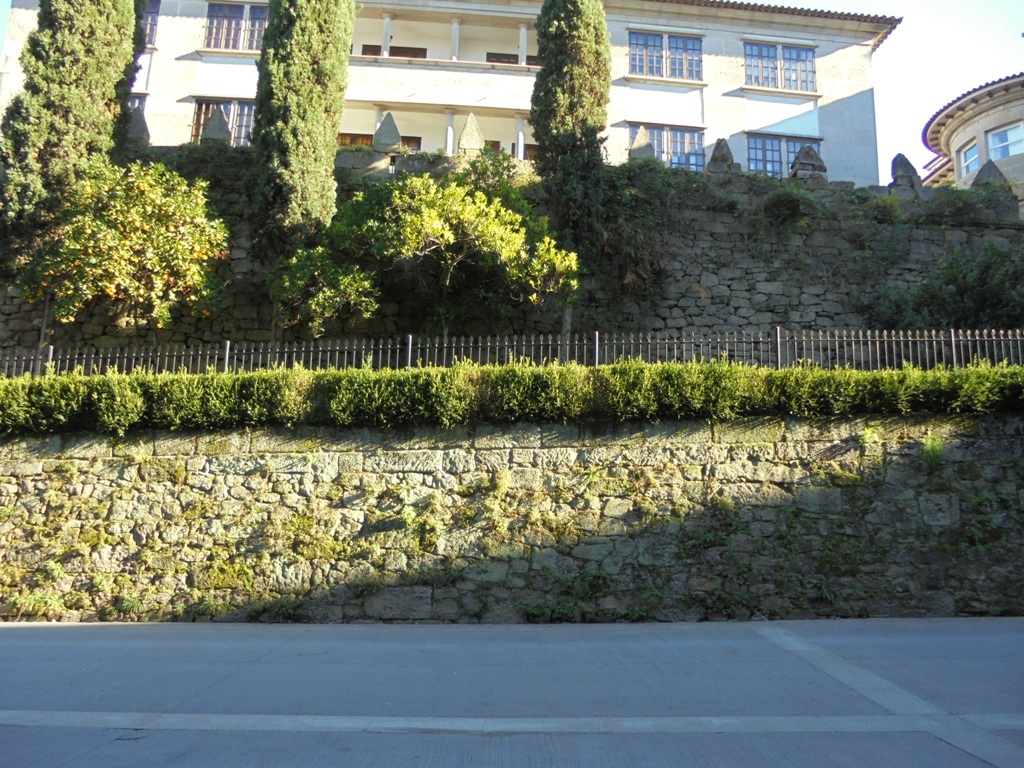
The walls of Pontevedra represent the medieval fortifications that once enclosed the historic city of Pontevedra, Spain. These defensive walls were constructed to protect the city from invaders and played a critical role in its development through the Middle Ages. Although much of the original structure was dismantled by the end of the 19th century, significant remnants remain visible today, offering insight into the city's fortified past. Historical context and construction The walls were likely built during the High to Late Medieval period, a time when many Spanish cities fortified themselves against frequent military threats and local conflicts. Pontevedra, situated in the Galicia region, benefited from its natural geography but required substantial fortifications to secure its urban center. The walls enclosed the city, controlling access through various gates and serving as a deterrent against sieges and raids. While exact dates of construction are uncertain, the fortifications evolved over several centuries, adapting to changing military technologies and urban expansion. The walls would have included crenellated battlements, towers, and gates to facilitate defense and surveillance. Architectural features and surviving sections Today, only fragments of the original walls endure, but these remain valuable for understanding the city’s medieval architecture. The most prominent surviving section is a crenellated stretch approximately 40 metres long, located on Arzobispo Malvar Street. This section is accessible from the gardens of the two buildings on the west side of Santa María Avenue. The crenellations, or battlements, are characteristic features that allowed defenders to shield themselves while observing or firing upon attackers. Other parts of the walls have been incorporated into later constructions. For example, a section adjacent to the former Trabancas gate was uncovered and emphasized during the renovation of the Savoy café. These integrations illustrate how the historic fabric of the city has been preserved within modern urban development. Significance and preservation The walls of Pontevedra are an important cultural heritage site that reflects the city's medieval urban planning and defensive strategies. Although the majority of the fortifications have been lost, the remaining sections provide valuable evidence of medieval military architecture in the Galicia region. Preservation efforts focus on maintaining the visible portions of the walls and integrating them into the contemporary cityscape. These remnants serve as a tangible connection to Pontevedra's past, attracting visitors interested in history and architecture. Visiting the walls of pontevedra Visitors to Pontevedra can explore the surviving sections of the walls, particularly the crenellated stretch on Arzobispo Malvar Street, which is accessible from nearby gardens. The incorporation of wall fragments into modern buildings, such as near the old Trabancas gate, offers additional points of interest for those tracing the city's fortified boundaries. While the walls no longer form a continuous circuit, the preserved parts are well marked and provide a glimpse into the city's medieval defenses. The site is freely accessible to the public and is often included in historical walking tours of Pontevedra.

Late Medieval (14th–15th c.)
Details