Lanhoso Castle
Lanhoso Castle is a prominent high medieval hill castle located in the civil parish of Póvoa de Lanhoso, in the Braga district of northern Portugal. Perched atop a large rocky hill, the castle commands extensive views over the surrounding landscape, a strategic position that has been occupied since the Chalcolithic period. This site’s long history of human settlement and fortification reflects its enduring military and administrative importance through the centuries.
The castle's origins trace back to the 10th and 11th centuries, when it existed as a fortified enclosure consisting of walls and defensive corners. Between 1071 and 1091, Bishop D. Pedro, who led the episcopate of Braga during that period, undertook significant reconstruction of the castle's ashlar stone walls, building over an earlier pre-Romanesque fortress that originally served to defend the episcopal seat of Braga. This reconstruction marked a transition from earlier fortifications to a more robust medieval stronghold.
Historical significance and notable events
Medieval political refuge and sieges
In 1121, Lanhoso Castle played a key role in the political struggles of the Iberian Peninsula when D. Teresa of León sought refuge within its walls during a siege by forces loyal to her half-sister, Queen D. Urraca of León. The siege ended with the Treaty of Lanhoso, mediated by Bishop Gelmires, which preserved the territorial rights of both parties. Later, in 1128, D. Teresa was imprisoned in the castle by her son, D. Afonso Henriques, following the decisive Battle of São Mamede, an event that helped establish the foundation of the Kingdom of Portugal.
Romanesque architectural developments
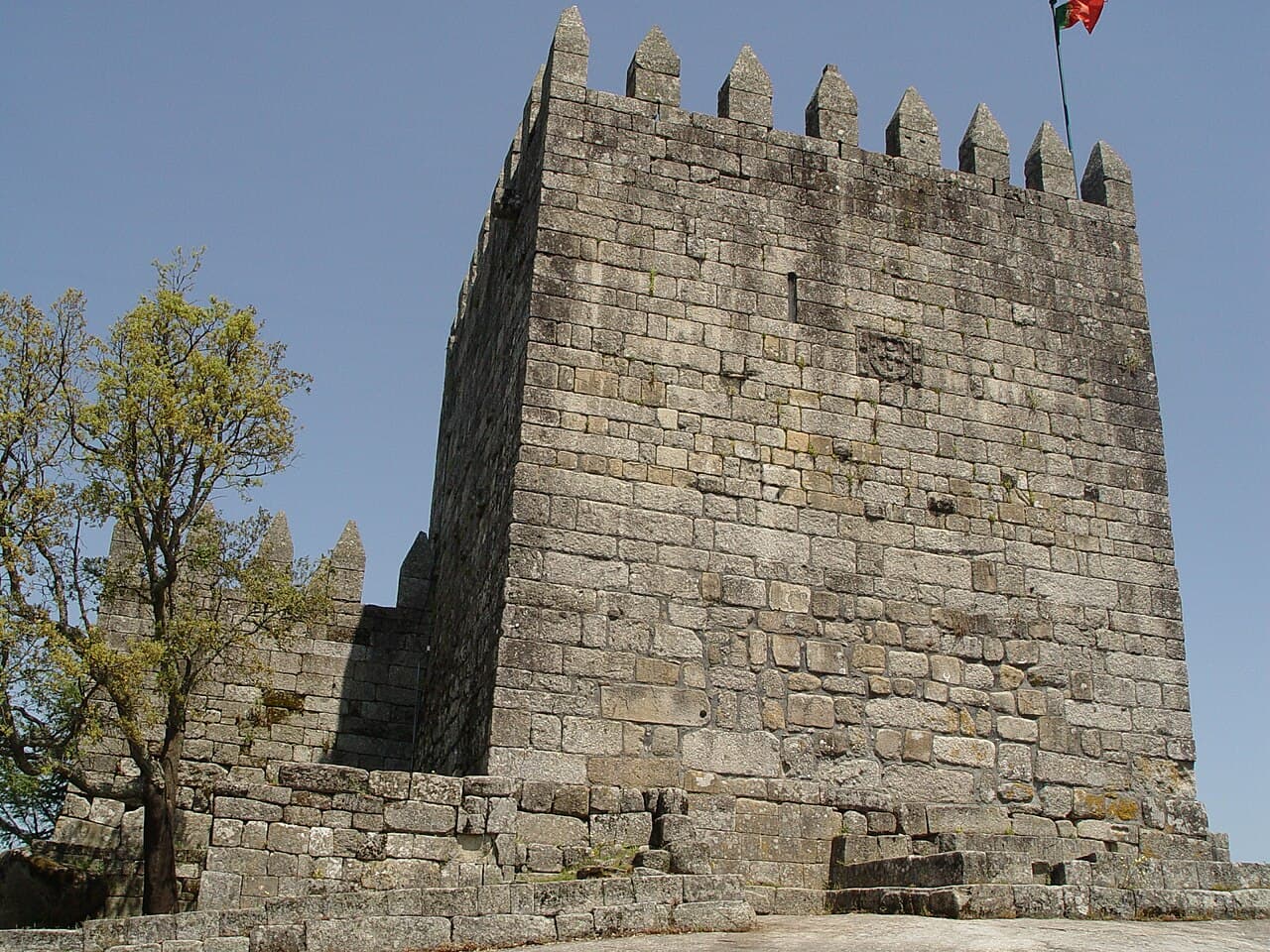
By the late 12th century or early 13th century, the castle underwent significant architectural modifications, including the construction of a Romanesque keep tower. This keep became the central defensive and residential feature of the fortress, symbolizing the castle’s importance as the administrative center of the region.
Tragic events and decline
The castle was also the scene of a dramatic event involving D. Rui Gonçalves Pereira, the alcalde and ancestor of the famous Portuguese general D. Nuno Álvares Pereira. Upon discovering his wife Inês Sanches' infidelity with a friar from the nearby monastery of Bouro, he ordered the castle gates to be closed and set fire to the citadel. The fire claimed the lives of Inês, her lover, and all servants implicated in the affair, including domestic animals, leaving the fortress severely damaged.
Following the consolidation of Portugal’s frontiers, Lanhoso Castle gradually lost its strategic military role. By the 17th century, much of the fortress had fallen into ruin. In 1680, André da Silva Machado, a wealthy merchant from Porto, received permission to dismantle parts of the castle to reuse the stones for constructing a sanctuary dedicated to Our Lady of the Pillar. This sanctuary, built within the castle enclosure, included a church, staircases, and chapels, and was still under construction by 1724.
Architectural features and layout
Fortifications and walls
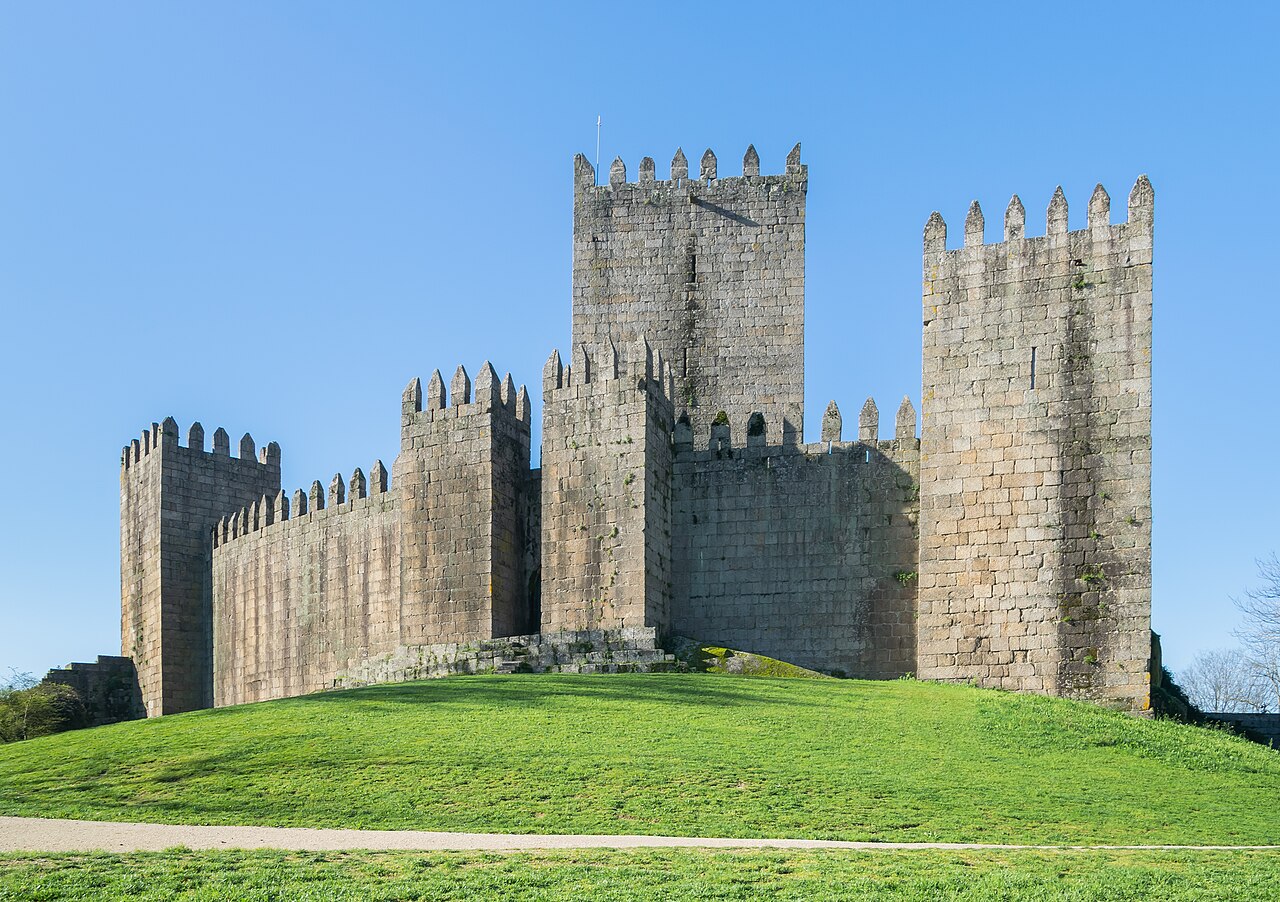
The castle is situated on the western edge of the hilltop, enclosed by an elliptical barbican formed by defensive walls with merlons. Two corbels are visible along the northern and opposite sides of the enclosure. The irregularly shaped fortification includes a rectangular keep tower on the eastern side, rising approximately 10 meters high and topped with battlements. Access to the keep is through an arched doorway located about 3 meters above ground level, a defensive feature typical of medieval keeps.
Gate and access
The main entrance is an arched gate flanked by two towers, located on the southern wall adjacent to the keep. A staircase carved directly into the rock leads up to this gate, emphasizing the castle’s integration with the natural terrain. The walls surrounding the castle are interrupted near the keep by this gate, providing controlled access to the interior.
Interior structures and remnants
Within the castle walls lies the alcalde's citadel and a large cistern, essential for water storage during sieges. Archaeological remains include foundations and towers at the corners, as well as parts of an accessway that hint at the site's pre-Roman occupation. Inside the rectangular courtyard, two lines of pillars remain, suggesting the presence of covered or multi-story structures.
Archaeological investigations and preservation
Excavations carried out between 1938 and 1939 uncovered important structural remains and helped guide restoration efforts. Although the castle is partially ruined, ongoing preservation has made it a popular historical attraction. Visitors can explore the castle grounds, including a small exhibition detailing its history, as well as the adjacent sanctuary and nearby castro (ancient fortified settlement).
Lanhoso Castle remains a significant monument reflecting the layered history of northern Portugal, from prehistoric times through the medieval period and into the modern era. Its combination of Romanesque architecture, strategic hilltop location, and rich historical associations make it a valuable site for both heritage tourism and scholarly study.
Frequently asked questions (FAQ)
- What is the historical significance of Lanhoso Castle?
- Lanhoso Castle, dating back to the 12th century, played a crucial role in the defense of the region during the Reconquista. Its strategic location provided a vantage point for monitoring enemy movements, making it an essential fortification in Portugal's early history.
- When was Lanhoso Castle built?
- The construction of Lanhoso Castle began in the late 12th century, with significant developments occurring throughout the medieval period. It has undergone various restorations, reflecting the architectural styles and historical events that have shaped it over the centuries.
- Can I visit Lanhoso Castle?
- Yes, visitors are welcome to explore Lanhoso Castle. It is open to the public, allowing guests to immerse themselves in its rich history and stunning architecture.
- What are the opening hours for Lanhoso Castle?
- Lanhoso Castle is typically open to visitors from 9 AM to 7 PM during the summer months and from 9 AM to 5 PM in the winter. However, it's advisable to check the official website or contact local tourist information for any seasonal changes or special closures.
- Is Lanhoso Castle accessible for individuals with disabilities?
- The accessibility of Lanhoso Castle may be limited due to its historical architecture and terrain. Visitors with mobility challenges should contact the castle administration in advance to inquire about available accommodations and assistance options.
- What is the best time to visit Lanhoso Castle?
- The best time to visit Lanhoso Castle is during the spring and early autumn when the weather is mild and pleasant. These seasons provide an excellent opportunity to enjoy the outdoor surroundings and panoramic views from the castle.
- Are there nearby attractions to visit along with Lanhoso Castle?
- Yes, there are several attractions near Lanhoso Castle, including the beautiful landscapes of the Gerês National Park and the charming town of Póvoa de Lanhoso. Visitors can also explore local churches and historical sites that reflect the region's rich culture.
- What are the ticket prices for Lanhoso Castle?
- Ticket prices for Lanhoso Castle are generally affordable, with discounts available for students and seniors. It’s best to check the official website for the most current pricing and any special offers available for group visits.
Photo gallery

Photo by Joseolgon•Public domain
Information
Loading map...
Visitor reviews
No reviews yet. Been here? Write the first review and help other travelers!
Write the first reviewVisited this castle? Share your experience
Your review helps other travelers and adds first-hand knowledge to our encyclopedia.