Castle of Braga
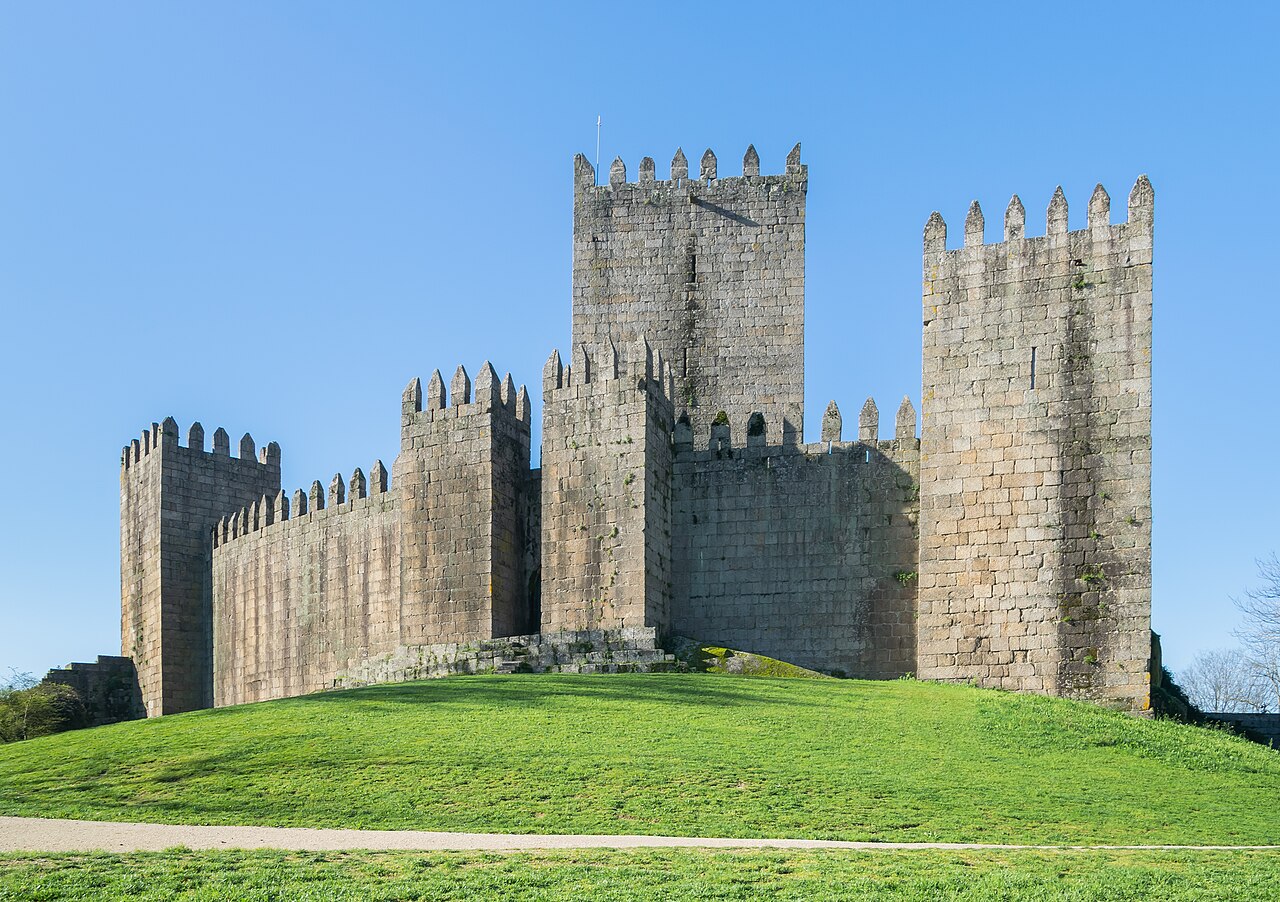
The Castle of Braga stands as a significant historical fortification located in the city of Braga, Portugal. This hill castle traces its origins back to the Roman Empire, evolving through the High Medieval period into a complex defensive structure that once encircled the city. Today, the castle's remains include notable medieval gates, towers, and the imposing keep tower—a testament to the castle's enduring military and architectural legacy.
Originally established as the Roman fortified settlement of Bracara Augusta in the 2nd century, the site was enclosed by polygonal granite walls featuring rounded turrets typical of Roman military architecture. These early fortifications served both defensive and administrative roles, marking Braga as a key urban center in the Roman province of Gallaecia. Following the collapse of Roman authority, Braga maintained its strategic importance through the Suebic, Visigothic, and Moorish periods, although detailed records of fortification changes during these eras are limited.
Medieval fortifications and castle development
In the 11th century, a new line of medieval walls was constructed around Braga’s southern and western edges, supplementing the older Roman northern fortifications. Documentation from 1161 mentions a walled keep, with further expansions around 1210 reflecting ongoing efforts to strengthen the city's defenses. The castle's main keep tower was commissioned by King Denis of Portugal around 1300, although construction extended into the mid-14th century under King Pedro I and remained incomplete for some time.
The castle played a pivotal role during the Ferdinand Wars (1369-1371), when it was captured and set ablaze by forces of Henry II of Castile. Subsequent restoration efforts led by King Ferdinand reinforced the walls and added new defensive towers by 1378. Later, Archbishop Martinho Pires da Charneca received royal authorization to repair the castle and appoint an alcalde to oversee its defense, marking the beginning of ecclesiastical jurisdiction over the fortress in the early 15th century.
Architectural features and surviving structures
The keep tower
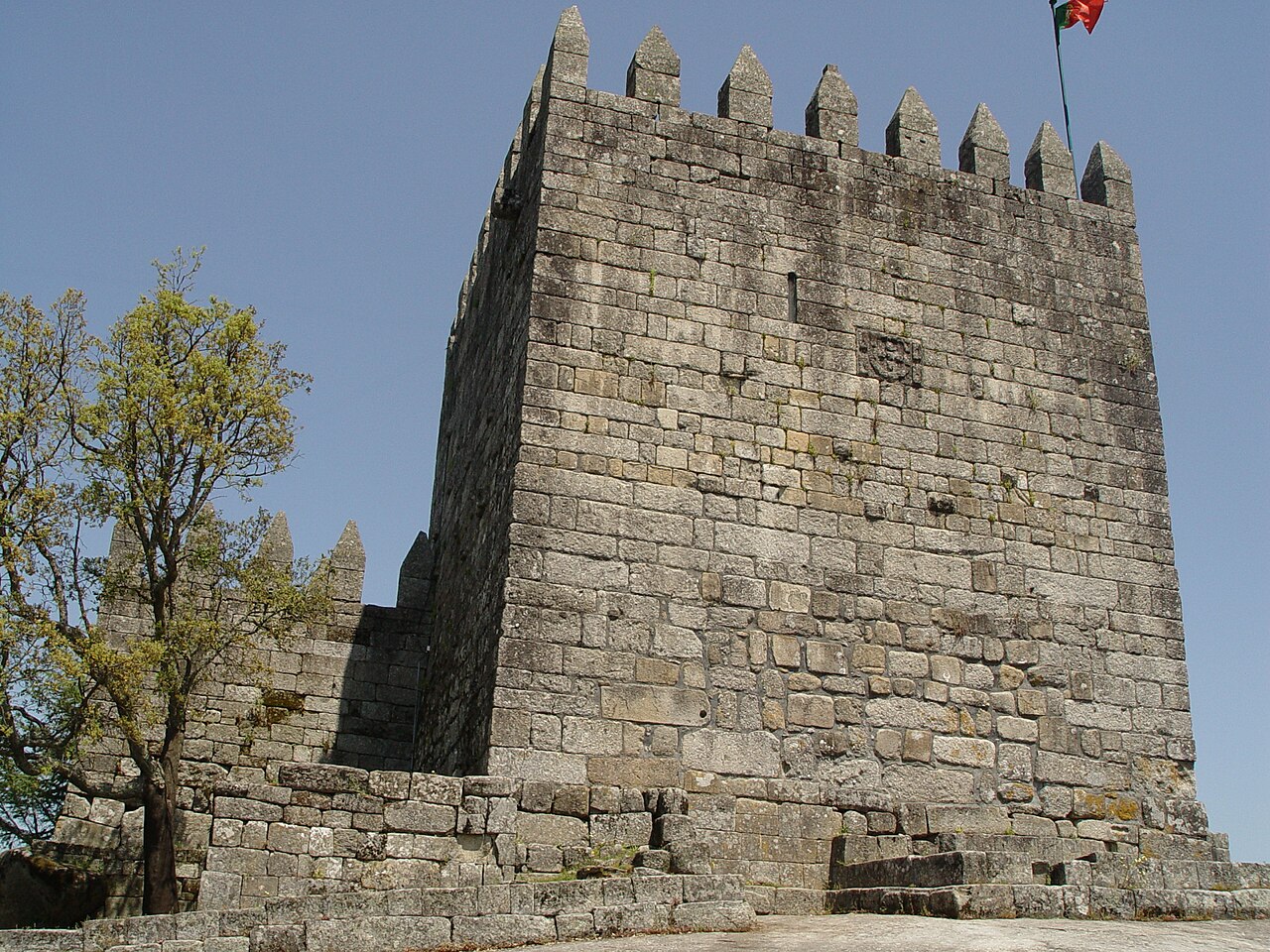
The keep tower (Torre de Menagem) remains the castle's most prominent and well-preserved feature. Constructed primarily from granite masonry, this tower rises nearly 30 meters high and is divided into three or four interior floors. The first floor is notably tall, approximately 12 meters, with a slight setback at the base to absorb siege impacts. The tower is crowned with battlements featuring chamfered merlons, machicolations, and decorative gargoyles designed to channel rainwater away from the walls.
Entrances to the tower display the coat of arms of King Denis, emphasizing its royal patronage. Inside, wooden staircases connect the floors, which include parquet flooring and wooden ceilings. The upper levels feature arched windows that provide light and strategic views, including twin windows on the southeast and northwest faces.
Gates and other towers
Several other defensive elements survive, including the Torre de Santiago, Torre de São Sebastião, and the Porta Nova gate. The Porta Nova, constructed between 1505 and 1532 under Archbishop Diogo de Sousa, showcases Renaissance architectural influences and was later remodeled in the 18th-century Rococo style by Archbishop José de Bragança. The Gate of São Tiago remains partially intact and was augmented with the Chapel of Our Lady of the Tower following the 1755 Lisbon earthquake, blending religious and defensive functions.
Fragments of the medieval city walls are visible in backyards along Rua do Anjo and Rua de São Marcos, illustrating the extensive use of granite in the fortifications. The walls originally formed a circuit exceeding 2,000 meters in length, enclosing an area estimated between 40 and 50 hectares. This circuit included multiple strategically placed towers and gates, protecting Braga’s urban core from medieval threats.
Historical significance and later developments
The Castle of Braga reflects a layered history of military architecture spanning from the Roman period through the medieval era and into the Renaissance. Its strategic location on a hill overlooking the city made it a vital defensive point throughout various conflicts, including the Ferdinand Wars and regional power struggles. The castle's evolution demonstrates the adaptation of fortifications to changing military technologies and political authorities.
Following the 18th century, the castle's military importance declined, and urban expansion led to the gradual demolition of much of its walls and structures starting in 1858. Despite this, the keep tower and several gates were preserved and recognized as National Monuments in 1910, underscoring their cultural and historical value.
Throughout the 20th century, conservation efforts focused on stabilizing and restoring the remaining structures. Repairs to the keep tower's machicolations were necessary after damage in 1996. Today, the Castle of Braga serves as a prominent heritage site, offering insight into the region's complex history and architectural development.
Visiting the castle of braga
Visitors to the Castle of Braga can explore the surviving towers and gates, appreciating the blend of Roman military engineering and medieval fortification techniques. The keep tower provides a striking example of medieval defensive architecture, while the Porta Nova gate offers a glimpse into Renaissance and Rococo stylistic influences. The castle's location within the city allows easy access to other historical landmarks in Braga, enriching the cultural experience.
While much of the original walls have disappeared, the remaining fragments integrated into the urban fabric reveal the scale and significance of Braga’s fortifications. Interpretive signage and guided tours help visitors understand the castle's historical context and architectural features.
Frequently asked questions (FAQ)
- What is the historical significance of the Castle of Braga?
- The Castle of Braga, dating back to the 14th century, played a crucial role in the defense against invasions and the consolidation of the Portuguese territory. Its strategic location in Braga made it a key military stronghold during various conflicts in the region.
- When was the Castle of Braga built?
- The construction of the Castle of Braga began in the 12th century and was completed in the 14th century. It underwent several renovations and expansions over the centuries, reflecting the architectural styles of different periods.
- Can I visit the Castle of Braga year-round?
- Yes, the Castle of Braga is open to visitors throughout the year. However, it's advisable to check for any special events or maintenance closures that may affect access.
- What are the opening hours for the Castle of Braga?
- The Castle of Braga typically opens at 9 AM and closes at 6 PM, but hours may vary seasonally. It's recommended to verify the latest opening hours on the castle's official website before planning your visit.
- Is it possible to access the Castle of Braga with mobility challenges?
- The Castle of Braga has some accessibility features, though certain areas may be challenging due to uneven terrain and steps. Visitors with mobility impairments should contact the castle administration in advance to find out more about specific accommodations.
- What is the best time to visit the Castle of Braga?
- The best time to visit the Castle of Braga is during the spring and fall when the weather is mild and pleasant for exploring. Additionally, these seasons often feature fewer crowds compared to the summer months.
- Are there any nearby attractions to visit after the Castle of Braga?
- Yes, after visiting the Castle of Braga, you can explore nearby attractions such as the Braga Cathedral and the Sanctuary of Bom Jesus do Monte. These historical sites offer a rich cultural experience and stunning views of the surrounding area.
- What are the ticket prices for the Castle of Braga?
- Ticket prices for the Castle of Braga are generally affordable, with discounts available for students and seniors. Children under a certain age may enter for free, but it's best to check the official website for the most up-to-date pricing information.
Information
Website
Visit websiteSources & official resources
Verify the information above using these authoritative references.
Loading map...
Visitor reviews
No reviews yet. Been here? Write the first review and help other travelers!
Write the first reviewVisited this castle? Share your experience
Your review helps other travelers and adds first-hand knowledge to our encyclopedia.