Landgoed Schaffelaar — Netherlands castle

Landgoed Schaffelaar

Landgoed Schaffelaar: 19th-century Tudor Revival estate in Gelderland
Barneveld, Gelderland, Netherlands
Modern (19th–20th c.)
Well Preserved

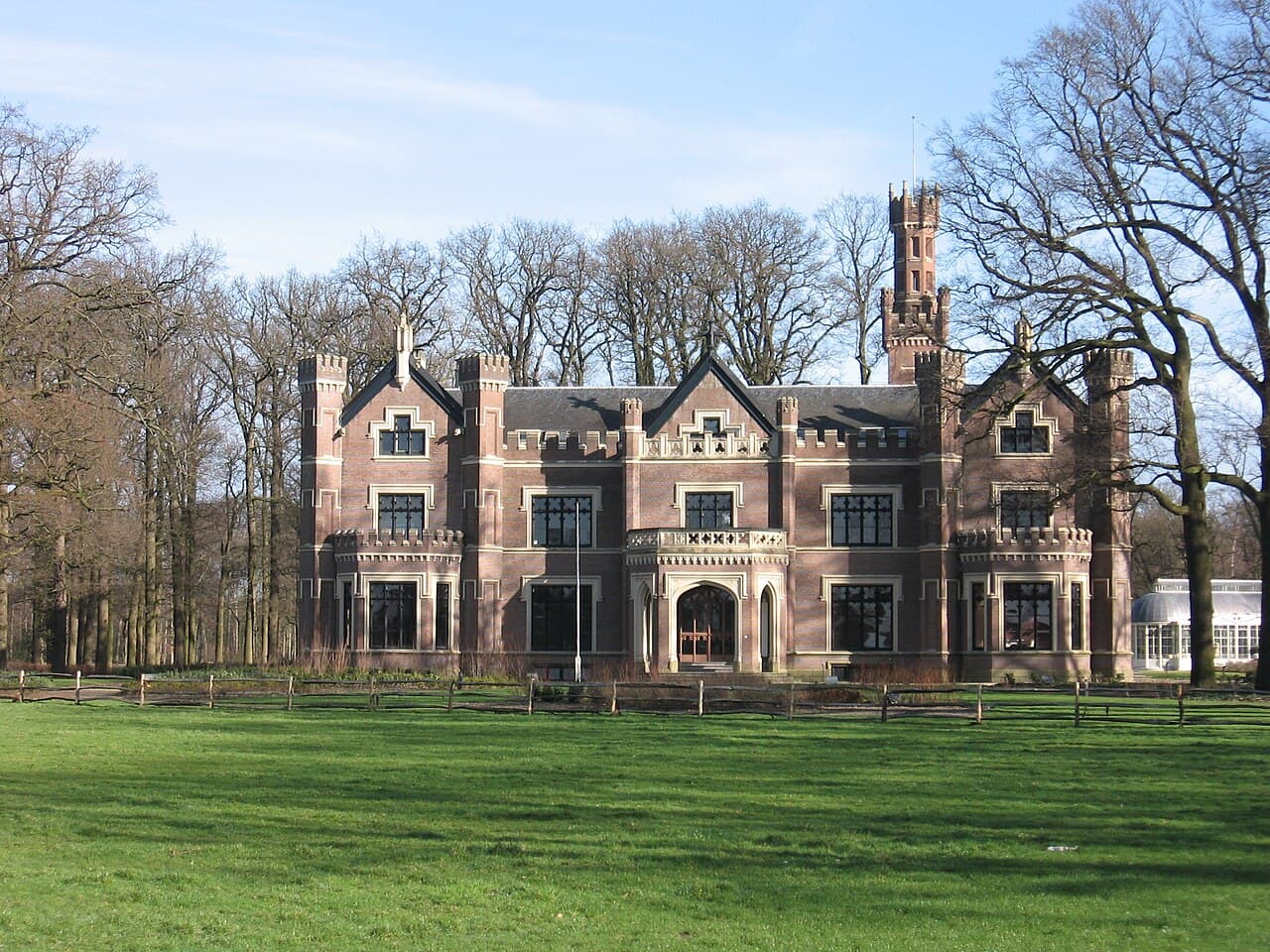
Landgoed Schaffelaar is a notable historic estate situated in Barneveld, within the province of Gelderland, the Netherlands. Spanning approximately 94 hectares, the estate is renowned for its 19th-century Tudor Revival manor house, often referred to as Kasteel De Schaffelaar. This manor house is the centerpiece of the estate, surrounded by extensive woodlands, meadows, water features, and an orangery.

Historical background and estate development

The origins of Landgoed Schaffelaar trace back to earlier periods, but the current manor house was constructed in the 19th century during a wave of revivalist architecture that sought to evoke the charm and grandeur of Tudor England. The estate was developed as a country retreat, embodying the romantic ideals of the period. Its design reflects the Tudor Revival style, characterized by steeply pitched roofs, decorative half-timbering, and tall chimneys.

Architectural features of Kasteel De Schaffelaar

The manor house at Landgoed Schaffelaar exemplifies the Tudor Revival architectural style with its distinctive elements. The building features steep gabled roofs and ornate brickwork that mimic the aesthetics of 16th-century English manor houses. The use of half-timbering on the facades adds to its historicist character, while large mullioned windows provide ample light to the interiors. Tall, elaborately designed chimneys punctuate the roofline, enhancing the castle's silhouette.

The estate also includes an orangery, a glasshouse used historically for growing citrus trees and exotic plants, which complements the manor's elegant design and reflects the horticultural interests of its owners.

Landscape and natural environment

Landgoed Schaffelaar is not only significant for its architecture but also for its carefully maintained natural surroundings. The estate's woodlands and meadows provide a diverse habitat for local flora and fauna. Water features such as ponds and streams are integrated into the landscape, enhancing the scenic quality and offering tranquil views throughout the property.

The park-like setting reflects 19th-century landscape design principles, emphasizing harmony between built structures and nature. Visitors can explore walking paths that meander through the varied terrain, experiencing the peaceful atmosphere of the estate.

Current status and cultural importance

Today, Landgoed Schaffelaar remains a well-preserved example of a 19th-century Tudor Revival estate in the Netherlands. While the manor house is privately owned, the estate holds cultural significance as part of the region's heritage. The combination of historic architecture and natural beauty makes it a notable landmark in Gelderland.

Efforts to maintain the estate's integrity ensure that both the manor house and the surrounding landscape continue to reflect their historical character and charm.

Frequently asked questions (FAQ)

How do I get to Landgoed Schaffelaar?
Landgoed Schaffelaar is located in Barneveld, Netherlands, and is easily accessible by car and public transport. If you are traveling by car, you can use the A1 motorway and follow the signs to Barneveld. Public transportation options include buses and trains that can take you to nearby stations, from where you can reach the castle by a short walk.
What is the historical significance of Landgoed Schaffelaar?
Landgoed Schaffelaar dates back to the 14th century and has served as a noble estate for centuries. It has witnessed significant historical events and changes in ownership, reflecting the rich heritage of the region. Its architecture and grounds showcase the evolution of Dutch castle design and society throughout the ages.
When was Landgoed Schaffelaar built?
The original constructions of Landgoed Schaffelaar began in the 14th century, with various renovations and expansions occurring over the centuries. The castle features elements from different architectural styles, showcasing its long history. Visitors can appreciate the intricate details that reflect its medieval origins and later modifications.
Can I visit Landgoed Schaffelaar year-round?
Yes, Landgoed Schaffelaar is open to visitors throughout the year, though specific opening hours may vary by season. It is advisable to check the official website for the most current visiting hours and any special events that may be taking place. This ensures you have the best experience when planning your visit.
Why is Landgoed Schaffelaar a popular tourist destination?
Landgoed Schaffelaar is popular among tourists for its stunning architecture, beautiful gardens, and rich history. The castle's picturesque setting and well-preserved grounds offer a serene escape for visitors. Additionally, it hosts various cultural events and exhibitions that attract both locals and tourists alike.
Is it possible to rent facilities at Landgoed Schaffelaar for events?
Yes, Landgoed Schaffelaar offers facilities for private events such as weddings, corporate meetings, and special celebrations. The castle's enchanting atmosphere and beautiful scenery provide a unique backdrop for any occasion. It is recommended to contact the management for more details on availability and booking options.
What are the ticket prices for visiting Landgoed Schaffelaar?
Ticket prices for Landgoed Schaffelaar vary depending on the type of visit, such as guided tours or special events. Generally, entrance fees are quite reasonable, making it accessible for families and groups. Discounts may be available for children, seniors, and large parties, so be sure to inquire about any offers when planning your visit.
What are the best times to visit Landgoed Schaffelaar?
The best times to visit Landgoed Schaffelaar are during the spring and summer months when the gardens are in full bloom and the weather is pleasant. Autumn also offers beautiful foliage, creating a picturesque setting. Additionally, visiting during weekdays may provide a quieter experience compared to weekends.
What nearby attractions can I explore after visiting Landgoed Schaffelaar?
After visiting Landgoed Schaffelaar, you can explore other attractions in Barneveld, such as the local museums and parks. The surrounding countryside also offers beautiful walking and cycling routes. Additionally, nearby towns like Amersfoort and Arnhem have historical sites and vibrant cultural experiences worth checking out.

Photo gallery

Landgoed Schaffelaar
Click to view

Photo by M.Minderhoud•CC BY-SA 3.0

1 photo • Click any image to view in full screen

Information

Hill Castle

Loading map...

Visitor reviews

No reviews yet. Been here? Write the first review and help other travelers!

Write the first review

Visited this castle? Share your experience

Your review helps other travelers and adds first-hand knowledge to our encyclopedia.
Write a review

(5/5)

0/2000 characters

Your review will be visible after admin approval

Nearby castles

8.6 km
Kasteel Renswoude — Netherlands castle

Kasteel Renswoude

Renswoude, Netherlands

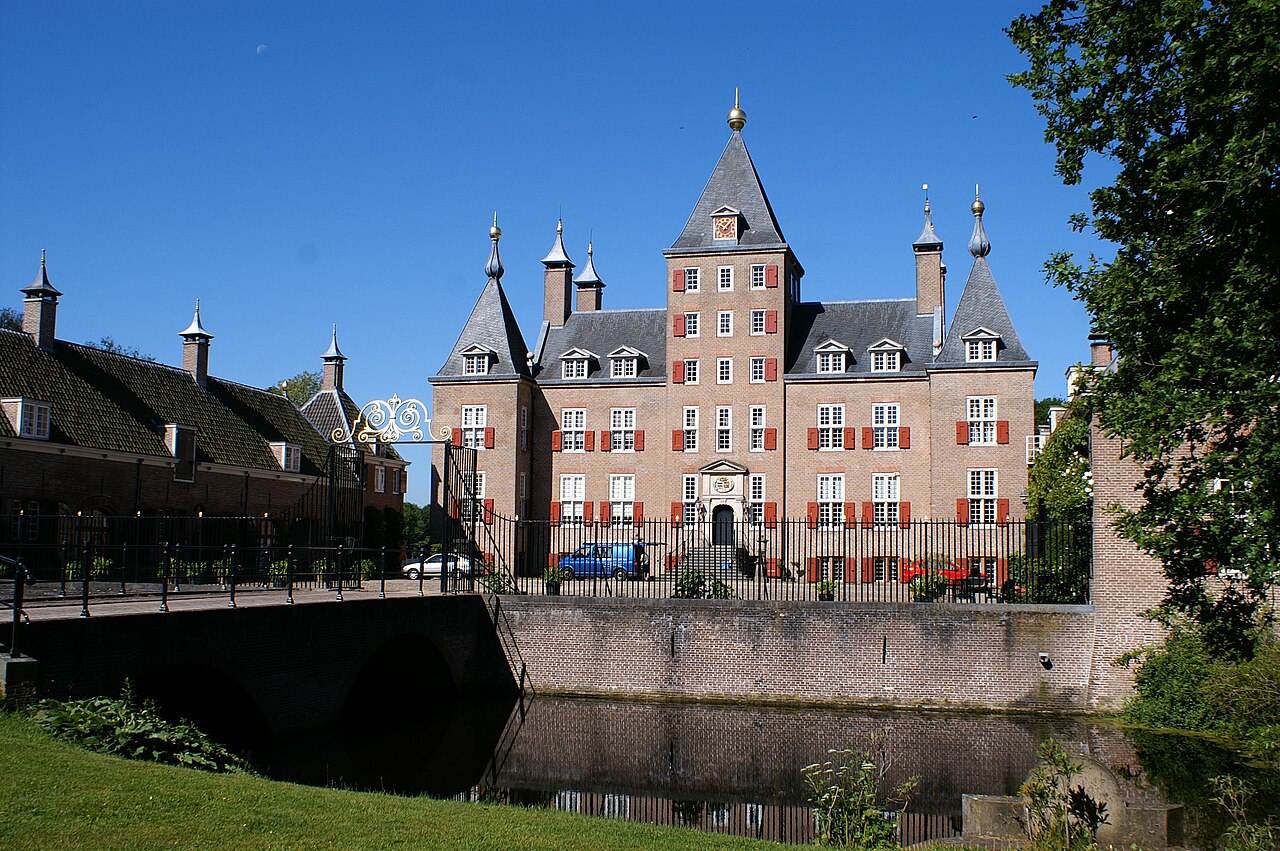
Kasteel Renswoude is a notable example of a late medieval hill castle located in the Netherlands. Constructed in the 14th century, this castle represents the defensive and residential architecture typical of its period. The castle's elevated position on a natural or artificial hill provided strategic advantages in terms of defense and surveillance over the surrounding landscape. Historical context and significance The castle was established during a time when feudal lords fortified their residences to assert control and protect their territories. The 14th century in the Netherlands was marked by regional conflicts and power struggles, which necessitated the construction of fortified structures like Kasteel Renswoude. Over the centuries, the castle has witnessed various historical events and ownership changes that have influenced its architecture and function. Architectural features and layout Kasteel Renswoude exemplifies the characteristics of a hill castle with its strategic placement and defensive design. The castle complex traditionally includes a fortified keep, curtain walls, and defensive towers, which were common features in medieval fortifications. The elevated site allowed defenders to monitor approaching enemies and provided a natural defense barrier. Fortifications and defensive elements The castle's fortifications likely include thick stone walls designed to withstand sieges and attacks. Defensive towers positioned at key points along the walls would have served as vantage points for archers and lookouts. A moat or ditch may have surrounded the castle, enhancing its defensive capabilities by hindering direct assaults. Residential and functional spaces Inside the walls, the castle would have contained residential quarters, including the lord's living chambers, a great hall for gatherings and feasts, and service areas such as kitchens and storage rooms. The design balanced the need for defense with the requirements of daily life and administration. Later developments and preservation Over time, Kasteel Renswoude may have undergone modifications reflecting changing architectural styles and the evolving needs of its inhabitants. While originally built for defense, later periods likely saw adaptations to improve comfort and status display. The castle's current condition is partially preserved, with some original medieval structures remaining intact, offering valuable insights into medieval construction techniques and lifestyle. Visiting Kasteel Renswoude Today, Kasteel Renswoude stands as a cultural heritage site attracting visitors interested in medieval history and architecture. Its location in the Netherlands makes it accessible for tourists exploring the region's rich historical landscape. Visitors can appreciate the castle's strategic design, its role in regional history, and its architectural features that have endured through centuries. Access and tours While specific visiting hours and ticketing information vary, the castle is generally open to the public during designated times. Guided tours may be available, providing detailed historical context and highlighting architectural elements. Visitors are encouraged to explore the surrounding grounds to fully experience the castle's hilltop vantage point. Nearby attractions The area around Kasteel Renswoude offers additional historical sites and natural beauty, enhancing the visitor experience. Exploring nearby towns and countryside allows for a broader understanding of the region's medieval heritage.

Late Medieval (14th–15th c.)
Details
18.2 km
Amerongen Castle — Netherlands castle

Amerongen Castle

Amerongen, Netherlands

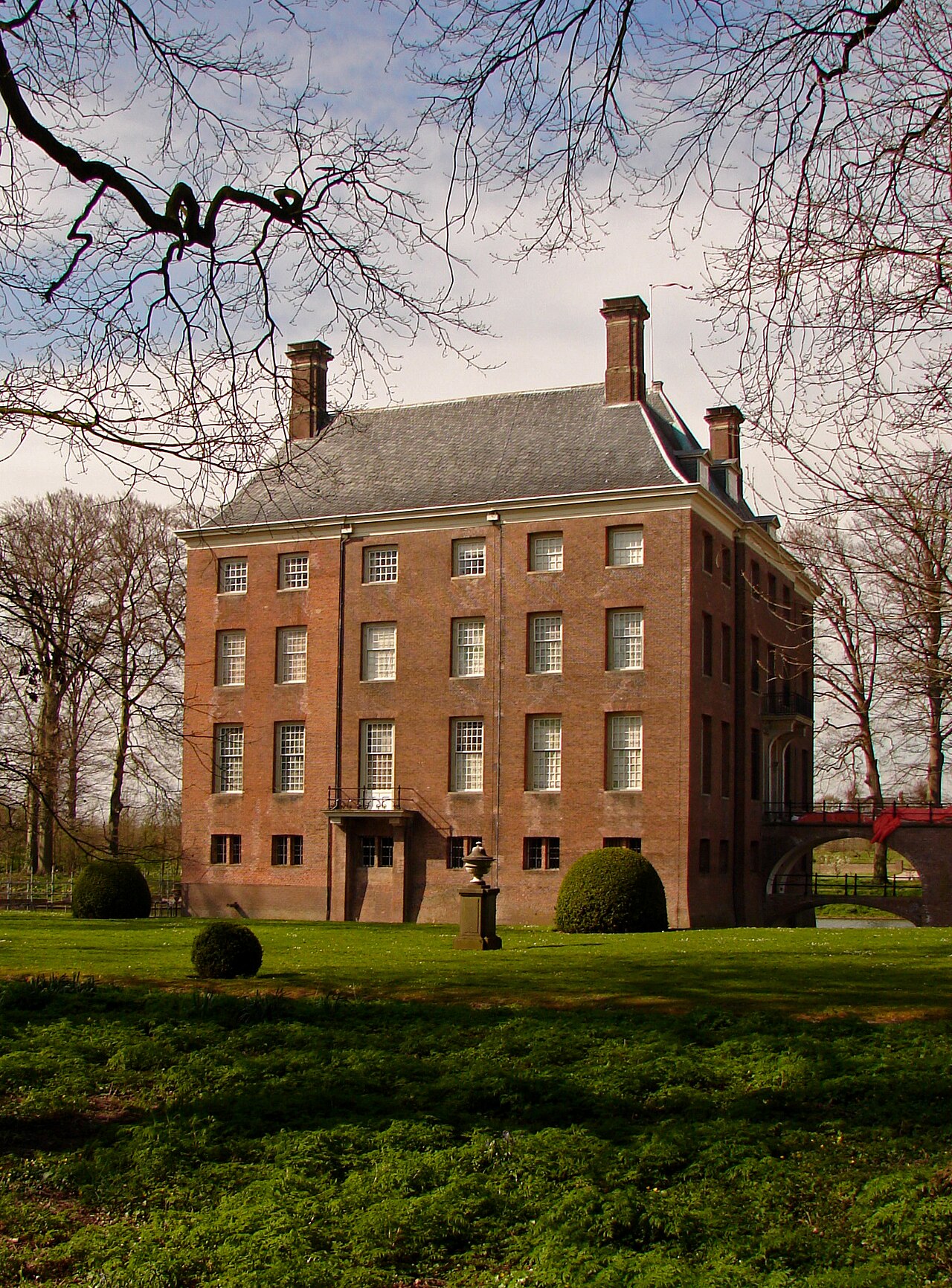
Amerongen Castle stands as a remarkable example of 17th-century baroque architecture in the province of Utrecht, Netherlands. Constructed between 1674 and 1680, this stately residence was built on the site of a medieval fortress destroyed by French troops during the invasion of 1672, an event known locally as the Rampjaar or "disaster year." The castle's origins are deeply intertwined with the turbulent history of the Dutch Republic in the late 17th century, reflecting both the military strife of the period and the aristocratic aspirations of its owners. The design of Amerongen Castle was commissioned by Godard Adriaan van Reede and his wife Margaretha Turnor, members of the Dutch nobility who sought to replace the ruined medieval stronghold with a modern, elegant residence. The architect Maurits Post, a prominent figure in Dutch architecture and son of Pieter Post, was entrusted with this task. His work on Amerongen Castle showcases the refined baroque style, characterized by symmetry, classical proportions, and restrained decorative elements that emphasize grandeur without excessive ornamentation. Architectural features and design The castle's layout follows a traditional rectangular plan, surrounded by a moat that preserves its defensive origins while serving an aesthetic purpose. The main building is constructed of brick with natural stone accents, featuring a steeply pitched roof punctuated by dormer windows and chimneys. The facade is marked by large sash windows that provide ample light to the interior and are framed by stone detailing. Inside, the main hall is a highlight of the castle's interior design. It features a grand central staircase with a beautifully painted ceiling, a work attributed to Willem van Nimwegen. This staircase not only serves a functional purpose but also acts as a focal point for the interior, embodying the baroque emphasis on drama and visual impact. The castle's interiors were later enhanced in the early 20th century by the renowned architect P. J. H. Cuypers, who added ornamental details that blend harmoniously with the original baroque style. Defensive elements and ancillary structures Although primarily a residence, Amerongen Castle retains elements of its defensive past. The moat encircles the building, and the castle walls predate the current structure, surviving from the medieval fortress. Near the entrance, a wooden clock tower dating from 1728 houses the original clock, serving as both a practical and decorative feature. The entrance bridge, constructed in 1678, provides access across the moat and is an important architectural element linking the castle to its surroundings. Gardens and landscape The castle is set within historic gardens that have evolved over centuries but still retain key elements from different periods. A notable feature is the orangerie located in the north-east corner of the gardens, built in the 1880s. This conservatory was designed to shelter exotic plants during colder months and reflects the 19th-century interest in horticulture and botanical collections. The gardens also include a conservatory dating from the 1890s, which complements the orangerie and adds to the estate's charm. During the residence of Kaiser Wilhelm II, the north wall of the gardens was raised to enhance privacy and security, marking a significant alteration linked to the castle's role in 20th-century European history. Historical significance and notable residents Amerongen Castle is historically significant not only for its architectural qualities but also for its role in European history. After World War I, the former German Emperor Kaiser Wilhelm II took refuge at the castle from 1918 to 1920. It was here that he signed his abdication, ending his reign and marking a pivotal moment in German and European history. Wilhelm II's stay brought international attention to Amerongen Castle and led to modifications in the estate to accommodate the former monarch's needs. Following his abdication, Wilhelm II moved to Huis Doorn, but Amerongen Castle remains closely associated with this historic episode. The castle's connection to such a significant figure adds to its cultural heritage and attracts visitors interested in both architectural beauty and historical narratives. Preservation and public access Today, Amerongen Castle is well preserved and remains an important cultural monument in the Netherlands. Its baroque architecture, historic gardens, and rich history make it a popular destination for tourists and scholars alike. The castle often hosts exhibitions and events that highlight its architectural features and historical context. Visitors can explore the castle's interiors, including the grand halls and ornate rooms, as well as stroll through the gardens to appreciate the blend of natural beauty and historic landscaping. The presence of original features such as the wooden clock tower and the orangerie adds depth to the visitor experience.

Renaissance (15th–17th c.)
Details
18.7 km
Zuylestein Castle — Netherlands castle

Zuylestein Castle

Leersum, Netherlands

Zuylestein Castle (Dutch Huis Zuylenstein; also spelt Zuylestein or Zuilenstein) is a historic hill castle located near the town of Leersum in the Netherlands, approximately twenty miles east of the city of Utrecht. This castle is notable for its origins dating back to the 14th century, although the surviving structure and its prominent developments primarily reflect the 16th-century Renaissance period. The castle originally belonged to the burgomaster of Utrecht before passing into the possession of Frederick Henry, Prince of Orange, in 1630. A decade later, in 1640, Frederick Henry granted the castle and its lands to his illegitimate son, also named Frederick, along with the noble title Lord of Zuylestein (Heer van Zuylestein in Dutch). This established the castle as a significant seat of a cadet branch of the House of Orange-Nassau, intertwining its history with the broader political and dynastic developments of the Dutch Republic during the Renaissance and Early Modern periods. Architectural evolution and style The original 14th-century structure underwent substantial modifications in the 16th century, reflecting the transition from medieval fortifications to more comfortable Renaissance residences. Zuylestein Castle exemplifies the Renaissance architectural style with its emphasis on symmetry, proportion, and the incorporation of classical elements, although it retains features typical of earlier medieval hill castles, such as a defensive position on elevated terrain. The castle's layout and surviving elements suggest a fortified manor house rather than a large-scale military fortress. It was designed to serve both as a noble residence and a symbol of status, with its courtyards, residential wings, and defensive walls harmonizing to create a balanced estate. The castle's setting on a hill provided natural defensive advantages, typical of hill castles constructed in the region during this period. Historical significance and ownership Zuylestein Castle's passage into the hands of the House of Orange-Nassau marks its importance in Dutch history. Frederick Henry, a key military and political leader during the Eighty Years' War, used the estate to establish his illegitimate son's noble standing. The title Lord of Zuylestein became hereditary within this line, linking the castle to the broader narrative of the Dutch Golden Age. Throughout the centuries, the castle endured various European conflicts but managed to survive largely intact until the Second World War, when it suffered significant damage. The war's destruction impacted many historic estates in the Netherlands, and Zuylestein was no exception. Restoration and the gardens After the war, the castle estate underwent a period of decline until restoration efforts began in the late 20th century. In 1982, a new house was constructed in a semi-historical style on the site of the former formal gardens, blending modern needs with respect for historical context. One of the most remarkable features of the Zuylestein estate today is its late 17th-century walled kitchen garden, which has been carefully restored since 2011. This garden is considered one of the finest examples of its kind in the Netherlands, showcasing period-appropriate horticultural design and techniques. The Twickel Foundation currently manages the castle and its grounds, ensuring the preservation of its cultural and historical heritage. Architectural features and layout The castle complex includes a combination of defensive walls, residential buildings, and service structures arranged around courtyards. The hilltop location offers commanding views of the surrounding landscape, which was historically important for surveillance and defense. Though much of the original medieval fabric has been altered or lost, the castle retains characteristic elements such as thick stone walls and remnants of defensive towers. The integration of Renaissance design principles is visible in the castle's proportions and window arrangements, reflecting the shift from purely military architecture to a more refined noble residence. The walled kitchen garden The restored walled kitchen garden is enclosed by brick walls typical of the late 17th century, designed to create a microclimate favorable for growing a variety of fruits, vegetables, and herbs. This garden not only served practical purposes but also demonstrated the wealth and sophistication of the castle's owners. Cultural importance and public access Today, Zuylestein Castle is recognized for its historical significance and its well-preserved Renaissance features. The estate's management by the Twickel Foundation ensures ongoing conservation and public engagement through occasional events and guided tours, although the castle itself is primarily a private residence or restricted access site. The castle and its gardens contribute to the cultural landscape of the Utrecht region, attracting visitors interested in Dutch history, Renaissance architecture, and historic horticulture.

Renaissance (15th–17th c.)
Details