Amerongen Castle
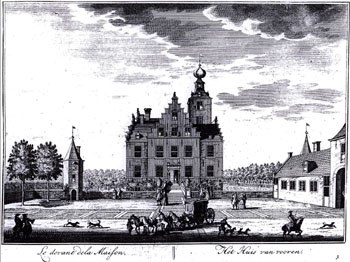
Amerongen Castle stands as a remarkable example of 17th-century baroque architecture in the province of Utrecht, Netherlands. Constructed between 1674 and 1680, this stately residence was built on the site of a medieval fortress destroyed by French troops during the invasion of 1672, an event known locally as the Rampjaar or "disaster year." The castle's origins are deeply intertwined with the turbulent history of the Dutch Republic in the late 17th century, reflecting both the military strife of the period and the aristocratic aspirations of its owners.
The design of Amerongen Castle was commissioned by Godard Adriaan van Reede and his wife Margaretha Turnor, members of the Dutch nobility who sought to replace the ruined medieval stronghold with a modern, elegant residence. The architect Maurits Post, a prominent figure in Dutch architecture and son of Pieter Post, was entrusted with this task. His work on Amerongen Castle showcases the refined baroque style, characterized by symmetry, classical proportions, and restrained decorative elements that emphasize grandeur without excessive ornamentation.
Architectural features and design
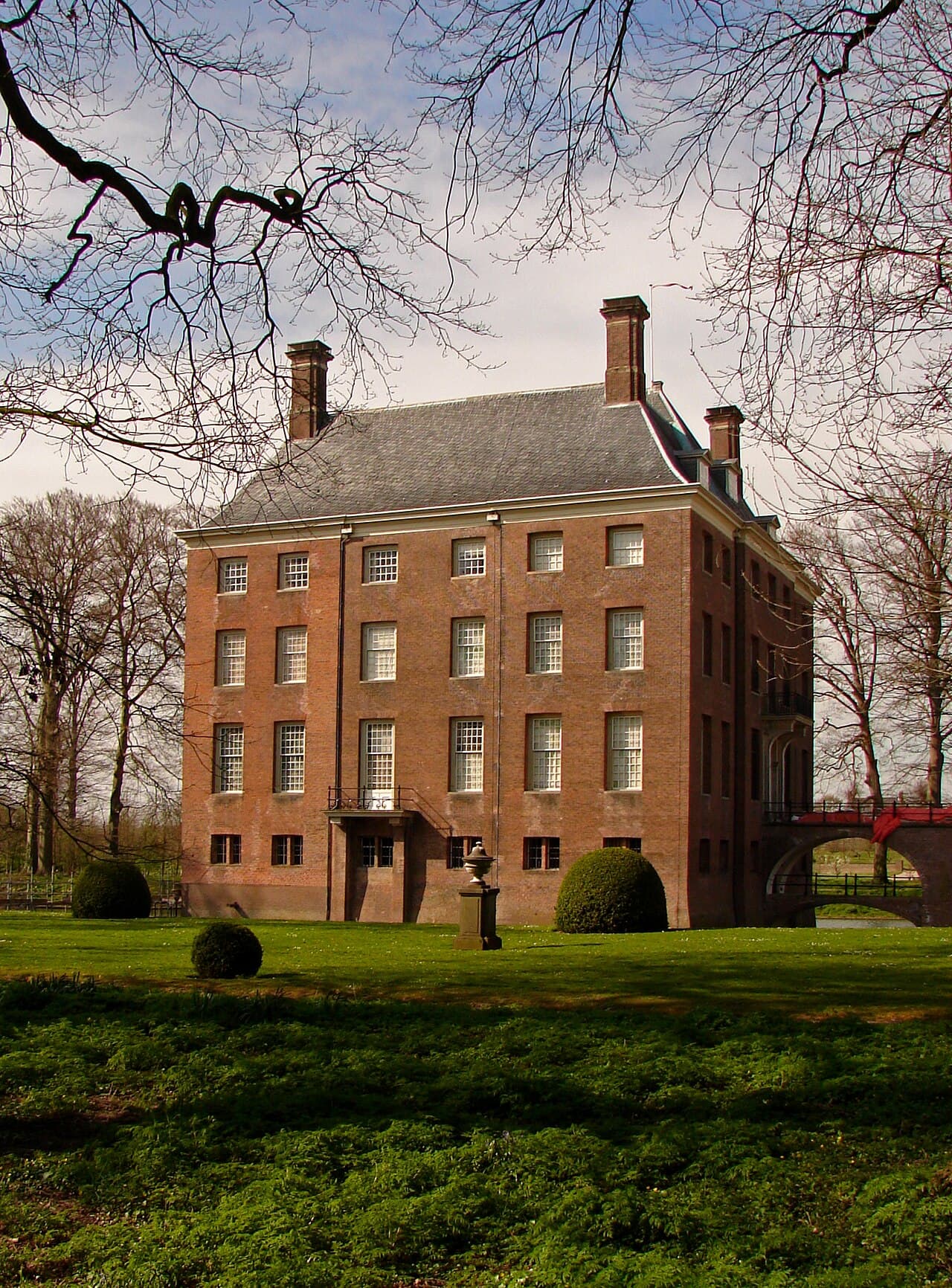
The castle's layout follows a traditional rectangular plan, surrounded by a moat that preserves its defensive origins while serving an aesthetic purpose. The main building is constructed of brick with natural stone accents, featuring a steeply pitched roof punctuated by dormer windows and chimneys. The facade is marked by large sash windows that provide ample light to the interior and are framed by stone detailing.
Inside, the main hall is a highlight of the castle's interior design. It features a grand central staircase with a beautifully painted ceiling, a work attributed to Willem van Nimwegen. This staircase not only serves a functional purpose but also acts as a focal point for the interior, embodying the baroque emphasis on drama and visual impact. The castle's interiors were later enhanced in the early 20th century by the renowned architect P. J. H. Cuypers, who added ornamental details that blend harmoniously with the original baroque style.
Defensive elements and ancillary structures
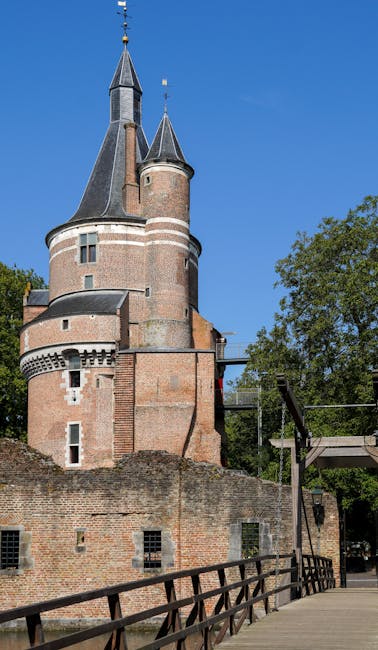
Although primarily a residence, Amerongen Castle retains elements of its defensive past. The moat encircles the building, and the castle walls predate the current structure, surviving from the medieval fortress. Near the entrance, a wooden clock tower dating from 1728 houses the original clock, serving as both a practical and decorative feature. The entrance bridge, constructed in 1678, provides access across the moat and is an important architectural element linking the castle to its surroundings.
Gardens and landscape
The castle is set within historic gardens that have evolved over centuries but still retain key elements from different periods. A notable feature is the orangerie located in the north-east corner of the gardens, built in the 1880s. This conservatory was designed to shelter exotic plants during colder months and reflects the 19th-century interest in horticulture and botanical collections.
The gardens also include a conservatory dating from the 1890s, which complements the orangerie and adds to the estate's charm. During the residence of Kaiser Wilhelm II, the north wall of the gardens was raised to enhance privacy and security, marking a significant alteration linked to the castle's role in 20th-century European history.
Historical significance and notable residents
Amerongen Castle is historically significant not only for its architectural qualities but also for its role in European history. After World War I, the former German Emperor Kaiser Wilhelm II took refuge at the castle from 1918 to 1920. It was here that he signed his abdication, ending his reign and marking a pivotal moment in German and European history. Wilhelm II's stay brought international attention to Amerongen Castle and led to modifications in the estate to accommodate the former monarch's needs.
Following his abdication, Wilhelm II moved to Huis Doorn, but Amerongen Castle remains closely associated with this historic episode. The castle's connection to such a significant figure adds to its cultural heritage and attracts visitors interested in both architectural beauty and historical narratives.
Preservation and public access
Today, Amerongen Castle is well preserved and remains an important cultural monument in the Netherlands. Its baroque architecture, historic gardens, and rich history make it a popular destination for tourists and scholars alike. The castle often hosts exhibitions and events that highlight its architectural features and historical context.
Visitors can explore the castle's interiors, including the grand halls and ornate rooms, as well as stroll through the gardens to appreciate the blend of natural beauty and historic landscaping. The presence of original features such as the wooden clock tower and the orangerie adds depth to the visitor experience.
Frequently asked questions (FAQ)
- What are the opening hours for Amerongen Castle?
- Amerongen Castle is open to visitors from Tuesday to Sunday, from 10 AM to 5 PM. Please note that the castle is closed on Mondays and certain public holidays, so it's advisable to check the official website for any updates before planning your visit.
- What is the historical significance of Amerongen Castle?
- Amerongen Castle dates back to the 13th century and has played a crucial role in Dutch history, serving as a residence for nobility and an important military stronghold. Its rich history is reflected in the various architectural styles seen throughout the castle, making it a fascinating destination for history enthusiasts.
- Can I take guided tours at Amerongen Castle?
- Yes, guided tours are available at Amerongen Castle, providing visitors with in-depth information about its history, architecture, and the stories of its former inhabitants. These tours are typically offered in multiple languages and are a great way to enhance your experience.
- Is it possible to access all areas of the castle?
- While Amerongen Castle offers access to many areas, some parts may have restricted access due to preservation efforts. However, the main rooms and gardens are generally open to visitors, allowing you to enjoy the beauty and history of the castle.
- When is the best time to visit Amerongen Castle?
- The best time to visit Amerongen Castle is during the spring and summer months, when the gardens are in full bloom and the weather is pleasant for outdoor exploration. Additionally, special events and exhibitions are often organized during these seasons, enhancing the visitor experience.
- What are the ticket prices for Amerongen Castle?
- Admission prices for Amerongen Castle vary depending on age and group size, with discounts available for children, students, and seniors. It's recommended to check the official website for the most up-to-date pricing information and any special offers.
- Are there nearby attractions to visit while at Amerongen Castle?
- Yes, there are several nearby attractions, including the picturesque village of Amerongen and the scenic Utrechtse Heuvelrug National Park. These locations offer beautiful walking and cycling routes, making it easy to extend your visit beyond the castle itself.
- How do I get to Amerongen Castle using public transport?
- You can reach Amerongen Castle via public transport by taking a train to the nearest station, then transferring to a local bus or taxi service. The castle is well-signposted, and the journey provides a lovely view of the surrounding countryside.
Photo gallery

Information
Website
Visit websiteSources & official resources
Verify the information above using these authoritative references.
Loading map...
Visitor reviews
No reviews yet. Been here? Write the first review and help other travelers!
Write the first reviewVisited this castle? Share your experience
Your review helps other travelers and adds first-hand knowledge to our encyclopedia.