La Sarraz Castle
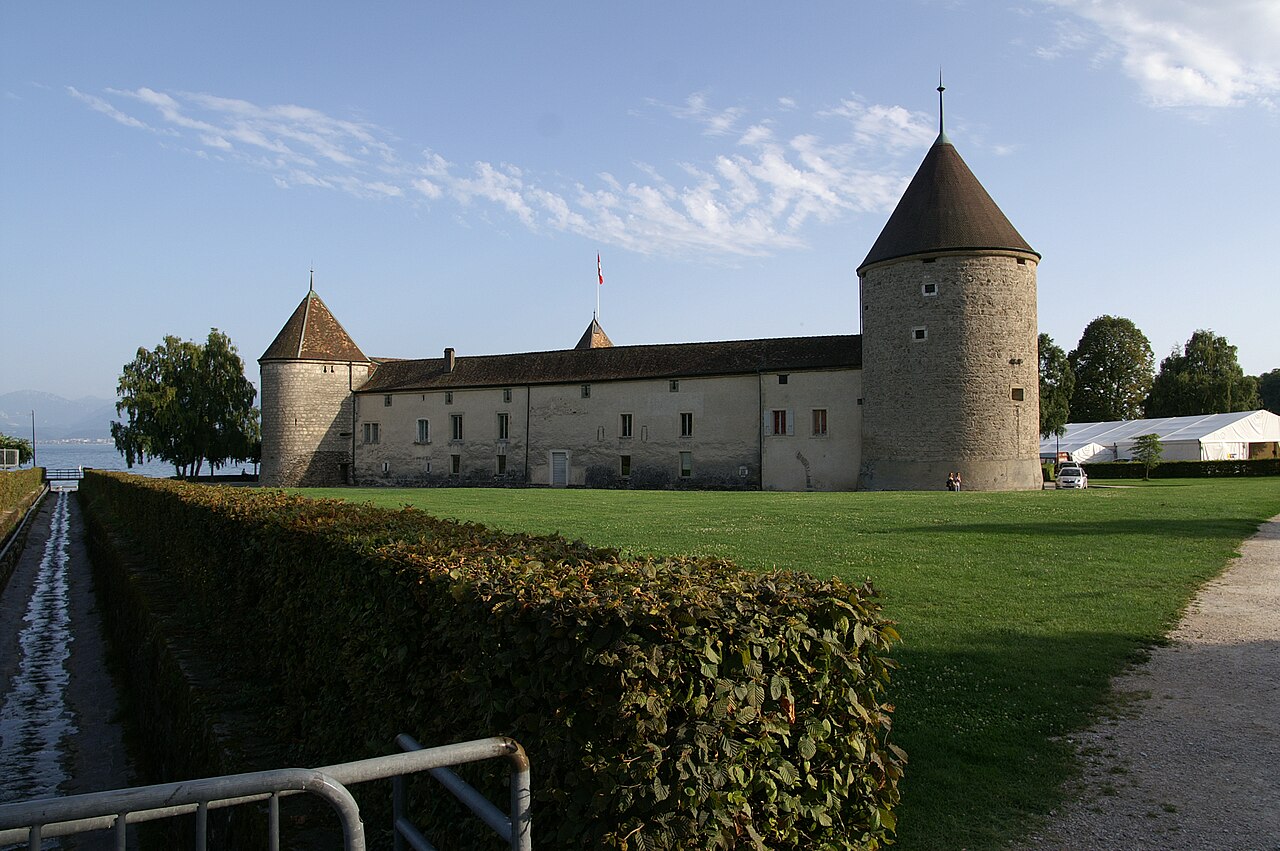
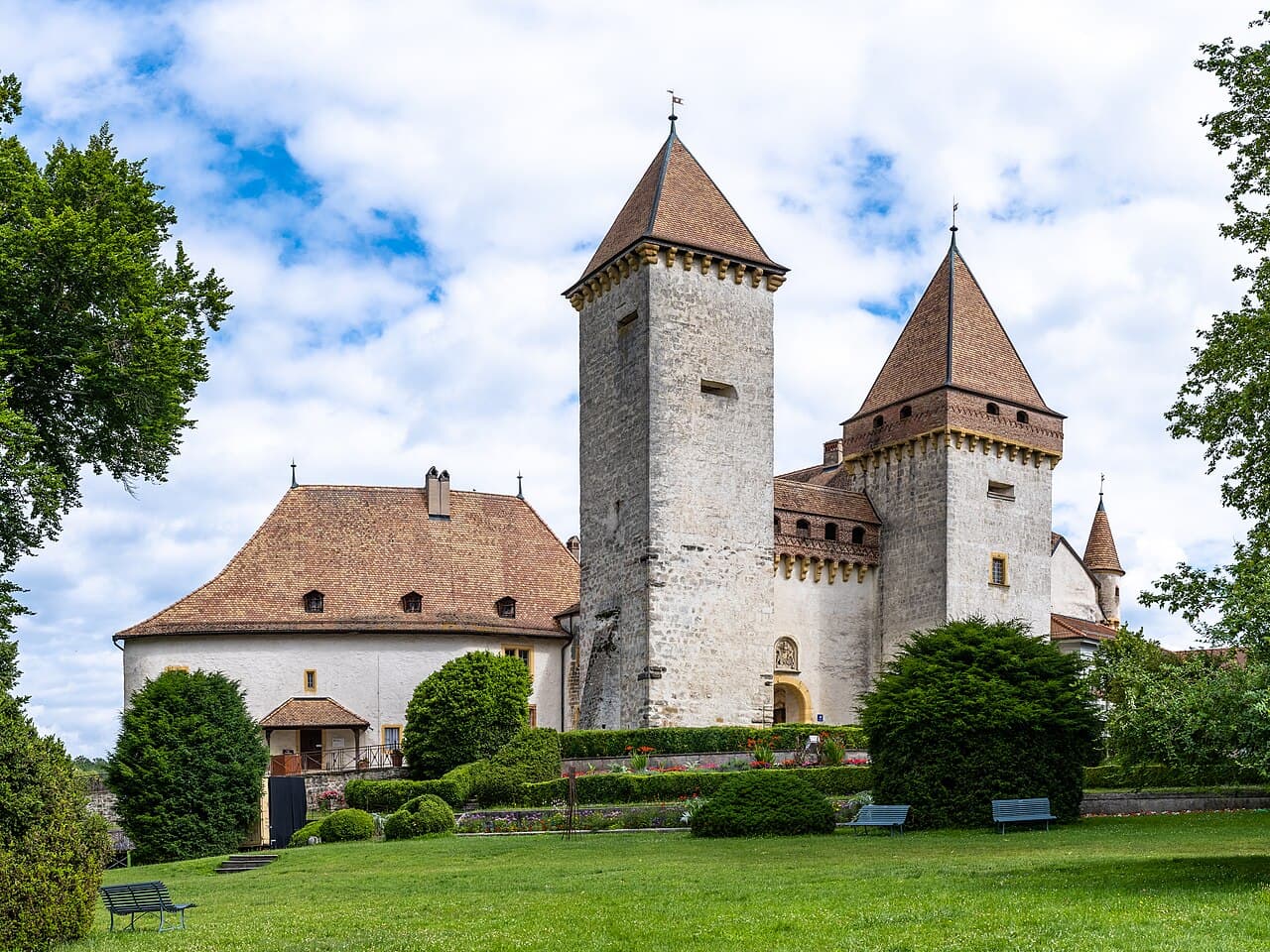
La Sarraz Castle stands as a remarkable example of a medieval hill castle that has witnessed nearly a millennium of history in the Vaud region of Switzerland. Built originally in 1049 on a rocky spur between Morges and Yverdon-les-Bains, the castle dominates the surrounding countryside, offering a commanding view that was strategic for defense and control during the High Medieval period. Today, it functions as a museum and cultural venue, showcasing a rich collection of artifacts and furnishings that reflect the tastes and lifestyles of the noble families who inhabited it across centuries.
The castle’s continuous ownership by the barons of La Sarraz is a rare historical continuity, distinguishing it from many other European castles that changed hands frequently. This uninterrupted lineage has allowed La Sarraz Castle to retain much of its original character as a family residence, preserving an authentic atmosphere enriched by period furniture, silverware, and rare china. Visitors encounter an environment that vividly expresses the refined domestic life of a patrician family through the ages.
Historical development and ownership lineage
The origins of La Sarraz Castle trace back to the early 11th century, with the first documented mention in 1049, placing it firmly within the High Medieval era. The castle was initially constructed by the local La Sarraz family, a noble lineage that played a significant role in the feudal structure of the region. Over the centuries, the castle evolved architecturally and socially, reflecting the changing needs and fortunes of its owners.
The castle’s core defensive structure is a 12th-century keep, a robust stone tower that served both as a stronghold and the lord’s residence. In the 13th century, the main residential building was added, expanding the living quarters to accommodate the growing domestic and administrative functions of the lordship. The 14th century saw the addition of a guard tower to enhance the castle’s defensive capabilities amid regional conflicts.
Ownership passed through several noble families linked by lineage: the Grandson-La Sarraz, the Montferrant-La Sarraz, and ultimately the Gingins-La Sarraz families. This continuity lasted until approximately the 18th century. The Gingins family, who took over in the 16th century, gradually shifted their primary residences away from the castle, leading to a decline in its role as a main dwelling.
Architectural evolution and restoration
Medieval fortifications and residential expansions
The castle’s architecture is a palimpsest of medieval and early modern building phases. The 12th-century keep remains the oldest extant structure, characterized by thick stone walls and narrow openings designed for defense. The 13th-century residential building attached to the keep introduced more comfortable living spaces, reflecting the transition from purely military to domestic functions.
The 14th-century guard tower was strategically positioned to oversee access routes and provide an additional layer of defense. Constructed with durable local stone, it illustrates the military concerns of the period and the need for enhanced surveillance during times of regional unrest.
16th-century repairs and modifications
Following episodes of pillaging in 1475 and partial burning during conflict in 1536, La Sarraz Castle underwent significant repairs and alterations. These included structural reinforcements and updates to both defensive and residential areas. Notably, the Knights’ Hall features molded beam ceilings dating from approximately 1550 to 1600, which have been preserved to convey the castle’s Renaissance-era ambiance.
19th-century neoclassical and neo-Gothic renovations
In the early 19th century, the castle experienced a cultural revival under the historian Frédéric Charles Jean de Gingins de la Sarraz. Architect François Recordon introduced neo-Gothic facades with pointed arches and decorative elements that romanticized medieval forms, while Louis Wenger added a vaulted pseudo-chapel in the eastern tower to house the tomb of François I, recently rediscovered nearby. These renovations blended historic preservation with contemporary stylistic trends of the period.
The castle’s exterior was also transformed by the removal of the enclosing courtyard walls and the creation of an English-style landscaped park, softening the fortress’s austere medieval appearance and providing a picturesque setting.
Cultural significance and museum collections
La Sarraz Castle’s transition from noble residence to cultural institution was marked by its acquisition by the Mandrot family in the 20th century. Hélène de Mandrot, a notable patron of the arts, transformed the castle into a hub for avant-garde cultural movements. It hosted the first International Congress of Modern Architecture (CIAM) in 1928 and the inaugural independent film congress in 1929, attracting figures such as Le Corbusier and Sergei Eisenstein.
The public museum opened in 1922, initially showcasing family heirlooms like portraits and furniture. Since then, the collection has expanded to include illuminated manuscripts, local artworks, and artifacts of everyday life, broadening its appeal as a regional cultural repository. The Book of Hours of Jean II de Gingins, dating from circa 1420–1430, is a highlight, reflecting the castle’s medieval scholarly connections.
The museum preserves period rooms that recreate historical interiors with authentic furnishings, silverware, and artworks, allowing visitors to experience the ambiance of a noble household. More recent additions include white cube galleries that focus visitor attention on select exhibits, blending modern museology with historical settings.
The Swiss museum of the horse and contemporary uses
Since 1982, the castle grounds have housed the Swiss Museum of the Horse, located in a converted castle barn. This museum presents permanent and temporary exhibitions on the cultural and historical significance of horses in Switzerland. It features notable artifacts such as Napoleon I’s saddles, the Grimsel mail coach, and sculptures depicting equine themes.
The castle also serves as a venue for events including receptions, weddings, and an annual horse festival held in its courtyard and park, linking its historical heritage to contemporary cultural activities.
Architectural remains and heritage status
La Sarraz Castle’s layout integrates structures from the 12th to 19th centuries, combining defensive and residential architecture built primarily from local stone. The 12th-century keep remains a prominent feature, along with the 13th-century residential building and 14th-century guard tower. These elements illustrate the castle’s evolution from a fortified stronghold to a noble residence.
The castle’s preservation status is well preserved, with extensive renovations in the late 20th century enhancing its museum function while maintaining historical authenticity. It is officially recognized as a Swiss heritage site of national importance and holds the European Heritage Label, underscoring its significance as a monument of cultural and historical value in Switzerland and Europe.
Overall, La Sarraz Castle offers a layered historical narrative visible in its architecture, collections, and ongoing cultural uses, making it a unique destination for visitors interested in medieval history, noble heritage, and Swiss cultural traditions.
Frequently asked questions (FAQ)
- What is the historical significance of La Sarraz Castle?
- La Sarraz Castle, dating back to the 13th century, is a remarkable example of medieval architecture in Switzerland. It served as a noble residence and a strategic fortress, reflecting the power and wealth of its inhabitants throughout the centuries. The castle has witnessed numerous historical events, making it an important cultural landmark in the region.
- When was La Sarraz Castle built?
- La Sarraz Castle was constructed in the late 13th century, with its earliest records dating back to 1250. Over the years, it underwent various renovations and expansions, showcasing the evolution of architectural styles from medieval times to the Renaissance.
- What are the opening hours for La Sarraz Castle?
- La Sarraz Castle is open to visitors from April to October, with varying hours depending on the month. Typically, the castle opens at 10 AM and closes at 6 PM, allowing ample time for exploration. It is advisable to check the official website for any seasonal changes or special events.
- Can I take guided tours of La Sarraz Castle?
- Yes, guided tours are available at La Sarraz Castle, providing visitors with in-depth knowledge about its history and architecture. These tours are usually conducted in multiple languages and are a great way to enhance your experience. It's recommended to book in advance, especially during peak tourist seasons.
- Is it possible to host events at La Sarraz Castle?
- Yes, La Sarraz Castle offers facilities for hosting various events, including weddings, corporate gatherings, and private parties. The unique historical setting provides a picturesque backdrop for any occasion. Interested parties should contact the castle administration for more details on availability and services.
- What are the ticket prices for visiting La Sarraz Castle?
- Admission prices for La Sarraz Castle are quite reasonable, with discounts often available for students and seniors. Typically, adult tickets are priced around CHF 10, while children under 12 can enter for free. Special rates may apply for guided tours, so it's best to check the castle's official site for the latest pricing information.
- When is the best time to visit La Sarraz Castle?
- The best time to visit La Sarraz Castle is during the spring and summer months, from April to September, when the weather is pleasant and the gardens are in bloom. Additionally, many cultural events and activities take place during this period, enriching the visitor experience. Fall can also be beautiful, but be prepared for cooler temperatures.
- How do I get to La Sarraz Castle?
- La Sarraz Castle is easily accessible by public transport, with regular train services to the nearby La Sarraz train station. From the station, it’s a short walk to the castle. For those driving, there is parking available nearby, making it convenient for visitors traveling by car.
- Are there any nearby attractions to visit?
- Yes, there are several nearby attractions worth exploring, including the charming village of La Sarraz and the beautiful surrounding countryside. The region is also home to other historical sites and nature trails, perfect for those looking to extend their visit. Don't forget to check local tourism guides for recommendations on nearby activities and sights.
Photo gallery

Information
Website
Visit websiteSources & official resources
Verify the information above using these authoritative references.
Loading map...
Visitor reviews
No reviews yet. Been here? Write the first review and help other travelers!
Write the first reviewVisited this castle? Share your experience
Your review helps other travelers and adds first-hand knowledge to our encyclopedia.