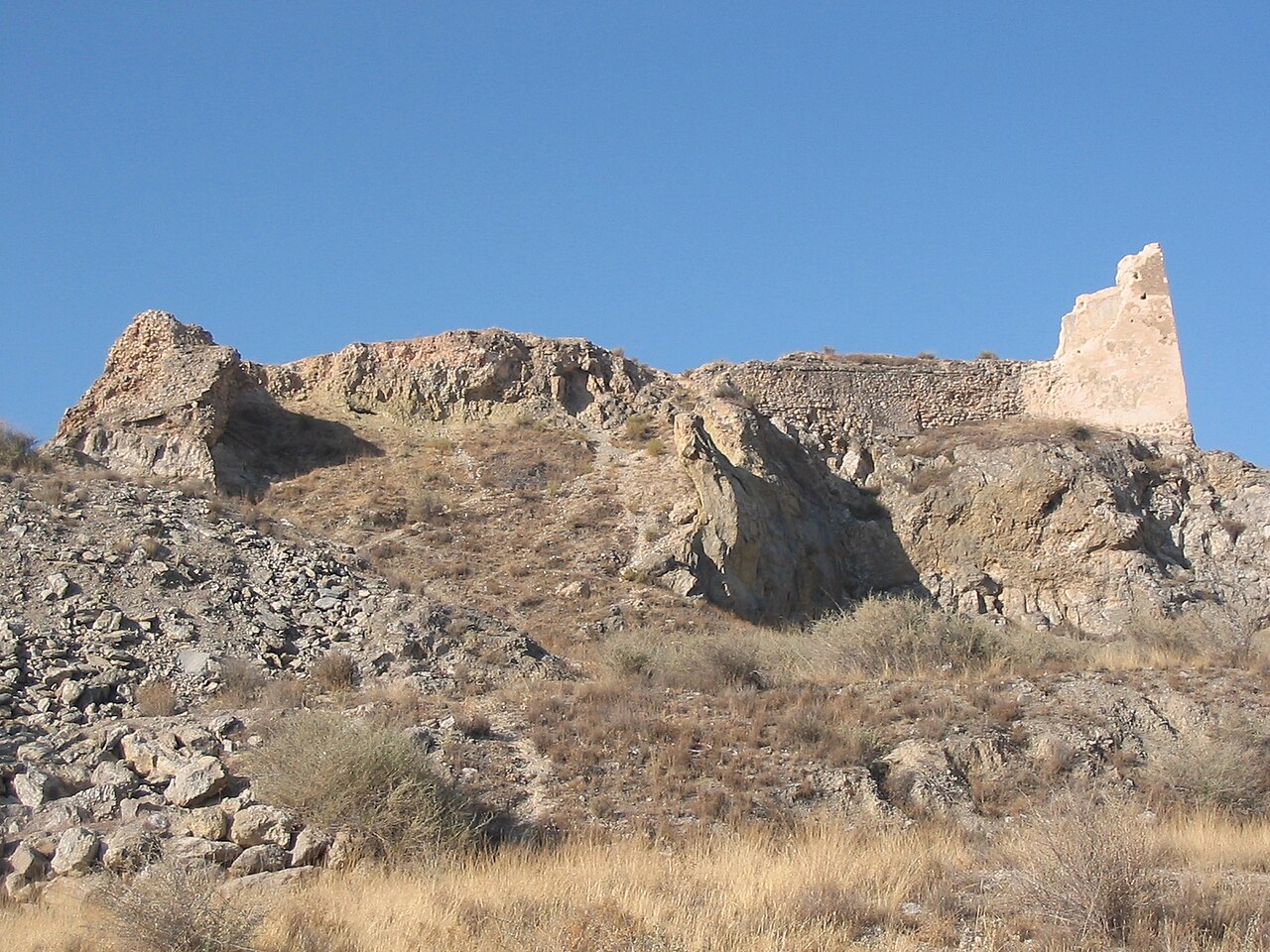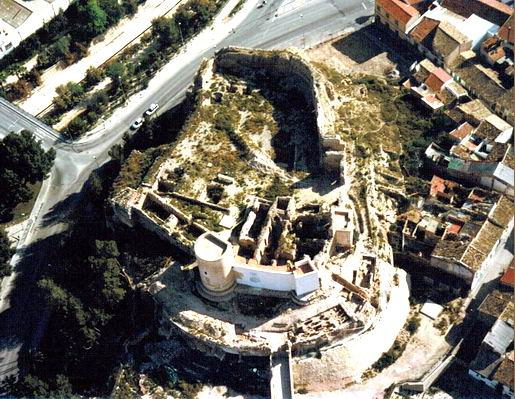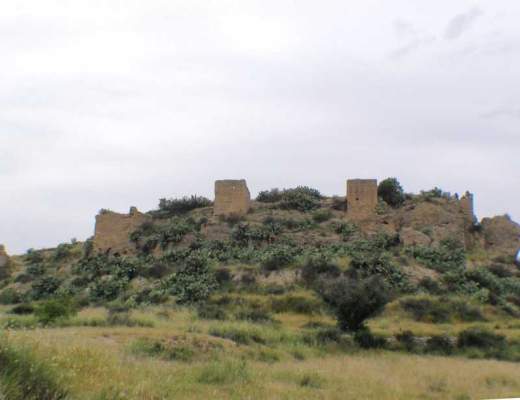
La Mola Castle, also known as Castillo de la Mola, is a remarkable historic fortress perched on a hill north of the town of Novelda in the province of Alicante, Spain. This hill castle offers a commanding view over the middle Vinalopó valley and stands as a testament to the region's layered history, from its early Islamic origins through medieval Christian reconquest and beyond.
The castle's strategic location made it a vital defensive stronghold during the Middle Ages, forming part of a network of fortifications that protected Andalusian territory from advancing Christian kingdoms. Its earliest known occupation dates back to the Bronze Age, with archaeological evidence indicating a settlement on the hill's southern slope before the fortress's construction.
The current polygonal enclosure of La Mola Castle was established in the 10th century under Islamic rule, with significant enlargement and fortification carried out by the Almohad dynasty in the 12th century. It was originally built on the site of an older Roman fortification, highlighting the long-standing military importance of this location.
Historical evolution and ownership
In the mid-13th century, La Mola Castle was conquered by Christian forces led by Infante Alfonso of Castile. This conquest marked a turning point, as the Muslim inhabitants relocated from the fortress to establish the nearby settlement that would become the modern town of Novelda. Despite this shift, the new community retained a significant Mudéjar population, preserving Islamic cultural influences under Christian rule.
Following the 1305 Pact of Elche, the castle and its surrounding lands were transferred from the Castilian Crown to the Crown of Aragon, becoming part of the Kingdom of Valencia. King James II of Aragon granted the castle to his wife, Blanche of Anjou, who oversaw extensive reconstruction and fortification efforts during the 14th century to maintain its military relevance.
Throughout the 14th and 15th centuries, La Mola Castle was held by various noble families connected to royal lineages. It continued to serve as a military stronghold and a critical communication point within the region. The castle's towers were used to send smoke signals to neighboring fortresses, including those in Petrer, Monforte del Cid, Agost, and Aspe, alerting inhabitants of potential threats.
Architectural features and fortifications
The castle's layout is a distinctive polygonal enclosure originally featuring eight quadrangular towers, known locally as "cubos," projecting from its thick defensive walls. Today, four of these towers remain, with some partially obscured by later modifications or natural overgrowth.
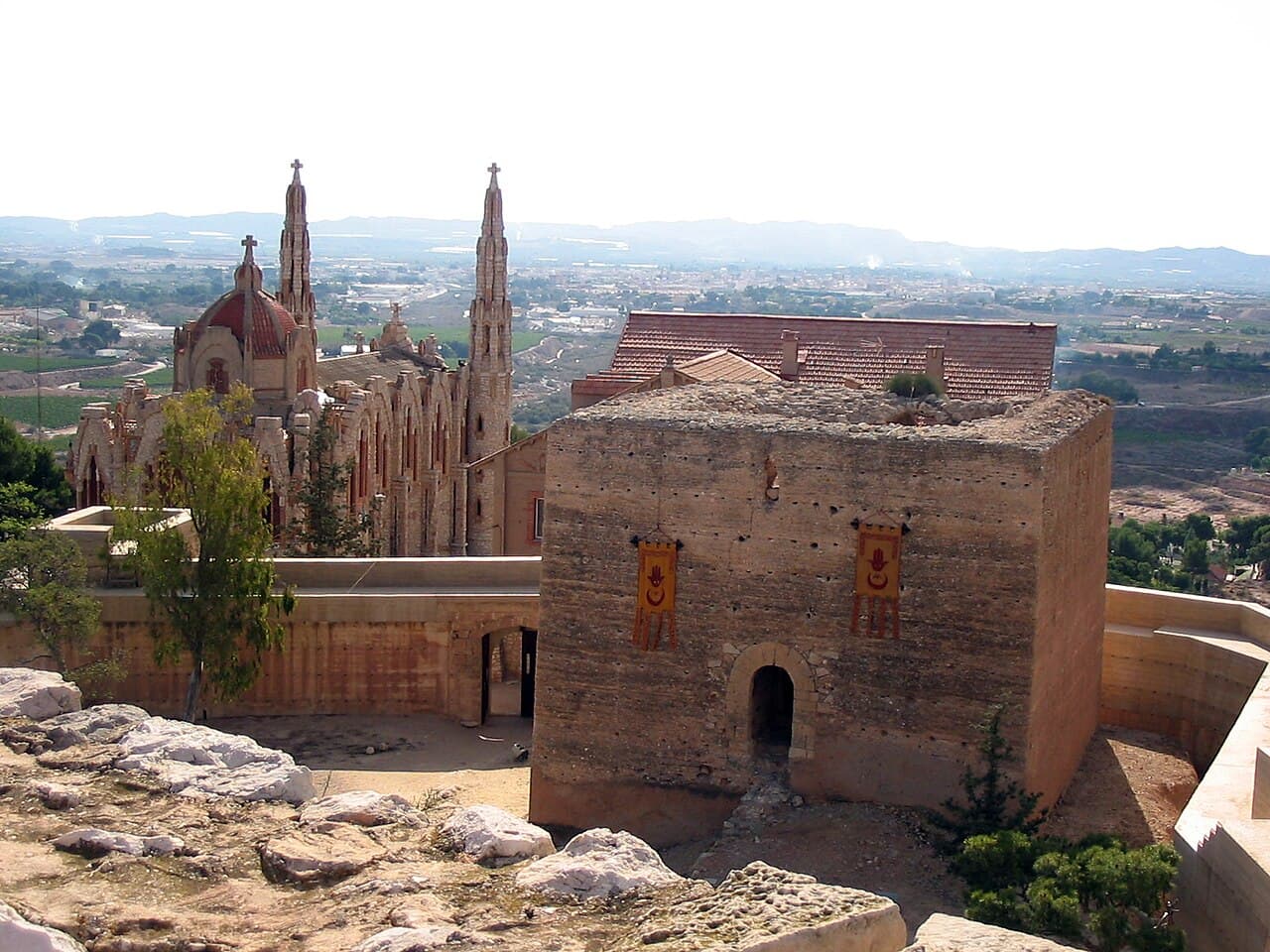
Within the enclosure stands a prominent square tower constructed using the rammed earth (tapial) technique, resting on a sturdy masonry base. Measuring approximately nine meters wide and eleven meters tall, this tower likely functioned as the castle's keep. Its lower chamber is illuminated by a narrow vertical slit window called an aspillera, a typical feature in military architecture designed for defense and observation. Access is gained through a semicircular-arched doorway positioned high above ground level.
One of the castle's most unique architectural elements is the triangular tower known as the Torre de los Tres Picos or Torre de las Tres Esquinas (Tower of the Three Corners). Built in the first half of the 14th century during the reign of James II of Aragon, this tower stands about 17 meters tall with sides measuring 15 meters. It is considered unique in Europe due to its uncommon triangular plan. The tower is primarily constructed from masonry with ashlar blocks reinforcing its corners for added strength and durability. It features two floors with narrow slit windows and a high semicircular-arched entrance facing northwest.
The castle's main gate is framed by finely worked ashlar stones and topped with a semicircular arch, characteristic of medieval fortifications. Significant repairs and reinforcements to the walls and towers were carried out during the 14th century, reflecting the site's ongoing military importance during this period.
Domestic spaces and archaeological findings
Excavations within the castle's enclosure have revealed a variety of domestic and functional spaces, indicating that La Mola Castle was not solely a military fortress but also a residence capable of sustaining its inhabitants during sieges. Archaeologists uncovered remains of cisterns for water storage, kitchen areas equipped with pantries and benches, rooms for food storage, a large hall suitable for banquets or gatherings, a prison, and a mill.
These findings demonstrate the castle's role as a self-sufficient stronghold, providing for the daily needs and defense of its occupants. The layered phases of construction visible in the ruins offer valuable insight into the castle's evolution from its early Islamic origins through its medieval Christian modifications and noble ownership.
Modern era and cultural significance
Today, La Mola Castle exists as a ruined fortress, with many structural elements still intact enough to convey its historical and architectural significance. The site was officially recognized in 1931 as a Historic-Artistic Monument and designated a Bien de Interés Cultural, underscoring its importance as a cultural heritage landmark in Spain.
Adjacent to the castle stands the Sanctuary of Santa María Magdalena, an architectural gem inspired by the work of Antoni Gaudí. Designed by local engineer José Sala Sala, construction of the sanctuary began in 1918 and was completed in 1946. The sanctuary draws inspiration from Gaudí's masterpiece, La Sagrada Familia in Barcelona, yet it possesses unique characteristics that distinguish it as an individual work of art.
Visitors to La Mola Castle can explore the ruins and enjoy panoramic views of the surrounding landscape, while also appreciating the nearby sanctuary's distinctive modernist architecture. The combination of medieval fortifications and early 20th-century religious architecture makes this site a compelling destination for history enthusiasts and architecture lovers alike.
Visiting information
La Mola Castle is freely accessible to visitors during daylight hours, offering an enriching experience of both historical exploration and scenic beauty. The site is ideal for those interested in medieval military architecture, Islamic and Christian historical interactions, and the legacy of Catalan modernism represented by the adjacent sanctuary.
Visitors are encouraged to take time to observe the castle’s unique architectural features, especially the rare triangular tower, and to explore the sanctuary of Santa María Magdalena nearby to gain a fuller appreciation of the cultural and historical layers present at this remarkable location.
Frequently asked questions (FAQ)
- How do I get to La Mola Castle?
- La Mola Castle is located in Partida Molinos, Spain, and can be easily reached by car or public transport. If you're driving, take the A-7 motorway and follow the signs to the castle. Public transport options include local buses that connect to nearby towns.
- What is the historical significance of La Mola Castle?
- La Mola Castle dates back to the 16th century and was built as a military fortress to protect the region from invasions. Its strategic location offers stunning views of the surroundings, making it a pivotal point for defense. The castle is a testament to the architectural styles of its time and plays an important role in the history of the area.
- When was La Mola Castle built?
- La Mola Castle was constructed between 1553 and 1561, during a period of heightened military activity in the region. The fortress was designed to withstand attacks and has seen various historical events throughout its existence. Its well-preserved structure provides insight into the military architecture of the Renaissance period.
- Can I visit La Mola Castle year-round?
- Yes, La Mola Castle is open to visitors throughout the year, although the best time to visit is during the spring and fall when the weather is mild. Be sure to check the official website for any seasonal hours or special events that might affect access. Guided tours are available to enhance your experience and provide deeper insights into the castle's history.
- Why is La Mola Castle a popular tourist destination?
- La Mola Castle attracts visitors due to its rich history, impressive architecture, and breathtaking views of the surrounding landscape. It offers a unique glimpse into Spain's military past and serves as a fantastic backdrop for photography. Additionally, its accessibility and proximity to other attractions make it a favored stop for tourists.
- Is it possible to take guided tours of the castle?
- Yes, guided tours of La Mola Castle are available and are highly recommended for a comprehensive understanding of its history and architecture. The tours typically include knowledgeable guides who share fascinating stories and facts about the castle. Check the official website for tour schedules and availability.
- What are the opening hours for La Mola Castle?
- La Mola Castle generally opens at 10 AM and closes at 6 PM, but hours may vary by season. It is advisable to check the castle's official website for the most current information regarding opening times and any holiday closures. Arriving early can help you enjoy a less crowded experience.
- Are there any ticket prices for visiting La Mola Castle?
- Yes, there is a nominal entrance fee to visit La Mola Castle, which helps maintain the site. Ticket prices are generally affordable, and discounts may be available for students or seniors. Be sure to check the official site for the latest pricing and any special offers.
- What nearby attractions can I visit after exploring La Mola Castle?
- After visiting La Mola Castle, you can explore nearby attractions such as the beautiful town of Alcoy, known for its rich history and stunning architecture. Additionally, the natural parks in the region offer hiking and outdoor activities. There are also several restaurants and cafes close by where you can enjoy local cuisine.

Information
Website
Visit websiteSources & official resources
Verify the information above using these authoritative references.
Loading map...
Visitor reviews
No reviews yet. Been here? Write the first review and help other travelers!
Write the first reviewVisited this castle? Share your experience
Your review helps other travelers and adds first-hand knowledge to our encyclopedia.