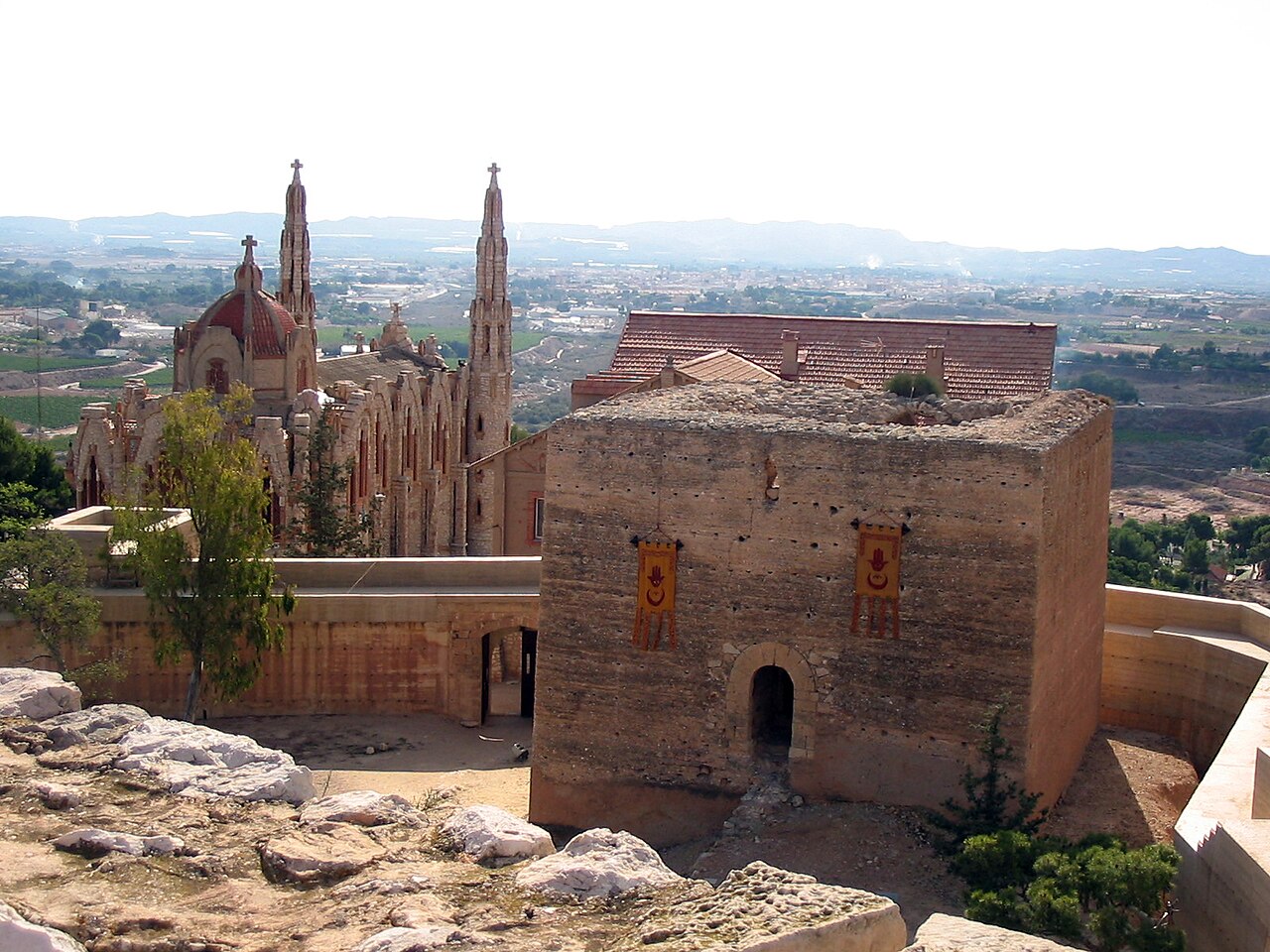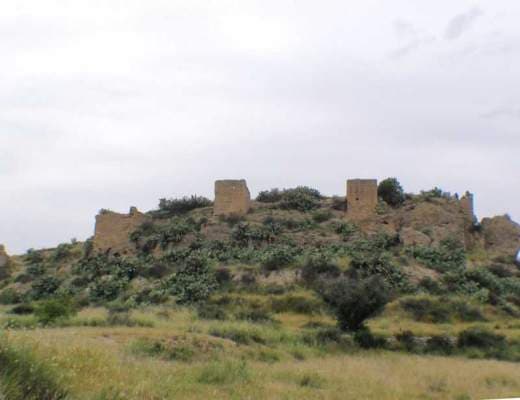
Castillo del Río — Spain castle

Castillo del Río

Castillo del Río: a 12th-century hill castle in Spain
High Medieval (11th–13th c.)

Castillo del Río is a medieval fortress located in Spain, notable for its strategic position atop a hill. Constructed in the 12th century, this hill castle exemplifies High Medieval military architecture designed to oversee and control the surrounding territory.

Strategic location and historical context

Situated on elevated terrain, Castillo del Río was built to serve both defensive and administrative purposes during a period marked by territorial conflicts and the Reconquista. The castle's hilltop position provided commanding views over the landscape, enabling early detection of approaching forces and effective communication with neighboring fortifications.

Architectural features and construction

The castle's design reflects typical High Medieval fortification principles, emphasizing strong defensive elements. Its stone walls and battlements were constructed to resist siege warfare common in the 12th century. The presence of a keep or donjon at the core of the complex served as the last line of defense and a residence for the lord or garrison commander.

Additional features likely included a gatehouse fortified with defensive mechanisms such as a portcullis and murder holes. The castle's layout would have incorporated a courtyard surrounded by curtain walls, with space for essential facilities such as storage, stables, and living quarters.

Defensive structures

Given its era and type, the castle probably featured towers integrated into the curtain walls to provide flanking fire against attackers. The battlements allowed defenders to shield themselves while repelling assaults. A moat or natural steep slopes may have enhanced its defensive capabilities, although specific details require archaeological confirmation.

Historical significance and role

During the High Medieval period, castles like Castillo del Río played a critical role in consolidating territorial control amid the shifting political landscape of medieval Spain. They served as military strongholds, administrative centers, and symbols of feudal authority.

The castle's endurance over centuries reflects its importance in regional defense and governance. Its construction in the 12th century situates it within the broader context of the Christian reconquest of the Iberian Peninsula, where fortifications were essential for securing newly acquired lands.

Current condition and preservation

The present state of Castillo del Río is not definitively documented here, but many castles of this period in Spain exist as ruins or partially preserved structures. Preservation efforts often focus on stabilizing remaining walls and making the site accessible to visitors interested in medieval history and architecture.

Visiting and cultural importance

While specific visitor information is unavailable, castles like Castillo del Río are valuable cultural heritage sites. They attract tourists, historians, and archaeologists who seek to understand medieval military architecture and Spain's historical development.

Exploring such a castle offers insights into the defensive strategies, feudal society, and architectural innovations of the 12th century. The castle's location also provides scenic views and a tangible connection to Spain's medieval past.

Frequently asked questions (FAQ)

What is the historical significance of Castillo del Río?
Castillo del Río is a 15th-century fortress located in Spain, known for its strategic position overlooking the river. It played a crucial role in the defense against invasions and served as a royal residence during its peak, reflecting the architectural and military advancements of its time.
When was Castillo del Río built?
Construction of Castillo del Río began in the early 1400s and was completed by the mid-15th century. The castle showcases a blend of Gothic and Renaissance architectural styles, making it a significant landmark in Spanish history.
What are the opening hours for Castillo del Río?
The castle is open to visitors from 10 AM to 6 PM daily, with extended hours during the summer months. It is recommended to check the official website for any seasonal changes or special events that may affect opening times.
Can I take guided tours of Castillo del Río?
Yes, guided tours are available and highly recommended for a comprehensive understanding of the castle's history and architecture. Tours typically last about an hour and provide insights into the castle's unique features and historical events.
Is it possible to access Castillo del Río with a wheelchair?
Yes, Castillo del Río is committed to accessibility and offers facilities for wheelchair users. However, some areas may have limited access due to the castle's historical structure, so it's best to inquire in advance for specific accommodations.
What is the best time to visit Castillo del Río?
The best time to visit Castillo del Río is during the spring and early autumn when the weather is mild and pleasant. These seasons also tend to have fewer crowds, allowing for a more enjoyable experience while exploring the castle and its surroundings.
What are the ticket prices for entering Castillo del Río?
Ticket prices for Castillo del Río are generally affordable, with adult tickets priced around €8 and discounts available for students and seniors. Children under a certain age may enter for free, making it an accessible destination for families.
What nearby attractions can I visit while at Castillo del Río?
While visiting Castillo del Río, you can explore several nearby attractions such as the picturesque village of Ronda and the stunning views from the surrounding countryside. Additionally, local museums and historical sites provide further insight into the region's rich heritage.

Photo gallery

Castillo del Río
Click to view

Photo by David aspe•Public domain

1 photo • Click any image to view in full screen

Information

Hill Castle

Loading map...

Visitor reviews

No reviews yet. Been here? Write the first review and help other travelers!

Write the first review

Visited this castle? Share your experience

Your review helps other travelers and adds first-hand knowledge to our encyclopedia.

Write a review

(5/5)

0/2000 characters

Your review will be visible after admin approval

Nearby castles

1.5 km

Del Río Castle

South of the CV-847 road, Spain

Del Río Castle, known locally as Castillo del Río, is a historic fortress situated on a hill east of the town of Aspe in the province of Alicante, Spain. It occupies a strategic position on a mound called Tabayá, near the confluence of the Tarafa and Vinalopó rivers. The castle's location provided control over the valley route leading towards Elche, making it a significant military and administrative site during the High Medieval period. Constructed in the early 12th century under Almoravid rule, the castle likely replaced an earlier Iberian settlement, reflecting the region's layered history of occupation. The fortress was designed to follow the natural contours of the hill, forming a roughly oval walled enclosure. It featured 12 square towers connected by robust curtain walls, built primarily for defense and surveillance. Unlike many contemporary castles, Del Río Castle did not have a central keep or donjon. Instead, its defensive strength lay in the perimeter towers and walls. Architectural features and layout The castle's design emphasizes its role as a fortified settlement rather than a noble residence. The twelve towers were evenly spaced along the curtain walls, providing overlapping fields of fire and observation points. The walls were constructed with local stone, and their thickness was sufficient to withstand siege engines of the time. The absence of a keep suggests that the castle's defense relied on the collective strength of its walls and towers. Del Río Castle's position allowed for intervisibility with Del Mola Castle to the north, enabling communication and coordinated defense between the two fortifications. The castle also served as the nucleus of a village known historically as "Old Aspe," which developed within its protective walls. This village was eventually relocated in the 13th century to the site of present-day Aspe, likely due to changing political and economic circumstances. Historical context and ownership During the 12th century, the castle was part of the Almoravid frontier in the Iberian Peninsula. In 1265, it was conquered by the forces of Alfonso X of Castile, marking a shift in control from Muslim to Christian rule. Later, in 1296, the castle was occupied by Aragonese troops and entrusted to the lords of Crevillente. This reflected the complex political landscape of the region during the Reconquista. By 1304, Del Río Castle was fully incorporated into the Kingdom of Valencia. At the end of the 15th century, ownership passed to the Counts of Cocentaina, a noble family with significant influence in the area. Following the expulsion of the Muslims in the early 17th century, the surrounding lands were depopulated. In 1611, the Marquess of Elche initiated efforts to repopulate the area with Christian settlers, reflecting broader demographic and social changes in post-Reconquista Spain. Current condition and visitor information Today, the remains of Del Río Castle are accessible to the public. The site is classified as a hill castle with partially preserved structures, primarily consisting of the surviving sections of the curtain walls and some towers. While the castle does not retain elaborate architectural details or interiors, it offers valuable insight into medieval military architecture and the historical landscape of Alicante. Visitors can explore the ruins freely, though the site lacks extensive interpretive materials or facilities. The castle's modest remains provide a tangible connection to the region's High Medieval heritage and its role in the shifting political boundaries of medieval Spain. Significance in medieval military architecture Del Río Castle exemplifies the strategic use of natural topography in castle construction during the High Medieval period. Its design prioritizes defense and surveillance over residential comfort, characteristic of frontier fortifications during the Reconquista. The castle's network of towers and curtain walls allowed defenders to monitor and control movement through the valley effectively. The castle's lack of a central keep is notable, as most contemporary fortresses featured a stronghold tower as the last line of defense. Instead, Del Río relied on its perimeter fortifications, which may indicate a design adapted to the specific terrain and tactical needs of the region. Its intervisibility with nearby fortifications like Del Mola Castle reflects a coordinated defensive system common in medieval Spain.

High Medieval (11th–13th c.)
Details
8.1 km
La Mola Castle — Spain castle

La Mola Castle

Partida Molinos, Spain

La Mola Castle, also known as Castillo de la Mola, is a remarkable historic fortress perched on a hill north of the town of Novelda in the province of Alicante, Spain. This hill castle offers a commanding view over the middle Vinalopó valley and stands as a testament to the region's layered history, from its early Islamic origins through medieval Christian reconquest and beyond. The castle's strategic location made it a vital defensive stronghold during the Middle Ages, forming part of a network of fortifications that protected Andalusian territory from advancing Christian kingdoms. Its earliest known occupation dates back to the Bronze Age, with archaeological evidence indicating a settlement on the hill's southern slope before the fortress's construction. The current polygonal enclosure of La Mola Castle was established in the 10th century under Islamic rule, with significant enlargement and fortification carried out by the Almohad dynasty in the 12th century. It was originally built on the site of an older Roman fortification, highlighting the long-standing military importance of this location. Historical evolution and ownership In the mid-13th century, La Mola Castle was conquered by Christian forces led by Infante Alfonso of Castile. This conquest marked a turning point, as the Muslim inhabitants relocated from the fortress to establish the nearby settlement that would become the modern town of Novelda. Despite this shift, the new community retained a significant Mudéjar population, preserving Islamic cultural influences under Christian rule. Following the 1305 Pact of Elche, the castle and its surrounding lands were transferred from the Castilian Crown to the Crown of Aragon, becoming part of the Kingdom of Valencia. King James II of Aragon granted the castle to his wife, Blanche of Anjou, who oversaw extensive reconstruction and fortification efforts during the 14th century to maintain its military relevance. Throughout the 14th and 15th centuries, La Mola Castle was held by various noble families connected to royal lineages. It continued to serve as a military stronghold and a critical communication point within the region. The castle's towers were used to send smoke signals to neighboring fortresses, including those in Petrer, Monforte del Cid, Agost, and Aspe, alerting inhabitants of potential threats. Architectural features and fortifications The castle's layout is a distinctive polygonal enclosure originally featuring eight quadrangular towers, known locally as "cubos," projecting from its thick defensive walls. Today, four of these towers remain, with some partially obscured by later modifications or natural overgrowth. Within the enclosure stands a prominent square tower constructed using the rammed earth (tapial) technique, resting on a sturdy masonry base. Measuring approximately nine meters wide and eleven meters tall, this tower likely functioned as the castle's keep. Its lower chamber is illuminated by a narrow vertical slit window called an aspillera, a typical feature in military architecture designed for defense and observation. Access is gained through a semicircular-arched doorway positioned high above ground level. One of the castle's most unique architectural elements is the triangular tower known as the Torre de los Tres Picos or Torre de las Tres Esquinas (Tower of the Three Corners). Built in the first half of the 14th century during the reign of James II of Aragon, this tower stands about 17 meters tall with sides measuring 15 meters. It is considered unique in Europe due to its uncommon triangular plan. The tower is primarily constructed from masonry with ashlar blocks reinforcing its corners for added strength and durability. It features two floors with narrow slit windows and a high semicircular-arched entrance facing northwest. The castle's main gate is framed by finely worked ashlar stones and topped with a semicircular arch, characteristic of medieval fortifications. Significant repairs and reinforcements to the walls and towers were carried out during the 14th century, reflecting the site's ongoing military importance during this period. Domestic spaces and archaeological findings Excavations within the castle's enclosure have revealed a variety of domestic and functional spaces, indicating that La Mola Castle was not solely a military fortress but also a residence capable of sustaining its inhabitants during sieges. Archaeologists uncovered remains of cisterns for water storage, kitchen areas equipped with pantries and benches, rooms for food storage, a large hall suitable for banquets or gatherings, a prison, and a mill. These findings demonstrate the castle's role as a self-sufficient stronghold, providing for the daily needs and defense of its occupants. The layered phases of construction visible in the ruins offer valuable insight into the castle's evolution from its early Islamic origins through its medieval Christian modifications and noble ownership. Modern era and cultural significance Today, La Mola Castle exists as a ruined fortress, with many structural elements still intact enough to convey its historical and architectural significance. The site was officially recognized in 1931 as a Historic-Artistic Monument and designated a Bien de Interés Cultural, underscoring its importance as a cultural heritage landmark in Spain. Adjacent to the castle stands the Sanctuary of Santa María Magdalena, an architectural gem inspired by the work of Antoni Gaudí. Designed by local engineer José Sala Sala, construction of the sanctuary began in 1918 and was completed in 1946. The sanctuary draws inspiration from Gaudí's masterpiece, La Sagrada Familia in Barcelona, yet it possesses unique characteristics that distinguish it as an individual work of art. Visitors to La Mola Castle can explore the ruins and enjoy panoramic views of the surrounding landscape, while also appreciating the nearby sanctuary's distinctive modernist architecture. The combination of medieval fortifications and early 20th-century religious architecture makes this site a compelling destination for history enthusiasts and architecture lovers alike. Visiting information La Mola Castle is freely accessible to visitors during daylight hours, offering an enriching experience of both historical exploration and scenic beauty. The site is ideal for those interested in medieval military architecture, Islamic and Christian historical interactions, and the legacy of Catalan modernism represented by the adjacent sanctuary. Visitors are encouraged to take time to observe the castle’s unique architectural features, especially the rare triangular tower, and to explore the sanctuary of Santa María Magdalena nearby to gain a fuller appreciation of the cultural and historical layers present at this remarkable location.

Modern (19th–20th c.)
Details
9.4 km

Vaillo Tower

Elche, Spain

Vaillo Tower, also known by its local names Torre de Vaillo, Torre de Los Vaillo, Torre Vaillos, or Torre Vaillo de Llanos, is a historic defensive structure located on the northern outskirts of the city of Elche in the province of Alicante, Spain. This tower is a notable example of Renaissance military architecture from the 16th century, serving both as a refuge for local inhabitants and a lookout post against maritime threats during a turbulent period in Mediterranean history. Historical background and strategic purpose The precise construction date of Vaillo Tower remains uncertain, but it is generally placed between the late Middle Ages and the early 16th century. This period was marked by frequent raids and incursions by Barbary pirates along the Mediterranean coast, posing a significant threat to coastal communities. The tower was part of a broader network of defensive buildings erected around Elche to provide early warning and protection for the local population. The tower takes its name from the original owning family, the Vaillo de Llanos, who held the noble title of Counts of Torrellano. Their ownership reflects the common practice of aristocratic families maintaining fortified residences or lookout points to safeguard their lands and people. Architectural features and design Vaillo Tower exemplifies typical Renaissance defensive architecture, characterized by robust stone construction designed to withstand attacks. Its structure likely includes thick walls, narrow windows or arrow slits for surveillance and defense, and a raised entrance to deter invaders. While specific architectural details of the tower's interior remain largely undocumented, its external form suggests a functional design prioritizing security and visibility over comfort. The tower's elevated position on the northern side of Elche provided strategic vantage points to monitor the surrounding landscape and coastline. This allowed early detection of pirate ships or hostile forces approaching the area, giving residents time to seek shelter or organize a defense. Context within elche's defensive network Vaillo Tower was one of several fortifications around Elche, including the Altamira Castle, the Calahorra Tower, and the Ressemblanc watchtower. Together, these structures formed an integrated system of defense that protected the city and its inhabitants from external threats. Elche is also renowned for its Palmeral, a vast historic palm grove that has been cultivated since the Islamic period. The presence of these towers alongside the Palmeral highlights the blend of agricultural prosperity and military vigilance that shaped the region's history. Current status and visitor information Currently, the interior of Vaillo Tower is not open to the public, limiting direct access to its historical spaces. However, the tower remains an important cultural landmark within the Elche area, attracting visitors interested in the region's medieval and Renaissance heritage. Visitors to Elche can explore the surrounding defensive sites, including Altamira Castle and other watchtowers, as well as enjoy the unique natural and cultural landscape of the Palmeral. This combination offers a rich experience for those interested in history, architecture, and traditional Spanish landscapes. Architectural and cultural significance Vaillo Tower stands as a testament to the defensive strategies employed in coastal Spain during the Renaissance. Its construction reflects the challenges faced by communities in maintaining security against piracy and military threats. The tower's preservation, despite limited access, contributes to the understanding of regional history and architectural evolution in Alicante province.

Renaissance (15th–17th c.)
Details