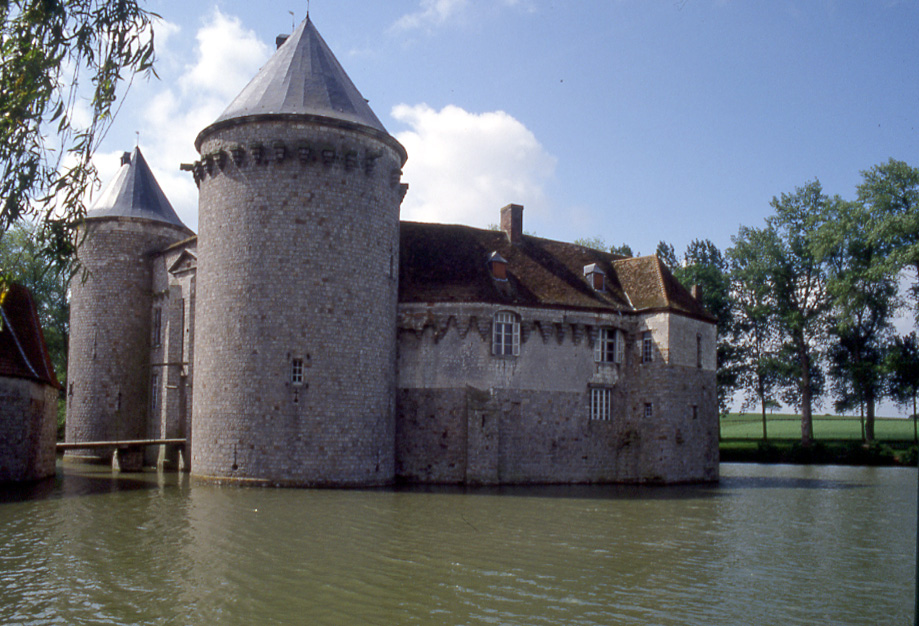
La Buissière Castle
La Buissière Castle, also known locally as Château de La Buissière or simply Le Donjon (the Keep), is a medieval fortress located in Bruay-la-Buissière, in the Pas-de-Calais department of northern France. This castle occupies a strategic position on Mont Royal, a wooded hill overlooking the village of La Buissière. Its origins date back to the early 13th century, placing it firmly within the high medieval period.
The castle was originally constructed by the Lords of Béthune, a powerful noble family in the region, who likely used it as a fortified manor house. Its location near the borderlands of Flanders and Artois made it a key defensive site, especially during the turbulent centuries marked by frequent invasions and conflicts involving English and Spanish forces.
Medieval origins and strategic importance
Built primarily as a hill castle, La Buissière's position on Mont Royal provided a natural vantage point for surveillance and defense. The early construction focused on a strong keep, which served as the main fortified residence and last line of defense. The castle's initial design was typical of high medieval fortifications, with thick stone walls and limited openings to withstand sieges.
Strengthening and transformation under countess mahaut
During the 14th century, the castle underwent significant fortification enhancements under the direction of Countess Mahaut, a prominent noblewoman of the era. She transformed La Buissière into a more formidable defensive fortress, reflecting the increased military threats in the region. This included strengthening the curtain walls, reinforcing towers, and establishing a permanent garrison commanded by a lord to maintain security.
Between 1360 and 1361, the castle walls were completely restored, a testament to the ongoing strategic importance of the site. An inventory from 1380 mentions Broustart de la Tourelle as the castle's keeper, listing furniture, food, and ammunition stored within, indicating the castle's readiness for sustained defense.
Late medieval developments and decline
In the late 15th century, the castle saw further additions under Charles the Bold, Duke of Burgundy. Around 1470, he added essential facilities such as stables and barns, supporting the castle's role as a noble residence and administrative center for the region of Artois. Ownership by the Courteville family during this period continued the castle's use as a regional stronghold.
However, the castle's condition deteriorated due to ongoing wars and neglect. By 1505, it was reported to be in very poor repair. Following its capture by French forces in 1522, La Buissière was deliberately dismantled on the orders of the Duke of Vendôme to prevent its use by enemy forces.
Rebirth and modern era changes
In 1735, a new castle was constructed on the site by a member of the De Maulde family, who had held the property since the 16th century. This new château incorporated remnants of the original medieval keep and served as the manor house for the Marquess De Maulde. This structure reflected the architectural styles and residential needs of the early modern period rather than medieval military design.
Unfortunately, the 18th-century château was demolished in 1964, leaving only the ruins of the original keep standing today. The surviving ruin is located within a residential housing estate, which appears somewhat neglected but remains accessible to visitors. The interior of the keep is not open for exploration, but the exterior ruins provide valuable insight into medieval defensive architecture.
Architectural features and surviving remains
The remaining keep of La Buissière Castle is a significant example of high medieval military architecture. Its thick stone walls and elevated position illustrate the defensive priorities of the period. While much of the castle's original layout has been lost, the keep's ruins reveal the robust construction techniques used by medieval builders to withstand sieges and attacks.
The castle's hilltop location on Mont Royal offered natural defenses, complemented by man-made fortifications. Though the later additions such as stables and barns no longer survive, historical records confirm their presence, indicating the castle's dual role as a fortress and noble residence.
Historical significance and legacy
La Buissière Castle played a notable role in the military and political history of northern France, especially given its position near the contested border regions of Flanders and Artois. The castle's fortifications and garrison under Countess Mahaut highlight its importance in regional defense during the Middle Ages.
The dismantling of the castle in the early 16th century reflects the changing political landscape and military strategies of the time, where fortresses were often slighted to prevent their capture. The subsequent construction of the 18th-century château shows the evolution of the site from a military fortress to a noble residence.
Visiting la buissière castle today
Today, visitors to La Buissière Castle can view the ruins of the medieval keep situated within a modern residential area. While the interior is not accessible, the exterior offers a glimpse into the castle's medieval past and its architectural significance. The surrounding environment contrasts with the historic ruins, reflecting the challenges of preserving heritage sites within urbanized settings.
Despite its modest remains, La Buissière Castle remains an important cultural landmark in the Pas-de-Calais region, representing centuries of French medieval history and architectural development.
Frequently asked questions (FAQ)
- What are the opening hours for La Buissière Castle?
- La Buissière Castle is open to visitors from 10 AM to 6 PM from Wednesday to Sunday. It is closed on Mondays and Tuesdays, as well as on public holidays. Be sure to check the castle's official website for any seasonal changes to the schedule.
- What is the historical significance of La Buissière Castle?
- La Buissière Castle dates back to the 18th century and has played a crucial role in the local history of Bruay-la-Buissière. Originally built as a noble residence, it showcases the architectural style of the period and reflects the region's rich heritage. The castle has also been a witness to various historical events that shaped the surrounding area.
- Can I take guided tours of La Buissière Castle?
- Yes, guided tours are available for visitors who wish to explore the history and architecture of La Buissière Castle. These tours are conducted by knowledgeable guides who provide fascinating insights into the castle's past. It is recommended to book your tour in advance to ensure availability.
- Is La Buissière Castle accessible for visitors with disabilities?
- La Buissière Castle strives to be accessible to all visitors. There are designated paths and ramps to help those with mobility challenges navigate the grounds. However, certain areas of the castle may still have limitations, so it is advisable to contact the castle administration for specific accessibility information.
- When is the best time to visit La Buissière Castle?
- The best time to visit La Buissière Castle is during the spring and early autumn months when the weather is mild and the gardens are in full bloom. Additionally, visiting during weekdays can help you avoid larger crowds, allowing for a more enjoyable experience. Special events and exhibitions are also often held during these seasons.
- What are the ticket prices for La Buissière Castle?
- Ticket prices for La Buissière Castle vary depending on age and whether you are part of a guided tour. Generally, adult tickets are priced around €8, while discounts are available for seniors and students. Children under a certain age may enter for free, but it's best to check the official website for the most up-to-date pricing.
- Are there any nearby attractions to visit after La Buissière Castle?
- Yes, there are several attractions near La Buissière Castle that you can explore after your visit. The nearby Parc de la Gloriette offers beautiful walking paths and relaxing green spaces. Additionally, the historic town center of Bruay-la-Buissière is just a short distance away, featuring charming shops and local restaurants.
Information
Address
Allée du Château, Bruay-la-Buissière, Pas-de-Calais, France
Loading map...
Visitor reviews
No reviews yet. Been here? Write the first review and help other travelers!
Write the first reviewVisited this castle? Share your experience
Your review helps other travelers and adds first-hand knowledge to our encyclopedia.