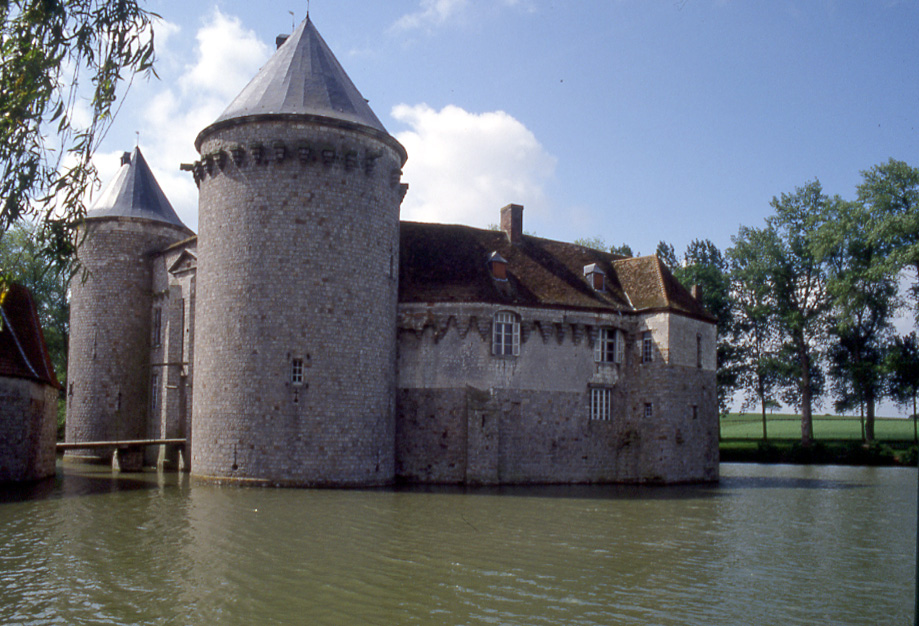
Bours Keep
The Bours Keep, locally known as Donjon de Bours, is a distinctive medieval tower house located in the quiet village of Bours in the Pas-de-Calais department of northern France. This high medieval structure stands as a testament to the region's feudal past and noble heritage, reflecting the architectural and historical developments from the late 12th century through the early modern period.
Historical background and ownership lineage
The origins of the Bours lordship trace back to the end of the 12th century, marking the beginning of its significance in the region. The keep itself was constructed around 1375 by the then Lord of Bours, serving as both a fortified residence and a symbol of feudal authority. By the late 14th century, the lordship passed through inheritance to the Mailly family, a prominent noble lineage in the area.
During the 16th century, the political landscape of the region was complex, as it was part of the Spanish Netherlands. This turbulent period saw the keep suffer two major attacks by French troops in 1537 and 1543. These assaults resulted in significant damage, including devastating fires that destroyed the interior floors and caused the collapse of all internal levels. Following these events, ownership transferred from the Noyelles family to the Sainte-Aldegonde family through marriage, reflecting the common practice of consolidating noble estates via dynastic unions.
Architectural features and defensive design
The Bours Keep is architecturally notable for its rectangular plan crowned by six corbelled turrets, which project from the corners and walls, providing vantage points for observation and defense. This design classifies the structure as a tower house, a type of fortified residence prevalent in medieval Europe, particularly among the nobility who sought to demonstrate their status rather than withstand prolonged artillery sieges. The keep's walls are relatively thin, indicating that its primary function was prestige and residence rather than full military fortification.
Excavations in the late 20th and early 21st centuries revealed that the keep was originally surrounded by a moat, enhancing its defensive capabilities. Additionally, it was accompanied by a moated bailey that included various outbuildings, likely serving agricultural, administrative, and domestic functions essential to the lordship's operation.
Decline, restoration, and modern use
By around 1735, the Bours Keep ceased to function as a noble residence and gradually fell into disrepair. During this period, only the associated farm buildings remained in active use, supporting the local rural economy. The Sainte-Aldegonde family regained ownership after the upheavals of the French Revolution, when the estate was confiscated and auctioned off, but this did not halt the keep's deterioration.
In the 19th century, the farm buildings were demolished, further isolating the keep. Early in the 20th century, there were plans to demolish the keep itself, but fortunately, these were abandoned, allowing for its survival. Subsequently, the keep underwent several restoration campaigns during the latter half of the 20th century. It was repurposed as the village town hall until 2014, integrating the historic structure into the community's civic life.
Since 2014, archaeological excavations have provided valuable insights into the keep's original layout and defensive features, enriching the understanding of its historical context and architectural evolution.
Visiting bours keep today
Today, the Bours Keep is accessible to visitors through guided tours, which offer an opportunity to explore its medieval architecture and learn about its historical significance. The keep's location in a peaceful rural village adds to its charm, making it an appealing destination for those interested in medieval history and castle architecture.
Visitors can appreciate the imposing corbelled turrets, the remnants of the moat, and the overall layout that illustrates the lifestyle and status of a medieval noble family in northern France. The keep's preservation and interpretive efforts contribute to the cultural heritage of the Pas-de-Calais region.
Architectural significance of the tower house design
The tower house style of the Bours Keep is significant as it reflects a transitional phase in medieval fortification, where the emphasis shifted from purely military defense to incorporating residential comfort and noble prestige. The six corbelled turrets not only provided defensive advantages but also enhanced the visual impact of the structure, symbolizing the lord's power and status.
Historical context of the 16th-century conflicts
The attacks on the keep in 1537 and 1543 occurred during the period when the region was contested between French and Spanish forces. These conflicts were part of the larger struggles of the Italian Wars and the ongoing rivalry between the Habsburgs and the French crown, which affected many territories in the Low Countries and northern France.
Archaeological discoveries and research
Recent archaeological work has uncovered the extent of the original fortifications, including the moat and the bailey, as well as foundations of outbuildings that supported the lordship's operations. These findings have helped reconstruct the historical landscape of the castle and provide a clearer picture of medieval noble life in the region.
Frequently asked questions (FAQ)
- How do I visit Bours Keep?
- Bours Keep can be visited through guided tours arranged locally. Visitors are advised to check with the municipality for tour availability and schedules.
- What is the historical significance of Bours Keep?
- Bours Keep is a medieval tower house built around 1375, reflecting the feudal history and noble lineage of the Pas-de-Calais region.
- When was Bours Keep attacked and damaged?
- The keep was attacked by French troops in 1537 and 1543 during conflicts related to the Spanish Netherlands, resulting in fires that destroyed its interior levels.
- Is Bours Keep accessible to the public?
- Yes, Bours Keep is open to the public with guided tours, allowing visitors to explore its medieval architecture and learn about its history.
- What architectural style does Bours Keep represent?
- Bours Keep exemplifies the tower house design, characterized by a rectangular plan with six corbelled turrets, emphasizing noble prestige over heavy fortification.
Information
Current owner
Municipality
Address
Rue de l'Église, Bours, Pas-de-Calais, France
Loading map...
Visitor reviews
No reviews yet. Been here? Write the first review and help other travelers!
Write the first reviewVisited this castle? Share your experience
Your review helps other travelers and adds first-hand knowledge to our encyclopedia.