Kyzyl-Kala
Kyzyl-Kala, also known as Qyzyl Qala or the "Red fortress," is a significant ancient bastioned fortress located in the region of Karakalpakstan, Uzbekistan. Constructed during the early medieval period, specifically between the 1st and 4th centuries CE, this fortress served as a key defensive structure in the historical region of Chorasmia. Its strategic position near the archaeological site of Toprak-Kala, approximately 1 kilometer to the west, highlights its role as a protective outpost complementing the larger urban center.
Historical context and significance
The fortress of Kyzyl-Kala was built during a time when the region of Chorasmia was an important cultural and political zone along the Silk Road. The fortress likely functioned as a military stronghold to guard the surrounding oasis and trade routes. It was part of a wider network of fortifications known today as the "Fifty fortresses oasis" in Uzbekistan, which collectively secured the fertile and strategically vital areas of the Khorezm region.
Throughout its history, Kyzyl-Kala experienced periods of occupation and restoration. Notably, it underwent restoration in the 12th century, during the rule of the Khwarazmian Empire. The fortress was last occupied by Muhammad II of Khwarazm, who ruled from 1169 and again from 1200 to 1220, before the region succumbed to the Mongol conquest of Khwarazmia. This marked a significant turning point in the fortress's active use and regional importance.
Architectural features and construction
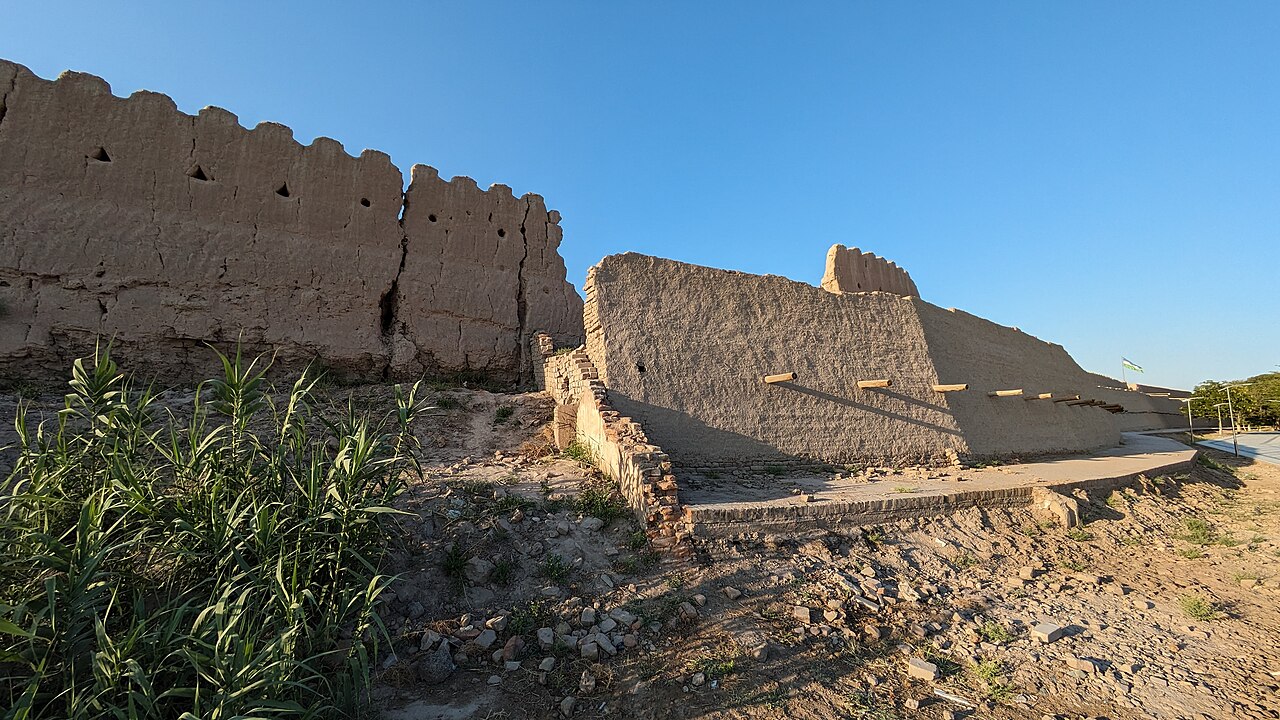
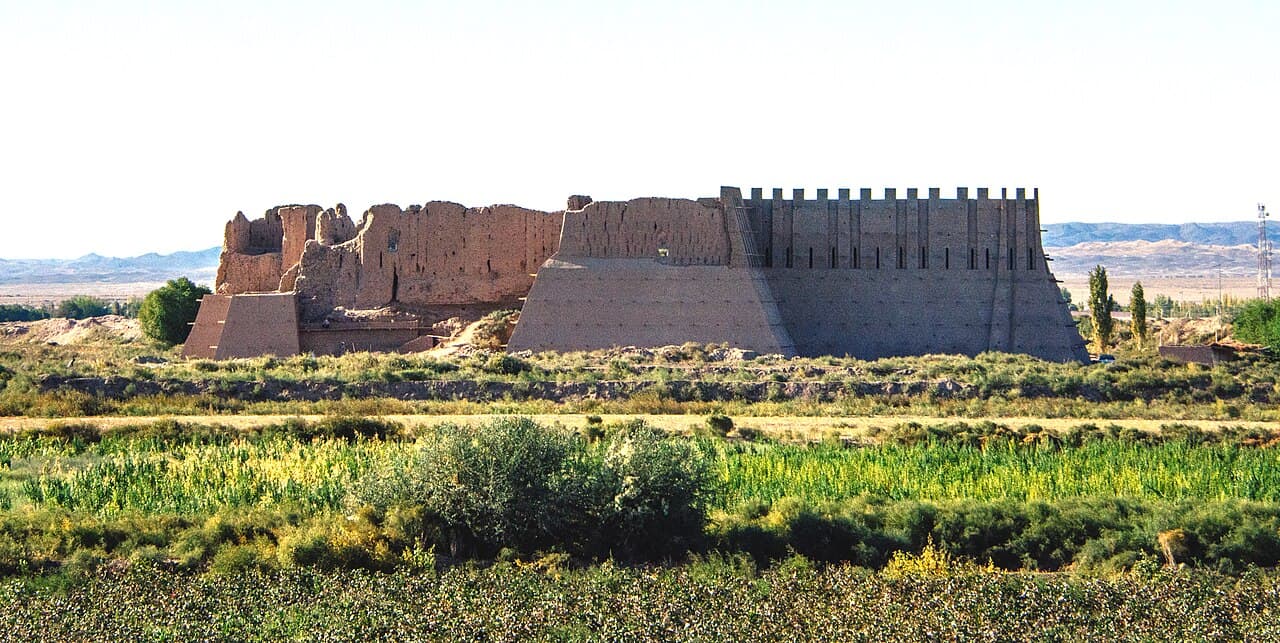
Kyzyl-Kala is classified as a bastioned fortress, a type of fortification characterized by projecting bastions that allowed defenders to cover adjacent walls with crossfire. The fortress's walls are constructed from sun-dried mud bricks, a common building material in Central Asian architecture of the period, providing both insulation and structural strength.
The fortress layout is compact, reflecting its role as a defensive outpost rather than a large urban center. The bastions are positioned at intervals along the fortress walls, enabling defenders to repel attacks from multiple angles. The walls themselves are thick and high, designed to withstand sieges and assaults. The fortress likely included internal structures such as barracks, storage rooms, and possibly a central courtyard, although much of the interior remains subject to archaeological interpretation.
Restoration and modern preservation
Kyzyl-Kala has undergone modern restoration efforts aimed at preserving its structural integrity and illustrating its original appearance. These renovations help visitors and scholars understand the fortress's historical defensive capabilities and architectural style. The restoration is part of a broader initiative to protect and showcase the "Fifty fortresses oasis," which collectively represent the rich cultural heritage of the Khorezm region.
Geographical and cultural importance
Situated in the arid landscape of Karakalpakstan, Kyzyl-Kala stands as a testament to the ingenuity of early medieval fortification techniques adapted to the Central Asian environment. Its proximity to Toprak-Kala, an important urban site, underscores the interconnected nature of military and civilian settlements in the region.
The fortress's red-hued walls, from which it derives its name, are a distinctive feature visible across the surrounding terrain. This coloration is due to the local clay and mud materials used in construction, which have weathered over centuries but still retain their characteristic appearance.
Visiting Kyzyl-Kala today
Today, Kyzyl-Kala is an archaeological site open to visitors interested in Central Asian history and ancient military architecture. While the fortress is not fully restored to its original grandeur, the preservation efforts provide a clear sense of its scale and defensive design. Visitors can explore the fortress grounds and appreciate the craftsmanship of early medieval builders in this remote part of Uzbekistan.
The site is part of a broader cultural tourism route that includes other fortresses and archaeological sites within the "Fifty fortresses oasis," offering insight into the historical landscape of the Khorezm region. Accessibility may be limited due to its remote location, so planning ahead is recommended for those wishing to visit.
Frequently asked questions (FAQ)
- When was Kyzyl-Kala fortress built?
- Kyzyl-Kala fortress was constructed between the 1st and 4th centuries CE during the early medieval period.
- What is the significance of Kyzyl-Kala in Central Asian history?
- Kyzyl-Kala served as a defensive bastioned fortress protecting the region of Chorasmia and was part of the "Fifty fortresses oasis" network securing trade routes and settlements.
- Can visitors explore Kyzyl-Kala today?
- Yes, Kyzyl-Kala is an archaeological site open to visitors, featuring partial restorations that illustrate its original defensive structures.
- What materials were used to build Kyzyl-Kala fortress?
- The fortress was primarily built using sun-dried mud bricks, typical of Central Asian construction methods in the early medieval period.
- Who last occupied Kyzyl-Kala before the Mongol conquest?
- Muhammad II of Khwarazm last occupied the fortress before it fell during the Mongol conquest of Khwarazmia in the early 13th century.
Photo gallery

Information
Loading map...
Visitor reviews
No reviews yet. Been here? Write the first review and help other travelers!
Write the first reviewVisited this castle? Share your experience
Your review helps other travelers and adds first-hand knowledge to our encyclopedia.