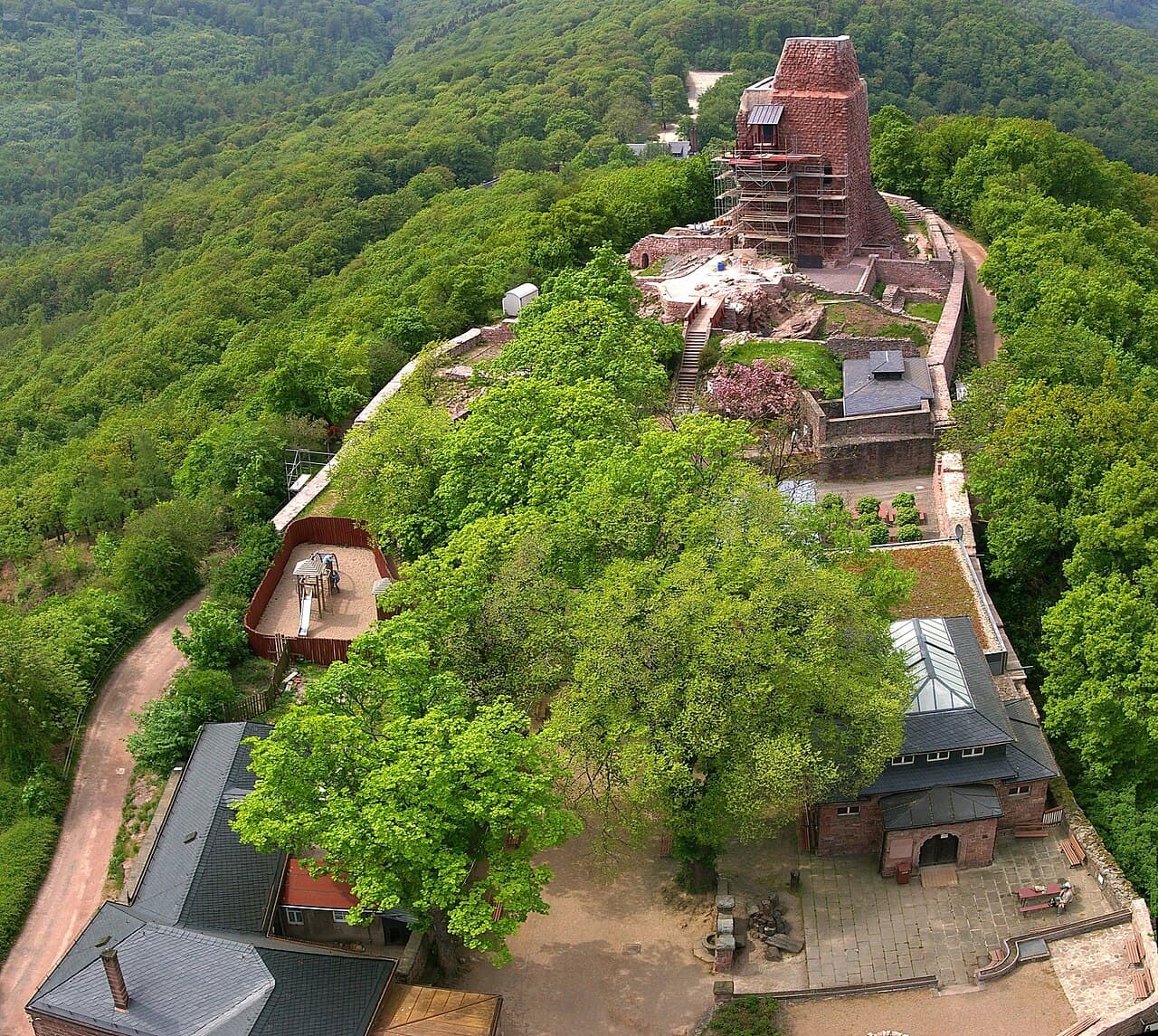
Kyffhausen Castle
Kyffhausen Castle, also known as the Imperial Castle of Kyffhausen or Reichsburg Kyffhausen in German, stands as a significant medieval ruin nestled in the Kyffhäuser hills of Thuringia, Germany, near the border with Saxony-Anhalt. This castle, dating back to the 10th century, was likely founded around the year 1000, marking it as an important early medieval fortress. It played a crucial role during the era of the Hohenstaufen emperors in the 12th and 13th centuries, superseding the nearby imperial palace known as the Kaiserpfalz of Tilleda.
Historical significance and imperial connections
The castle's strategic location in the Kyffhäuser hills provided a commanding view over the surrounding landscape, making it a vital stronghold for imperial authority in central Germany. During the High Middle Ages, under the rule of the Hohenstaufen dynasty, Kyffhausen Castle served as a symbol of imperial power and governance. The castle was part of a network of fortifications that helped consolidate and defend the Holy Roman Empire's territories.
The castle's association with the legend of Emperor Frederick Barbarossa adds a layer of cultural importance. According to folklore, Barbarossa is said to sleep within the castle, awaiting the right moment to awaken and restore the empire. This legend has contributed to the castle's enduring mystique and appeal.
Architectural features and layout
Although today Kyffhausen Castle exists primarily as ruins, archaeological studies have revealed much about its original structure. The castle was built as a hill castle, utilizing the natural topography of the Kyffhäuser hills for defense. Its layout included multiple defensive walls, towers, and a keep that dominated the site.
The castle complex originally featured a gatehouse, courtyards, and residential quarters for the imperial court and garrison. The strong fortifications were typical of early medieval castles designed to withstand sieges and control important routes.
Construction techniques and materials
The castle was constructed primarily from local stone, with masonry techniques evolving over time as the castle was expanded and renovated during the 12th and 13th centuries. The remains of thick defensive walls and foundations indicate a robust construction intended for long-term military use.
Decline and preservation
Following the decline of the Hohenstaufen dynasty and changes in political power, Kyffhausen Castle gradually lost its military importance. Over the centuries, it fell into disrepair and was eventually abandoned, leading to its current state as a ruined archaeological site.
Despite its ruined condition, the site remains a valuable cultural and historical landmark. Excavations and preservation efforts have aimed to stabilize the ruins and make them accessible to visitors interested in medieval history and architecture.
Kyffhäuser Monument and tourism
Between 1890 and 1896, the Kyffhäuser Monument was erected on the castle grounds. This monument commemorates Emperor Frederick Barbarossa and the German Empire, linking the medieval heritage of the castle with modern national identity. The monument's presence has increased the site's popularity as a tourist destination.
Visitors to Kyffhausen Castle can explore the ruins, enjoy panoramic views of the Kyffhäuser hills, and learn about the castle's imperial past through onsite information and guided tours. The combination of medieval ruins and the impressive monument makes it a unique cultural experience in central Germany.
Visiting kyffhausen castle
The castle ruins are accessible to the public, offering walking paths through the historic site. The surrounding natural landscape provides opportunities for hiking and photography. While the castle itself is a ruin, the site is well-maintained to allow safe exploration.
Information on opening hours and ticket prices varies seasonally, so visitors are advised to check local resources before planning their visit. The site is suitable for history enthusiasts, families, and those interested in medieval architecture and German heritage.
Frequently asked questions (FAQ)
- What is the historical significance of Kyffhausen Castle?
- Kyffhausen Castle, located in Germany, dates back to the 11th century and is steeped in legends, including that of Emperor Frederick Barbarossa. It served as a strategic fortress and royal residence, playing a crucial role in regional power dynamics during the medieval period.
- When was Kyffhausen Castle built?
- Kyffhausen Castle was constructed around 1060, showcasing a mix of Romanesque and Gothic architectural styles. The castle has undergone various renovations throughout the centuries, reflecting the changing tastes and needs of its occupants.
- What are the opening hours for Kyffhausen Castle?
- Kyffhausen Castle is typically open to visitors from 10 AM to 6 PM during the summer months and from 10 AM to 4 PM in the winter. It is advisable to check the official website for any seasonal changes or special holiday hours before planning your visit.
- Can I access Kyffhausen Castle with limited mobility?
- While Kyffhausen Castle has made efforts to improve accessibility, certain areas may still pose challenges for visitors with limited mobility due to uneven terrain and stairs. It is recommended to contact the castle's visitor services in advance to inquire about specific accommodations and accessibility options.
- What is the best time to visit Kyffhausen Castle?
- The best time to visit Kyffhausen Castle is during the late spring and early autumn months when the weather is pleasant and the surrounding landscape is particularly beautiful. Additionally, visiting during weekdays tends to be less crowded, allowing for a more enjoyable experience.
- Are there any nearby attractions to explore after visiting Kyffhausen Castle?
- Yes, nearby attractions include the scenic Kyffhäuser Monument, which commemorates Emperor Frederick Barbarossa, and the beautiful Harz National Park, known for its hiking trails and natural beauty. These sites complement your visit to the castle and offer additional insights into the region's history and landscape.
- How much are the ticket prices for Kyffhausen Castle?
- Ticket prices for Kyffhausen Castle are generally around €6 for adults, with discounts available for children and seniors. Special family tickets may also be offered, making it an affordable option for a day of exploration and history.
Photo gallery

Information
Loading map...
Visitor reviews
No reviews yet. Been here? Write the first review and help other travelers!
Write the first reviewVisited this castle? Share your experience
Your review helps other travelers and adds first-hand knowledge to our encyclopedia.


