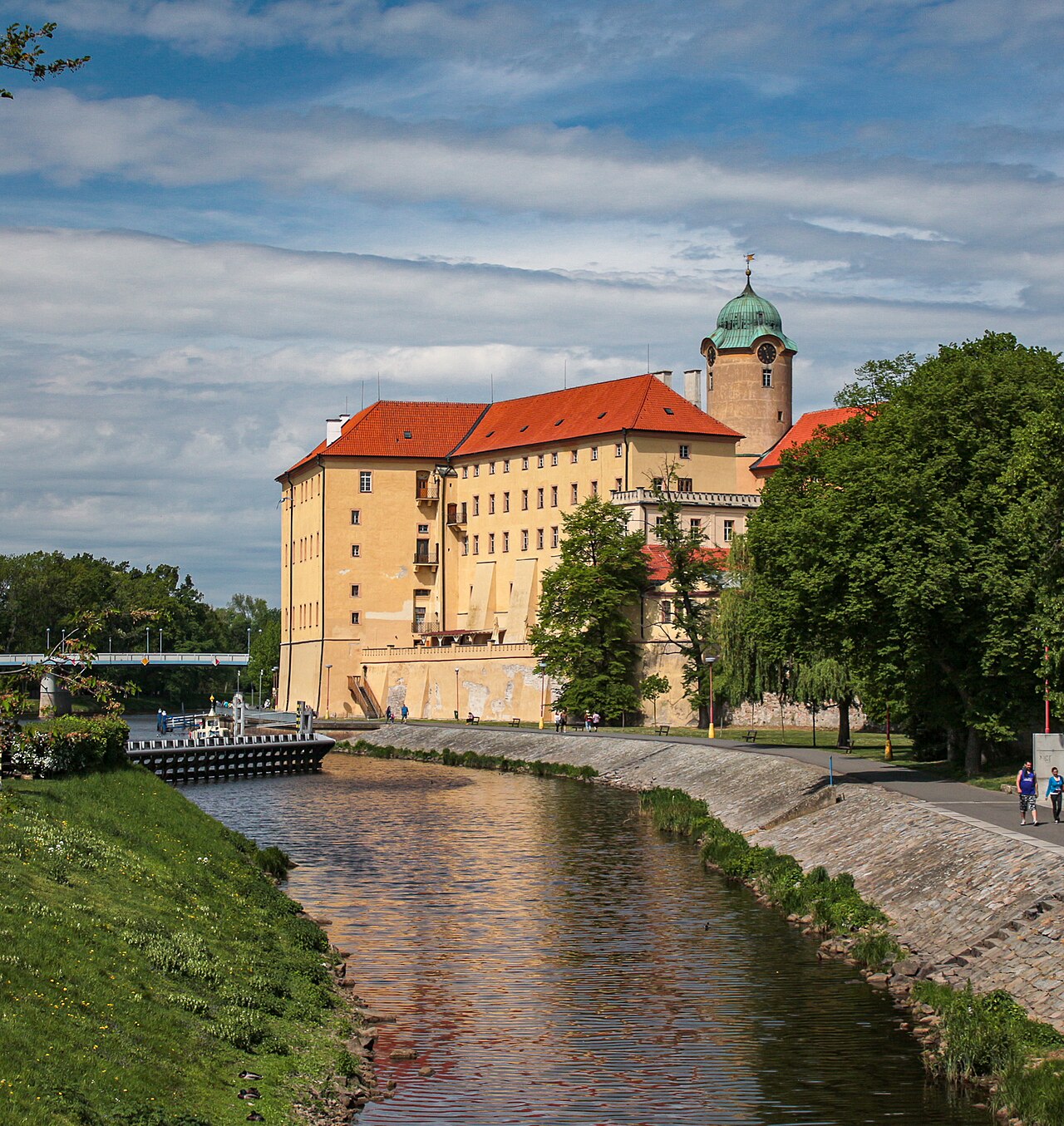
Kuncberk
Kuncberk castle is a historically significant site located in the municipality of Křinec, in the Czech Republic. Established before 1470 by the Bohemian noble Jan Křinecký of Ronov, it originally served as a medieval hill castle with a strategic hexagonal layout atop a 215-meter elevation. This location provided commanding views over the surrounding flat terrain, crucial for defense and surveillance during the High medieval period.
Medieval origins and strategic design
The castle’s initial construction focused on fortification and defense, featuring a distinctive hexagonal plan uncommon among medieval castles in the region. The site was protected by a broad moat and a substantial earthen rampart designed to absorb the impact of heavy artillery, indicating adaptations to evolving military technology in the late medieval period. The rampart’s construction reflects the transition from traditional medieval fortifications to more modern defensive structures capable of withstanding cannon fire.
Ownership remained with the Křinecký family until 1575, when the castle was sold to Jindřich of Waldstein. The Waldstein family preferred their residence at Dobrovice Castle, leading to Kuncberk’s abandonment and gradual decay. By 1638, contemporary records described Kuncberk as a ruin, marking the end of its military function.
Transformation into a baroque chateau
In the mid-17th century, the Morzin family acquired the estate and initiated a significant architectural transformation. Between 1659 and 1680, they constructed a modest early Baroque chateau on the castle’s former footprint. This new structure featured an octagonal plan, contrasting with the original hexagonal layout, and reflected the shift from military to residential and representational architecture.
The chateau’s lower floor was built in durable stone, while the upper floor employed timber framing, a typical construction technique of the period. Surviving vaulted rooms from this phase suggest continuity with earlier masonry, blending medieval and Baroque building traditions. Interior spaces included a painted entrance hall, a kitchen, and several rooms on the ground floor, with the upper floor housing three rooms and a large hall decorated with stucco and frescoes that created illusionistic effects, exemplifying Baroque artistic sensibilities.
19th-century restoration and decline
In approximately 1818, the Bethmann family undertook restoration efforts to revive the chateau’s condition, reflecting 19th-century interest in preserving historic estates. Despite these efforts, the building fell into disrepair later in the century and was ultimately demolished in 1891. The loss of the chateau marked the end of Kuncberk as a residential estate.
Archaeological remains and heritage protection
Today, Kuncberk exists primarily as an archaeological site preserving the layered history of the location. The visible remains include the moat and earthen rampart from the medieval fortress, as well as fragments of the Baroque chateau’s vaulted rooms and structural elements. These remnants provide valuable insight into the architectural evolution from a defensive hill castle to a residential Baroque estate.
The site has been officially protected since 1965 for its cultural heritage value, ensuring the preservation of this historic footprint. Visitors and researchers can study the transformation of castle architecture and the changing functions of noble residences in Czech history through the surviving features of Kuncberk.
Architectural significance and historical context
Kuncberk’s unique hexagonal design and its later adaptation into an octagonal Baroque chateau illustrate important trends in castle architecture and noble estate development in Central Europe. The site exemplifies the gradual shift from fortified medieval strongholds to more comfortable and decorative residences reflecting changing social and military realities.
The castle’s history also mirrors broader historical currents, including the decline of feudal warfare, the rise of artillery, and the Baroque period’s emphasis on art and representation. The involvement of notable noble families such as the Křinecký, Waldstein, Morzin, and Bethmann families situates Kuncberk within the complex tapestry of Bohemian aristocratic history.
Frequently asked questions (FAQ)
- How do I get to Kuncberk castle?
- Kuncberk castle is located in the municipality of Křinec in Central Bohemia, Czechia. It is accessible by local roads and is best reached by car or regional bus services from nearby towns.
- What is the historical significance of Kuncberk castle?
- Kuncberk castle reflects the transition from a medieval defensive fortress to a Baroque residential estate. Its unique hexagonal layout and later Baroque modifications highlight key architectural and historical developments in Bohemia.
- Can I visit the remains of Kuncberk castle?
- Yes, the site is protected as a cultural heritage location and is accessible to visitors. While only archaeological remains survive, the moat, ramparts, and vaulted rooms provide insight into the castle’s historical phases.
- When was Kuncberk castle built?
- The original castle was founded before 1470 by Jan Křinecký of Ronov during the late medieval period, with significant Baroque modifications in the 17th century.
- What architectural styles are visible at Kuncberk castle?
- Kuncberk castle exhibits a mix of late medieval military architecture and early Baroque residential design, including a hexagonal fortress layout and an octagonal Baroque chateau with stucco and fresco decorations.
Information
Current owner
Municipality
Loading map...
Visitor reviews
No reviews yet. Been here? Write the first review and help other travelers!
Write the first reviewVisited this castle? Share your experience
Your review helps other travelers and adds first-hand knowledge to our encyclopedia.