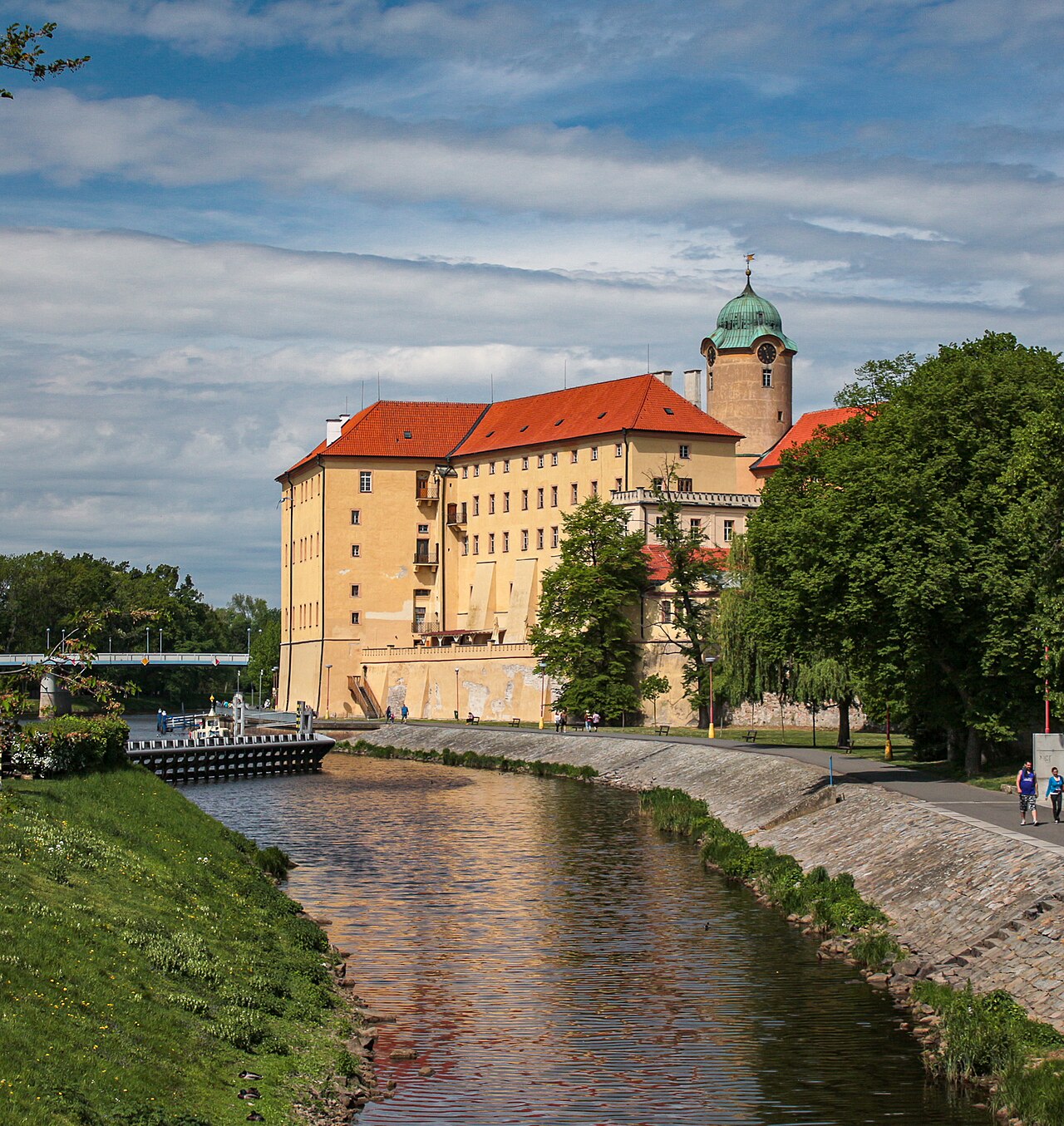
Mydlovar Castle
Mydlovar Castle stands as a remarkable example of medieval fortification in Czechia, uniquely distinguished by its predominant use of brick in construction, a rarity among Bohemian castles traditionally built from stone. Located near the village of Kostomlaty within the municipality of Ostrá-Lysá nad Labem, the castle occupies an artificially elevated hill approximately 185 meters above sea level, strategically positioned amidst marshy terrain and oxbow lakes formed by the Elbe River. This setting provided natural defensive advantages, which were further enhanced by man-made double moats and earth ramparts, particularly guarding the northern and western approaches.
The origins and historical significance of Mydlovar Castle
Constructed in the second half of the 13th century, Mydlovar Castle emerged during the high medieval period as a feudal stronghold reflecting the political and military landscape of Central Europe at the time. The earliest documentary references to the surrounding village of Kostomlaty date back to 1223, linked to the noble family of Choustnik and their successors, though the castle itself is first explicitly mentioned in records from 1356.
Throughout its history, the castle passed through the hands of several prominent noble families, including the lords of Častolovice and Jan Puška of Kunštát, a notable Moravian nobleman who played a significant role during the Hussite Wars. Puška initially fought alongside the famed Hussite leader Jan Žižka before aligning with the more moderate Prague faction and eventually becoming captain of Nymburk. This association situates Mydlovar within the broader context of the religious and political upheavals that shaped Bohemia in the 15th century.
Later, the castle came under the ownership of the influential Podiebrad family, followed by the Šelmberk and Donín lineages. In 1493, King Vladislav Jagellonský acquired Mydlovar but pledged it to Jan of Šelmberk, illustrating the castle's continued strategic and noble importance. The last noble owner, Bedřich of Donín, was involved in the Bohemian Estates uprising against Habsburg rule. Following the defeat of the uprising in 1547, his estates, including Mydlovar, were confiscated by the crown, and the castle was incorporated into the royal estate of Lysá nad Labem.
By 1561, Mydlovar Castle was recorded as deserted, marking the beginning of its decline into ruin. Despite this, the site remains embedded in local folklore, notably connected to the legendary princess Libuše, who is said to have used the castle as a summer residence. The nearby cultivation of the flower known as ladoňka (Scilla) is also linked to her, adding a layer of cultural and mythical significance to the site.
Architectural features and defensive design
Site and fortifications
The castle's location on an elevated hill surrounded by wetlands and oxbow lakes was a deliberate choice to maximize natural defense. The marshy terrain complicated enemy approaches, while the Elbe River's meandering created natural barriers. To supplement these defenses, the builders constructed double moats and earth ramparts, especially along the vulnerable northern and western sides.
The main entrance was situated on the northern side, protected by these earthworks and moats. The castle's inner enclosure was fortified by a curtain wall primarily composed of brick. This use of brick is particularly notable as Mydlovar is potentially the only castle in Bohemia where bricks formed the principal fortification material, contrasting with the more common stone construction of the region's medieval castles.
Castle layout and internal structures
Within the curtain wall, the internal buildings have largely collapsed inward, causing the courtyard to rise above its original medieval level. This collapse obscures the precise layout of the castle's internal structures, but archaeological studies suggest a rugged defensive stronghold adapted to its wetland environment. The eastern section, identified as an outer bailey, shows no evidence of stone or brick buildings, indicating it may have been primarily an open space for ancillary functions or livestock.
Mydlovar Castle in the modern era and preservation
Today, the ruins of Mydlovar Castle are preserved within the Mydlovarský luh nature reserve, a protected area that highlights the unique riverside landscape and biodiversity of the region. The site is accessible via marked hiking trails from nearby villages, inviting visitors to explore the remnants of the castle's imposing defensive structures and experience the natural environment that shaped its history.
The preservation of the brick curtain walls, earth ramparts, and moat remnants offers valuable insights into medieval military architecture in Bohemia, particularly the adaptation to wetland terrain and the unusual choice of brick as a primary building material. These features contribute to the castle's cultural heritage significance and provide an evocative window into the feudal past of Czechia.
Folklore and cultural heritage associated with Mydlovar Castle
Local legends enrich the historical narrative of Mydlovar Castle, with tales linking it to princess Libuše, a mythical figure in Czech history and folklore. According to tradition, Libuše used the castle as a summer residence and cultivated the flower ladoňka nearby, symbolizing the castle's enduring presence in regional cultural memory. These stories enhance the castle's allure for visitors and historians alike, blending tangible ruins with intangible heritage.
Visiting Mydlovar Castle
Visitors to Mydlovar Castle can enjoy a unique combination of historical exploration and natural beauty. The castle's location within a nature reserve offers opportunities for hiking, birdwatching, and appreciating the landscape that once influenced medieval defensive strategies. While the ruins are modest, the site provides a compelling glimpse into the architectural and feudal history of the region.
Access is generally via hiking paths from Kostomlaty and surrounding villages, with no formal visitor center or facilities on-site. This preserves the site's authenticity and natural setting, making it ideal for visitors interested in history, archaeology, and nature.
Frequently asked questions (FAQ)
- What is the historical significance of Mydlovar Castle?
- Mydlovar Castle is a remarkable example of Renaissance architecture in Czechia, reflecting the rich cultural heritage of the region. Built in the late 16th century, it served as a noble residence and has played a crucial role in local history, making it a significant landmark for visitors interested in Czech history.
- When was Mydlovar Castle built?
- Mydlovar Castle was constructed in the late 1500s, with its completion around 1590. The castle showcases the architectural styles of the era and has undergone various restorations to preserve its historical integrity.
- Can I visit Mydlovar Castle?
- Yes, Mydlovar Castle is open to visitors. Guests can explore its beautiful grounds and learn about its history through guided tours, making it a perfect destination for history enthusiasts and families alike.
- What are the opening hours for Mydlovar Castle?
- Mydlovar Castle typically opens its doors to visitors from 9 AM to 5 PM during the tourist season, which runs from May to October. It's advisable to check the official website for any seasonal changes or special events that might affect opening hours.
- Is it possible to purchase tickets online for Mydlovar Castle?
- Yes, visitors can purchase tickets online through the official Mydlovar Castle website. This option allows for a smoother entry experience and helps avoid long lines, especially during peak tourist seasons.
- What is the best time to visit Mydlovar Castle?
- The best time to visit Mydlovar Castle is during the spring and early autumn months when the weather is pleasant and the gardens are in full bloom. Visiting during weekdays can also provide a quieter experience compared to weekends.
- How accessible is Mydlovar Castle for visitors with disabilities?
- Mydlovar Castle strives to be accessible to all visitors, with pathways and facilities designed to accommodate those with mobility challenges. It's recommended to contact the castle in advance to ensure specific needs can be met during your visit.
- Are there any nearby attractions to Mydlovar Castle?
- Yes, there are several attractions near Mydlovar Castle, including beautiful parks, local museums, and historical sites in Ostrá-Lysá nad Labem. Visitors can easily plan a full day of exploration in the area.
- What architectural features can I expect to see at Mydlovar Castle?
- Mydlovar Castle features stunning Renaissance architecture, with intricate facades, decorative elements, and expansive gardens. Visitors will appreciate the historical craftsmanship and the aesthetic beauty of the castle's design.
Information
Loading map...
Visitor reviews
No reviews yet. Been here? Write the first review and help other travelers!
Write the first reviewVisited this castle? Share your experience
Your review helps other travelers and adds first-hand knowledge to our encyclopedia.