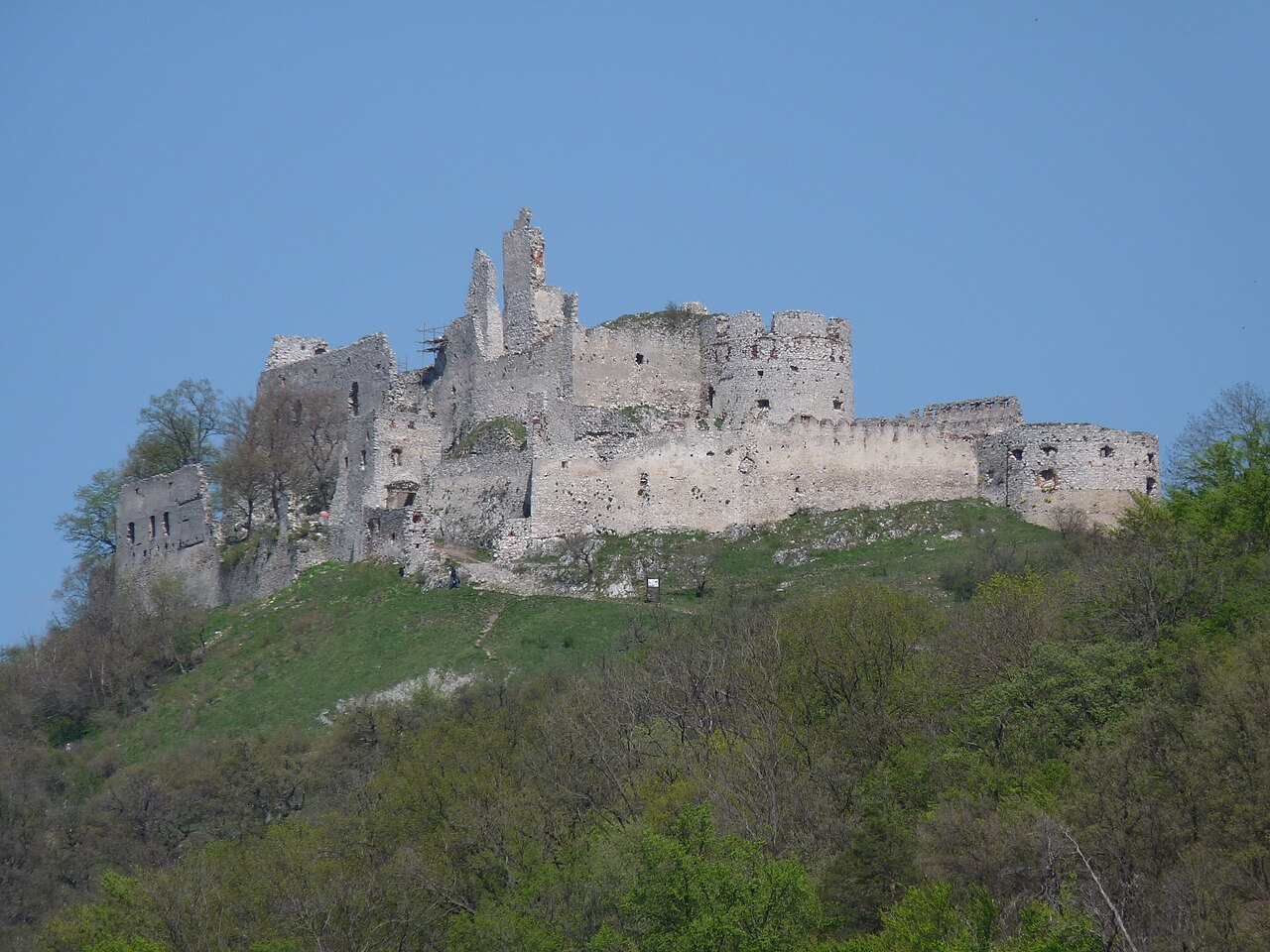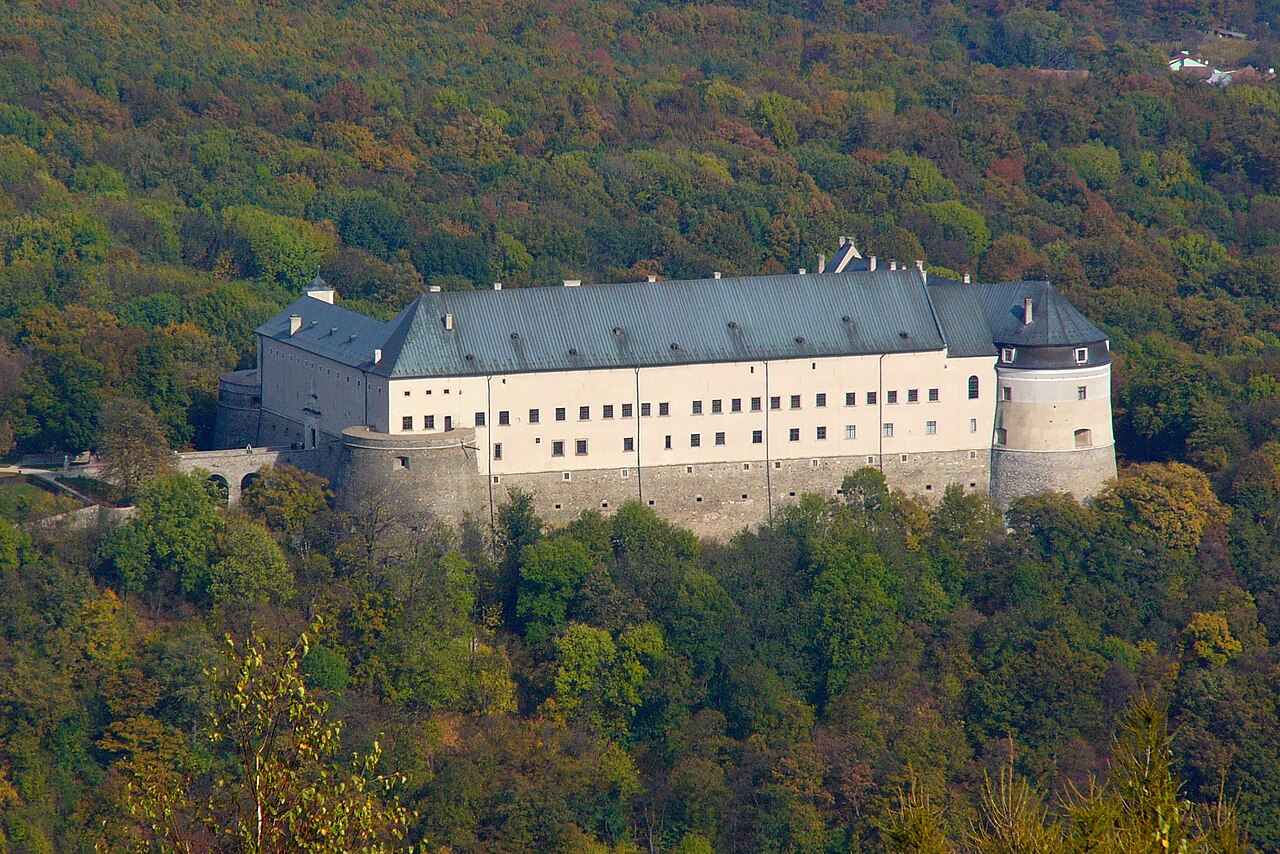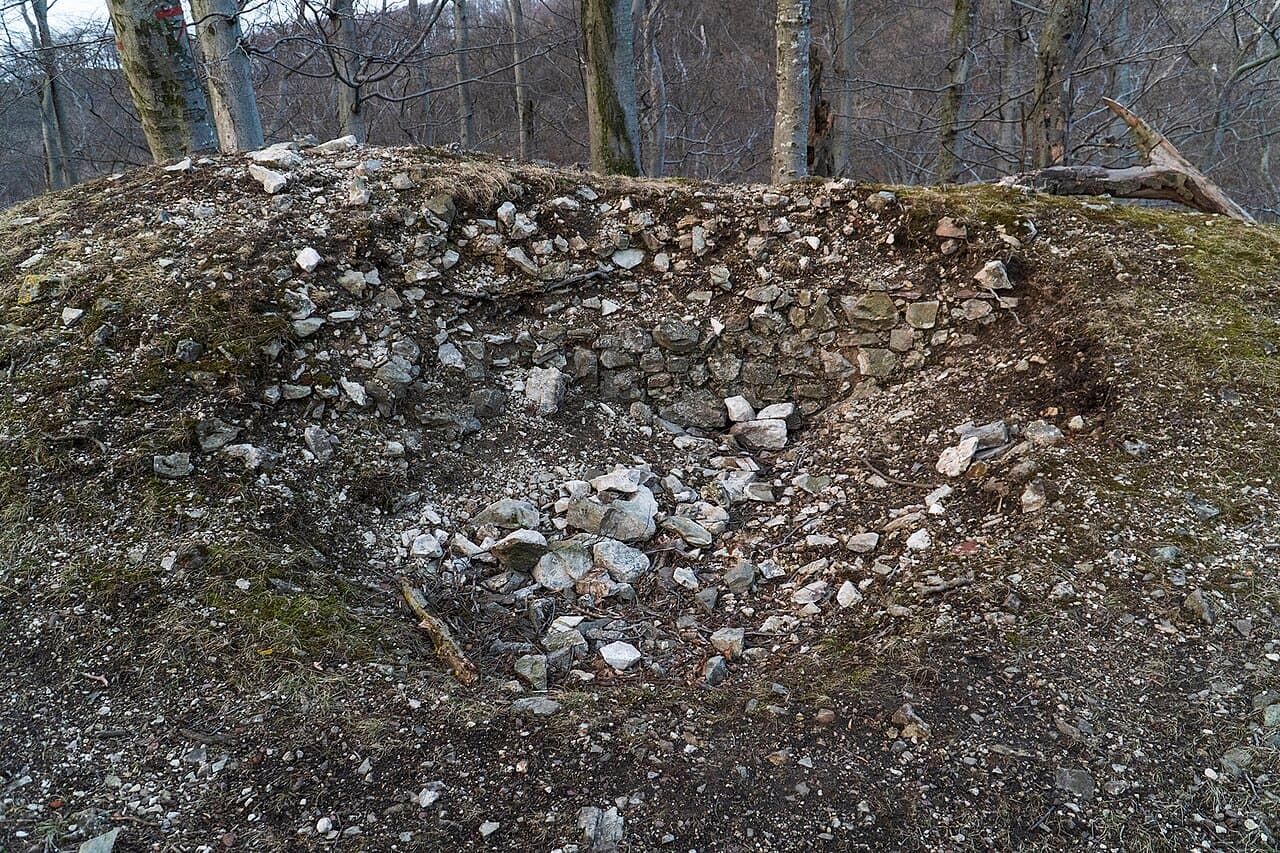
Kuchyňa Castle — Slovakia castle

Kuchyňa Castle

Kuchyňa castle ruins in the little carpathians

Kuchyňa Castle is a medieval castle ruin located in the Little Carpathians mountain range near the municipality of Kuchyňa in the Bratislava region of Slovakia. Positioned at approximately 420 meters above sea level, the castle occupies a strategic hilltop site that once provided commanding views over the surrounding landscape. Though only modest remains survive today, the site offers valuable insight into the region's medieval fortifications and settlement patterns.

Historical background and discovery

The ruins of Kuchyňa Castle were rediscovered in the 1980s, a relatively recent addition to the catalog of Slovak medieval castles. Unlike more prominent nearby fortresses such as Biely Kameň or Pajštún Castle, Kuchyňa has remained less well-known, partly due to its limited surviving structures and less extensive historical documentation.

Historical records suggest the castle was likely constructed during the High to Late Medieval period, a time when fortifications in the Little Carpathians were developed to secure trade routes and protect local noble estates. The castle's location on a hilltop aligns with typical hill castle defensive strategies of the era.

Architectural features and layout

Today, only fragmentary remains of Kuchyňa Castle survive, primarily sections of defensive walls and foundations. These ruins indicate a compact fortress with a stone masonry construction typical of medieval Slovak castles. The castle likely featured a keep or donjon as its central stronghold, surrounded by curtain walls and possibly a small courtyard.

The limited archaeological evidence points to a simple but functional design focused on defense rather than elaborate residential comforts. The castle's modest size and ruins suggest it served primarily as a local stronghold rather than a major noble residence.

Strategic significance and regional context

Situated in the Little Carpathians, Kuchyňa Castle formed part of a network of fortifications guarding important trade routes and regional borders during the medieval period. Its elevated position allowed control over the surrounding valleys and paths, crucial for monitoring movements and providing early warning of potential threats.

The castle's proximity to other fortresses such as Biely Kameň and Pajštún indicates a coordinated defensive system in the Bratislava region, reflecting the geopolitical importance of this area in medieval Slovakia.

Current condition and visitor experience

Currently classified as ruins, Kuchyňa Castle's remains are limited but accessible to visitors. The site is a popular destination for hikers exploring the Little Carpathians, offering scenic views and a glimpse into Slovakia's medieval heritage.

While the castle lacks extensive visitor facilities or interpretive signage, its natural setting and historical ambiance attract those interested in archaeology and medieval history. Visitors should be prepared for rugged terrain and limited infrastructure.

Archaeological research and preservation

Since its rediscovery in the 1980s, Kuchyňa Castle has been the subject of archaeological surveys aimed at documenting its remains and understanding its historical role. These investigations have helped clarify the castle's layout and construction techniques, contributing to broader knowledge of medieval fortifications in the region.

Preservation efforts remain limited due to the castle's modest remains and remote location, but ongoing interest from historians and hikers helps maintain awareness of its cultural significance.

Frequently asked questions (FAQ)

What is the historical significance of Kuchyňa Castle?
Kuchyňa Castle, located in Slovakia, dates back to the 13th century and is known for its strategic position overlooking the surrounding landscape. It played a crucial role in regional defense and served as a residence for various noble families throughout its history, making it a significant landmark in Slovak heritage.
When was Kuchyňa Castle built?
Kuchyňa Castle was constructed in the early 13th century, with its establishment believed to be around 1260. The castle underwent several renovations and expansions over the centuries, reflecting the architectural styles and needs of the periods during which it was inhabited.
What are the opening hours for Kuchyňa Castle?
Kuchyňa Castle is typically open to visitors from April to October, with hours ranging from 10 AM to 6 PM. It is advisable to check the official website or local tourism information for any seasonal changes or special event hours before planning your visit.
Can I access Kuchyňa Castle by public transport?
Yes, Kuchyňa Castle is accessible by public transport, with several bus routes operating in the area. Visitors can take a bus from nearby towns, and there are often signs guiding you to the castle from the nearest stop.
Is it possible to take guided tours of the castle?
Yes, guided tours of Kuchyňa Castle are available, providing an in-depth look at its history and architecture. These tours are typically conducted in multiple languages and can enhance your experience by offering insights that you might miss on a self-guided visit.
What are the ticket prices for visiting Kuchyňa Castle?
Ticket prices for Kuchyňa Castle are generally affordable, with discounts available for children, students, and seniors. It is best to check the official website for the most current pricing and any special offers that may be available during your visit.
When is the best time to visit Kuchyňa Castle?
The best time to visit Kuchyňa Castle is during the spring and early autumn months when the weather is pleasant, and the surrounding scenery is particularly beautiful. Additionally, visiting during these seasons allows you to enjoy fewer crowds and a more relaxed experience.
What nearby attractions can I visit while at Kuchyňa Castle?
While visiting Kuchyňa Castle, you can explore several nearby attractions, including the picturesque town of Malacky and the scenic nature trails in the surrounding area. Other historical sites and local eateries are also within a short driving distance, making it an ideal day trip destination.

Photo gallery

Kuchyňa Castle
Click to view

Photo by Lukáč Peter•CC BY-SA 4.0

1 photo • Click any image to view in full screen

Information

Archaeological Site / Ruins

Loading map...

Visitor reviews

No reviews yet. Been here? Write the first review and help other travelers!

Write the first review

Visited this castle? Share your experience

Your review helps other travelers and adds first-hand knowledge to our encyclopedia.

Write a review

(5/5)

0/2000 characters

Your review will be visible after admin approval

Nearby castles

9.5 km

Plavecky Castle

Bratislava Region, Slovakia

Plavecky Castle stands as a significant medieval ruin perched above the village of Plavec on Pohanská Hill within the Pohanská National Nature Reserve, nestled at the western foothills of the Little Carpathians in the Bratislava Region of Slovakia. This castle, now a ruin, played a crucial role in the defense and administration of the Kingdom of Hungary's borderlands during the High Medieval period. Origins and strategic importance Constructed between 1256 and 1273, Plavecky Castle was established as a royal border fortress in response to the geopolitical pressures following the devastating Mongol invasion of Hungary in 1241-1242. This wave of castle building aimed to strengthen frontier defenses and secure vital routes. The castle's position on Pohanská Hill allowed it to command the surrounding landscape and oversee the border between the Kingdom of Hungary and the Kingdom of Bohemia. The earliest documented reference to the castle's existence is from 1273, when a battle took place beneath its walls between the Hungarian forces and those of Přemysl Otakar II. Its initial function was primarily military and surveillance-oriented, guarding the border and controlling the important road ascending the castle hill. Architectural features and defensive systems Originally, the castle comprised a keep and fortified walls designed to withstand sieges typical of the period. Its location on a hill classifies it as a hill castle, leveraging natural topography for defense. The castle was part of an advanced network of fortifications, including Branč Castle, Ostrý Kameň, and Korlátka, with which it communicated through an early form of visual signaling, often referred to as a radiosonde system. This allowed rapid transmission of warnings in case of enemy incursions. During the 16th century, the castle underwent significant transformation to adapt to the changing nature of warfare. It was rebuilt in the Renaissance style with the addition of a lower courtyard and new cannon bastions to accommodate artillery, reflecting the evolution from medieval to early modern fortifications. These bastions were integral to the castle's ability to resist contemporary siege tactics. Ownership and historical developments Throughout its history, Plavecky Castle passed through the hands of several notable noble families. From 1398, it was owned by Stibor of Stiborice, a prominent nobleman of the Kingdom of Hungary. Later, ownership transferred to the Counts of Svätý Jur and Pezinok until the 16th century, followed by the Serédy family. Between 1553 and 1575, the castle was held by the influential Fugger family, renowned European bankers and merchants, before passing to the Balaš family. Between 1579 and 1584, under the ownership of Štefan Balaš, the castle was notable for housing one of the first printing presses in Slovakia. This press produced calendars, Bibles, hymnals, and other religious and cultural texts, largely influenced by the Protestant writer and church dignitary Peter Bornemisa. This cultural activity highlights the castle's role beyond military functions, serving as an economic and administrative center. From 1641 until the 20th century, the castle belonged to the Pálf family, a significant noble house in Hungarian and Slovak history. However, the castle's military importance declined over time, especially after it sustained damage during the conflicts of the early 18th century. Decline and current condition In 1706, during the anti-Habsburg uprisings, the castle was seized and damaged by the imperial army, which had captured it from rebel forces. This event marked the beginning of its decline. The castle was never restored to its former glory, and by the mid-17th century, the estate's administrative seat had been relocated to the nearby town of Malacky. Today, Plavecky Castle remains a ruin, preserved as a historical monument and cultural heritage site. Its remnants offer insight into medieval and Renaissance military architecture and the turbulent history of the region. The castle's location within a protected nature reserve also makes it a popular destination for visitors interested in history, architecture, and natural beauty. Visiting plavecky castle Visitors to Plavecky Castle can explore the ruins set amidst the scenic landscapes of the Little Carpathians. The castle's elevated position provides panoramic views of the surrounding countryside. The site is accessible via hiking trails from the village of Plavec, offering a rewarding experience for history enthusiasts and nature lovers alike. The castle's remains include sections of the defensive walls, foundations of the residential and administrative buildings, and the distinctive cannon bastions added during the Renaissance modifications. Informational signage helps visitors understand the castle's historical context and architectural evolution.

High Medieval (11th–13th c.)
Details
9.7 km
Plavecký hrad — Slovakia castle

Plavecký hrad

Plavecké Podhradie, Slovakia

Plavecký hrad is a significant medieval castle ruin perched above the village of Plavecké Podhradie in Slovakia. Constructed in the mid-13th century by the Kingdom of Hungary, it served as a crucial royal border stronghold designed to defend the kingdom's western frontier against neighboring powers. The castle's strategic location on a hilltop provided commanding views and facilitated communication with nearby fortresses such as Branč, Ostrý Kameň, and Korlátka castles through signal stations, underscoring its military importance in the region. Historical context and foundation The origins of Plavecký hrad trace back to the reign of King Béla IV of Hungary, who initiated a widespread fortification campaign following the devastating Mongol invasion of 1241–1242. The castle was built between approximately 1256 and 1273 to bolster defenses along the kingdom's vulnerable western border with the Kingdom of Bohemia. The first documented mention of the castle dates to 1273 during a battle involving Hungarian forces and troops loyal to Přemysl Otakar II, King of Bohemia. The castle's construction is attributed to Detrich, son of Kunt, the mayor of Bratislava at the time, reflecting the importance placed on securing this frontier region. Ownership and architectural evolution Throughout its history, Plavecký hrad changed hands among several noble families, each contributing to its development and fortification. In 1398, it came under the ownership of Stibor of Stiborice, a prominent nobleman. Subsequently, the castle was held by the counts of Svätý Jur and Pezinok, and later by the Serédy family. The 16th century marked a period of significant transformation when the wealthy Fugger family acquired the castle. They enhanced its defenses by constructing a substantial bastion to protect the steep access routes. The castle also became a cultural center during the Reformation, housing one of Slovakia's earliest printing presses between 1579 and 1584 under the Balaš family's ownership. This press produced Protestant religious texts by Peter Bornemis, highlighting the castle's role in the religious and intellectual movements of the era. Late 16th-century renovations introduced Renaissance architectural features and expanded the lower courtyards, reflecting evolving military technologies and aesthetic preferences. In the 17th century, the castle was further adapted to withstand artillery warfare through the addition of artillery bastions, a response to the increasing use of cannon in European conflicts. Military significance and decline Plavecký hrad maintained its strategic military role well into the early modern period. It played a part in the anti-Habsburg uprising of 1706, when imperial forces captured the fortress during the rebellion led by Francis II Rákóczi. The damage sustained during this conflict marked the beginning of the castle's decline. After its capture, the castle was owned by the Pálffy family from 1641 until the 20th century. Over time, they abandoned the fortress in favor of a more comfortable manor house in the nearby village, leading to Plavecký hrad's gradual deterioration into ruins. Despite this, the castle remains a site of historical and cultural significance, with ongoing preservation efforts to stabilize its remains. Architectural features and remains Plavecký hrad exemplifies a hilltop Gothic fortress with a layout designed for defense and communication. The castle's original stone masonry walls, bastions, and courtyards reflect construction techniques typical of the medieval period. The Renaissance-era lower courtyards and artillery bastions demonstrate the fortress's adaptation to changing military technologies, particularly the introduction of firearms and cannon. The castle's most notable surviving features include the large bastion built by the Fuggers to secure the steep hill approach, and the artillery bastions from the 16th and 17th centuries that illustrate the evolution of fortress design in response to artillery warfare. These structures allowed defenders to mount early firearms and cannons effectively, enhancing the castle's defensive capabilities. Surrounding landscape and archaeological context Situated on the western foothills of Pohanská hill within a national nature reserve, Plavecký hrad overlooks the village of Plavecké Podhradie. The site is archaeologically rich, with the ancient Pohanská hillfort located on the same hill, offering insights into earlier defensive settlements. Nearby natural landmarks include the Plavecká cave on the northern slope and the remains of a former monastery to the south, adding layers of historical and cultural significance to the area. Visitor experience and access Today, visitors can explore the castle ruins via marked hiking trails from Plavecké Podhradie and Plavecký Mikuláš. The trails lead through dramatic natural scenery to the extensive ruins, where the surviving stonework narrates centuries of military and architectural evolution. Conservation efforts have stabilized the ruins, allowing safe exploration while preserving the site's historical integrity. Plavecký hrad remains a testament to medieval fortification strategies and the historical complexities of border defense in Central Europe. Its combination of Gothic and Renaissance architectural elements, along with its rich history of ownership and military engagement, make it a valuable cultural heritage site in Slovakia.

High Medieval (11th–13th c.)
Details
10.8 km
Czerwony Kamień — Slovakia castle

Czerwony Kamień

Častá, Slovakia

Czerwony Kamień Castle is a remarkable example of a Renaissance bastioned fortress located in Slovakia, near the village of Častá. Its origins trace back to the early 13th century, when it was first established as a royal stone castle on a strategic hill overlooking key trade and military routes. Over the centuries, the castle evolved significantly, reflecting the changing needs of defense, commerce, and noble residence, with its most transformative phase occurring in the mid-16th century under the ownership of the wealthy Fugger family. Early history and strategic importance The initial fortress likely predates 1240, constructed by the Kingdom of Hungary as part of a frontier defense system stretching from Bratislava (then Pressburg) to Žilina. Positioned on a prominent quartz rock outcrop, the castle commanded a vital route from Bratislava toward Moravia, making it a critical military and administrative site. Although little is known about the original castle's appearance, it occupied the area that is now the castle's courtyard. In 1296, the castle was acquired by the powerful noble Matúš Čák Trenčanský, who controlled extensive territories in the region. After his death in 1321, ownership reverted to the Hungarian crown and subsequently passed through various noble families, including the counts of Svätý Jur and influential figures such as Jan Zápolský and Queen Maria Habsburg. This succession of owners reflects the castle's ongoing strategic and political significance during the medieval period. Renaissance transformation under the fugger family The castle's most significant architectural transformation began in the 16th century when it was purchased by the Fugger family in 1523, a wealthy Augsburg merchant dynasty deeply involved in mining and trade, especially copper from the nearby mines of Banská Bystrica. Due to debts owed by the Thurzo family, the Fuggers took control and initiated extensive reconstruction work that lasted until 1556. The new fortress was designed on a rectangular plan with four massive, multi-story round bastions at each corner. These bastions were equipped with artillery positions on the lower levels, featuring advanced ventilation systems to expel smoke generated during firing. The bastions were connected by thick curtain walls enclosing a spacious inner courtyard. Along the southwest curtain wall, a residential building was constructed with large vaulted cellars beneath, used by the Fuggers to store their valuable trade goods. The entire complex was surrounded by a wide moat, enhancing its defensive capabilities. Access to the castle was controlled by a drawbridge on the northwest side, leading to an outer bailey protected by its own defensive walls and housing various economic buildings. The pálffy era: from fortress to noble residence In 1588, Mikuláš II Pálffy married Anna Fugger and acquired the castle, marking the beginning of the Pálffy family's long tenure, which lasted until 1945. Under their ownership, the castle was transformed from a purely military stronghold into an elegant noble residence. Mikuláš II initiated expansions including the addition of two residential wings along the shorter curtain walls and a ground-floor service building on the northeast side. The main residential building was remodeled, and new structures were added to the outer bailey. Despite suffering damage from a fire in 1620, the castle was rebuilt in the mid-17th century, achieving much of its present-day appearance. Further damage occurred during the 1705 siege by Rakoczy's forces and a fire in 1758, after which the castle was restored and expanded with added attics and raised bastions. The original drawbridge was replaced by a stone bridge, enhancing the castle's grandeur and permanence. Architectural features and interior highlights The castle's defensive design is characterized by its trapezoidal layout, thick slanted walls designed to deflect cannon fire, and four imposing round bastions rising four stories high. The lower casemates housed large artillery pieces, while the upper levels featured gunports for handheld firearms, providing layered defense. Inside, the castle boasts richly decorated interiors from the Renaissance and Baroque periods. Notable rooms include the sala terrena, renowned for its exquisite early Baroque stucco and fresco decorations considered among the finest in Slovakia. Other significant chambers are the knight's hall, great dining room, golden salon, oriental cabinet, boudoir, library, and various bedrooms and salons decorated in diverse historical styles. The castle chapel features early Baroque décor, and a unique highlight is the historic castle pharmacy, first documented in 1676. Beneath the residential buildings lie extensive vaulted cellars, with one large chamber measuring 70 meters in length and 9 meters in height, originally possibly comprising multiple levels. Historical challenges and preservation Throughout its history, Czerwony Kamień Castle endured several destructive events including fires and military sieges. The 1705 siege by Rakoczy's troops caused significant damage, as did fires in 1620 and 1758. Each time, the castle was carefully restored and expanded, preserving its architectural integrity and adapting to contemporary needs. In 1945, the castle was nationalized and converted into a museum. Recognized as a National Cultural Monument in 1970, it remains one of Slovakia's best-preserved Renaissance fortresses. The castle attracts many visitors annually, drawn by its impressive architecture, rich history, and extensive museum collections showcasing noble lifestyle and military heritage. Cultural significance and visitor experience Today, Czerwony Kamień Castle stands as a testament to Renaissance military architecture and noble residence evolution in Central Europe. It hosts various cultural events, including fencing festivals and falconry demonstrations, which vividly bring its history to life. Summer night tours offer a unique atmosphere, allowing visitors to experience the castle's historic ambiance in an evocative setting. The museum inside preserves and displays the legacy of the Pálffy family and the castle's multifaceted history, from its origins as a royal fortress to its role as a commercial hub and aristocratic home. The castle's extensive collections and well-preserved interiors provide a comprehensive insight into the region's history and architectural heritage.

Renaissance (15th–17th c.)
Details