Krzepice
Krzepice Castle stands as a significant historical monument in the town of Krzepice, Poland, embodying the rich medieval and Renaissance heritage of the region. Originally established in the mid-14th century, this bastioned fortress was strategically positioned to guard a vital trade route crossing the Liswarta River, linking Kraków and Wieluń, and marking the meeting point of the historical provinces of Małopolska, Silesia, and Wielkopolska. The castle's origins are closely tied to the town's founding and its early defensive needs, reflecting the geopolitical complexities of medieval Poland.
The earliest records date back to 1357, when Krzepice was granted town rights. Around this time, King Casimir the Great commissioned the construction of a "strong brick castle on marshy ground just below the town," according to contemporary chroniclers. This initial fortress served as a crucial military and administrative center, overseeing the surrounding lands and securing the important river crossing. Its location and robust construction underscored the king's efforts to fortify the kingdom's borders and trade arteries.
Medieval origins and political significance
Following the death of Casimir the Great in 1370, the castle and town of Krzepice passed into the hands of Prince Władysław Opolczyk under a feudal arrangement granted by King Louis I of Hungary. Opolczyk's tenure was marked by political tensions due to his policies that were often at odds with the Polish crown. These conflicts culminated in armed confrontations with King Władysław Jagiełło, leading to the prince's loss of his fiefs. In 1391, the castle was captured and reintegrated into the Polish Crown, subsequently becoming the seat of a non-fortified starosty (administrative district) administered by the Kraków voivode, Spytko of Melsztyn.
Renaissance transformation and architectural features
In the late 16th century, under the long stewardship of Starosta Mikołaj Wolski (from 1568 for 63 years), the castle underwent a significant transformation. Around 1588, the original Gothic fortress was remodeled into a luxurious Renaissance defensive residence. Detailed inventories from this period reveal that the castle was a modest two-story structure laid out on a quadrangular plan. It featured a central courtyard surrounded on three sides by single-wing buildings, with the fourth side enclosed by a cloister.
The castle's defensive architecture included four round corner towers and a tall central tower dominating the silhouette. In front of the main castle stood a bailey separated by a moat and accessed via a drawbridge. The bailey was further protected by an earth rampart topped with a palisade and bastions, as well as a two-story wooden gatehouse. The entrance to the bailey was also secured by a drawbridge, reflecting the castle's advanced fortification system designed to withstand contemporary military threats.
Fortifications and bastioned defenses
Following the Renaissance renovations, the castle's defenses were further modernized in the 17th century. After the Swedish invasion known as the "Deluge" (Potop Szwedzki), the fortress suffered occupation and damage. In response, starosts Jacek Michowski and later Samuel Prażmowski, voivode of Płock, reinforced the castle with bastioned fortifications reflecting the evolving military architecture of the period. These earthwork bastions were designed to absorb artillery fire and improve defensive capabilities, marking a shift from medieval to early modern fortress design.
Sieges, decline, and present condition
The castle's strategic importance was demonstrated during the mid-17th century conflicts. In 1655, Swedish forces under General Jan Weichard occupied Krzepice Castle with minimal resistance. It was retaken in 1656 by Polish forces led by Jan Bogusław Petryczyn after a siege, only to be lost again to the Swedes until expelled by Stanisław Warszycki's forces from nearby Danków. Despite post-war restoration efforts, the castle gradually fell into neglect.
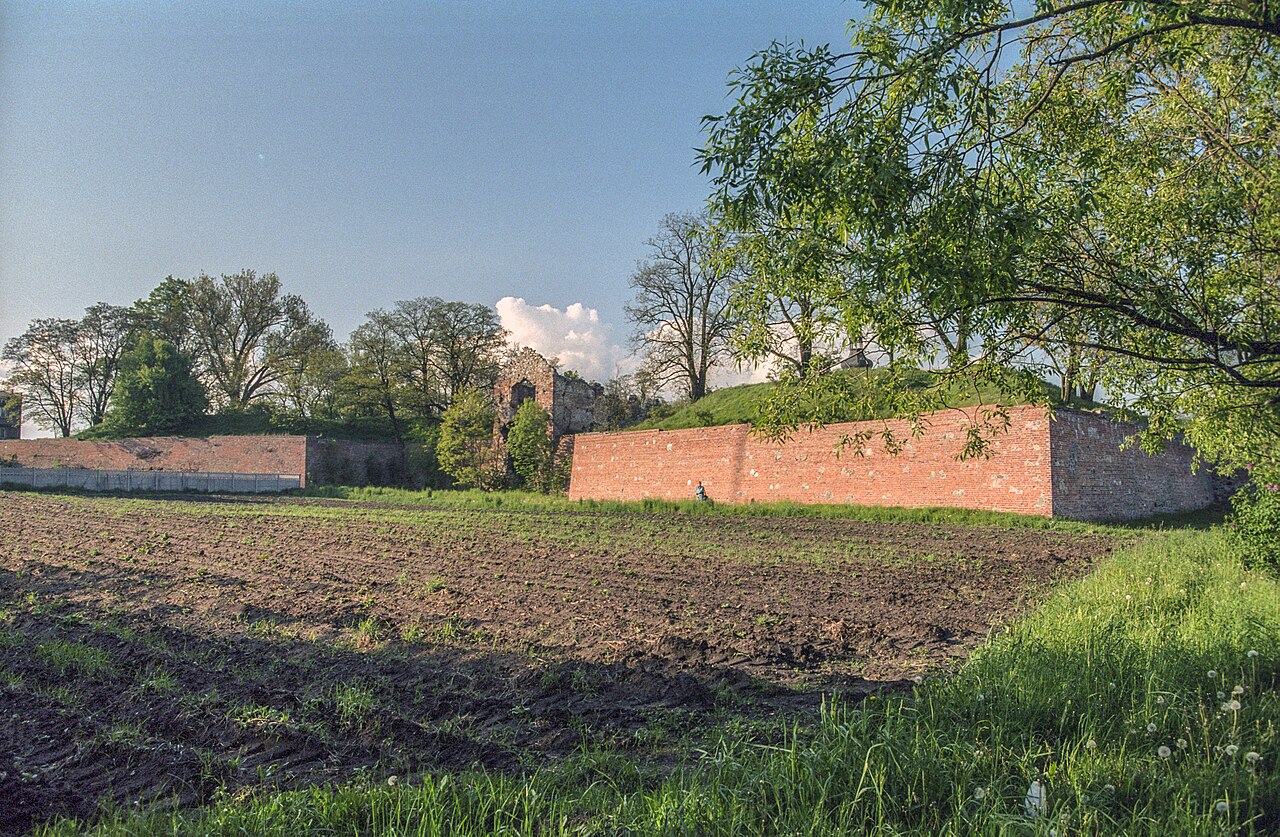
By the late 17th century, maintenance of the fortress continued, but the 18th century saw a steady decline. A 1765 inspection reported the castle buildings as so dilapidated they were uninhabitable. The final blow came after 1840, when Russian authorities sold the ruins at auction, leading to their rapid dismantling for building materials. Today, no visible stone walls remain above ground. Only faint traces of the bastioned earthworks survive, offering subtle testimony to the castle's former grandeur.
Cultural heritage and archaeological significance
Although Krzepice Castle exists now only as ruins, its archaeological and historical importance remains substantial. The site provides valuable insights into the transition from medieval fortresses to Renaissance residences and the adaptation of fortifications to early modern warfare. The remnants of the bastioned fortifications are particularly significant for understanding the evolution of military architecture in Poland during the 16th and 17th centuries.
Efforts to preserve and study the site contribute to the appreciation of Poland's rich cultural heritage and medieval history. Visitors to Krzepice can explore the landscape shaped by centuries of conflict, governance, and architectural innovation, reflecting the broader historical currents that shaped the region.
Frequently asked questions (FAQ)
- How do I get to Krzepice Castle?
- Krzepice Castle is located in the charming town of Krzepice, Poland. You can reach it by car or public transport, with several bus services connecting from nearby cities such as Częstochowa. Once in town, the castle is easily accessible on foot.
- What is the historical significance of Krzepice Castle?
- Krzepice Castle dates back to the 14th century and has played a crucial role in the region's history. It served as a defensive stronghold and residence for local nobility, reflecting the architectural styles and social dynamics of its time. The castle's rich history adds to its allure as a tourist destination.
- When was Krzepice Castle built?
- Krzepice Castle was constructed in the late 14th century, with subsequent modifications made in the following centuries. The castle's design showcases various architectural influences, illustrating the evolution of military and residential structures in Poland over time. Visitors can appreciate both its historical and architectural heritage.
- Can I visit Krzepice Castle year-round?
- Yes, Krzepice Castle is open to visitors year-round, although the best time to visit is during the spring and summer months when the weather is pleasant and the gardens are in full bloom. During colder months, some areas may have restricted access, so it's advisable to check ahead for any seasonal changes. Guided tours are also available, providing deeper insights into the castle's history.
- Why is Krzepice Castle considered an architectural gem?
- Krzepice Castle is considered an architectural gem due to its unique blend of Gothic and Renaissance styles. The castle features impressive stonework, intricate details, and well-preserved structures that showcase the craftsmanship of its era. Its design not only served a functional purpose but also reflected the artistic trends of the time.
- Is it possible to take guided tours of the castle?
- Yes, guided tours of Krzepice Castle are available and highly recommended for a comprehensive experience. Knowledgeable guides provide historical context and fascinating stories that enhance your visit. Tours typically run during opening hours, so be sure to check the schedule in advance.
- What are the opening hours for Krzepice Castle?
- Krzepice Castle is generally open to visitors from 10 AM to 5 PM, with extended hours during the summer months. It is advisable to verify the current opening hours before your visit, as they may vary by season or for special events. Planning your visit accordingly ensures a smoother experience.
- Are there any nearby attractions worth visiting?
- Yes, the area surrounding Krzepice Castle is rich in attractions. Nearby, you can explore the picturesque landscapes of the Silesian Voivodeship, visit local museums, or enjoy outdoor activities in the surrounding parks. Additionally, Częstochowa, famous for its spiritual significance, is just a short drive away.
- What are the ticket prices for visiting Krzepice Castle?
- Ticket prices for Krzepice Castle are quite affordable, usually around 10 PLN for adults and a reduced rate for children and seniors. Special family tickets may also be available, making it a cost-effective outing for families. Keep an eye out for any seasonal promotions or events that might offer discounted entry.
Information
Loading map...
Visitor reviews
No reviews yet. Been here? Write the first review and help other travelers!
Write the first reviewVisited this castle? Share your experience
Your review helps other travelers and adds first-hand knowledge to our encyclopedia.