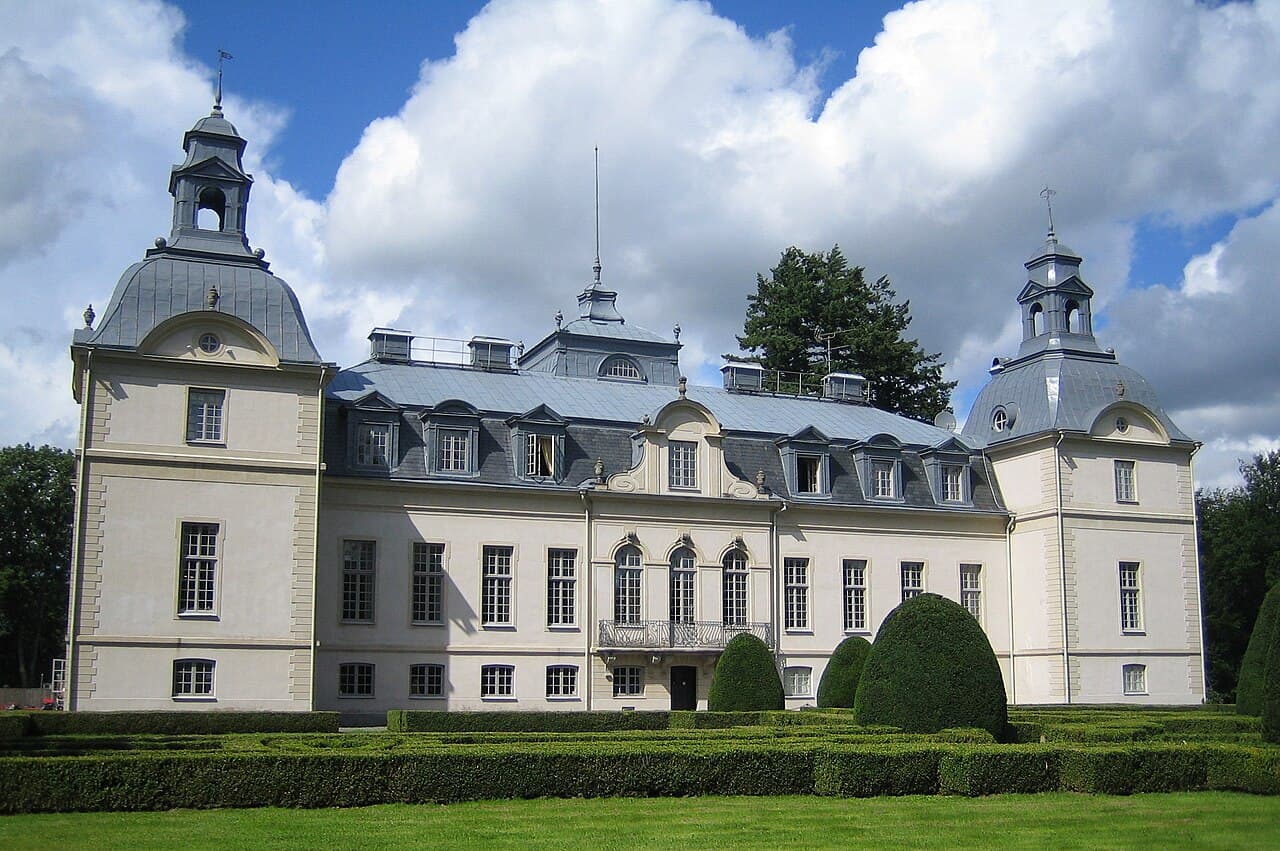
Kronovall Castle — Sweden castle

Kronovall Castle

Kronovall Castle in Tomelilla, Sweden
Tomelilla, Sweden
Post-Renaissance (17th–18th c.)
Well Preserved

Kronovall Castle (Swedish: Kronovalls slott) is a notable chateau located in Tomelilla Municipality, Scania, Sweden. Its origins date back to the 18th century, with the main building constructed in 1760. The castle is situated on a gentle hill, classifying it as a hill castle, which was a common choice for estates seeking both prominence and natural defense advantages.

Architectural evolution and style

The original structure of Kronovall Castle was a two-storey building reflecting the architectural preferences of the post-Renaissance period. However, the castle's current appearance is heavily influenced by a significant renovation carried out in the 1890s. During this time, the building was redesigned in the French Baroque style, which is characterized by grandeur, elaborate ornamentation, and formal symmetry.

The renovation introduced typical Baroque elements such as decorative façades, ornate window frames, and a more pronounced roofline. This style was popular among European aristocracy in the 17th and 18th centuries and was revived in the 19th century to convey prestige and elegance.

Historical ownership and usage

Kronovall Castle has had a varied history of ownership, with the Sparre family acquiring it in 1991. Since then, the castle has been adapted for modern uses while preserving its historical character. It currently serves as the headquarters for a local winery company, integrating its rich heritage with contemporary business.

Current functions and visitor experience

Today, Kronovall Castle operates as a multifaceted venue offering a hotel, restaurant, wine café, and conference facilities. These amenities allow visitors to experience the castle's historical ambiance alongside modern comforts. The site is open to visitors by appointment, making it a destination for those interested in history, architecture, and wine culture.

Location and setting

Located in Tomelilla, within the region of Scania, Kronovall Castle benefits from the scenic landscapes of southern Sweden. The castle's hilltop position offers views of the surrounding countryside, enhancing its appeal as both a historical monument and a hospitality venue.

Architectural features

The castle's layout includes a prominent main building with two floors, surrounded by landscaped grounds. The French Baroque renovation emphasized formal gardens and symmetrical design elements, which complement the castle's stately appearance. While the castle retains much of its 19th-century character, it also reflects the 18th-century origins in its structural composition.

Visiting information

Kronovall Castle is accessible to visitors primarily through appointments, which allows for a personalized experience. The combination of historical architecture and modern amenities makes it a unique destination in the region. Guests can enjoy wine tastings, fine dining, and explore the castle's elegant interiors and grounds.

Photo gallery

Kronovall Castle
Click to view

Photo by jorchr•CC BY-SA 3.0

1 photo • Click any image to view in full screen

Information

Hill Castle

Current owner

Family Sparre

Loading map...

Visitor reviews

No reviews yet. Been here? Write the first review and help other travelers!

Write the first review

Visited this castle? Share your experience

Your review helps other travelers and adds first-hand knowledge to our encyclopedia.

Write a review

(5/5)

0/2000 characters

Your review will be visible after admin approval

Nearby castles

6.8 km

Tunbyholm Castle

Smedstorp, Sweden

Tunbyholm Castle, located in Smedstorp, Sweden, is a distinguished example of Renaissance architecture from the early 17th century. Constructed between 1634 and 1640, the castle reflects the architectural influence of Christian IV of Denmark, renowned for his distinctive Renaissance style that combines both functionality and ornamentation. Historical context and architectural significance The castle was built during a period of significant cultural and political change in Scandinavia. The reign of Christian IV, King of Denmark and Norway, was marked by extensive building projects that introduced Renaissance architectural elements across the region. Tunbyholm Castle stands as one of the finest manifestations of this style in Sweden, illustrating the spread of Renaissance ideals beyond Denmark's borders. The Renaissance style of Tunbyholm is characterized by its balanced proportions, symmetry, and classical details. The main building features two floors and is flanked by two annexes, which were typical of manor houses designed to accommodate both residential and administrative functions. Architectural features The castle's layout is typical of Renaissance manors, emphasizing harmony and order. The facade likely includes classical elements such as pilasters, cornices, and possibly gabled roofs, all hallmarks of the period's architectural vocabulary. While detailed descriptions of the interior are scarce due to its private ownership, the structure's exterior remains a valuable example of 17th-century Scandinavian Renaissance architecture. Tunbyholm's construction materials and techniques would have combined traditional Swedish building methods with Renaissance stylistic influences imported from Denmark and the broader European continent. This blend results in a unique architectural expression that is both regionally grounded and internationally informed. Ownership and accessibility Today, Tunbyholm Castle remains under private ownership and is not open to the public. This status has helped preserve its condition but limits scholarly access and public appreciation. Despite this, the castle continues to be recognized for its architectural and historical value within Swedish heritage circles. Preservation and condition The castle is well preserved, maintaining much of its original Renaissance character. Its survival through centuries reflects careful stewardship by its owners. The preservation of Tunbyholm allows it to serve as a physical document of early modern Scandinavian architecture and aristocratic life. Location and surroundings Situated in the rural landscape of Smedstorp, the castle is part of the cultural fabric of southern Sweden. Its setting likely includes gardens or parkland typical of manor estates, designed to complement the architectural elegance of the main building. The surrounding region is rich in history and natural beauty, contributing to the castle's contextual significance.

Renaissance (15th–17th c.)
Details
9.5 km
Smedstorp Castle — Sweden castle

Smedstorp Castle

Smedstorp, Sweden

Smedstorp Castle (Swedish: Smedstorps slott) is a historic hill castle located in Tomelilla Municipality, in the province of Scania, southern Sweden. The castle's origins trace back to the medieval period, with documented ownership by the noble Bing family from 1313 to 1589. Over the centuries, it passed through the hands of prominent families including the Quitzow, Bülow, and Kruus, reflecting its importance as a noble residence in the region. Architectural evolution and the Renaissance great hall The present main building of Smedstorp Castle was originally constructed as the great hall of the castle during the 16th century, placing it firmly in the Renaissance period. This architectural style is characterized by symmetry, proportion, and the incorporation of classical elements inspired by ancient Roman and Greek architecture. While the castle was originally a larger complex, today only this main building remains, as no other parts of the original castle structures have survived. Original castle layout and current condition Historical records suggest that the castle was once a fortified residence typical of the Renaissance era, likely featuring defensive walls, courtyards, and ancillary buildings. However, over time, the majority of these structures have been lost or dismantled. Currently, Smedstorp Castle stands as a partially preserved Renaissance hill castle, with the great hall serving as the primary surviving element. The castle is not open to the public, limiting direct access and exploration of its grounds. Historical significance and noble ownership The castle's long association with noble families underscores its role as a center of local power and administration. The Bing family held the estate for nearly three centuries, during which time the castle likely served as a hub for managing the surrounding lands and estates. Subsequent ownership by the Quitzow, Bülow, and Kruus families continued this tradition, reflecting the castle's ongoing importance in regional aristocratic society. Role in regional history Smedstorp Castle's location in Scania places it within a historically contested region that has seen various political and military conflicts, particularly between Denmark and Sweden. Although there are no specific recorded battles or sieges at Smedstorp, its presence as a fortified noble residence would have contributed to the local defense network and governance during turbulent times. Geographical setting and landscape Situated in southern Sweden, the castle occupies a strategic position on a hill, which would have provided natural defensive advantages and a commanding view of the surrounding landscape. The elevated location is typical of hill castles, designed to maximize visibility and control over adjacent lands. The surrounding area is characterized by the gentle rolling hills and fertile farmland typical of Scania, enhancing the castle's role as a manorial center. Current status and preservation Today, Smedstorp Castle remains a private property and is not accessible to visitors. The preservation of the main building, originally the great hall, allows for the study of Renaissance architectural elements in a Swedish noble context. Despite the loss of the broader castle complex, the existing structure provides valuable insight into the region's architectural and social history during the 16th century. Conservation challenges The absence of the original castle's other buildings highlights the challenges of preserving historic sites that have undergone centuries of change, ownership transitions, and possible neglect. Efforts to maintain the remaining structure focus on protecting its Renaissance features and ensuring its structural integrity for future generations.

Renaissance (15th–17th c.)
Details
10.1 km

Christinehof Castle

Brösarp, Sweden

Christinehof Castle is a notable example of German Baroque architecture constructed between 1737 and 1740 in Brösarp, Sweden. This post-Renaissance manor house was commissioned by countess Christina Piper, a prominent noblewoman who acquired the nearby Andrarums ironworks a few years prior to the castle's construction. The castle served as her residence and a symbol of her wealth and status in the region. Historical context and ownership Countess Christina Piper was one of the most influential figures in 18th-century Sweden. She managed extensive estates and industrial enterprises, including the Andrarums ironworks, which played a significant role in the local economy. The construction of Christinehof Castle reflected her ambition to establish a grand residence that combined both comfort and the stylistic trends of the time. The castle remained in the Piper family for several generations and has been preserved as a cultural heritage site. Its connection to the industrial history of the area adds to its historical significance. Architectural features and style Christinehof Castle exemplifies the German Baroque style, characterized by its symmetry, grandeur, and decorative details. The building features a balanced façade with evenly spaced windows and a central entrance accentuated by classical elements. The castle's layout includes formal reception rooms, private chambers, and service areas arranged around a central axis. The use of stucco decorations, pilasters, and pediments on the exterior reflects the Baroque emphasis on dramatic visual effects and elegance. Inside, the interiors originally included richly decorated ceilings, wood paneling, and period furnishings, although some elements have been restored or altered over time. Grounds and surroundings The castle is set within landscaped gardens that complement its architectural style. These gardens were designed to enhance the aesthetic appeal of the estate and provide leisure spaces for the residents. The proximity to the Andrarums ironworks also underscores the castle's role as a center of industrial and agricultural management. Preservation and current status Christinehof Castle is well preserved and maintained as a historic site. It is accessible to visitors who wish to explore its architectural beauty and learn about the life of countess Christina Piper and the region's industrial heritage. The castle's preservation ensures that its Baroque features and historical significance remain intact for educational and cultural purposes. Visiting information and cultural significance Visitors to Christinehof Castle can experience a well-preserved example of 18th-century Baroque residential architecture in Sweden. The castle often hosts exhibitions and events that highlight its history and the legacy of the Piper family. Its location in Skåne County makes it a notable destination for those interested in Swedish noble estates and industrial history. The castle's combination of architectural elegance and historical context provides insight into the lifestyle of Swedish nobility during the post-Renaissance period, as well as the economic activities that shaped the region.

Post-Renaissance (17th–18th c.)
Details