Christinehof Castle

Christinehof Castle in Brösarp, Sweden
Brösarp, Sweden
Post-Renaissance (17th–18th c.)
Well Preserved

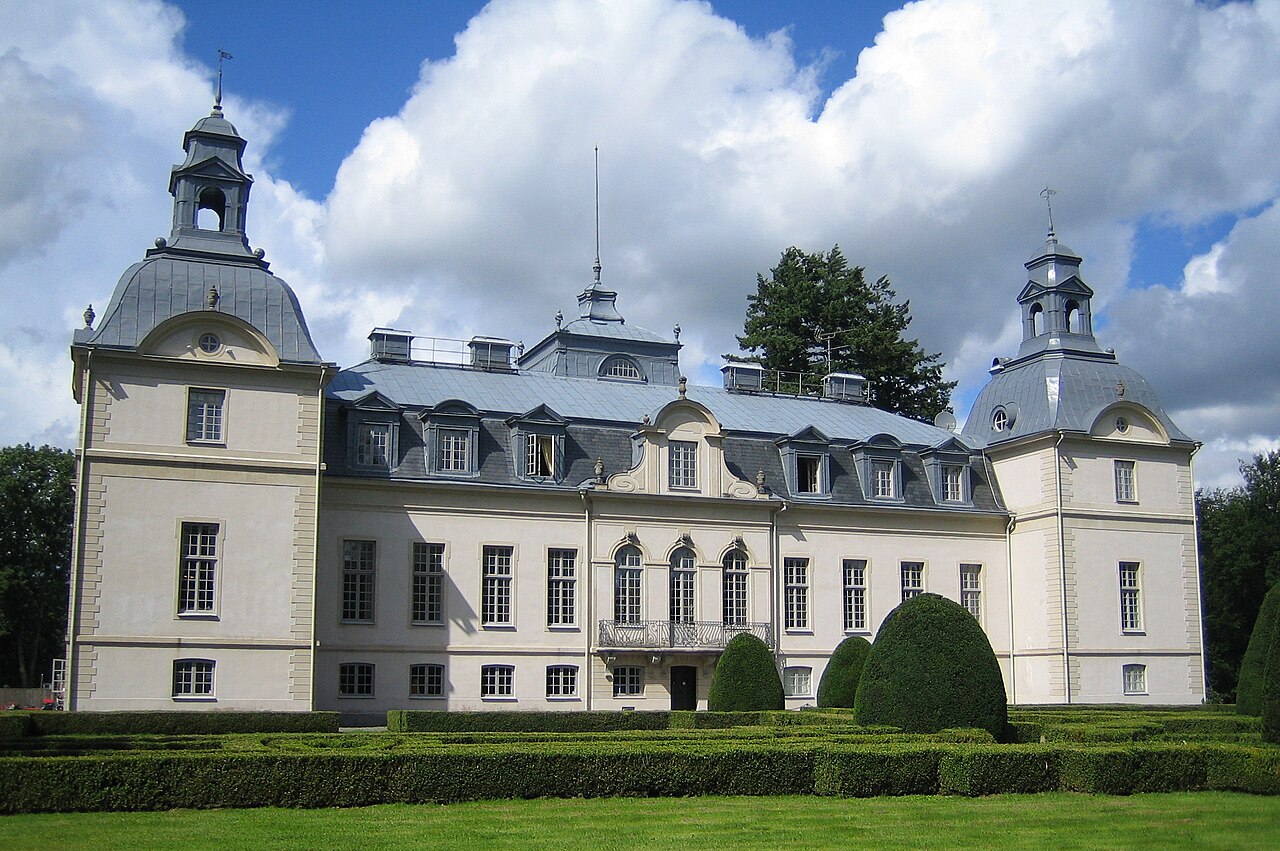
Christinehof Castle is a notable example of German Baroque architecture constructed between 1737 and 1740 in Brösarp, Sweden. This post-Renaissance manor house was commissioned by countess Christina Piper, a prominent noblewoman who acquired the nearby Andrarums ironworks a few years prior to the castle's construction. The castle served as her residence and a symbol of her wealth and status in the region.

Historical context and ownership

Countess Christina Piper was one of the most influential figures in 18th-century Sweden. She managed extensive estates and industrial enterprises, including the Andrarums ironworks, which played a significant role in the local economy. The construction of Christinehof Castle reflected her ambition to establish a grand residence that combined both comfort and the stylistic trends of the time.

The castle remained in the Piper family for several generations and has been preserved as a cultural heritage site. Its connection to the industrial history of the area adds to its historical significance.

Architectural features and style

Christinehof Castle exemplifies the German Baroque style, characterized by its symmetry, grandeur, and decorative details. The building features a balanced façade with evenly spaced windows and a central entrance accentuated by classical elements. The castle's layout includes formal reception rooms, private chambers, and service areas arranged around a central axis.

The use of stucco decorations, pilasters, and pediments on the exterior reflects the Baroque emphasis on dramatic visual effects and elegance. Inside, the interiors originally included richly decorated ceilings, wood paneling, and period furnishings, although some elements have been restored or altered over time.

Grounds and surroundings

The castle is set within landscaped gardens that complement its architectural style. These gardens were designed to enhance the aesthetic appeal of the estate and provide leisure spaces for the residents. The proximity to the Andrarums ironworks also underscores the castle's role as a center of industrial and agricultural management.

Preservation and current status

Christinehof Castle is well preserved and maintained as a historic site. It is accessible to visitors who wish to explore its architectural beauty and learn about the life of countess Christina Piper and the region's industrial heritage. The castle's preservation ensures that its Baroque features and historical significance remain intact for educational and cultural purposes.

Visiting information and cultural significance

Visitors to Christinehof Castle can experience a well-preserved example of 18th-century Baroque residential architecture in Sweden. The castle often hosts exhibitions and events that highlight its history and the legacy of the Piper family. Its location in Skåne County makes it a notable destination for those interested in Swedish noble estates and industrial history.

The castle's combination of architectural elegance and historical context provides insight into the lifestyle of Swedish nobility during the post-Renaissance period, as well as the economic activities that shaped the region.

Frequently asked questions (FAQ)

What is the historical significance of Christinehof Castle?
Christinehof Castle, built in the late 18th century, is an important example of Swedish architecture and landscape design. It was commissioned by the influential merchant and industrialist, Hans von Essen, and reflects the ideals of the Enlightenment period, showcasing a blend of classical and romantic styles.
When was Christinehof Castle constructed?
Christinehof Castle was constructed between 1749 and 1753. It was designed by the architect Carl Hårleman, making it one of the notable architectural landmarks of its time in Sweden.
How do I get to Christinehof Castle?
Christinehof Castle is located in Brösarp, Sweden, and is easily accessible by car or public transport. If traveling by car, there are parking facilities available on-site, and the castle is well-signposted from major roads.
Can I visit Christinehof Castle year-round?
Yes, Christinehof Castle is open for visitors throughout the year, though opening hours may vary by season. It is advisable to check the official website for the most current visiting hours and any special events that may be taking place during your visit.
What are the ticket prices for Christinehof Castle?
Ticket prices for Christinehof Castle vary depending on the season and any special exhibitions. Generally, adult tickets are reasonably priced, with discounts available for students and seniors, making it accessible for all visitors.
Is it possible to explore the gardens at Christinehof Castle?
Yes, the gardens surrounding Christinehof Castle are open to the public and feature beautifully landscaped areas that reflect the design principles of the 18th century. Visitors can stroll through the gardens and enjoy the scenic views, particularly during the spring and summer months.
What is the best time to visit Christinehof Castle?
The best time to visit Christinehof Castle is during the late spring and summer when the gardens are in full bloom and the weather is pleasant. Additionally, many special events and guided tours are offered during this season, enhancing the visitor experience.
Are there any nearby attractions to Christinehof Castle?
Yes, there are several nearby attractions, including the stunning Söderåsen Nature Reserve and the picturesque village of Brösarp. Visitors can also explore local hiking trails, making it a great destination for those interested in nature and outdoor activities.
Is Christinehof Castle accessible for individuals with disabilities?
Christinehof Castle strives to be accessible to all visitors, with facilities in place to accommodate those with disabilities. It is recommended to contact the castle in advance to inquire about specific accessibility options and any assistance you may require during your visit.

Information

Palace Castle

Sources & official resources

Verify the information above using these authoritative references.

Loading map...

Visitor reviews

No reviews yet. Been here? Write the first review and help other travelers!

Write the first review

Visited this castle? Share your experience

Your review helps other travelers and adds first-hand knowledge to our encyclopedia.
Write a review

(5/5)

0/2000 characters

Your review will be visible after admin approval

Nearby castles

10.1 km
Kronovall Castle — Sweden castle

Kronovall Castle

Tomelilla, Sweden

Kronovall Castle (Swedish: Kronovalls slott) is a notable chateau located in Tomelilla Municipality, Scania, Sweden. Its origins date back to the 18th century, with the main building constructed in 1760. The castle is situated on a gentle hill, classifying it as a hill castle, which was a common choice for estates seeking both prominence and natural defense advantages. Architectural evolution and style The original structure of Kronovall Castle was a two-storey building reflecting the architectural preferences of the post-Renaissance period. However, the castle's current appearance is heavily influenced by a significant renovation carried out in the 1890s. During this time, the building was redesigned in the French Baroque style, which is characterized by grandeur, elaborate ornamentation, and formal symmetry. The renovation introduced typical Baroque elements such as decorative façades, ornate window frames, and a more pronounced roofline. This style was popular among European aristocracy in the 17th and 18th centuries and was revived in the 19th century to convey prestige and elegance. Historical ownership and usage Kronovall Castle has had a varied history of ownership, with the Sparre family acquiring it in 1991. Since then, the castle has been adapted for modern uses while preserving its historical character. It currently serves as the headquarters for a local winery company, integrating its rich heritage with contemporary business. Current functions and visitor experience Today, Kronovall Castle operates as a multifaceted venue offering a hotel, restaurant, wine café, and conference facilities. These amenities allow visitors to experience the castle's historical ambiance alongside modern comforts. The site is open to visitors by appointment, making it a destination for those interested in history, architecture, and wine culture. Location and setting Located in Tomelilla, within the region of Scania, Kronovall Castle benefits from the scenic landscapes of southern Sweden. The castle's hilltop position offers views of the surrounding countryside, enhancing its appeal as both a historical monument and a hospitality venue. Architectural features The castle's layout includes a prominent main building with two floors, surrounded by landscaped grounds. The French Baroque renovation emphasized formal gardens and symmetrical design elements, which complement the castle's stately appearance. While the castle retains much of its 19th-century character, it also reflects the 18th-century origins in its structural composition. Visiting information Kronovall Castle is accessible to visitors primarily through appointments, which allows for a personalized experience. The combination of historical architecture and modern amenities makes it a unique destination in the region. Guests can enjoy wine tastings, fine dining, and explore the castle's elegant interiors and grounds.

Post-Renaissance (17th–18th c.)
Details
16.4 km

Bjärsjölagård Castle

Sjöbo, Sweden

Bjärsjölagård Castle is a notable historic estate located in Sjöbo, Sweden, showcasing a blend of architectural styles from the post-Renaissance period. The site has a deep-rooted history that traces back to the medieval era, beginning with the original fortified castle known as Beritzholm. This medieval fortress was constructed under the reign of Valdemar Atterdag in the 14th century, around the 1300s, serving as a stronghold in the region. Beritzholm stood a few hundred meters from where the current castle stands today but was demolished in 1526, marking the end of its medieval military significance. Early history and estate development Following the demolition of Beritzholm, the estate passed through various hands until Peter Julius Coyet purchased it from the Crown in 1720. During the early 19th century, the estate included a lime factory, an industrial feature that reflects the economic activities of the period. Two lime ovens from this era still remain on the property, offering a tangible link to the estate's industrial past. Architectural evolution of Bjärsjölagård Castle The rococo main building The present main building of Bjärsjölagård Castle was constructed in 1766 in the rococo style, a decorative and elegant architectural movement that flourished in Europe during the 18th century. This style is characterized by ornamental details, lightness, and an emphasis on curves and intricate designs, which contrasted with the more robust and fortified structures of earlier periods. The main building reflects these rococo ideals with its refined façades and balanced proportions, serving as the centerpiece of the estate. In 1812, a southern wing was added to the main building, complementing the original structure and expanding the living and service areas of the castle. Romantic German-style addition Later in the 19th century, a significant expansion took place between 1849 and 1850. This addition was constructed in a Romantic, German architectural style, which was popular in the mid-19th century and often featured elements such as steep roofs, decorative towers, and an overall picturesque aesthetic inspired by medieval German castles and manors. This newer building is located on a hill just south of the original rococo castle. It is a three-story structure flanked by two square towers, which give it a fortress-like appearance, blending romantic historicism with functional residential design. The contrast between the rococo main building and the romantic addition illustrates the evolving tastes and architectural trends over nearly a century. Current status and usage Today, Bjärsjölagård Castle functions as a hotel, allowing visitors to experience the historic ambiance and architectural beauty firsthand. The estate's combination of rococo elegance and romantic historicism, alongside its rich history dating back to the medieval period, makes it a significant cultural landmark in the Skåne region of Sweden. Visitors can explore the castle grounds, appreciate the preserved lime ovens from the early 19th century, and enjoy the unique atmosphere created by the juxtaposition of different architectural styles and historical layers.

Post-Renaissance (17th–18th c.)
Details
16.8 km

Tunbyholm Castle

Smedstorp, Sweden

Tunbyholm Castle, located in Smedstorp, Sweden, is a distinguished example of Renaissance architecture from the early 17th century. Constructed between 1634 and 1640, the castle reflects the architectural influence of Christian IV of Denmark, renowned for his distinctive Renaissance style that combines both functionality and ornamentation. Historical context and architectural significance The castle was built during a period of significant cultural and political change in Scandinavia. The reign of Christian IV, King of Denmark and Norway, was marked by extensive building projects that introduced Renaissance architectural elements across the region. Tunbyholm Castle stands as one of the finest manifestations of this style in Sweden, illustrating the spread of Renaissance ideals beyond Denmark's borders. The Renaissance style of Tunbyholm is characterized by its balanced proportions, symmetry, and classical details. The main building features two floors and is flanked by two annexes, which were typical of manor houses designed to accommodate both residential and administrative functions. Architectural features The castle's layout is typical of Renaissance manors, emphasizing harmony and order. The facade likely includes classical elements such as pilasters, cornices, and possibly gabled roofs, all hallmarks of the period's architectural vocabulary. While detailed descriptions of the interior are scarce due to its private ownership, the structure's exterior remains a valuable example of 17th-century Scandinavian Renaissance architecture. Tunbyholm's construction materials and techniques would have combined traditional Swedish building methods with Renaissance stylistic influences imported from Denmark and the broader European continent. This blend results in a unique architectural expression that is both regionally grounded and internationally informed. Ownership and accessibility Today, Tunbyholm Castle remains under private ownership and is not open to the public. This status has helped preserve its condition but limits scholarly access and public appreciation. Despite this, the castle continues to be recognized for its architectural and historical value within Swedish heritage circles. Preservation and condition The castle is well preserved, maintaining much of its original Renaissance character. Its survival through centuries reflects careful stewardship by its owners. The preservation of Tunbyholm allows it to serve as a physical document of early modern Scandinavian architecture and aristocratic life. Location and surroundings Situated in the rural landscape of Smedstorp, the castle is part of the cultural fabric of southern Sweden. Its setting likely includes gardens or parkland typical of manor estates, designed to complement the architectural elegance of the main building. The surrounding region is rich in history and natural beauty, contributing to the castle's contextual significance.

Renaissance (15th–17th c.)
Details

