Krevo Castle Ruins
Krevo Castle, located in the town of Krevo in Belarus, stands as one of the most historically significant and architecturally remarkable medieval fortresses in Eastern Europe. Dating from the early 14th century, it holds the distinction of being the first all-stone castle constructed in the region, marking a pivotal evolution in fortress building techniques of the time. The castle's imposing stone walls, originally measuring up to 2.5 meters thick and 13 meters high, exemplify the advanced defensive architecture employed by the Grand Duchy of Lithuania during its period of territorial expansion.
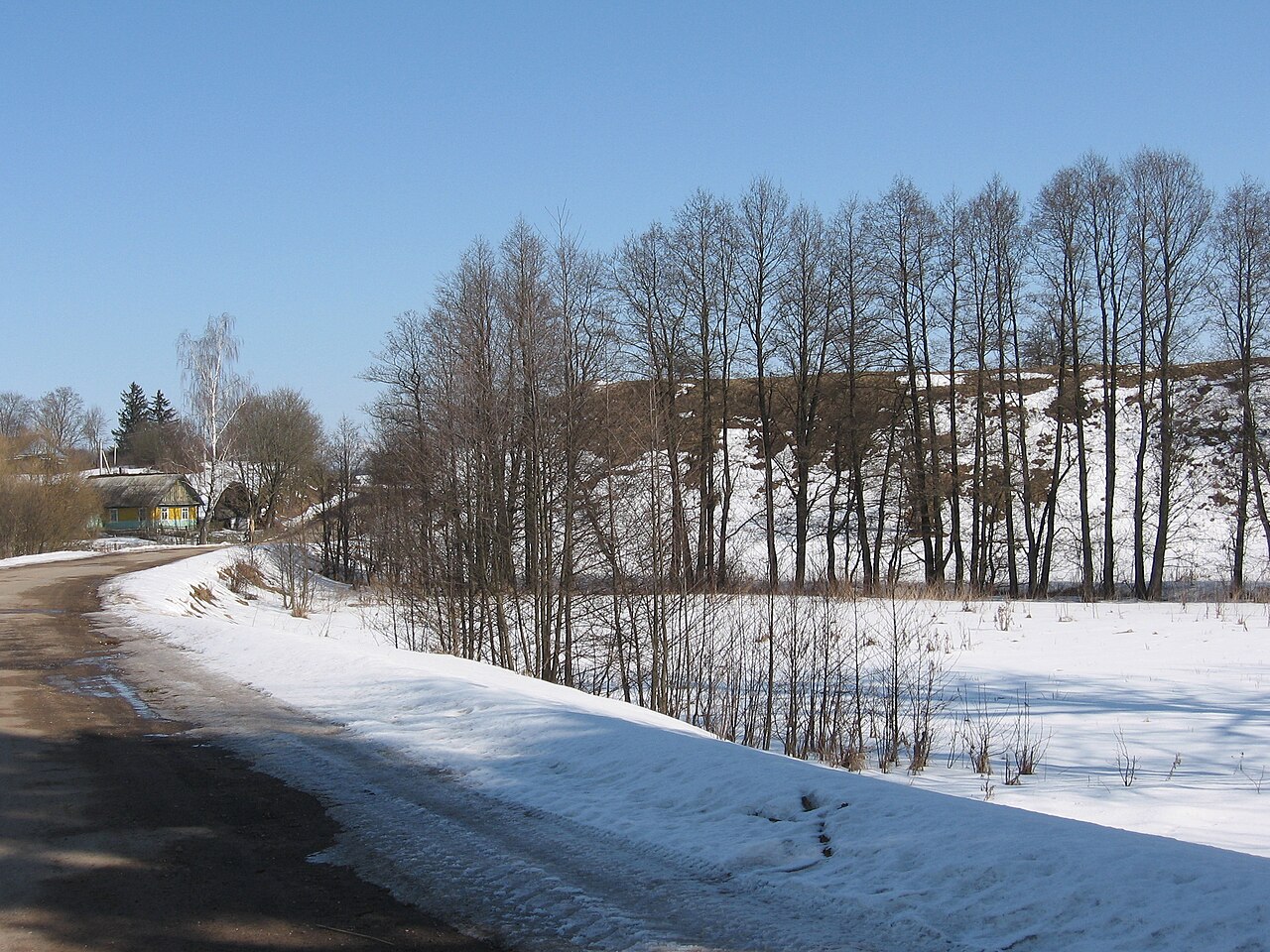
Strategically positioned on a hill near the confluence of the Krevyanka and Shlyakhtyanka rivers, Krevo Castle formed a crucial part of the so-called "Stone Belt," a defensive network designed to protect the vital centers of Vilnius and Navahrudak. This location not only offered natural defensive advantages but also allowed the castle to oversee important trade and military routes in the region.
Historical significance and events
The castle's history is deeply intertwined with the political and military developments of the late medieval period. Built in the 14th century, likely under the reigns of Grand Dukes Gediminas or Algirdas, it became a residence for members of the ruling Gediminid dynasty. Notably, Krevo Castle was the site of the imprisonment and subsequent murder of Grand Duke Kęstutis in 1381, an event that underscored the internal dynastic struggles within Lithuania at the time.
Perhaps the most historically momentous event associated with Krevo Castle is the signing of the Union of Krevo in 1385. This agreement united the Grand Duchy of Lithuania and the Kingdom of Poland under the leadership of Jogaila, who became King Władysław II Jagiełło of Poland. This union laid the foundation for the centuries-long Polish-Lithuanian Commonwealth, a major political entity in European history.
Throughout the 15th and 16th centuries, Krevo Castle witnessed numerous conflicts and sieges. It was captured during the 1433 rebellion led by Grand Duke Švitrigaila and endured multiple Tatar raids between 1503 and 1506, as well as a Muscovite siege in 1519. Despite these assaults, the castle remained largely intact, a testament to its robust construction and strategic design.
In the later 16th century, the castle served as the residence of Andrei Kurbsky, a Russian prince and military commander who defected from the court of Ivan the Terrible. This period highlights the castle's role not only as a military fortress but also as a noble residence.
Architecture and layout
Fortifications and walls
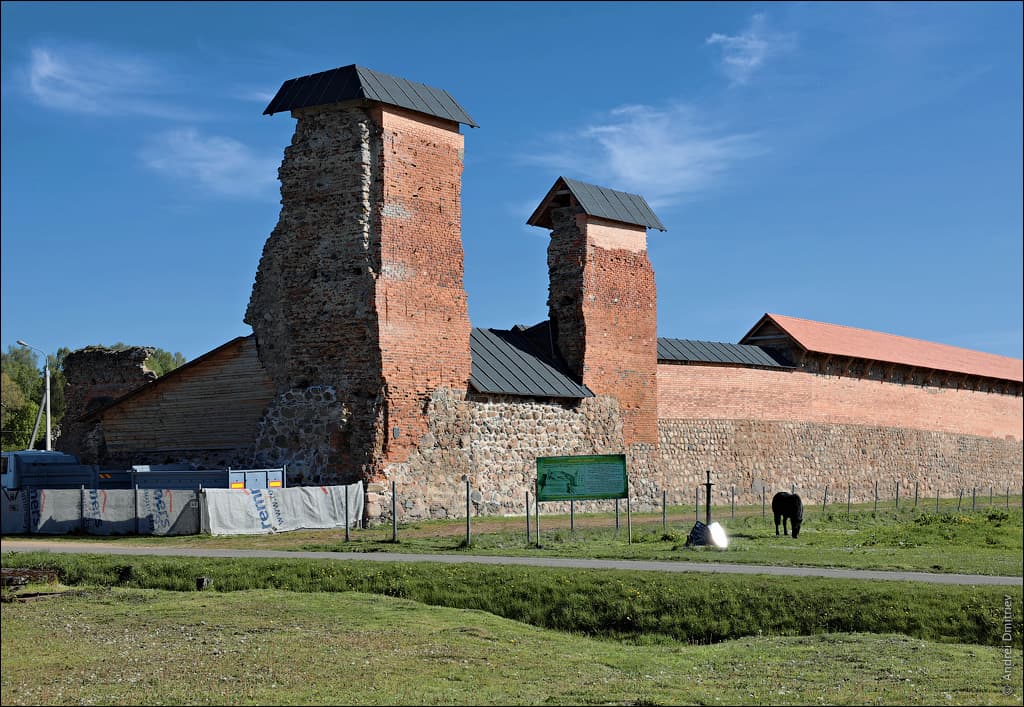
Krevo Castle features a large, irregular quadrilateral layout, resembling a trapezoid, with stone walls ranging from 71 to 108 meters in length. The walls are remarkably thick, between 2.5 and 3 meters, and stand approximately 12 to 13 meters high. The lower portions of the walls are constructed from fieldstone, a rough local stone, rising up to about 7 meters, while the upper sections are made of a distinctive band of large red bricks roughly 2 meters wide. These walls rest on deep foundations, between 5 and 7 meters, engineered to stabilize the structure on the marshy floodplain where the castle was built.
Half of the castle's defenses are situated on an artificially enlarged sandy dune, surrounded by a wide, water-filled moat and additional dikes, enhancing the fortress's defensive capabilities against siege warfare. The moat's foundation was carefully constructed with tightly fitted stones to prevent leaks, demonstrating the advanced medieval engineering skills of its builders.
Towers and gates
The castle is anchored by two main towers located at opposite corners. The larger northern tower, known as the Princely Tower or Kęstutis Tower, measures nearly 19 by 17 meters and originally rose over 25 meters high, with current ruins standing at about 17.5 meters. Its base is stone, while the upper walls consist of a three-layered brick masonry. Inside, the tower contains staircases embedded within thick walls, providing access to at least four floors, including a dungeon in the basement. The tower's entrance is uniquely situated at the battlement level, approximately 10 meters above ground, enhancing its defensibility. Embrasures spaced about 2.4 meters apart allowed defenders to fire upon attackers.
The tower's upper floors served both defensive and residential functions. The second floor likely housed the ruling family, adorned with medieval frescoes featuring geometric and human motifs. Higher floors included larger windows with painted linings, indicating a blend of comfort and fortification.
At the southeastern corner stands a smaller tower, approximately 11 by 10.5 meters with a height near 16 meters. Its lower walls are stone up to three meters tall, with brick above, mirroring the construction style of the larger tower but on a reduced scale. Archaeological excavations uncovered 14th-century stairways within its walls, aiding in understanding the tower's internal structure.
The main entrance is located in the southeast wall, featuring a gate about 2.8 meters wide and over 4 meters tall. A secondary gate on the western wall, smaller and rounded, likely served as a water drainage outlet or emergency exit. Inside the courtyard, remains of wooden residential and utility buildings, including a smithy and a pond, have been found, along with artifacts such as pottery, glazed tiles, glass fragments, and weapons dating mainly from the 14th and 15th centuries.
Later history and preservation efforts
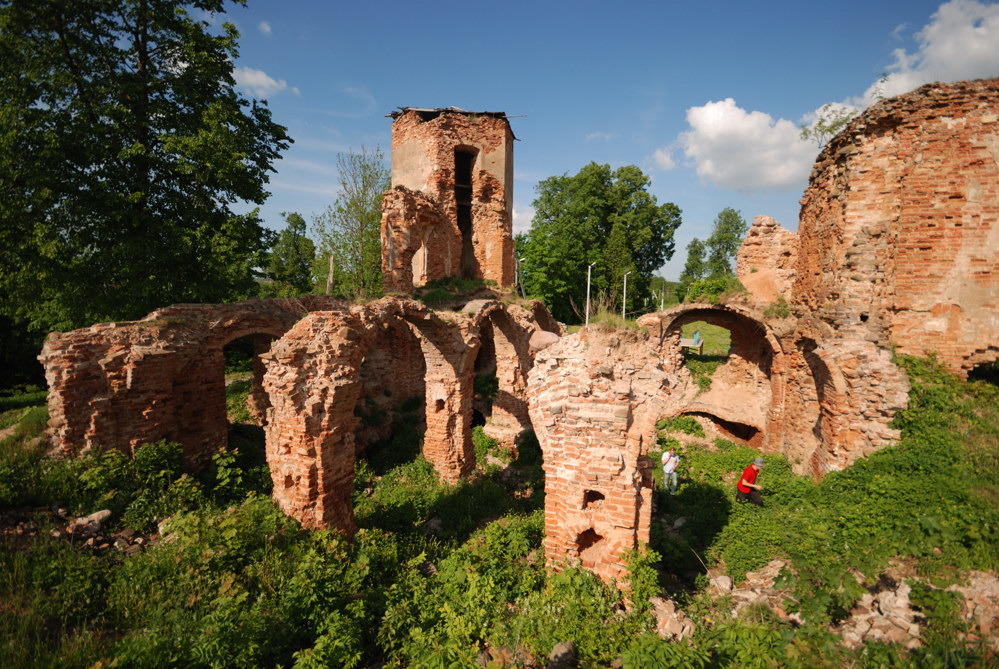
Though Krevo Castle gradually lost its military importance by the 18th century, it remained largely intact until the devastations of World War I. The frontline passed through Krevo, and German forces occupied the site, using the ruins as fortifications and observation posts. This military use caused significant damage to the remaining structures.
Restoration efforts began in 1929, led by Polish specialists who aimed to preserve what remained of the castle. Archaeological research resumed in the late 20th and early 21st centuries, conducted by Belarusian scholars such as M. A. Tkachov, A. Trusov, and I. Chernyavsky. These investigations uncovered new features, including the foundations of a previously unknown third tower and medieval stairways, enriching the understanding of the castle's original layout.
In 2005, a local foundation was established to support preservation and restoration, though it was dissolved in 2023. Current plans focus on rebuilding parts of the walls, battlements, and the princely residence tower to create a museum space that will educate visitors about the castle’s rich history.
Recent conservation work has stabilized the Princely Tower and restored portions of the walls on the northwest, northeast, and southwest sides. Protective structures have been installed to reduce weathering. In 2022, a wooden watchtower was erected near the site, believed to mark the location of a historic signal tower that communicated with other fortifications in the region.
Legends and cultural significance
The ruins of Krevo Castle are steeped in local legend and folklore. Tales speak of an underground tunnel connecting the castle to Vilnius, a distance of many kilometers, though no archaeological evidence has confirmed this. Another legend tells of a beautiful princess who was bricked up alive within the castle walls, a common medieval motif symbolizing sacrifice and tragedy.
Nearby Yuryeva Mountain holds a pagan temple and one of four ancient amulet boulders that once stood at the entrance to Krevo, believed to protect the town from harm and disease. The mountain also offers a magnificent vantage point from which visitors can view the castle ruins and the surrounding landscape.
Visiting krevo castle ruins today
Today, Krevo Castle remains a compelling destination for visitors interested in medieval history, architecture, and Belarusian heritage. Though only ruins survive, the site offers a tangible connection to the region's past and the dramatic events that shaped Eastern Europe. The castle’s well-preserved walls and towers provide insight into medieval defensive architecture, while the surrounding landscape enriches the visitor experience.
Ongoing preservation efforts aim to enhance accessibility and interpretive resources, including plans for a museum within the restored princely tower. Visitors can explore the ruins on foot, enjoy panoramic views from Yuryeva Mountain, and learn about the castle’s role in the formation of the Polish-Lithuanian Commonwealth.
Frequently asked questions (FAQ)
- What is the historical significance of Krevo Castle Ruins?
- Krevo Castle Ruins are an important historical site in Belarus, dating back to the 14th century. It served as a strategic fortification and has witnessed numerous battles and political events, making it a vital part of Belarus's cultural heritage.
- When was Krevo Castle originally built?
- Krevo Castle was originally constructed in the early 14th century, specifically around the year 1385. It was built during the Grand Duchy of Lithuania's expansion and reflects the architectural style of that period.
- What are the opening hours for Krevo Castle Ruins?
- Krevo Castle Ruins are generally open to visitors year-round, with specific hours depending on the season. Typically, the site is accessible from 9 AM to 5 PM, but it's best to check local listings for any seasonal changes.
- Is it possible to take guided tours of Krevo Castle?
- Yes, guided tours are available at Krevo Castle, providing visitors with in-depth knowledge about its history and architecture. These tours are a great way to enhance your experience and understanding of the site.
- Can I visit Krevo Castle Ruins with children?
- Absolutely! Krevo Castle Ruins are family-friendly and offer a fascinating experience for visitors of all ages. Kids can explore the ruins and learn about history in an engaging environment.
- What is the best time to visit Krevo Castle Ruins?
- The best time to visit Krevo Castle Ruins is during the spring and early autumn months when the weather is mild and pleasant. This allows for a more enjoyable outdoor experience while exploring the ruins and the surrounding landscape.
- Are there any nearby attractions to see while visiting Krevo Castle?
- Yes, nearby attractions include the picturesque village of Krevo and the scenic landscapes of the surrounding region. Visitors may also explore other historical sites and nature trails that highlight the beauty and culture of Belarus.
- How much do tickets cost to enter Krevo Castle Ruins?
- Tickets to enter Krevo Castle Ruins are generally affordable, with prices typically ranging from 2 to 5 Belarusian rubles. Discounts may be available for students and groups, making it an accessible destination for everyone.
- How do I get to Krevo Castle Ruins?
- Krevo Castle Ruins are located about 30 kilometers from Minsk, and can be reached by car or public transport. Buses and taxis frequently service the area, allowing for easy access to this historical landmark.
Photo gallery

Information
Website
Visit websiteSources & official resources
Verify the information above using these authoritative references.
Loading map...
Visitor reviews
No reviews yet. Been here? Write the first review and help other travelers!
Write the first reviewVisited this castle? Share your experience
Your review helps other travelers and adds first-hand knowledge to our encyclopedia.